

Acting
Toshio Takahara
Born — Died
1923-05-01 — 2000-02-26
Place of birth
Tokyo, Japan
Known for
Acting
Credits
64 titles
Known for
 8.3
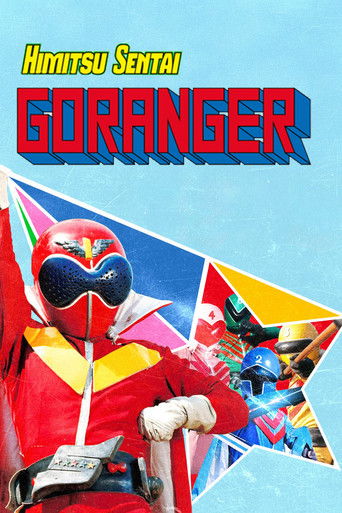
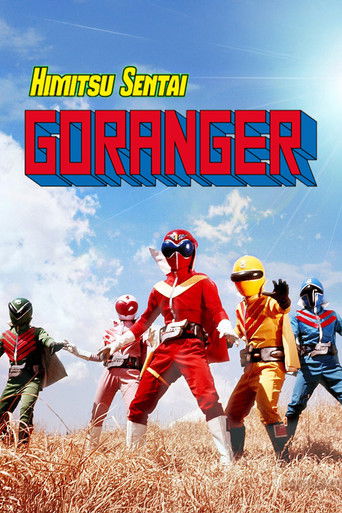
8.3A powerful terrorist organization known as the Black Cross Army threatens to destroy the Earth, with only the defense organization EAGLE (EArth Guard LEague) able to oppose them. In retaliation, Black Cross Army destroys multiple EAGLE headquarters across Japan, killing all but five people. Now, these five remaining EAGLE members are called to form a secret, powerful team known as Gorenger, the only force left that has a chance to stop the Black Cross Army and their evil leader, Black Cross Führer.
Himitsu Sentai Gorenger
1975
 8.5
8.5A samurai answers a village's request for protection after he falls on hard times. The town needs protection from bandits, so the samurai gathers six others to help him teach the people how to defend themselves, and the villagers provide the soldiers with food.
Seven Samurai
1954
 8.8
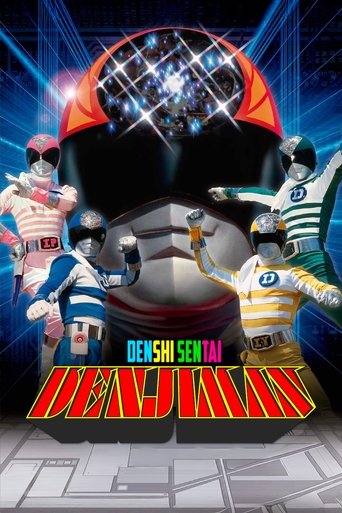
8.8Denzimen are warriors who fight against the Vader Clan, a clan that tries to pollute the Earth with sludge. Denzimen fight using the Super Science of the Denzi people.
Denshi Sentai Denziman
1980
 8.0
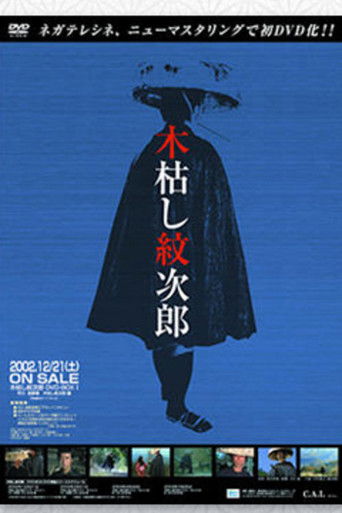
8.0Monjiro was born into a poor farm family in Mikazuki Village, Nitta County, Ueshu, and abandoned his hometown when he was 10 years old. He has been traveling aimlessly with a long toothpick in his mouth. Monjiro avoided getting involved in anything, but wherever he went, he ended up getting involved in incidents
Kogarashi Monjiro
1972
 NR
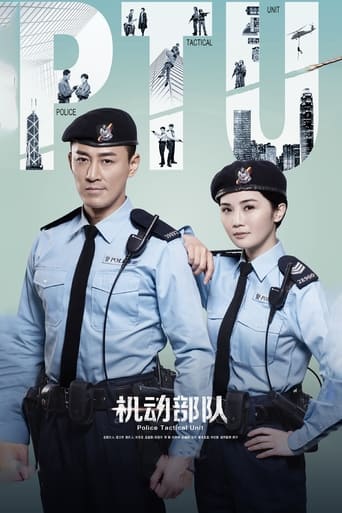
NRA story that tackles the life experience and mental issues that plague the PTU officers from the perspective of a former undercover cop who returns to the force. After successfully bringing down the triads, Gao Jiasheng (Raymond Lam) goes back to wearing the police badge and crosses paths with Sergeant He Huiling (Charlene Choi) and Team Leader Liu Jianhui (Alex Fong). The three have their share of misgivings, but learn to build trust and friendship through a series of dangerous missions.
Police Tactical Unit
2019
 8.4
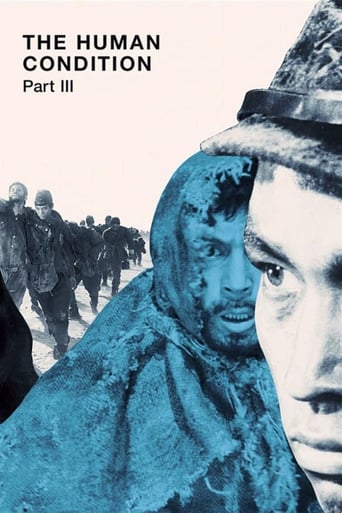
8.4After the Japanese defeat to the Russians, Kaji leads the last remaining men through Manchuria. Intent on returning to his old life, he faces great odds in a variety of different harrowing circumstances as he and his men sneak behind enemy lines.
The Human Condition III: A Soldier's Prayer
1961
Film credits
1980s · 2 titles
1970s · 9 titles
 5.4
5.4When Magman makes a blunder that finally makes him lose the Black Cross Furher's trust, he begins a rampage against EAGLE with Navarone Fortress, the Gorenger must finally stop them. It features the destruction of Volcano Mask General Magman and his Mobile Fortress Navarone, as well as the Gorenger Machines, and the first appearance of his successor Commander-in-Chief Golden Mask. This is a theatrical version of episode 54 of the Himitsu Sentai Gorenger television series.
Himitsu Sentai Gorenger: The Volcano's Last Big Eruption
1976
 8.0
8.0A Masked Monster being chased for stealing a microfilm with EAGLE secrets hides on a houseboat to avoid Kaijo and Asuka's pursuit.
Himitsu Sentai Gorenger: The Movie
1975
 8.6
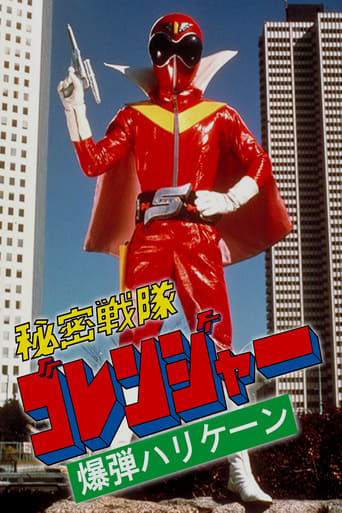
8.6The Gorenger head for Matsuyama to prevent the Black Cross from firing a missile to destroy Japan. Himitsu Sentai Gorenger: The Bomb Hurricane is a theatrical film based on the Himitsu Sentai Gorenger television series. It was originally shown on July 22, 1976 (between Episodes 56 and 57 of the TV series) as part of the Toei Manga Matsuri film festival. It was the only Gorenger film that was a completely original work and not a theatrical version of a TV episode.
Himitsu Sentai Gorenger: The Bomb Hurricane!
1976
 NR
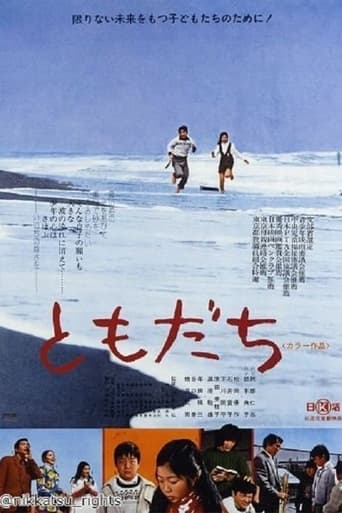
NRShinta is a sixth grader in Kawasaki City a troublemaker that dreams to become a soccer player. Yoshiko, a classmate who moved to Kawasaki from Iwate Prefecture two years ago, is a gloomy girl who suffers from asthma due to the polluted air in Kawasaki and is ostracized by her class. Shinta is placed next to Yoshiko in class and their stories will take a turn.
Tomodachi
1974
 8.5
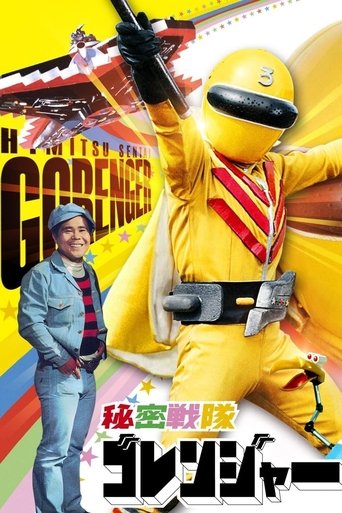
8.5The Gorenger try to retrieve rocket plans stolen by the Black Cross as Daita meets a mysterious girl he saves from them. This is a theatrical version of episode 36 of the Himitsu Sentai Gorenger television series.
Himitsu Sentai Gorenger: The Red Death Match
1976
 6.5
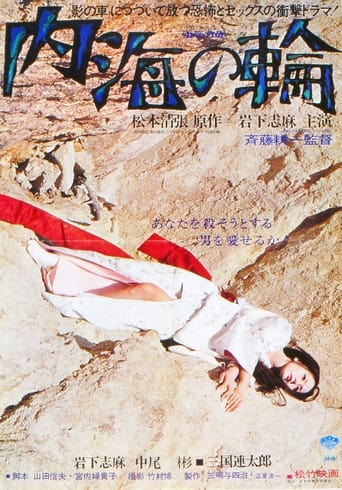
6.5It was five years ago when Minako spent a night with Sozo, younger brother of her ex-husband. She now lives in a local town with a rich old man who owns a dry goods store. Minako travels to Tokyo on business every three months, during which time she continues to meet Sozo, who has married the daughter of his respected teacher.
Shadow of Deception
1971
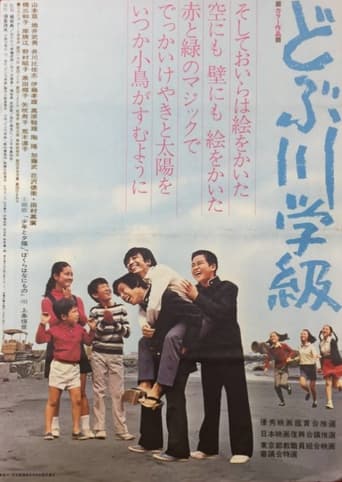 NR
NRThe struggle of a young man and boys who try to create the environment where they can speak their minds freely.
The Class of the Sewage Canal
1972
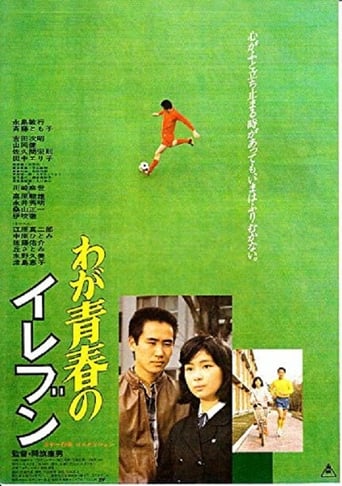 NR
NRSoccer movie.
Waga seishun no eleven
1979
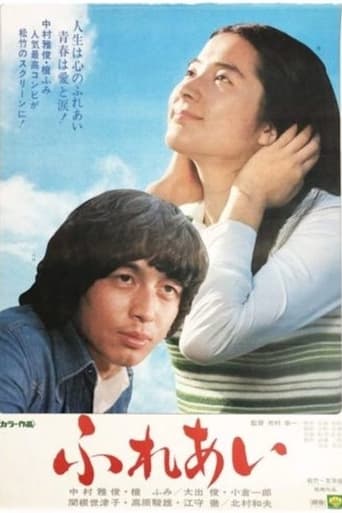 NR
NRNo synopsis available yet.
Touch of Love
1974
1960s · 26 titles
8.4After the Japanese defeat to the Russians, Kaji leads the last remaining men through Manchuria. Intent on returning to his old life, he faces great odds in a variety of different harrowing circumstances as he and his men sneak behind enemy lines.
The Human Condition III: A Soldier's Prayer
1961
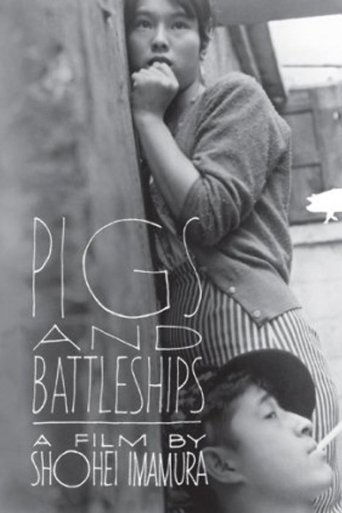 7.1
7.1In the city of Yokosuka, Kinta and his lover Haruko, both involved with yakuza, brave the post-occupation period with a goal to be together.
Pigs and Battleships
1961
 7.3
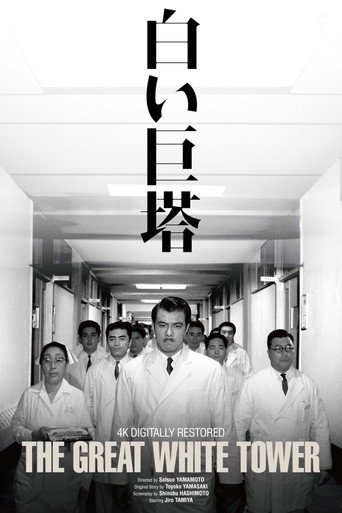
7.3The story contrasts the life of two doctors, former classmates and now both assistant professors at Naniwa University Hospital in Osaka. The brilliant and ambitious surgeon Goro Zaizen stops at nothing to rise to a position of eminence and authority, while the friendly Shuji Satomi busies himself with his patients and research.
The Great White Tower
1966
 6.5
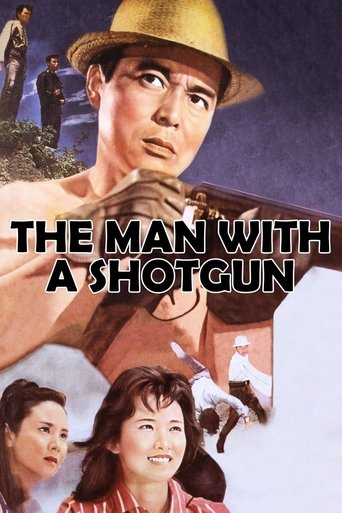
6.5Ryoji, a wanderer, arrives in a remote mountain town, carrying a shotgun and claiming to be a hunter. He quickly becomes embroiled in a web of trouble surrounding the town's mill.
The Man with a Shotgun
1961
 7.7
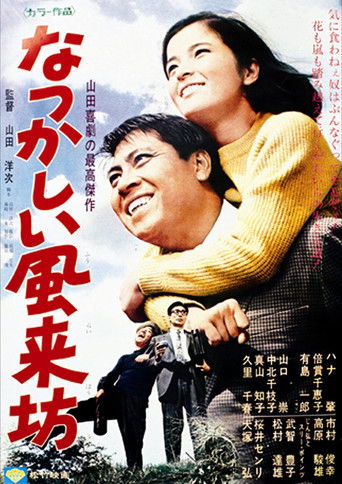
7.7Saotome is a white-collar worker on the brink of a burnout who one day strikes up a friendship with Gen, a boorish drifter who approaches life one day at a time.
The Lovable Tramp
1966
 NR
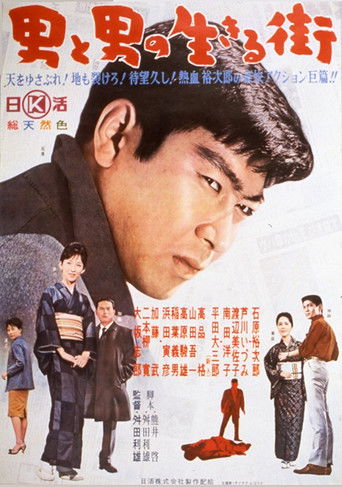
NR1962 Japanese movie
Otoko to otoko no ikiru machi
1962
 7.6
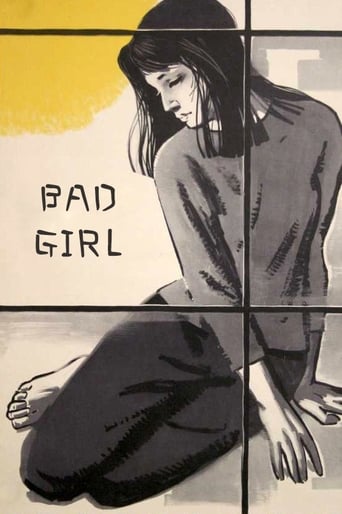
7.6Wakae is a 15 year old girl who lived under the same roof with her alcoholic father and stepmom. Her mother had died years ago. She spends her nights at a rundown bar, sharing drinks and cigarettes with the lowlife drunks. She has nowhere to turn and no one to talk to, until she is reunited with her childhood friend, Saburo, who brings warmth to her heart.
Bad Girl
1963
 10.0
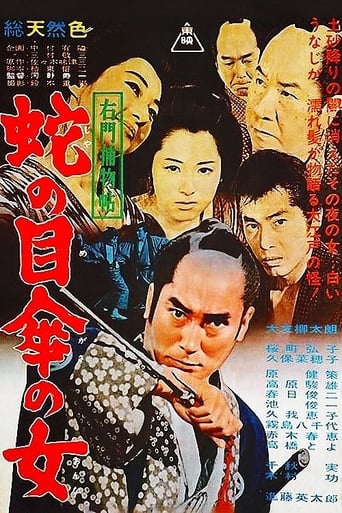
10.0Ryutaro Otomo as the Edo magistrate Umon Kondo is out to solve a crime that centers around the murder of a jail guard & the escape of a criminal who is later himself killed. His dying words in Umon's arms were, "I didn't kill the guard." The murdered criminal had been a safe-cracker & only his girlfriend knows where he hid a fortune. She is kidnapped, so the plot gets thicker & thicker.
Cases of Umon: The Woman with an Umbrella
1963
 NR
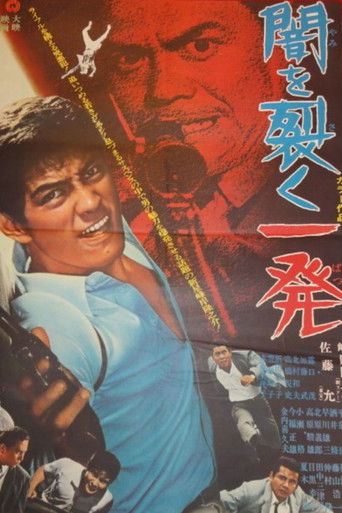
NRA 72-hour story about a group of rookie police officers and detectives who are candidates for the Mexican Olympic team and are in training camp for shooting competition, as they hunt down a violent criminal.
Trigger-Happy
1968
 NR
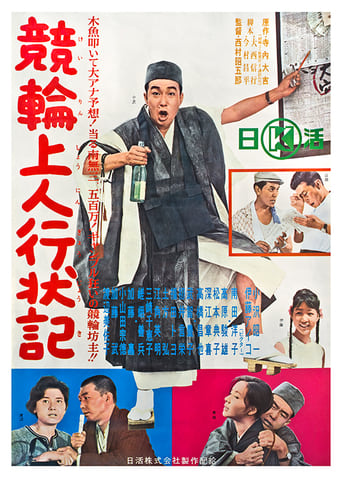
NROne summer day, the chief monk of the Hojuin Temple dies. Harumichi rushes back to town hearing about his brother's death and requests for a grand funeral. He had been unwilling to take over the family business and had chosen a life as a middle school teacher far away from home, but considering the circumstances, he changes his mind. As the new chief of Hojuin, Harumichi scrambles around day after day for donations. He has kept strictly to the straight and narrow, until he passes a bicycle race track where the sounds of cheering fans induce him into a new way of life...
The Gambling Monk
1963
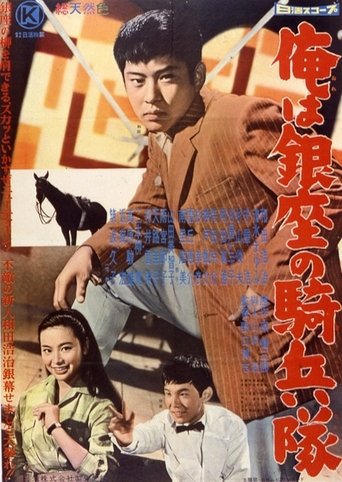 NR
NRA youth film starring Kōji Wada and Mayumi Shimizu
Ore wa Ginza no kiheitai
1960
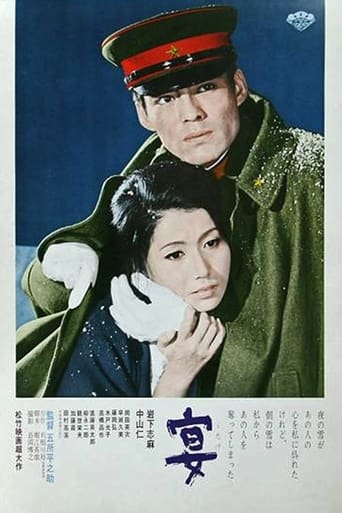 8.0
8.0Suzuko, a woman in her twenties who has a brother with political problems (due to communist reprisals), lives for over five years in a love affair with Tate who's a young lieutenant in the Army, ultimately becoming a right-wing fundamentalist revolutionary. She marries another man, one totally dedicated to the rigorous practices of Noh theatre, in an arranged marriage, but the bond that connects her with Tate is too strong.
Rebellion of Japan
1967
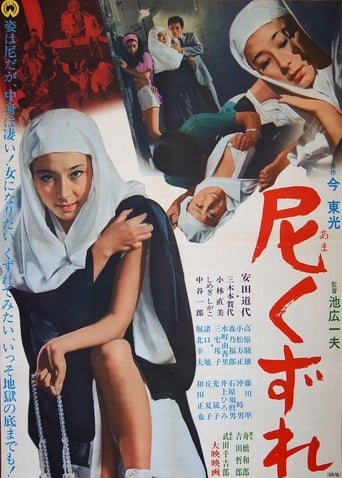 8.0
8.0One of the nuns at Senjuan is Sister Shunko (Michiyo Yasuda). Unlike the usual nun, however, she often goes out to see the world, being of the opinion that nuns should not lead cloistered lives but should see something of modern life. She makes the acquaintance of a young girl named lkuko (Kayo Mikimoto) and saves her from the advances of a gangster named Goro (lchiro Nakatani). In the meantime she turns down several propositions and, in revenge, one of her admirers denounces her to the Mother Superior (Kuniko Miyake). This lady is of liberal views, however, and refuses to do anything about it. Then Shunko is visited by Goro's gang boss who wants lkuko back and says he will blackmail Shunko unless she agrees.
The Daring Nun
1968
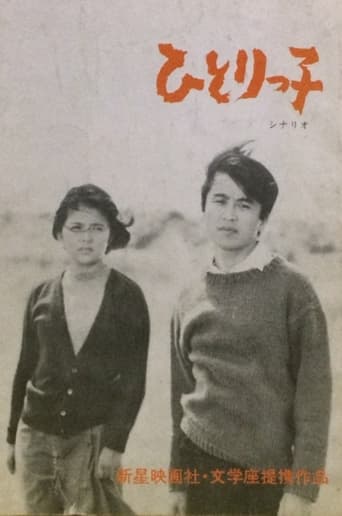 NR
NRNo synopsis available yet.
Only Child
1969
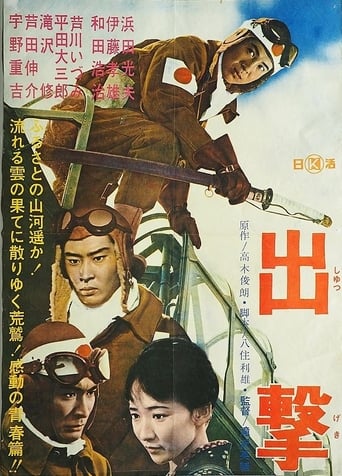 NR
NRAn original warrior directed by Toshio Takagi, directed by Eisuke Takizawa of “Kiriko's Tango” by Toshio Yasumi, a comedy, cheerful widow. The photo was taken by Minoru Yokoyama from “Asakusa no Toko Odoriko Monogatari”
Shutsugeki
1964
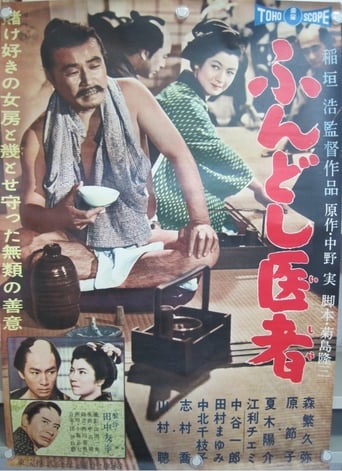 8.5
8.5A skilled country doctor's talents are such that he can even perform operations as difficult and novel as removing a patient's kidney for the first time in Japan. Unfortunately for him, however, his wife's addiction to gambling is of such a magnitude that he is down to selling his underwear to make money. The image sticks and he becomes known as the 'underwear doctor.' On the other hand, his successful surgery's patient is so grateful he himself wants to become a physician.
Life of a Country Doctor
1960
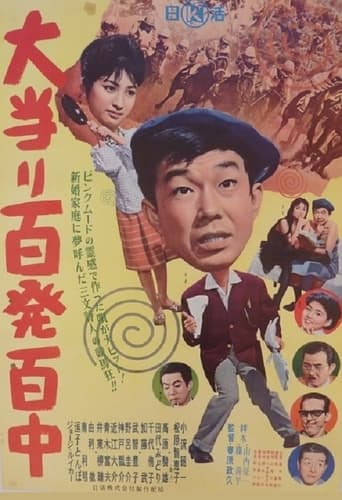 NR
NR1961 Japanese movie
Ōatari hyappatsuhyakuchū
1961
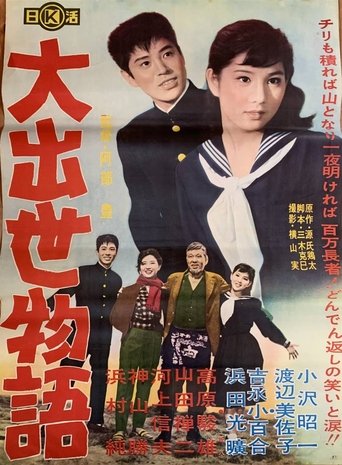 NR
NR1961 Japanese movie
Dai shusse monogatari
1961
A suspense comedy about thieves starring Kazuo Funaki.
Dorobō Sodachi Dorobōi
1968
 NR
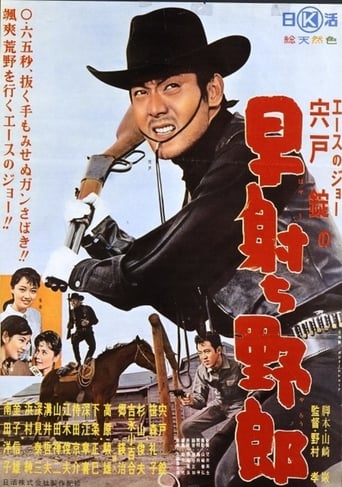
NROne day, a lone horseman rides into town with a wounded man strapped behind him. Joe, the Ace, had captured one of the bandits who had held up the armored payroll car headed for the dam construction site, takes the wounded man to the police and claims the reward offered. He is told to wait until the driver of the armored car returns to identify the bandit and goes over to the Blue Star where he is introduced to Mishima, the owner of the cabaret, who is highly respected in the town. Joe then meets Saburo, while fishing, and his lovely sister, who seem to sense the real man beneath the rough appearance and take him into their home. Word reaches Joe that the bandit he'd captured had been shot and he hurries over to the hospital.
Quick Draw Joe
1961
 10.0
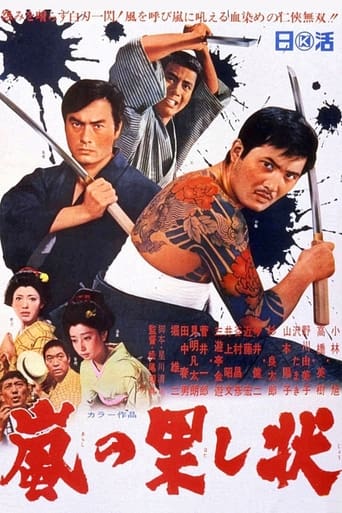
10.0It is the Taisho era in Japan. A man has quit the Yakuza after five years and returned to Shikoku in order to begin his life anew as a ferryman. His boss, however, became ill and the boat is taken due to unpaid debts to the local thugs. His new life has not begun well and he is determined to rebuild the shattered business. The Yakuza, however, have added the ferry business to the rest of their portfolio of local concerns.
Duel in the Storm
1968
 NR
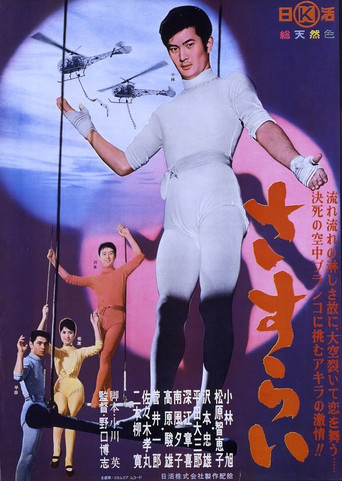
NRSatake Shoji had been a trapeze artist in the Ezaki Circus, but when Shingo, his team mate, slipped and fell to his death, he had felt responsible and, sick at heart, left the circus for a life at sea. On land again Shoji goes to a cabaret where he is soon involved in a brawl. Kasamatsu, the owner of the cabaret, impressed by Shoji's strength, offers him a job as his bodyguard. The next morning Shoji visits Shingo's grave and meets Miyako, Shingo's former sweetheart, who is still a trapeze performer and now the star of the Kuroko Circus which Shoji realizes Kasamatsu intends to control.
Love in the Air
1962
 NR
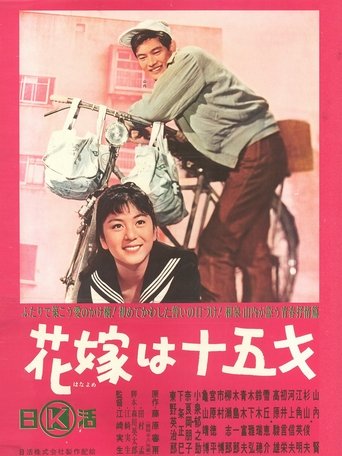
NRHanayome wa Jūgo-sai, directed by Mio Ezaki and distributed by Nikkatsu, stars Masako Izumi and Ken Yamauchi. The high-key pink background and casual photographic portrait embody Nikkatsu’s 1960s youth-film aesthetic. Clean, hopeful, and pop-oriented. The large white title, handwritten for a softer impression, injects playful energy that contrasts with the strict vertical text blocks. As Japan’s youth culture blossomed after the 1964 Tokyo Olympics, posters like this captured the spirit of romance and rebellion marketed to teenage audiences. The vivid color palette and carefree composition signal a stylistic shift from postwar black-and-white melodrama to the vibrant optimism of modern Technicolor cinema.
The Bride is Fifteen
1964
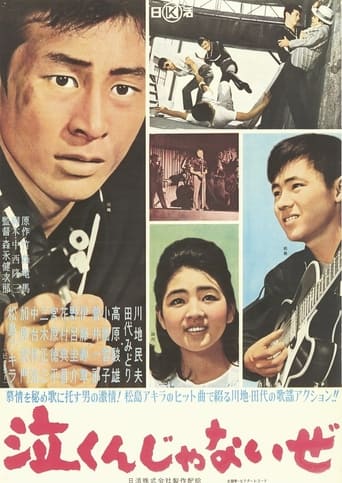 NR
NR1962 Japanese movie
Naku n janai ze
1962
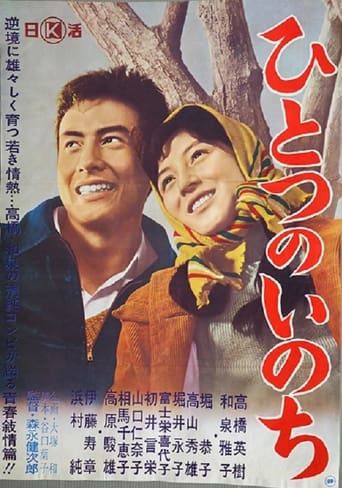 NR
NR1962 Japanese movie
Hitotsu no inochi
1962
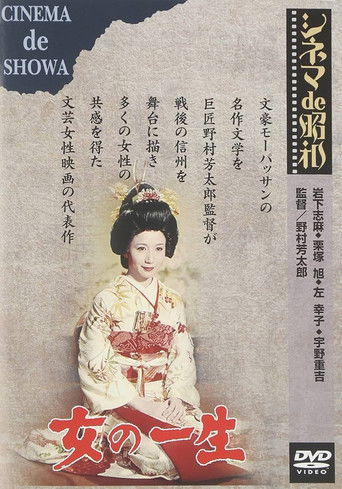 NR
NRNo synopsis available yet.
Onna no issho
1967
1950s · 23 titles
8.5A samurai answers a village's request for protection after he falls on hard times. The town needs protection from bandits, so the samurai gathers six others to help him teach the people how to defend themselves, and the villagers provide the soldiers with food.
Seven Samurai
1954
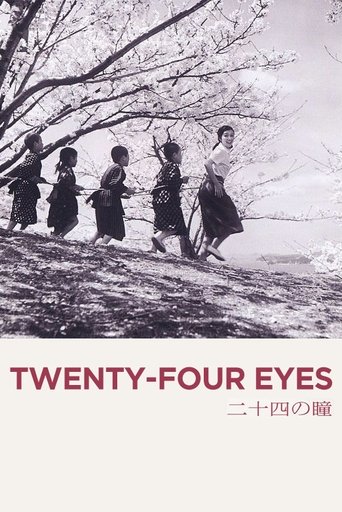 7.7
7.7From 1928 to 1946, the lives of 12 young people and their school teacher in a poor Japanese village are profoundly affected by historical events and personal circumstances.
Twenty-Four Eyes
1954
 7.0
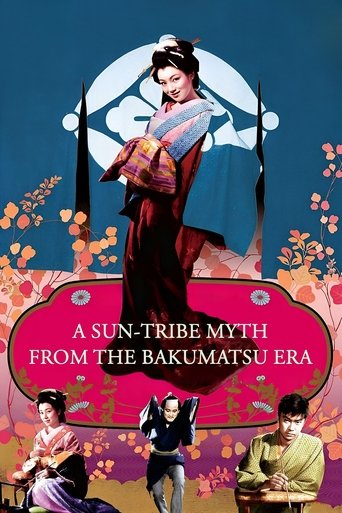
7.0Saheji, a man-about-town, gets stuck at a high-class brothel when he can’t pay the bill. He makes the best of his situation by performing various tasks amidst the tumult of the end of the shogunate—but always by making sure to get a “commission” for his troubles.
A Sun-Tribe Myth from the Bakumatsu Era
1957
 10.0
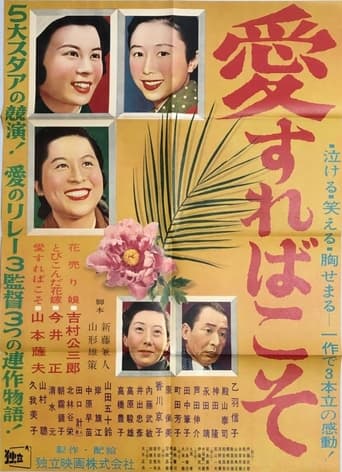
10.0The film consists of three short stories. Tomiko, the heroine of the first story, "The Flower Girl" (dir. Kozaburo Yoshimura), is a little girl who bears the unbearable burden of caring for her family. Tomiko's father has been unable to find work for a long time, and her older sister is terminally ill—it is unlikely that she will ever recover. To feed her family, Tomiko runs around the city from morning until late at night selling flowers... The second novella (dir. Tadashi Imai) also depicts the lives of the poor. An unfamiliar girl brings young Kavano a letter from his mother. It turns out that the girl's name is Kuniko, she is very hardworking, but her family is dying of hunger. Therefore, her mother decided to send Kuniko to her son so that he would marry her. The short story is called "The Unexpected Bride." The third short story, which gave the film its title, is particularly interesting: "When You Love" (dir. Satsuo Yamamoto). It shows the family of a young peace activist.
If Indeed One Loves
1955
 7.0
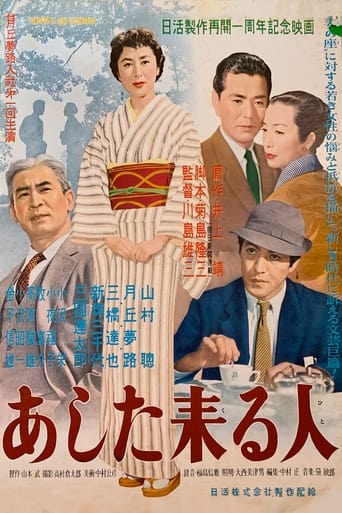
7.0Jiro Sone sacrifices all comfort to devote himself to research. Young housewife Yachiyo is disappointed with her husband Kappei, who is more attracted to mountain climbing and another girl. When Yachiyo’s father is introduced to Jiro, all of their lives become intertwined...
Till We Meet Again
1955
 8.5
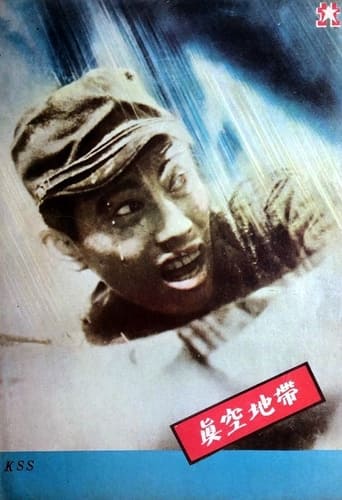
8.5Just before the end of the war, Japanese soldier Kitani is released from prison, having served his term for theft. Told in flashback, viewers learn about Kitani's past and reasons behind his prison sentence.
Vacuum Zone
1952
 6.6
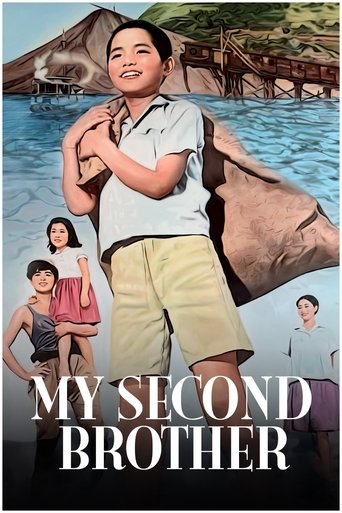
6.6The film tells the story of four orphans living in an impoverished mining town. An adaptation of a best-selling book based on the diary of a ten-year-old zainichi (ethnic Korean Japanese) girl, it was one of the first films to deal with the subject of zainichi identity and struggles in Japan.
My Second Brother
1959
 6.2
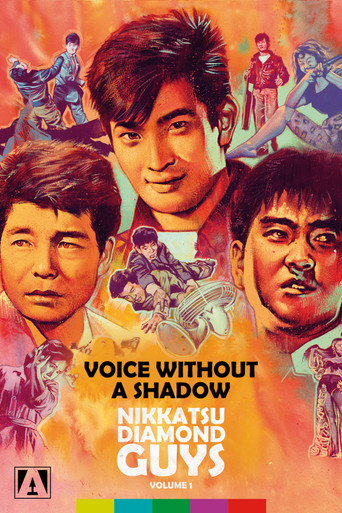
6.2Asako, a former telephone operator once heard the voice of a murder suspect which has continued to haunt her. Years later her husband invites his boss, Hamazaki, over for dinner and she realises his voice is suspiciously like that of the killer. Before she can investigate further, Hamazaki is found dead and her husband becomes the prime suspect.
Voice Without a Shadow
1958
 7.0
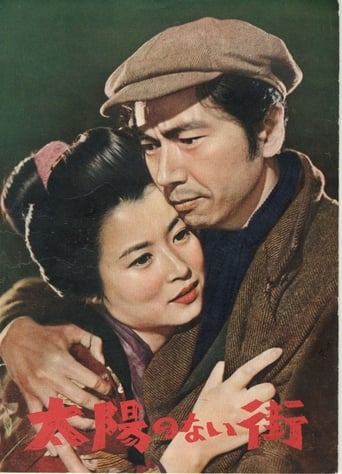
7.0Based on the novel by proletarian writer Sunao Tokunaga. The story is about a long strike by workers at a large printing house and the strikers' steadfastness, which neither hunger nor violence could break. The heroine of this story actively participates in her colleagues' struggle against layoffs, oppression, and police brutality.
The Street Without Sun
1954
 9.0
9.0No synopsis available yet.
The Sacrifice of the Human Torpedoes
1955
 8.0
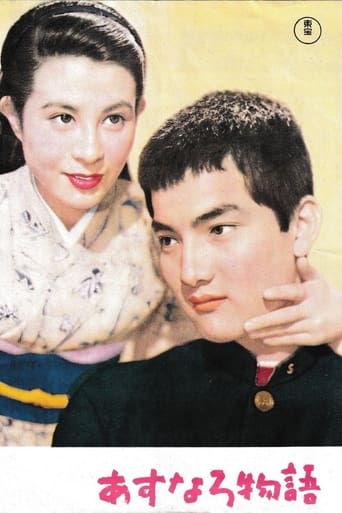
8.0No synopsis available yet.
Tomorrow I'll Be a Fire-Tree
1955
 6.7
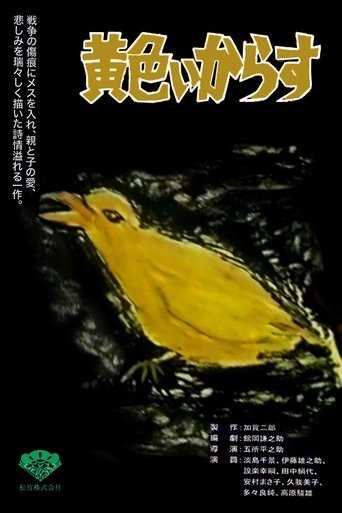
6.7Ichiro Yoshida, the father of the boy Kiyoshi, who has been repatriated from China, returns home after a ten-year separation. The father, who has been estranged from his son for many years, pays no attention to the boy, often punishes him unfairly, and gives all his tenderness to his little daughter, who was born after his return. The boy sees all the injustice of his father and, offended, leaves home. The father realized that he was wrong, that he was guilty before his son. The mother finds the boy and brings him home. The father and the son become friends from that day on.
Yellow Crow
1957
 5.9
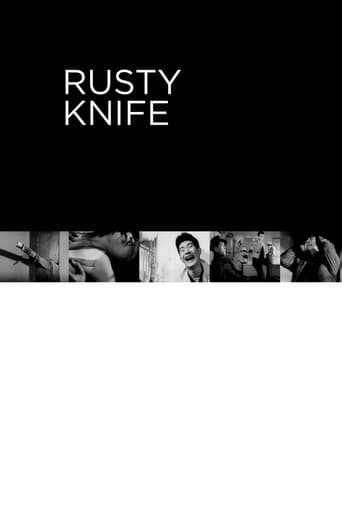
5.9Udaka is a new, post-war city where corruption has already taken hold. A persistent district attorney wants to arrest and convict Katsumata, a laughing, self-confident thug. The D.A. gets an anonymous letter about the suicide five years' before of a city council member. Evidence about the case leads the D.A. to Tachibana, struggling to go straight after involvement with the mob and a prison sentence for killing the man responsible for the rape and suicide of his fiancée. One of Tachibana's friends is Keiko, the daughter of the dead councilman and the ward of another powerful official. How do these stories connect?
Rusty Knife
1958
 7.0
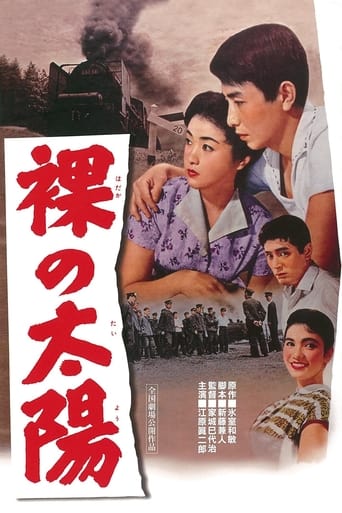
7.0A young, struggling couple are making every sacrifice so they will one day in the not-too-distant-future, have enough money to get married. As they have agreed on this procedure, it comes as a shock to the young woman to find out from her husband-to-be that he just loaned all the money they had saved to a friend. She is understandably miffed, and a big disagreement results. But after some time goes by, she discovers why the friend needed the money so badly, and the couple are back on solid footing again.
The Naked Sun
1958
 7.3
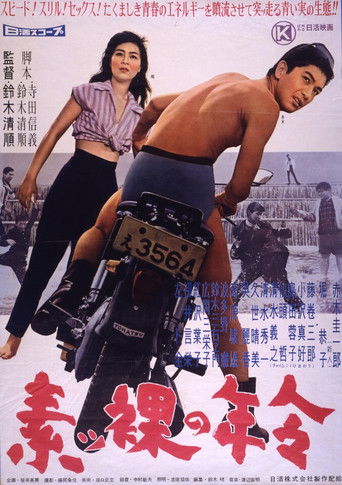
7.3The story deals with a juvenile delinquent gang surviving through petty thievery. However, everything gets screwed up when they accidentally steal big bucks from the Yakuza.
Age of Nudity
1959
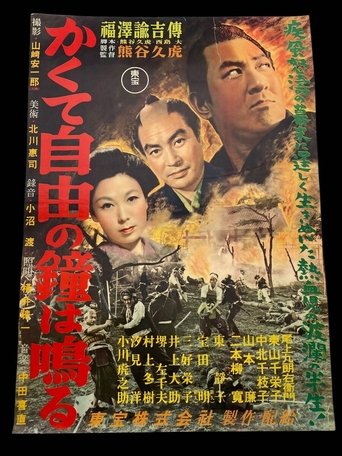 NR
NRSet during Japan's Bakumatsu period, the film follows Fukuzawa Yukichi, a poor samurai's son who defies societal norms to study Dutch and English. Despite facing opposition from his family and nationalist factions, he founds Keio University, becoming a key figure in Japan's modernization amid political turmoil.
How the Bell of Liberty Rings
1954
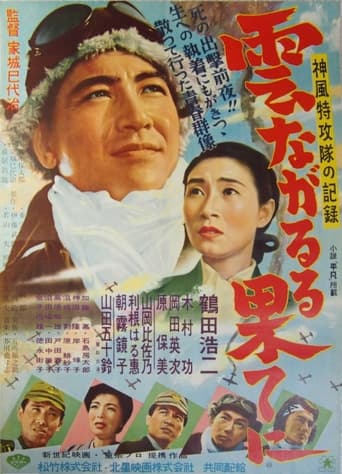 NR
NRA movie that depicts the tragic fate of many Yokaren flight-academy pilots.
At the End of the Clouds
1953
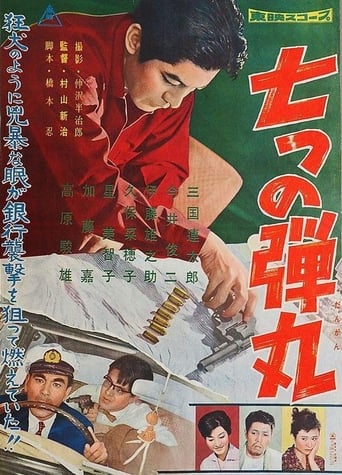 NR
NRA year ago, Tetsuo Yazaki was unemployed and wanted money, attacked a police box in Kobe, robbed a policeman of his pistol, attacked Hamamatsu OS Theater and Nagoya Shinwa Bank, and succeeded in robbing a large amount of money.
The Murderer Must Die
1959
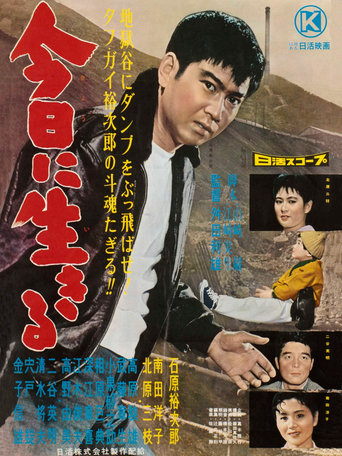 NR
NRIn a fictional mining city in northern Kanto, a Tokyo drifter named Shiro (Ishihara Yūjirō), caught in a conflict between two transportation companies, plays the role of both the good and bad guy.
We Live Today
1959
 5.9
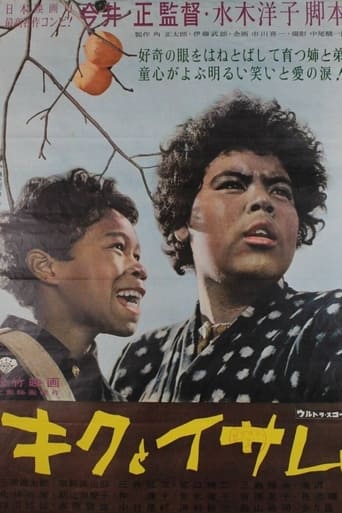
5.9Kiku and her brother Isamu are social outcasts, children of a prostitute mother and black GI father, in postwar Japan.
Kiku and Isamu: Two Siblings Born in Japan
1959
 10.0
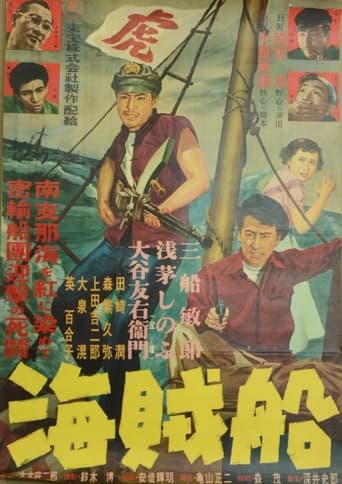
10.0No synopsis available yet.
Pirates
1951
 NR
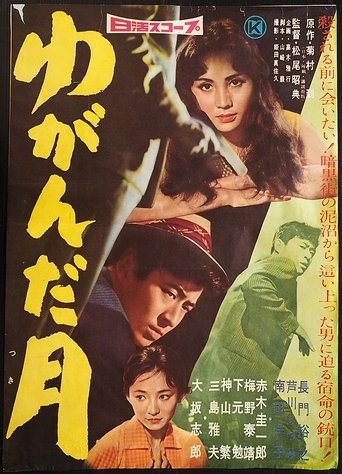
NRNo synopsis available yet.
Yuganda tsuki
1959
 7.5
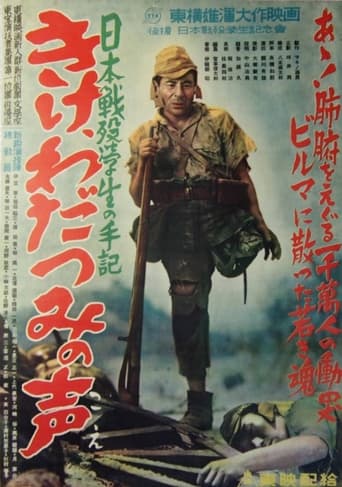
7.5This film is strongly anti-war film. The film is based on the collection of writings by Japanese student soldiers who died during World War II. The film is located to Burma. It shows the everyday problems of soldiers in contrast of their ideas and the cynicism of their commanders. Soldiers are also victims of military bullying by their commanders.
Listen to the Voices of the Sea
1950
Series credits
8.3A powerful terrorist organization known as the Black Cross Army threatens to destroy the Earth, with only the defense organization EAGLE (EArth Guard LEague) able to oppose them. In retaliation, Black Cross Army destroys multiple EAGLE headquarters across Japan, killing all but five people. Now, these five remaining EAGLE members are called to form a secret, powerful team known as Gorenger, the only force left that has a chance to stop the Black Cross Army and their evil leader, Black Cross Führer.
Himitsu Sentai Gorenger
1975
8.8Denzimen are warriors who fight against the Vader Clan, a clan that tries to pollute the Earth with sludge. Denzimen fight using the Super Science of the Denzi people.
Denshi Sentai Denziman
1980
8.0Monjiro was born into a poor farm family in Mikazuki Village, Nitta County, Ueshu, and abandoned his hometown when he was 10 years old. He has been traveling aimlessly with a long toothpick in his mouth. Monjiro avoided getting involved in anything, but wherever he went, he ended up getting involved in incidents
Kogarashi Monjiro
1972
NRA story that tackles the life experience and mental issues that plague the PTU officers from the perspective of a former undercover cop who returns to the force. After successfully bringing down the triads, Gao Jiasheng (Raymond Lam) goes back to wearing the police badge and crosses paths with Sergeant He Huiling (Charlene Choi) and Team Leader Liu Jianhui (Alex Fong). The three have their share of misgivings, but learn to build trust and friendship through a series of dangerous missions.
Police Tactical Unit
2019