

Directing
Hollis Frampton
Born — Died
1936-03-11 — 1984-03-30
Place of birth
Wooster, Ohio, USA
Known for
Directing
Credits
49 titles
Hollis Frampton is known for the broad and restless intelligence he brought to the films he made, beginning in the early '60s, until his death in 1984. In addition to being an important experimental filmmaker, he was also an accomplished photographer and writer, and in the 1970s made significant contributions to the emerging field of computer science. He is considered one of the pioneers of what has come to be termed structuralism, an influential style of experimental filmmaking that uses the basic elements of cinematic language to create works that investigate film form at the expense of traditional narrative content. Along with Michael Snow and Stan Brakhage, he is one of the major figures…
Known for
 7.8
7.8A compilation of over 30 years of private home movie footage shot by Lithuanian-American avant-garde director Jonas Mekas, assembled by Mekas "purely by chance", without concern for chronological order.
As I Was Moving Ahead Occasionally I Saw Brief Glimpses of Beauty
2000
 NR
NRHome movies shot on Super 8mm by W+B Hein over 10 years.
Home Movies 1971-81
1985
 NR
NRDuring the 1970s I shot, helped to make, or commissioned about ten document films, mainly about film-makers. This film is one of them. It was made with Dan Ochiva, who acted as cameraman on about half of the footage. I shot the rest, and then edited the film. It is a record of a conference held at the State University of New York at Buffalo on March 22-25, 1973. Among the participants filmed were Gerald O'Grady (who organized the conference), Will Hindle, Stan Brakhage, Jonas Mekas, Robert Creeley, Bruce Baillie, Scott Bartlett, Hollis Frampton, Ken Jacobs, Ed Pincus, Stan Vanderbeek, Ed Emshwiller, Sally Dixon, James Cox. This footage will eventually become part of my film PEOPLE, PLACES, THE 1970S. –R. H.
Notes on the Buffalo Conference: “Autobiography in American Independent Cinema”
1973
 6.4
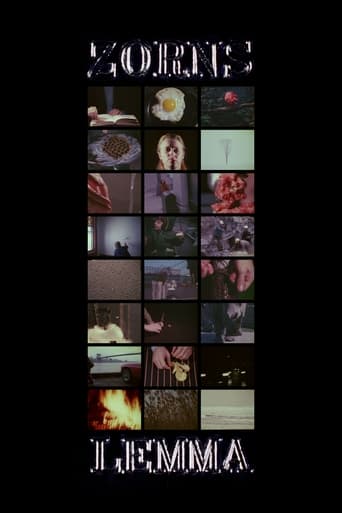
6.4Zorns Lemma is a 1970 American structural film by Hollis Frampton. It is named after Zorn's lemma (also known as the Kuratowski–Zorn lemma), a proposition of set theory formulated by mathematician Max Zorn in 1935. Zorns Lemma is prefaced with a reading from an early grammar textbook. The remainder of the film, largely silent, shows the viewer an evolving 24-part "alphabet" (where i & j and u & v are interchanged) which is cycled through, replaced and expanded upon. The film's conclusion shows a man, woman and dog walking through snow as several voices read passages from On Light, or the Ingression of Forms by Robert Grosseteste.
Zorns Lemma
1970
 5.4
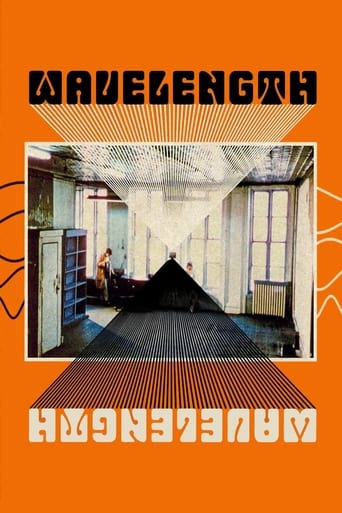
5.4In a Lower Manhattan industrial loft, a camera very slowly zooms into a photograph on a wall while various people occasionally enter and exit.
Wavelength
1967
 5.0
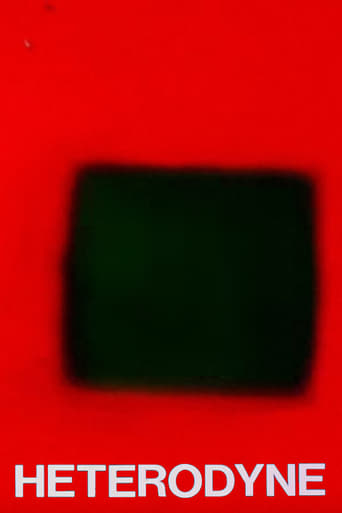
5.0“Geometric animation made entirely by sculptural methods: cutting, punching, welding colored leader. HETERODYNE is related to some of my other work as RNA to a protein or polypeptide. It was made in abject (if blissful) ignorance of Paul Sharits’ early work.” –Hollis Frampton
Heterodyne
1967
Film credits
2000s · 2 titles
7.8A compilation of over 30 years of private home movie footage shot by Lithuanian-American avant-garde director Jonas Mekas, assembled by Mekas "purely by chance", without concern for chronological order.
As I Was Moving Ahead Occasionally I Saw Brief Glimpses of Beauty
2000
 NR
NRA recording of a meeting in the studio where Jeffrey Schier and Woody show colleagues and teachers a new tool. Between 1976 and 1980, Woody and Schier designed a prototype device, the Vasulka Imaging System, or Digital Image Articulator. It was one of the first digital audiovisual tools to generate image algorithms and convert them to an analog signal. In the 1970s and 1980s, the Department of Media Study at the State University of New York at Buffalo became one of these places of, teaching and mediating, in the area of Media Art, developing into what was perhaps to the most influential school for media in the twentieth century. Teaching there under the leadership of the founder Gerald O’Grady were the (meanwhile canonized) structuralist, avantgarde filmmakers Hollis Frampton, Tony Conrad, and Paul Sharits, documentary filmmaker James Blue, video artists Steina and Woody Vasulka, and Peter Weibel.
Funtime at the Vasulkas
2006
1980s · 3 titles
NRHome movies shot on Super 8mm by W+B Hein over 10 years.
Home Movies 1971-81
1985
 8.4
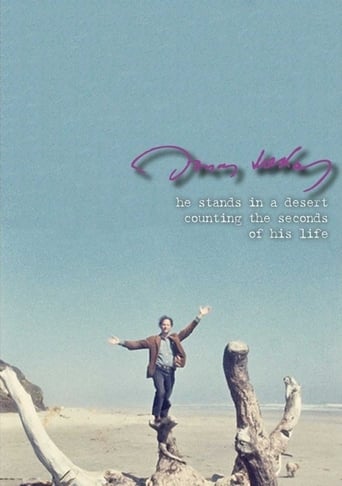
8.4A film collage tracing the story of the lives, loves, and deaths within the artistic community surrounding Jonas Mekas.
He Stands in a Desert Counting the Seconds of His Life
1986
 6.5
6.5Joyce Wieland: “Hollis and I came back to Toronto on holiday in the summer of '67. We were staying at a friend's house. We worked our way through the city and eventually made it to the island. We followed each other around. We enjoyed ourselves. We said we were going to make a film about each other - and we did”. A & B in Ontario was completed eighteen years after the original material was shot. After Frampton's death, the film was assembled by Wieland into a cinematic dialogue in which the collaborators shoot each other with cameras.
A and B in Ontario
1984
1970s · 3 titles
NRDuring the 1970s I shot, helped to make, or commissioned about ten document films, mainly about film-makers. This film is one of them. It was made with Dan Ochiva, who acted as cameraman on about half of the footage. I shot the rest, and then edited the film. It is a record of a conference held at the State University of New York at Buffalo on March 22-25, 1973. Among the participants filmed were Gerald O'Grady (who organized the conference), Will Hindle, Stan Brakhage, Jonas Mekas, Robert Creeley, Bruce Baillie, Scott Bartlett, Hollis Frampton, Ken Jacobs, Ed Pincus, Stan Vanderbeek, Ed Emshwiller, Sally Dixon, James Cox. This footage will eventually become part of my film PEOPLE, PLACES, THE 1970S. –R. H.
Notes on the Buffalo Conference: “Autobiography in American Independent Cinema”
1973
 7.5
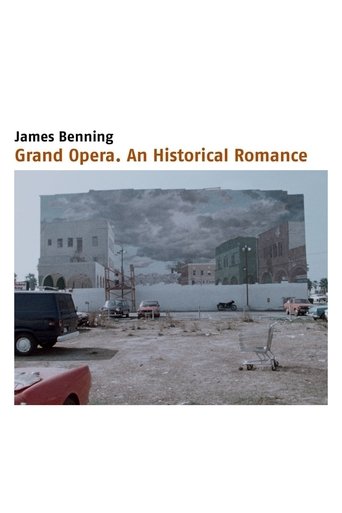
7.5Grand Opera marks a stock-taking of Benning's work and his life, presenting a personal and artistic autobiography woven together with a series of events dealing with the historical development of the number pi, Benning's travels, and homages to Michael Snow, Hollis Frampton, George Landow (Owen Land), and Yvonne Rainer.
Grand Opera: An Historical Romance
1979
 NR
NRBegins with landscape/sunset thru mist, ends with window sill.
Short Films 1975: #3 (Hollis Frampton)
1975
Behind the camera
6.4Zorns Lemma is a 1970 American structural film by Hollis Frampton. It is named after Zorn's lemma (also known as the Kuratowski–Zorn lemma), a proposition of set theory formulated by mathematician Max Zorn in 1935. Zorns Lemma is prefaced with a reading from an early grammar textbook. The remainder of the film, largely silent, shows the viewer an evolving 24-part "alphabet" (where i & j and u & v are interchanged) which is cycled through, replaced and expanded upon. The film's conclusion shows a man, woman and dog walking through snow as several voices read passages from On Light, or the Ingression of Forms by Robert Grosseteste.
Zorns Lemma
1970
5.0“Geometric animation made entirely by sculptural methods: cutting, punching, welding colored leader. HETERODYNE is related to some of my other work as RNA to a protein or polypeptide. It was made in abject (if blissful) ignorance of Paul Sharits’ early work.” –Hollis Frampton
Heterodyne
1967
Filmed in a slaughterhouse in South St. Paul, MN… Frampton utilizes a shooting strategy that flattens and pictorializes a palpable space of action that includes not only cattle (now seen hanging from huge meathooks), but even on occasion, figures.
Autumnal Equinox
1974
 NR
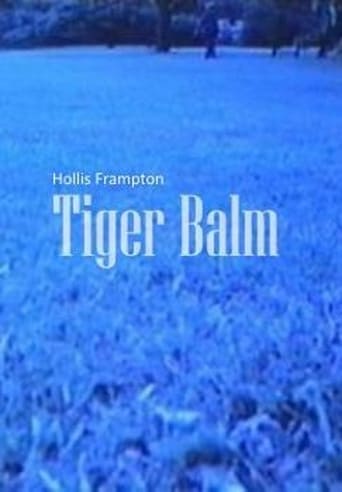
NR"After two years of massive didacticism in black-and-white [Hapax Legomena (1971-72)], I am surprised by Tiger Balm, lyrical, in color, a celebration of generative humors and principles, in homage to the green of England, the light of my dooryard… and consecutive matters." - HF
Tiger Balm
1972
 4.7
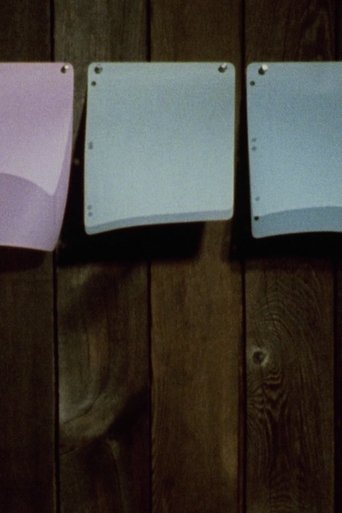
4.7A series of papers flutter in the wind.
Pan 4
1974
 4.6
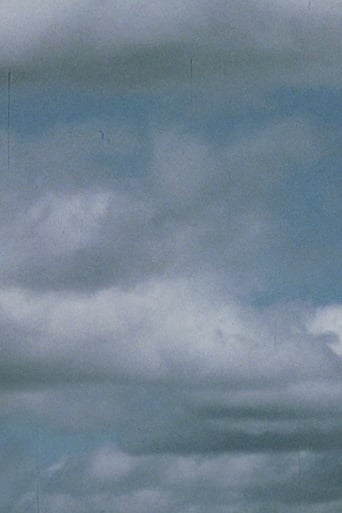
4.6Clouds roll by in a static haze.
Pan 0
1974
 NR
NR"The operations that dislocate a film like Summer Solstice– I hope irreparably– from being a movie about the locomotion and eating habits of cows, a dairy farm document, or what have you, are finally of a whole lot less concern to me than the following things: how it looks, the sense that probably it was done deliberately, the pleasure or displeasure– the intrigue, possibly– of attempting to retrieve the manner in which it was done while one is watching." -HF
Summer Solstice
1974
 4.9
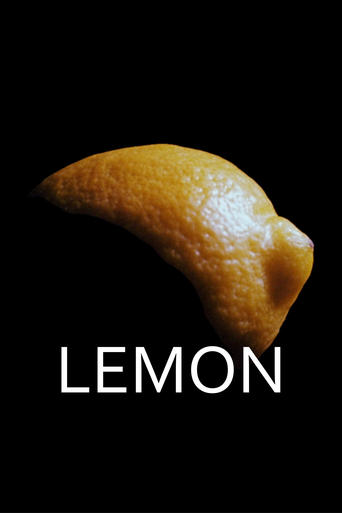
4.9Light begins to illuminate the small, nipple-like end of a lemon on the right edge of the frame and gradually spreads until the entire lemon is clearly visible. Then the light recedes across the frame.
Lemon
1969
 NR
NRFrampton on Apparatus Sum: "A brief lyric film of death, which brings to equilibrium a single reactive image from a roomful of cadavers."
Apparatus Sum
1972
 4.8
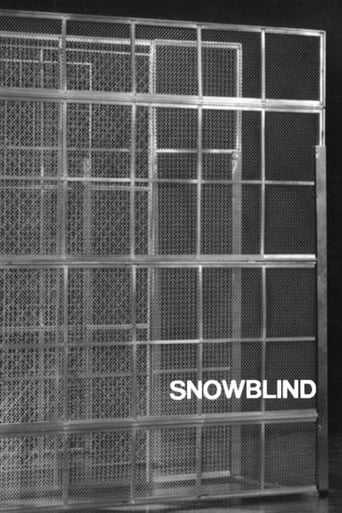
4.8"Homage to Michael Snow's environmental sculpture 'Blind.' The film proposes analogies, in imitation of three historic montage styles, for three perceptual modes mimed by that work." -HF
Snowblind
1968
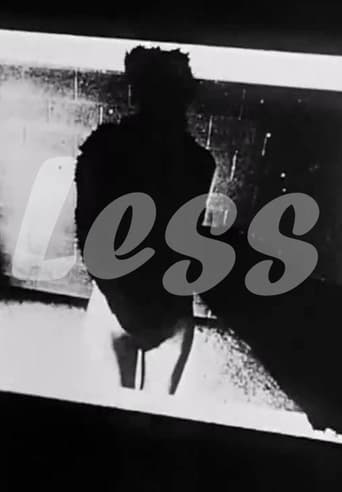 4.1
4.1"Near the end of 1973, Frampton realized that he had not finished a single film over the course of a year. He promptly conceived and executed LESS, a doubly punning work in which a minimalist Frampton generates a twenty-four frame (one-second) loop of the incremental blacking out of a nude image by photographer Les Krims." - Bruce Jenkins
Less
1973
 4.9
4.9An experimental short film by Hollis Frampton of contrasting colours.
Process Red
1966
 5.5
5.5A film in three parts: a man talking while a telephone rings, a walking tour of New York, and a goldfish swimming.
Surface Tension
1968
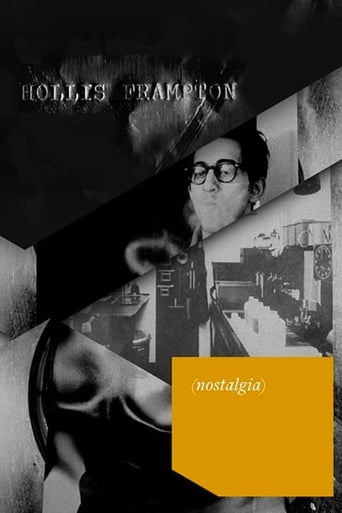 6.6
6.6Michael Snow narrates a series of Hollis Frampton's photographs (speaking as Frampton, in the first person)—as each picture catches fire on a hot plate.
Hapax Legomena I: (nostalgia)
1971
 5.0
5.0A journey through a field of corn.
Pan 3
1974
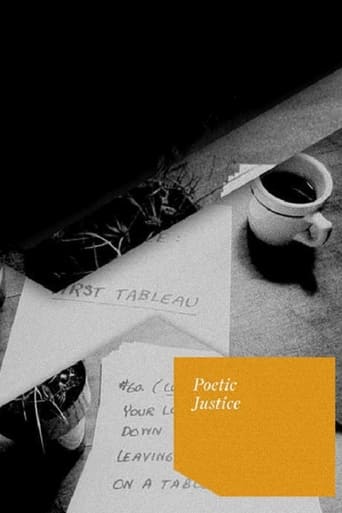 5.2
5.2Poetic Justice presents the viewer with an ordinary domestic scene: a stack of papers, a cup of coffee, and a potted cactus on a table. The sheets of paper compose a script that provides handwritten, frame-by-frame instructions for a film that unfolds only in the mind of the viewer.
Hapax Legomena II: Poetic Justice
1972
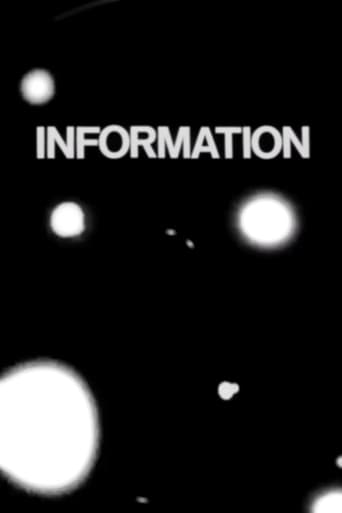 7.0
7.0Frampton on Information: "Hypothetical 'first film' for a synthetic tradition constructed from scratch on reasonable principles, given: 1) camera; 2) rawstock; 3) a single bare lightbulb. I admit to having made a number of splices."
Information
1966
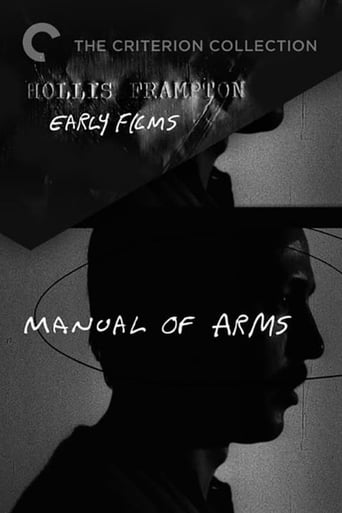 5.0
5.0In this "fourteen-part drill for the camera," Frampton created a portrait gallery of his art-world friends engaging in a variety of ordinary activities.
Manual of Arms
1966
 NR
NR"This film is composed of different and relatively commonplace subjects, but each image is a super-imposition ('double exposure') of two similar shots of the same subject, almost in the same position. The effect is amazing: one's gaze at the image becomes a double gaze, as the two images were made at different times and with slightly different framing. The viewer is engaged in a process of double-vision that returns him to image and subject in a manner more complex, more self-aware, and more temporal than the way most of us view photographs." - Fred Camper
Not the First Time
1976
An experimental short film from the Gates of Death series by Hollis Frampton.
Magellan: At the Gates of Death, Part I: The Red Gate I, 0
1976
 3.9
3.9The camera pans across a field of flowers at extreme speeds.
Pan 698
1974
 NR
NR“A portrait of the filmmaker, Paul Sharits, in particular response to energies he generated one May afternoon in 1971.” –Hollis Frampton
Yellow Springs (Magellan: Vanishing Point #1)
1972
 NR
NR"No, not the United etc. but the conditions, forms in which things exist. Somewhat abstracted, a solid, a liquid and a gas: salt, milk and smoke: falling, pouring and rising are the stars of this classical film. Sheets, streaks and wisps, the protagonists are all white (light). The background, zero place, is black (no light). Silence. The ongoing film reveals the ephemera compartmented in a pattern of temporal proportions in which lengths of salt sheet activity are gradually overtaken by liquid streaks which are in turn overtaken by smoke drifts. But another solid is the sliceable, arrangeable film material itself: the intercutting and the logic of the arrangement introduces something diamond-like, sculptural to the natures presented. There is a profoundly satisfying unity of ends and means that is both 'natural' (the way the protagonists behave) and 'artificial' (the artist's structure). The sum is cultured, beautiful." - Michael Snow
States
1967
 4.5
4.5An experimental short film which compares and contrasts the colors of carrots and peas.
Carrots & Peas
1969
 3.6
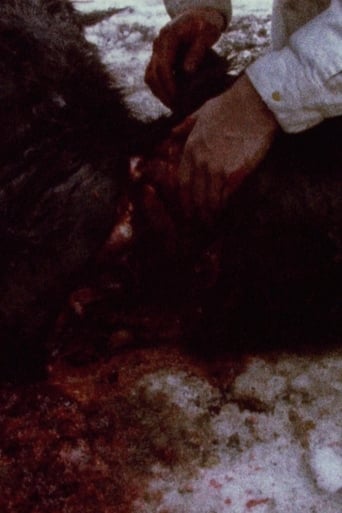
3.6A butchered cow is decapitated in this short film by Hollis Frampton.
Pan 697
1974
 NR
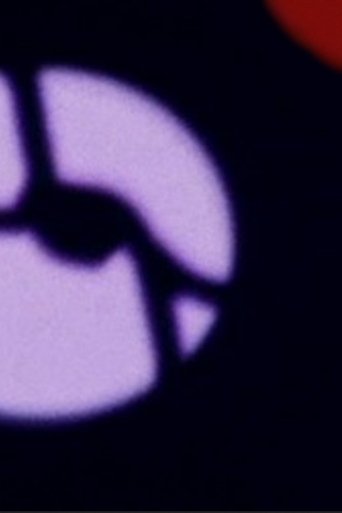
NROtherwise known as Magellan's Toys #1. Hollis Frampton's "Noctiluca" was a film designed to be shown on the second day of the Magellan cycle, the filmmaker's unfinished magnum opus work. The title (nox/luceo) means something that shines by night, i.e., the moon, and the film indeed consists of a bright sphere, sometimes white, sometimes tinted, sometimes single, sometimes doubled and overlapped.
Noctiluca
1974
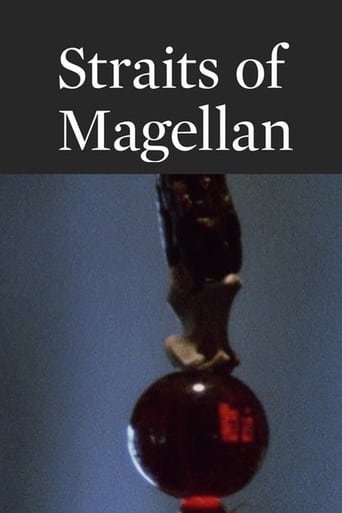 7.0
7.0A sampling of forty-nine fragments from Frampton's catalogue of 'actualities', the films from STRAITS OF MAGELLAN: "DRAFTS AND FRAGMENTS" are all silent and unedited. Several invoke, directly, the work of the Lumieres, as in Frampton's reworking of DEMOLITION D'UN MUR (1895) in which a dilapidated farm silo is demolished in place of the Lumieres' wall. He makes reference to his own work and plays homage to the work of contemporaries. A complex range of formal issues are raised in other fragments. Finally, Frampton offers a number of analogues for the act of filming and cinematic seeing that includes a series of appropriated 'lenses' ( a stone portal, a wooden silo) and a set of 'screens' a pool of water, curtains, a dusty window).
Straits of Magellan: "Drafts and Fragments"
1974
 NR
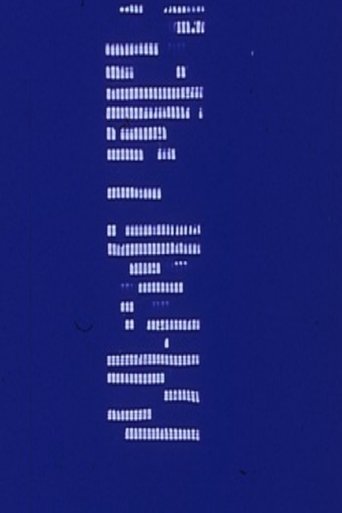
NR“An exquisite homage to O’Keeffe’s ‘Radiator Building, Night’.” –Mark Webber
For Georgia O'Keeffe
1976
 4.7
4.7Rain falls and reflects the light.
Pan 2
1974
 3.7
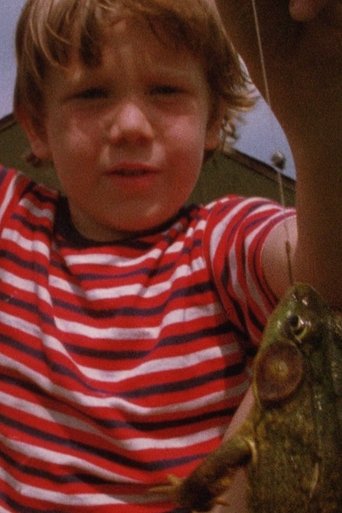
3.7A little boy celebrates his frog catch.
Pan 699
1974
6.5Joyce Wieland: “Hollis and I came back to Toronto on holiday in the summer of '67. We were staying at a friend's house. We worked our way through the city and eventually made it to the island. We followed each other around. We enjoyed ourselves. We said we were going to make a film about each other - and we did”. A & B in Ontario was completed eighteen years after the original material was shot. After Frampton's death, the film was assembled by Wieland into a cinematic dialogue in which the collaborators shoot each other with cameras.
A and B in Ontario
1984
 6.0
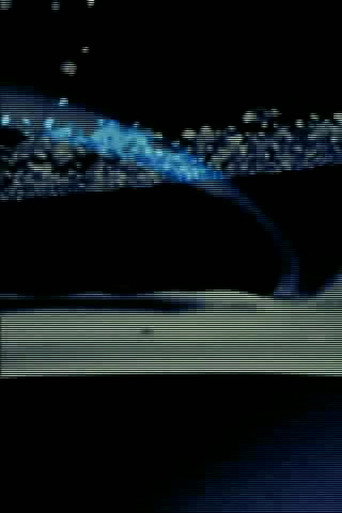
6.0While working at a photo lab, Frampton found that the waste at both ends of the rolls of processed film—where chemicals worked on the emulsion through clips used to attach the film to the machine—produced images far too interesting to be discarded. For Palindrome, Frampton selected images which he described as “tending towards the biomorphic,” resembling abstract surrealist painting. However, the rigid palindromic structure that Frampton imposes on the images—a motorized sequence based on “twelve variations on each of forty congruent phrases”—deviates from the subjective aesthetic of the expressive, demonstrating Frampton’s interest in the “generative power” of films composed by rules and principles.
Palindrome
1969
 6.4
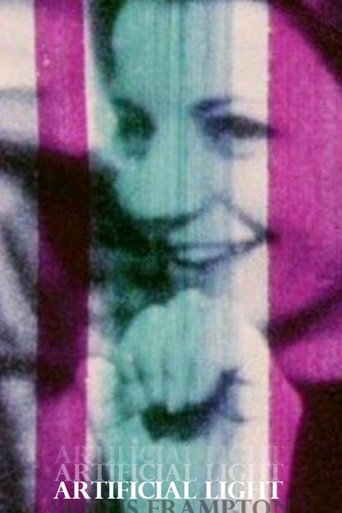
6.4Artificial Light repeats variations on a single filmic utterance twenty times. The same phrase is a series of portrait shots of a group of young New York artists talking, drinking wine, laughing, smoking, informally. The individual portrait-shots follow each other with almost academic smoothness in lap-dissolves ending in two shots of the entire group followed by a dolly shot into a picture of the moon... There is a chasm between the phrase and its formal inflections. That chasm is intellectual as well as formal. Frampton loves an outrageous hypothesis; his films, all of them, take the shape of logical formulae. -- P. Adams Sitney, Film Culture Reader
Artificial Light
1969
 4.9
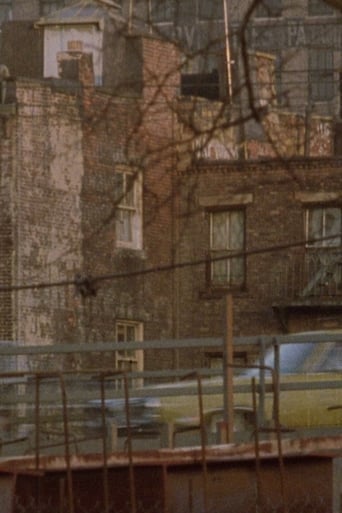
4.9A series of ghost-like vehicles drive by.
Pan 700
1974
 5.0
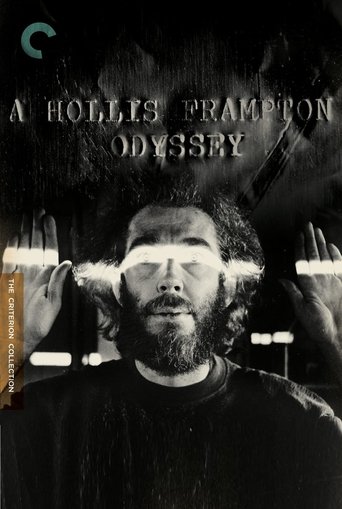
5.0An icon of the American avant-garde, Hollis Frampton made rigorous, audacious, brainy, and downright thrilling films, leaving behind a body of work that remains unparalleled. In the 1960s, having already been a poet and a photographer, Frampton became fascinated with the possibilities of 16 mm filmmaking. In such radically playful and visually and sonically arresting works as Surface Tension, Zorns Lemma, (nostalgia), Critical Mass, and the enormous, unfinished Magellan cycle (cut short by his death at age forty-eight), Frampton repurposes cinema itself, making it into something by turns literary, mathematical, sculptural, and simply beautiful—and always captivating. This collection of works by the essential artist—the first release of its kind—includes twenty-four films, dating from 1966 to 1979.
A Hollis Frampton Odyssey
2012
 NR
NR"In the final format for MAGELLAN, Frampton had planned to disassemble these two films into twenty-four 'encounters with death' that were to be shown in five-minute segments twice a month. In their present state, seen together and roughly the length of an average feature film, the two parts of MAGELLAN: AT THE GATES OF DEATH constitute perhaps the most gripping, monumental, and wrenching work ever executed on film...Frampton in 1971 began his filming of cedavers at the Gross Anatomy Lab at the University of Pittsburgh. He returned to the lab four times over the course of the next two years and then spent nine months assembling his 'forbidden imagery' into an extraordinary meditation upon death."–Bruce Jenkins
The Green Gate: Magellan at the Gates of Death, Part II
1976
 NR
NR"Strategy and imagery combat and aid each other in pairs. QUATERNION...a spatial figure of monumental attractions...interference...an undulating gyre. Hollis superimposes a fragmenting Muybridge-like grid of Cartesian elements (details of the fire ecscape outside the studio) against shots of rooftops superimposed in perfect scale with the billboard-like segments of an automobile, enlarged flower, and a spoon...panels of the 20' x 20' mural for the New York World's Fair in James Rosenquist's Broome Street studio–New York, mid-1960s."–Patrick Clancy
Quaternion
1976
 4.1
4.1Hollis Frampton alludes to origins and creation as he cuts between a garden featuring a bride and groom and an 1902 film entitled "A Little Piece of String."
The Birth of Magellan: Cadenza I
1977
 4.4
4.4A pendulum swings by until it comes to a complete stop.
Pan 1
1974
 NR
NR"In PUBLIC DOMAIN...(Frampton) recapitulates cinema's infancy in a series of direct quotes from such notable primitive works as RECORD OF A SNEEZE (FRED OTT'S SNEEZE) and SANDOW FLEXING HIS MUSCLES, two 1894 Edison kinetoscopic shorts, as well as literal pieces of cinematic juvenilia (child wading at the beach, another throwing a tantrum at home, three women merrily blowing bubble pipes, and the finale, a melodramatic weighing of a newborn attended by an anxious father, doctor, and nurse)–all readily retrievable/quotable fragments from our finite federal version of the 'infinite film,' the paper print collection at the Library of Congress."–Bruce Jenkins
Public Domain
1972