
Acting
Joseph Goebbels
Born — Died
1897-10-29 — 1945-05-01
Place of birth
Rheydt, Germany
Known for
Acting
Credits
74 titles
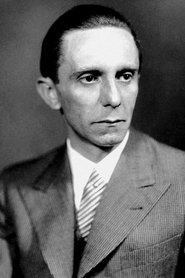
Paul Joseph Goebbels (German: [ˈpaʊ̯l ˈjoːzɛf ˈɡœbl̩s]; 29 October 1897 – 1 May 1945) was a German Nazi politician and philologist who was the Gauleiter (district leader) of Berlin, chief propagandist for the Nazi Party, and then Reich Minister of Propaganda from 1933 to 1945. He was one of Adolf Hitler's closest and most devoted followers, known for his skills in public speaking and his deeply virulent antisemitism which was evident in his publicly voiced views. He advocated progressively harsher discrimination, including the extermination of the Jews in the Holocaust.
Known for
 7.0
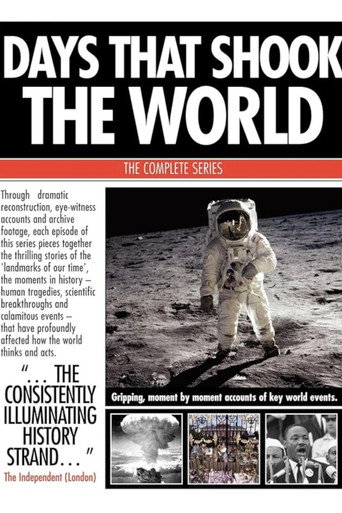
7.0Days That Shook the World is a British documentary television series that premiered on BBC Two on 17 September 2003. The programme features various milestones throughout history. It has been broadcast on the BBC, Discovery Channel UK, The History Channel and Viasat History. The series was also released on DVD by the Polish edition of Newsweek in 2007.
Days That Shook the World
2003
 8.3
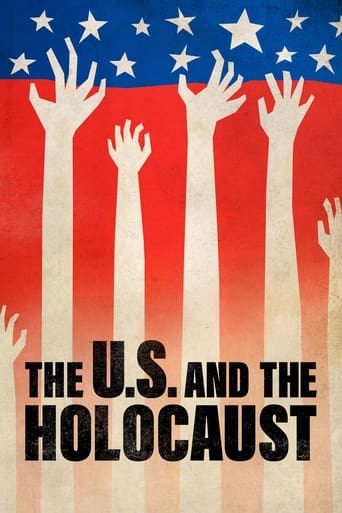
8.3Americans consider themselves a 'nation of immigrants', but as the catastrophe of the Holocaust unfolds in Europe, the U.S. prove unwilling to open its doors to more than a fraction of the hundreds of thousands of desperate refuge seekers. Through riveting firsthand testimony of witnesses and survivors who as children endured persecution, violence and flight as their families tried to escape Hitler, this three-part documentary series delves deeply into the tragic human consequences of public indifference, bureaucratic red tape and restrictive quota laws in America. Did the nation fail to live up to its ideals? This is a history to be reckoned with.
The U.S. and the Holocaust
2022
 7.6
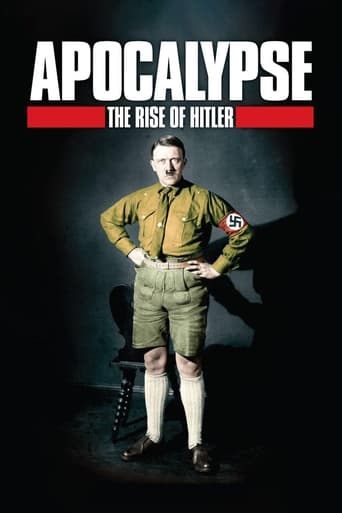
7.6Adolf Hitler (1889-1945) was a mediocre who rose to power because of the blindness and ignorance of the Germans, who believed he was nothing more than an eccentric dreamer. But when the crisis of 1929 devastated the economy, the population, fearful of chaos and communism, voted for him. And no one defended democracy. As the dictatorship extended its relentless shadow, the leader claimed peace, but was preparing the Apocalypse.
Apocalypse: The Rise of Hitler
2011
 8.1
8.1Using highly advanced colourisation techniques, critical moments from World War II, from Stalingrad to The Battle of Britain, are shown in a whole new light.
Greatest Events of World War II in Colour
2019
 7.3
7.3No synopsis available yet.
Crusade in Europe
1949
 7.4
7.4A keen chronicle of the unlikely rise to power of Adolf Hitler (1889-1945) and a dissection of the Third Reich (1933-1945), but also an analysis of mass psychology and how the desperate crowd can be deceived and shepherded to the slaughterhouse.
Hitler: A Career
1977
Film credits
2020s · 9 titles
 7.2
7.2Explores Leni Riefenstahl's artistic legacy and her complex ties to the Nazi regime, juxtaposing her self-portrayal with evidence suggesting awareness of the regime's atrocities.
Riefenstahl
2024
 6.6
6.6Waffen-SS officer Otto Skorzeny (1908-75) became famous for his participation in daring military actions during World War II. In 1947 he was judged and imprisoned, but he escaped less than a year later and found a safe haven in Spain, ruled with an iron hand by General Francisco Franco. What did he do during the many years he spent there?
The Most Dangerous Man in Europe: Otto Skorzeny's After War
2020
 NR
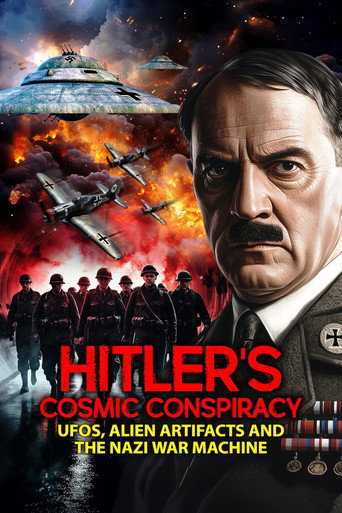
NRExplore the mysterious legend of the Thule society and the mystical "Vril" energy that the Nazi's claimed aided them in their pursuit for world power.
Hitler's Cosmic Conspiracy: UFOs, Alien Artifacts and the Nazi War Machine
2025
 6.0
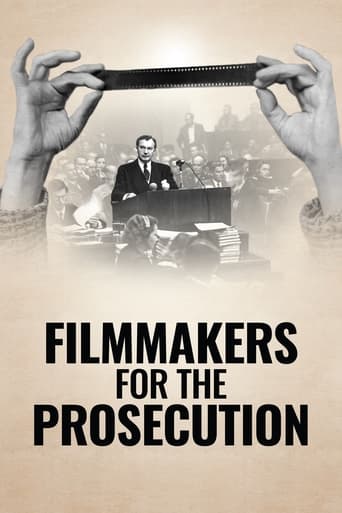
6.0In 1945, two young American soldiers, brothers Budd and Stuart Schulberg, are commissioned to collect filmed and recorded evidence of the horrors committed by the infamous Third Reich in order to prove Nazi war crimes during the Nuremberg trials (1945-46). The story of the making of Nuremberg: Its Lesson for Today, a paramount historic documentary, released in 1948.
Filmmakers for the Prosecution
2023
 7.2
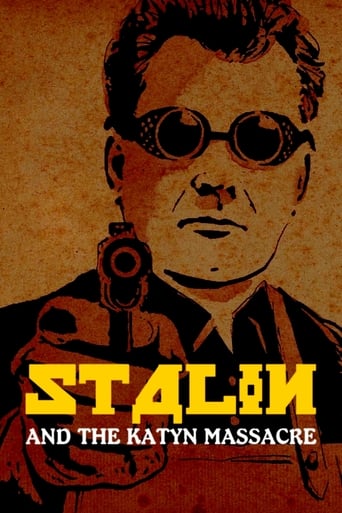
7.2The Katyn massacre, carried out by the Soviet NKVD in 1940, was only one of many unspeakable crimes committed by Stalin's ruthless executioners over three decades. The mass murder of thousands of Polish officers was part of a relentless purge, the secrets and details of which have only recently been partially revealed.
Stalin and the Katyn Massacre
2020
 NR
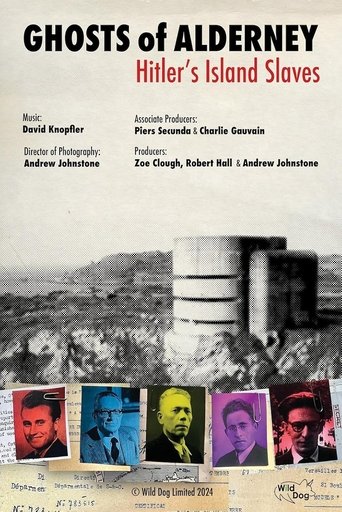
NRVisual artist Piers Secunda seeks out Hitler's Island Slaves. Meeting families of survivors, Secunda finds new forensic evidence of murder, brutality and a British government cover-up following the Nazi reign of terror on British soil.
Ghosts of Alderney: Hitler's Island Slaves
2025
 6.8
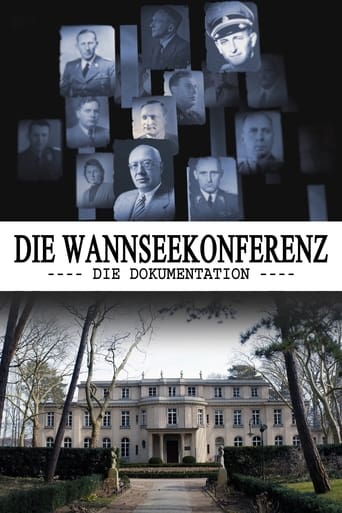
6.8It was arguably the deadliest conference in human history. The topic: plans to murder 11 million Jews in Europe. The participants were not psychopaths, but educated men from the SS, police, administration and ministries. The invitation to the meeting at Wannsee came from Reinhard Heydrich, head of the Reich Security Main Office. The Wehrmacht's campaigns of conquest in Eastern Europe marked the beginning of the systematic murder of Jews in Poland and the Soviet Union. In mid-September 1941, Hitler made the decision to deport all Jews from Germany to the East. Although there had been transports before, Hitler's order represented a further escalation in the murderous decision-making process. Persecution and discrimination had been part of everyday life since 1933. But as a result, the living conditions for the Jews in the Third Reich became even more difficult, among them the Berlin Jew Margot Friedländer, born in 1921, and the Chotzen family.
The Wannsee Conference: The Documentary
2022
 NR
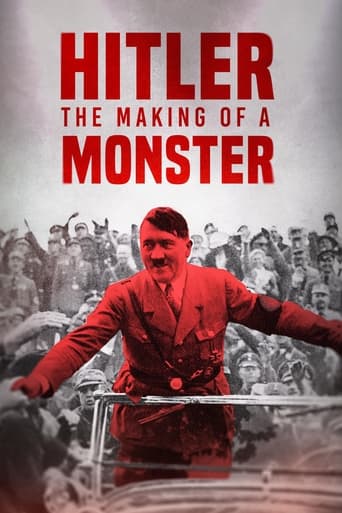
NRAdolf Hitler. The most notorious villain of the 20th century and architect of history's darkest period. From his humble upbringing in Austria to leading the Nazi Party, Hitler's life saw a reign of terror descend over Europe like never before.
Hitler: The Making of a Monster
2023
 7.2
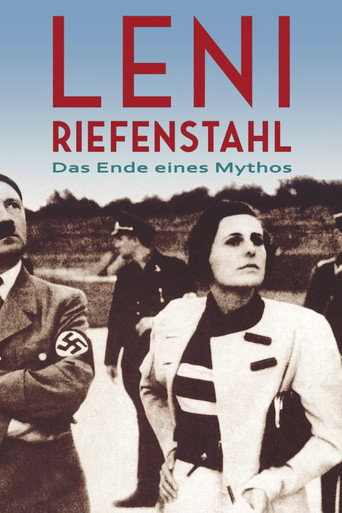
7.2Countless people around the world know the pictures from Leni Riefenstahl's films, even if they have not seen them in their entirety. The work of the German director has burned itself into the collective memory. Even decades after the end of the Nazi era, she showed no remorse and presented herself as an apolitical, naive follower of the Nazi criminal regime. Her artistic service for the cinema was always recognized. But book author Nina Gladitz shows after decades of research that Hitler's favorite filmmaker was not only a follower, but also a perpetrator during the Third Reich, who instrumentalized other filmmakers such as the brilliant cinematographer Willy Zielke in order to gain fame for herself.
Leni Riefenstahl - The End of a Myth
2020
2010s · 14 titles
 7.5
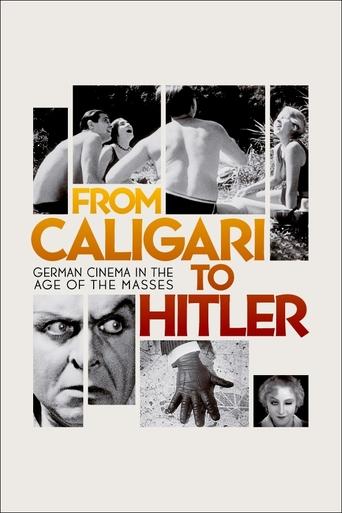
7.5Film journalist and critic Rüdiger Suchsland examines German cinema from 1919, when the Republic of Weimar is born, to 1933, when the Nazis come into power. (Followed by Hitler's Hollywood, 2017.)
From Caligari to Hitler
2015
 7.5
7.5Ireland, June 1944. The crucial decision about the right time to start Operation Overlord on D-Day comes to depend on the readings taken by Maureen Flavin, a young girl who works at a post office, used as a weather station, in Blacksod, in County Mayo, the westernmost promontory of Europe, far from the many lands devastated by the iron storms of World War II.
Storm Front in Mayo
2019
 6.5
6.5Florian Hartung and Dirk Pohlmann have reconstructed a previously unknown dimension of the collaboration between Nazis and the CIA in the Cold War. Drawing upon recently released documents, the film exposes for the first time a perfidious, worldwide net that reaches deep into the power structures of the Federal Republic of Germany. Lending their authority to the fact-finders’ mission are high-ranking statesmen, journalists and historians.
Nazis in the CIA
2013
 6.7
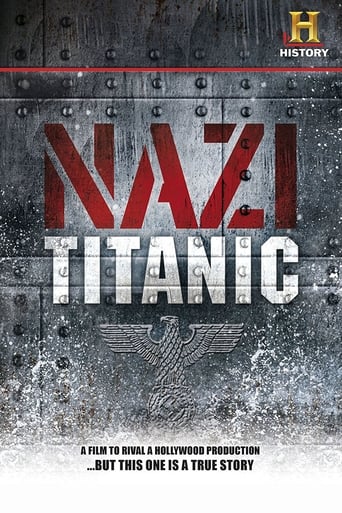
6.7During a bizarre chapter of WWII, Nazi propaganda minister Joseph Goebbels decided to make a movie based on the sinking of the Titanic. This epic film was so large in scale that the Nazis were forced to divert men, material and ships from the war effort in order to complete it. Titanic was filmed aboard cruise ship SS Cap Arcona in the Baltic Sea. The movie’s director Herbert Selpin was arrested by the Gestapo over comments he made about the ship’s crew and he was questioned by Goebbels. Selpin was found dead the next day in his cell. The Gestapo’s verdict was suicide. Titanic never received the impressive premiere that Goebbels intended, being first shown in Nazi-occupied Paris in 1943. We reveal this little known but fascinating story by looking at the making of the film, as well as the fate of the German ship Cap Arcona.
Nazi Titanic
2012
 7.3
7.3Winston Churchill understood the power of films, but the true extent of his use of cinema as a propaganda tool is rarely explored. In 1934, one of Britain's most celebrated film producers, Alexander Korda, signed Churchill up as a screenwriter and historical advisor. It was the start of a unique collaboration. Churchill provided script notes for Korda's productions and penned an epic screenplay. When war broke out, their collaboration took on national importance. Korda was sent on a mission to Hollywood to help bring America into the war, with positive results. With access to previously undiscovered documents, this film documentary examines that mission and a friendship that underpinned a unique, creative partnership.
Churchill and the Movie Mogul
2019
 8.0
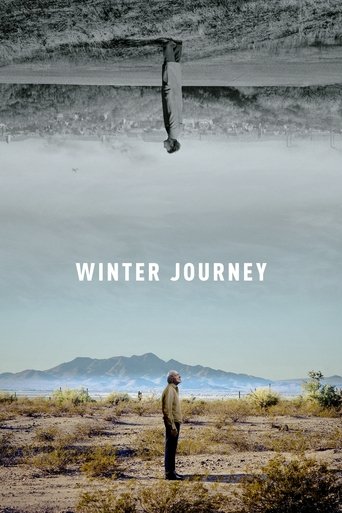
8.0Tucson, Arizona, September 1996. At the request of his son Martin, George Goldsmith tells him of his past in Nazi Germany as a member of a family of Jewish musicians and the strange history of the Jüdischer Kulturbund, a Jewish organization sponsored by Reichsminister Joseph Goebbels.
Winter Journey
2019
 6.0
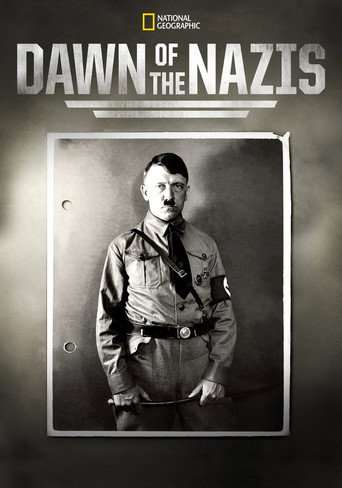
6.0How Germany was when its people entered the nightmare of World War II? Despair and fear lead a hungry population to follow the chilling call of just one man to world domination. A real-life horror story, an ominous tale of violence and deception, which takes place from 1919 to 1934. (Entirely made up of restored, colorized archival footage.)
Dawn of the Nazis
2017
 6.5
6.5The story of Italian cinema under Fascism, a sophisticated film industry built around the founding of the Cinecittà studios and the successful birth of a domestic star system, populated by very peculiar artists among whom stood out several beautiful, magnetic, special actresses; a dark story of war, drugs, sex, censorship and tragedy.
Cinecittà Babilonia: Sex, Drugs and Black Shirts
2017
 4.5
4.5The intricate history of UFA, a film production company founded in 1917 that has survived the Weimar Republic, the Nazi regime, the Adenauer era and the many and tumultuous events of contemporary Germany, and has always been the epicenter of the German film industry.
100 Years of the UFA
2017
 6.5
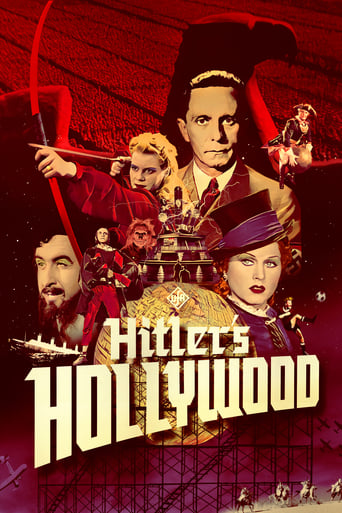
6.5Film journalist and critic Rüdiger Suchsland examines German cinema from 1933, when the Nazis came into power, until 1945, when the Third Reich collapsed. (A sequel to From Caligari to Hitler, 2015.)
Hitler's Hollywood
2017
 6.6
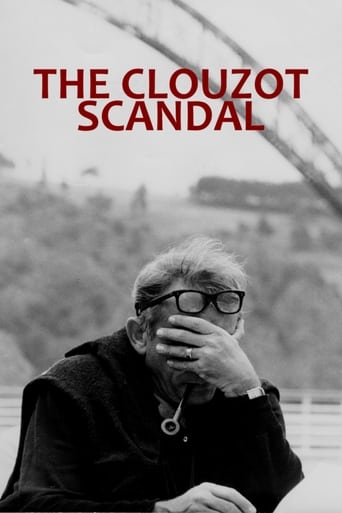
6.6Great filmmakers claim the artistic influence of French director Henri-Georges Clouzot (1907-1977), a master of suspense, with a unique vision of the world, who knew how to offer both great shows and subtle studies of characters. Beyond the myth of the tyrannical director, a contrasting portrait of a visionary, an agitator, an artist against the system.
The Clouzot Scandal
2017
 6.0
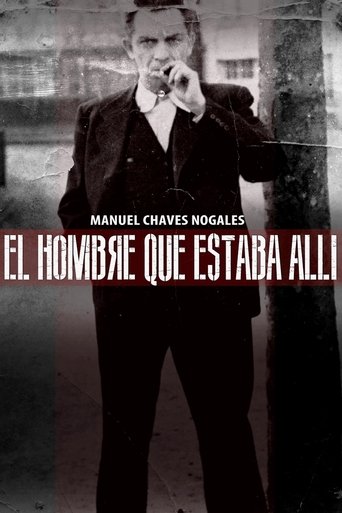
6.0The Spanish journalist Manuel Chaves Nogales (1897-1944) was always there where the news broke out: in the fratricidal Spain of 1936, in Bolshevik Russia, in Fascist Italy, in Nazi Germany, in occupied Paris or in the bombed London of World War II; because his job was to walk, see and tell stories, and thus fight against tyrants, at a time when it was necessary to take sides in order not to be left alone; but he, a man of integrity to the bitter end, never did so.
The Man Who Was There
2013
 8.0
8.0September 3rd, 1939. Britain and France declare war on Nazi Germany, only two days after the Wehrmacht invades Poland. This day, the sad date when the fate of the world changed forever, the Phoney War began: eight months of uncertainty, preparations, evacuations and skirmishes.
The Phoney War
2019
 5.7
5.7Hitler's biography told like never before. Besides brief historical localizations by a narrator, only contemporaries and Hitler himself speak: no interviews, no reenactment, no illustrative graphics and no technical gadgets. The testimonies from diaries, letters, speeches and autobiographies are assembled with new, often unpublished archive material. Hitler's life and work are thus reflected in a unique way in interaction with the image of the society in the years 1889 to 1945.
Who was Hitler
2017
2000s · 7 titles
 7.1
7.1A look at the parallel lives of Charlie Chaplin and Adolf Hitler and how they crossed with the creation of the film “The Great Dictator,” released in 1940.
The Tramp and the Dictator
2002
 7.3
7.3“The Soviet Story” is a story of an Allied power, which helped the Nazis to fight Jews and which slaughtered its own people on an industrial scale. Assisted by the West, this power triumphed on May 9th, 1945. Its crimes were made taboo, and the complete story of Europe’s most murderous regime has never been told. Until now...
The Soviet Story
2008
 6.5
6.5The films, affairs and struggles of the iconic star of The Blue Angel as told by Rosemary Clooney, Roger Corman, Deanna Durbin and many more.
Marlene Dietrich: Her Own Song
2002
 NR
NRThe key individuals of the Iraqi-Nazi connection.
Saddam and the Third Reich
2005
"Revealed" episode aired on UK TV
The Brits Who Fought For Hitler
2002
 6.5
6.5The Nazi propaganda mastermind behind Hitler speaks in first person as actor Kenneth Branagh reads pages of the diary kept by the chief of propaganda, Joseph Goebbels, revealing the man's most inner thoughts.
The Goebbels Experiment
2005
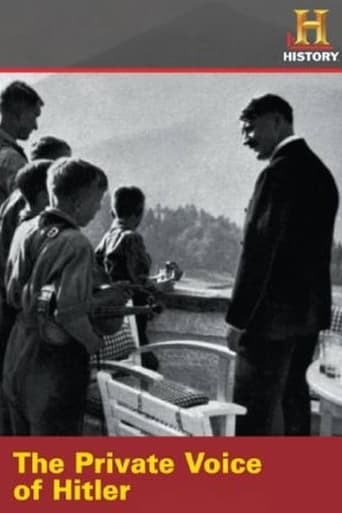 NR
NREveryone knows the public archive footage of Hitler. But most of it is silent. What was he saying? Special computer technology enables us for the first time to lip-read the silent film.
The Private Voice of Hitler
2006
1990s · 2 titles
1980s · 3 titles
 6.9
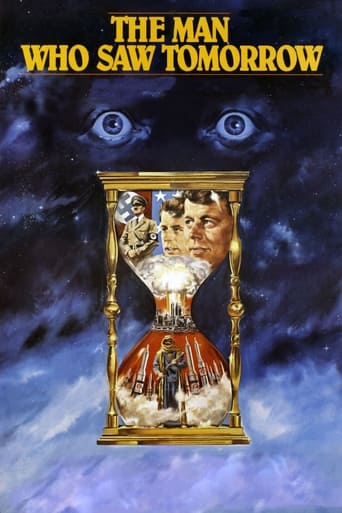
6.9Hosted by Orson Welles, this documentary utilizes a grab bag of dramatized scenes, stock footage, TV news clips and interviews to ask: Did 16th-century French astrologer and physician Nostradamus actually predict such events as the fall of King Louis XVI, the rise of Napoleon, the assassination of President John F. Kennedy? And are there prophecies that have yet to come true?
The Man Who Saw Tomorrow
1981
 7.5
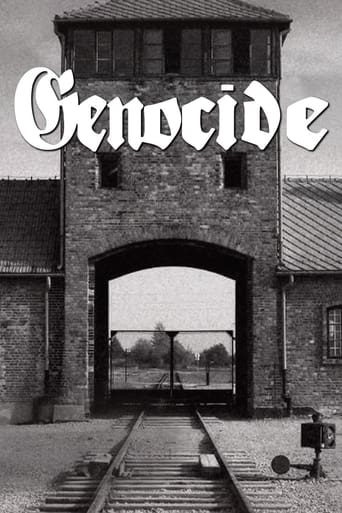
7.5The mass murder of Jewish people by the Nazi regime is chronicled, with a warning that anti-Semitism is on the rise and the events of the Holocaust could happen again. The history of European Jewish culture and events before and during the Holocaust are seen in newsreels, photographs, and animated segments. The words of the victims of the era are read, and footage from the liberation os a concentration camp is shown.
Genocide
1982
 4.5
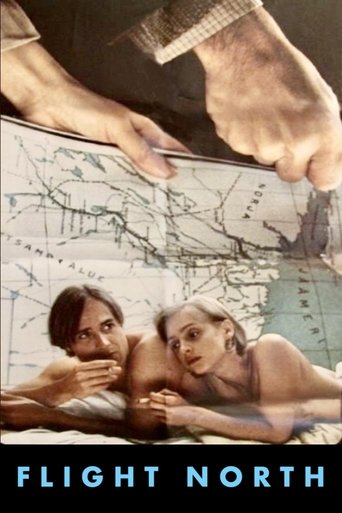
4.5Johanna has fled Nazi Germany to visit a friend in Finland, and from there she continues on to her friend's family's estate. Once at the estate, Johanna passionately argues with her friend's pro-Nazi brother and at the same time, falls for the second, good-looking brother who shares her own anti-fascist feelings. The two are soon engaged in an active sexual relationship that continues as they travel north to an Arctic port.
Flight North
1986
1970s · 3 titles
7.4A keen chronicle of the unlikely rise to power of Adolf Hitler (1889-1945) and a dissection of the Third Reich (1933-1945), but also an analysis of mass psychology and how the desperate crowd can be deceived and shepherded to the slaughterhouse.
Hitler: A Career
1977
 6.8
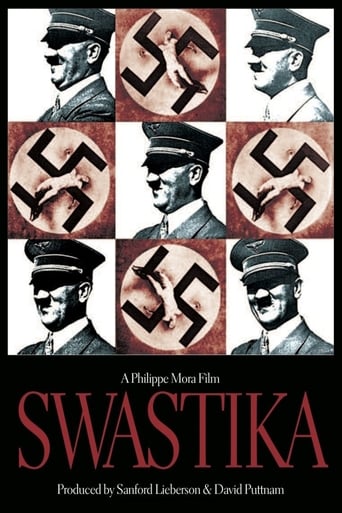
6.8Comprised of footage shot during the Nazi regime, including propaganda, newsreels, broadcasts and even some of Eva Braun's colorized personal home movies, we explore the way in which the Third Reich infiltrated the lives of the German population, from 1933 to 1945.
Swastika
1974
 8.0
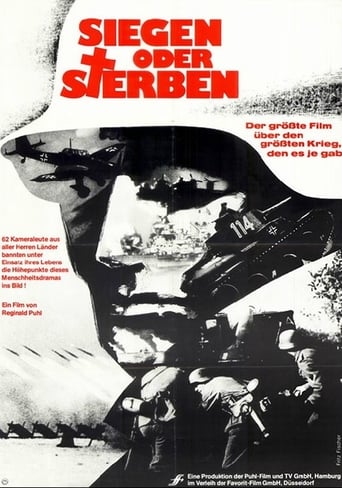
8.0The impact of new documents from the international conflict that shook the world is enormous. Never-before-seen footage has emerged for the first time from previously secret archives. The murderous encirclement battles in Russia, the Battle of Britain, and the heroic deeds of countless lone fighters in Potsdam complete the circle of horror, from the Polish campaign to the harrowing images of refugee treks in the winter of 1944/45.
Siegen oder sterben
1976
1960s · 3 titles
 7.5
7.5Romm pulls out all the stops in its selection of documentary material to draw the viewer not only into absolute horror about fascism and nazism in the 1920s–1940s Europe, but also to a firm conviction that nothing of the sort should be allowed to happen again anywhere in the world.
Triumph Over Violence
1965
 10.0
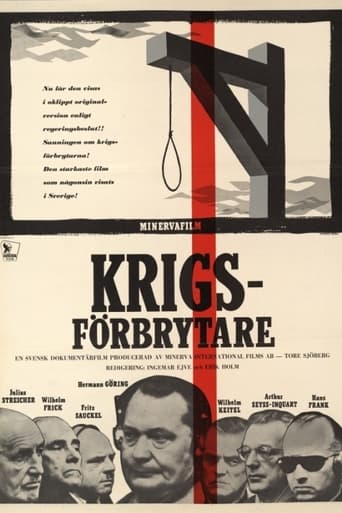
10.0Documents the major trial of the Nazi war criminals and the violent acts that they were accused of.
Secrets of the Nazi Criminals
1963
 NR
NRA look at Hitler's 'Eagle's Nest' in the Bavarian Alps; a construction which survived World War II, that has now become a popular tourist attraction.
Look at Life: Eagle's Nest
1962
1950s · 2 titles
 8.0
8.0No synopsis available yet.
So war der deutsche Landser
1955
 4.8
4.8The film begins with the First World War and ends in 1945. Without exception, recordings from this period were used, which came from weekly news reports from different countries. Previously unpublished scenes about the private life of Adolf Hitler and Eva Braun were also shown for the first time. The film was originally built into a frame story. The Off Commentary begins with the words: "This film [...] is a document of delusion that on the way to power tore an entire people and a whole world into disaster. This film portrays the suffering of a generation that only ended five to twelve. " The film premiered in Cologne on November 20, 1953, but was immediately banned by Federal Interior Minister Gerhard Schröder in agreement with the interior ministers of the federal states of the Federal Republic of Germany.
Adolf Hitler - Ein Volk, ein Reich, ein Führer: Dokumente der Zeitgeschichte
1953
1940s · 8 titles
 7.0
7.0The third film of Frank Capra's 'Why We Fight" propaganda film series, dealing with the Nazi conquest of Western Europe in 1940.
Why We Fight: Divide and Conquer
1943
 6.8
6.8How, in November 1945, after the end of the World War II and the fall of the Third Reich, the international prosecutors participating in the first Nuremberg trial —formally, the International Military Tribunal— built their case against the top Nazi war criminals using the films and records produced by the own regime, obsessed with documenting everything in its long path of infamy and crime.
Nuremberg: Its Lesson for Today
1948
 6.3
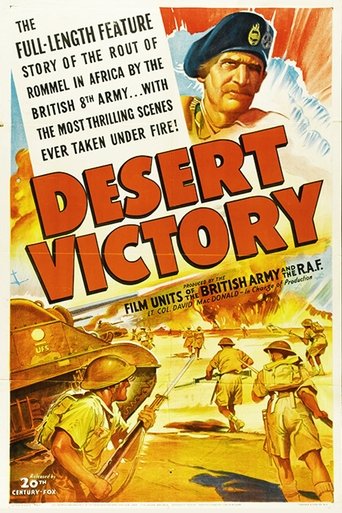
6.3A featureless land fit only for war, as the narrator, J. L. Hodson stated in the early scenes: "If war was to be fought then let it begin here". In endless miles of rock-strewn scrub desert, where civilians hardly existed. Desert Victory tells the story of the Allied campaign to drive Germany and Italy from North Africa is analysed, with the major portion of the film examining the battles at El Alamein, including some re-enactment. Won "Best Documentary Feature" at the 16th Academy Awards in 1944.
Desert Victory
1943
Post-war cinematic reckoning with People’s Fascism and its representatives.
They Are Personally Responsible for Crimes Against Humanity!
1946
 5.7
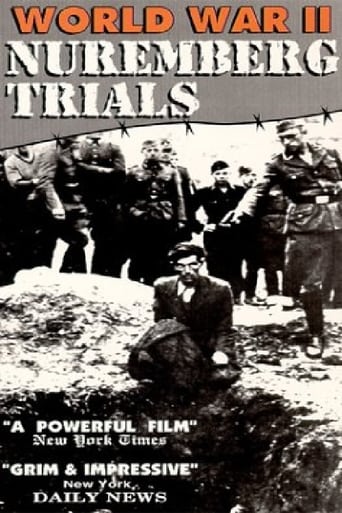
5.7This riveting Russian documentary takes you inside the trials of the notorious German war criminals, brought to trial to account for their actions. The footage includes excerpts from the trials of many of the senior Nazis including Goebels and Goring.
Nuremberg Trials
1946
 6.9
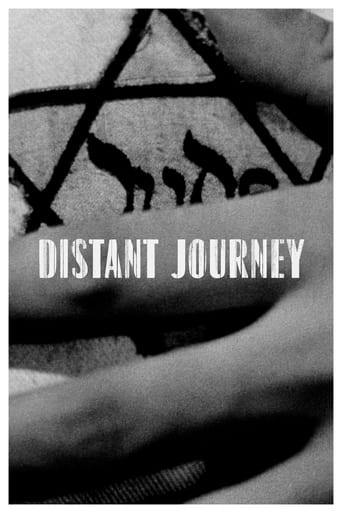
6.9Prague, during World War II. Hana Kaufmann, a Jewish ophthalmologist, marries Dr. Antonín Bureš, a Christian man. When her family is sent to the Theresienstadt concentration camp, their romance turns into a struggle for survival.
Distant Journey
1949
 6.5
6.5Poetry by Rudyard Kipling, John Milton, and William Blake, and excerpts from speeches by Abraham Lincoln and Winston Churchill, all read by Laurence Olivier, illuminate documentary footage of England during its defense against the Nazi blitz in World War II. This short film serves as both propaganda and as a rallying cry to the British people.
Words for Battle
1941
 9.0
9.0An account of Adolf Hitler's rise and fall, his relationship with Eva Braun and their days of leisure at the Berghof, their Bavarian residence.
Will It Happen Again?
1948
1930s · 8 titles
 6.9
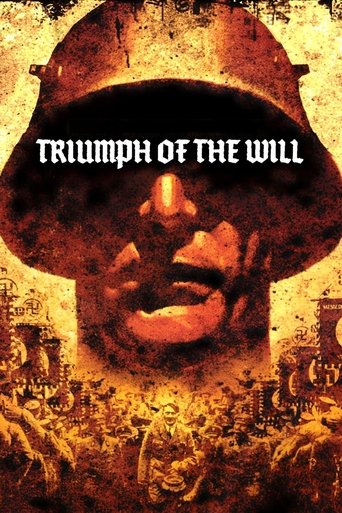
6.9A showcase of German chancellor and Nazi Party leader Adolf Hitler at the 1934 Nuremberg Rally.
Triumph of the Will
1935
 6.9
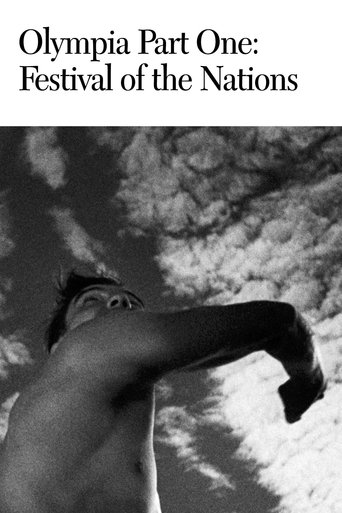
6.9Starting with a long and lyrical overture, evoking the origins of the Olympic Games in ancient Greece, Riefenstahl covers twenty-one athletic events in the first half of this two-part love letter to the human body and spirit, culminating with the marathon, where Jesse Owens became the first track and field athlete to win four gold medals in a single Olympics.
Olympia Part One: Festival of the Nations
1938
 5.4
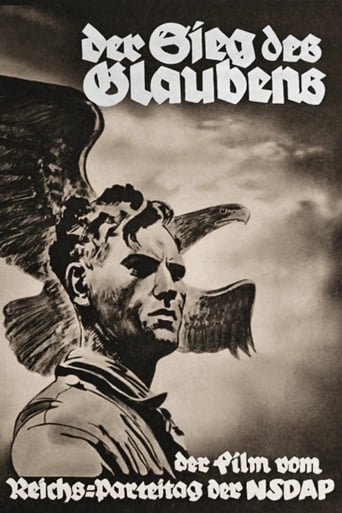
5.4Follows the Fifth Nazi Party Rally (Nuremberg, 30 August–3 September 1933) and shows the then close relationship between Adolf Hitler and Ernest Rõhm.
The Victory of Faith
1933
 9.0
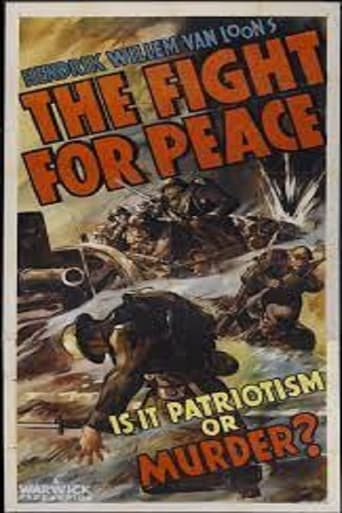
9.0A documentary about the threat of war breaking out in Europe, focusing on Hitler, Stalin and Mussolini.
The Fight For Peace
1939
Adolf Hitler lands at the airport and is greeted by cheering crowds. He drives through the streets lined with groups of people. Fairground with crowds, Adolf Hitler arrives with motorcade. Standing next to Hitler at a lectern, several high-ranking Nazi officials (including the director general of the Reichsbahn, Julius Dorpmüller) give propaganda speeches and praise the construction of the Reichsautobahn as a successful job creation measure for thousands of workers. Hitler gets into his car and sets off on the inaugural drive on the Reichsautobahn. Other cars follow him. Arrival at another square with cheering crowds. Hitler stands at the side of the road and trucks carrying workers who helped with the construction drive past him, as well as motorcycles and mopeds.
Eröffnung der ersten Reichsautobahnstrecke Frankfurt/Main - Darmstadt
1935
 6.5
6.5A propaganda film of the Nazi Party from the year of the “Machtergreifung” in 1933. The film is a contemporary interesting document that illustrates the self-perception of the party at the beginning of their importance in terms of power politics.
Germany Awakens - A Document of the Rebirth of Germany
1933
PROMOTIONAL DOCUMENTARY: Depicts Germans as forced to recapture Danzig in 1939 because of Polish aggression and mistreatment of towns-people. R.1: Germans occupy Danzig during summer 1939. Joseph Goebbels addresses crowd; arrival of battleship Schleswig-Holstein. Stresses "chaos and economic instability in Poland" and shows course of Schleswig-Holstein between September 2d - 8th and its bombardment of Naufahrwassa, Oxhoft, Odingen, Hela and Westerplatte. Polish officers officially surrender Poland to Germany. R.2: Germans occupy Hela; disarm captured Polish soldiers; rename and employ Polish minesweepers. German Adm. Erich Raeder inspects Danzig. Map of Poland with words "German Again" substituted for "Poland." Narrator implies England will meet similar fate. Display of German military force as national anthem is sung.
Die Danziger Bucht wieder deutsch!
1939
 8.0
8.0Propaganda film about Hitler's third flight over Germany on the occasion of the elections 1932. It shows the journey with rallies in over 20 German cities.
Hitler's Flight Over Germany
1932
Undated · 1 titles
Series credits
7.0Days That Shook the World is a British documentary television series that premiered on BBC Two on 17 September 2003. The programme features various milestones throughout history. It has been broadcast on the BBC, Discovery Channel UK, The History Channel and Viasat History. The series was also released on DVD by the Polish edition of Newsweek in 2007.
Days That Shook the World
2003
8.3Americans consider themselves a 'nation of immigrants', but as the catastrophe of the Holocaust unfolds in Europe, the U.S. prove unwilling to open its doors to more than a fraction of the hundreds of thousands of desperate refuge seekers. Through riveting firsthand testimony of witnesses and survivors who as children endured persecution, violence and flight as their families tried to escape Hitler, this three-part documentary series delves deeply into the tragic human consequences of public indifference, bureaucratic red tape and restrictive quota laws in America. Did the nation fail to live up to its ideals? This is a history to be reckoned with.
The U.S. and the Holocaust
2022
7.6Adolf Hitler (1889-1945) was a mediocre who rose to power because of the blindness and ignorance of the Germans, who believed he was nothing more than an eccentric dreamer. But when the crisis of 1929 devastated the economy, the population, fearful of chaos and communism, voted for him. And no one defended democracy. As the dictatorship extended its relentless shadow, the leader claimed peace, but was preparing the Apocalypse.
Apocalypse: The Rise of Hitler
2011
8.1Using highly advanced colourisation techniques, critical moments from World War II, from Stalingrad to The Battle of Britain, are shown in a whole new light.
Greatest Events of World War II in Colour
2019
7.3No synopsis available yet.
Crusade in Europe
1949
 10.0
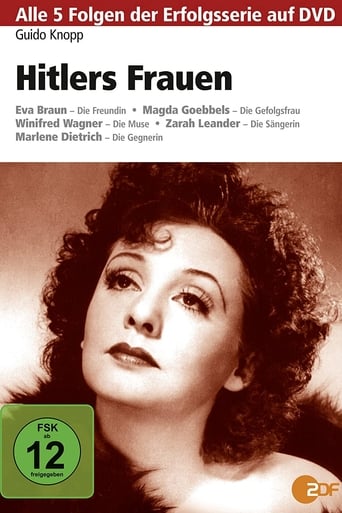
10.0"Hitler's Women" - A six part series about some of the women Hitler enjoyed and adored.
Hitlers Frauen
2001
 NR
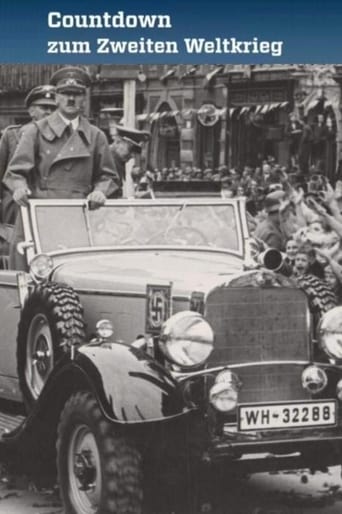
NRNo synopsis available yet.
Countdown zum Zweiten Weltkrieg
2018
No synopsis available yet.
Das Jahrhundert des Kabaretts
2001
 6.2
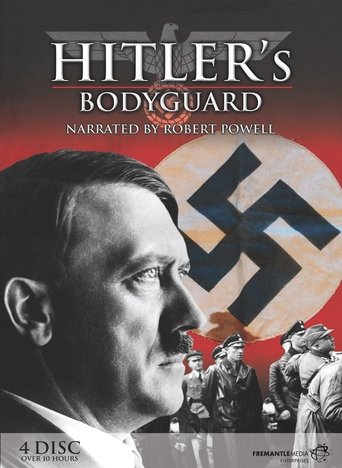
6.2Adolf Hitler caused the deaths of fifty million people. An entire nation followed him to ruin. Over a tumultuous 12 years Adolf Hitler went from being a minor rabble-rousing politician, to supreme leader of Nazi Germany. He was hated by those he persecuted, and even by some of his own commanders - yet in twenty-five years no one managed to kill him. This program shows how Hitler's bodyguards helped him cheat death on many occasions. They expanded from a handful of thugs recruited to protect political meetings and fight opponents on the streets, to many thousands - including some of the most fearsome secret police and paramilitary forces the world has ever known.
Hitler's bodyguard
2010
 7.8
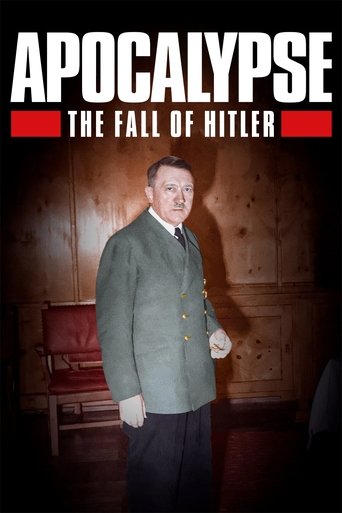
7.8Summer 1943: Hitler engages in a decisive battle in Kursk to win the war in the East. This is without counting on the pugnacity of the Red Army and the Allied intervention in the West. Month after month, the noose tightens on the Nazi tyrant who refuses to admit defeat and precipitates his country in its fall.
Apocalypse: The Fall of Hitler
2023
 NR
NRNo synopsis available yet.
Загадки века с Сергеем Медведевым
2016
 8.0
8.0No synopsis available yet.
WWII: The Lost Color Archives
2000
 4.0
4.0No synopsis available yet.
Europa: The Last Battle
2017
 NR
NRAn exploration of some of history's most mysterious disappearances
Vanishings!
2003