
Acting
Adolfas Mekas
Born — Died
1925-09-30 — 2011-05-31
Place of birth
Semeniškiai, Lithuania
Known for
Acting
Credits
33 titles
Adolfas Mekas (born on September 30th 1924 in Semeniskiai, Lithuania and died on May 31st 2011 in Poughkeepsie, New York) was a Lithuanian filmmaker, writer, director, editor, actor, educator and mentor. Adolfas Mekas collaborated with his brother Jonas Mekas to establish the seminal magazine Film Culture, and the Film-Maker’s Cooperative. He was associated with George Maciunas as well as the Fluxus art movement. His short films incorporate a comic and anarchic spirit, highlighted in his feature ‘Hallelujah the Hills’ (1963), which was featured at the Cannes Film Festival and is now classified as an American classic. Adolfas Mekas played a key role in the experimental film society, the ‘New …
Known for
 7.8
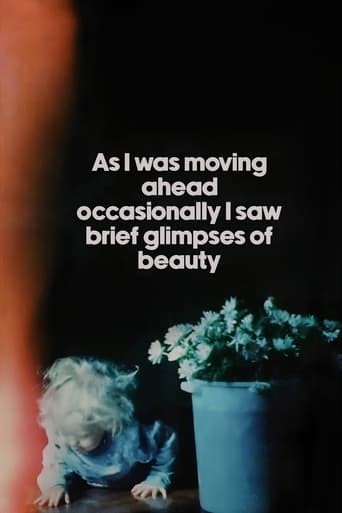
7.8A compilation of over 30 years of private home movie footage shot by Lithuanian-American avant-garde director Jonas Mekas, assembled by Mekas "purely by chance", without concern for chronological order.
As I Was Moving Ahead Occasionally I Saw Brief Glimpses of Beauty
2000
 7.3
7.3Also known as Walden, Jonas Mekas’s first diary film is a six-reel chronicle of his life in 1960s New York, interweaving moments with family, friends, lovers, and artistic idols. Blending everyday encounters with portraits of the avant-garde art scene, it forms an epic, personal meditation on community, creativity, and the passage of time.
Diaries, Notes, and Sketches
1968
 6.2
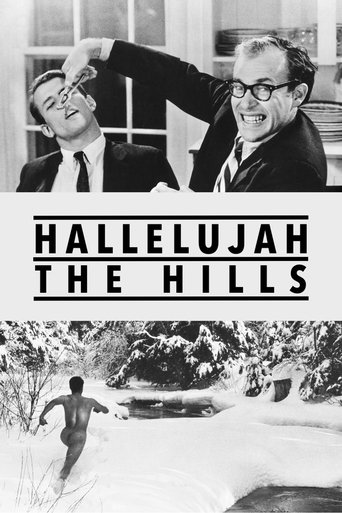
6.2Jack and Leo vie for the affections of Vera – who appears a little differently to each man – over the course of a series of energetic sketches, flashbacks and homages.
Hallelujah the Hills
1963
 7.3
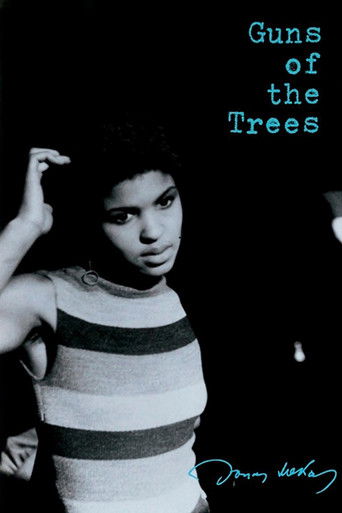
7.3Barbara, a young woman consumed by despair, contemplates suicide, while a man she meets in a church and a married couple struggle to persuade her that life is still worth living. Mekas’s film weaves this intimate drama into a larger reflection on alienation, politics, and the turbulence of early 1960s America.
Guns of the Trees
1961
 5.8
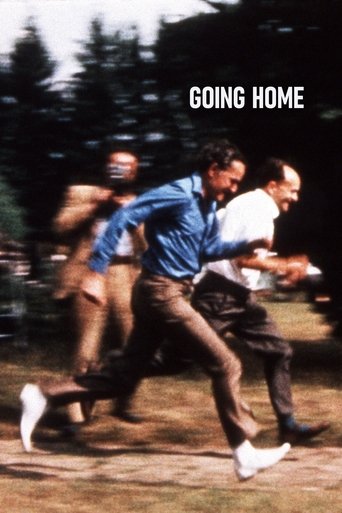
5.8A home movie by Adolfas Mekas and wife Pola Chapelle on their travels to Lithuania and Europe. It was filmed concurrently with the more highly regarded “Reminiscences of a Journey to Lithuania” by Jonas Mekas, brother to Adolfas.
Going Home
1972
 8.0
8.0The film consists of continuous panning shots up a series of 367 human legs.
Up Your Legs Forever
1971
Film credits
2010s · 3 titles
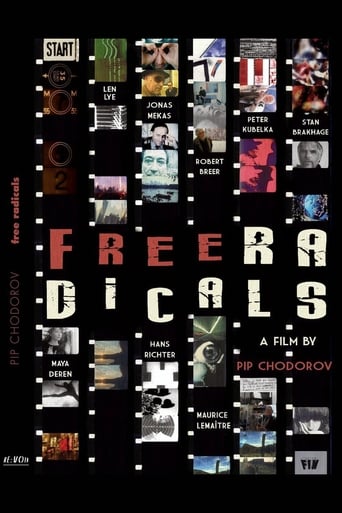 6.8
6.8Experimental filmmaker Pip Chodorov traces the course of experimental film in America, taking the very personal point of view of someone who grew up as part of the experimental film community.
Free Radicals: A History of Experimental Film
2011
A short portrait of Jonas Mekas by filmmaker and veteran Jonas chronicler Peter Sempel.
3 Friends Singing (...in the Desert)
2019
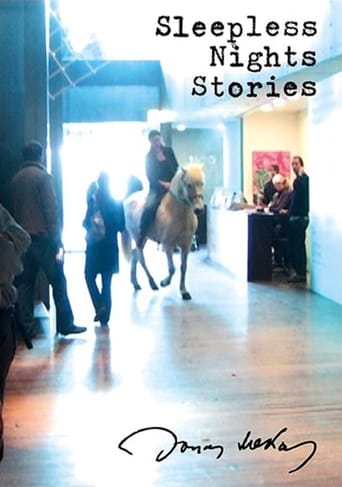 5.3
5.3Unable to sleep, Jonas Mekas drifts through New York nights, moving between apartments, studios, galleries, bars, and clubs. Along the way he encounters friends and fellow artists—including Ken and Flo Jacobs and Yoko Ono—capturing an intimate mosaic of nocturnal encounters, reflections, and moments of community.
Sleepless Nights Stories
2011
2000s · 3 titles
7.8A compilation of over 30 years of private home movie footage shot by Lithuanian-American avant-garde director Jonas Mekas, assembled by Mekas "purely by chance", without concern for chronological order.
As I Was Moving Ahead Occasionally I Saw Brief Glimpses of Beauty
2000
 10.0
10.0This exhibition focuses on Jonas Mekas’ 365 Day Project, a succession of films and videos in calendar form. Every day as of January 1st, 2007 and for an entire year, as indicated in the title, a large public (the artist's friends, as well as unknowns) were invited to view a diary of short films of various lengths (from one to twenty minutes) on the Internet. A movie was posted each day, adding to the previously posted pieces, resulting altogether in nearly thirty-eight hours of moving images.
365 Day Project
2007
 9.0
9.0Caldwell's pulp storytelling, proto-feminist stance and unabashed social dramatization of his characters are a distinct vision of the condition of women -- specifically working class women. His broadly drawn themes of small town hypocrisy and restrictive moral values contextualize the titular characters' struggle for sexual expression, stability and independence. Certain Women is a disconcerting parable that pays tribute to but also defies the 50s period style of Caldwell, opting for contemporary small town situations and cinematic style. This cautionary tale of four heroic yet ordinary women is fashioned out of the past but relies on observations of the present historical moment and its political reality.
Certain Women
2004
1990s · 2 titles
 7.0
7.0Jonas Mekas assembles 160 portraits, appearances, and fleeting sketches of underground and independent filmmakers captured between 1955 and 1996. Fast-paced and archival in spirit, the film celebrates the avant-garde as its own “nation of cinema,” a vital community existing outside the dominance of commercial film.
Birth of a Nation
1997
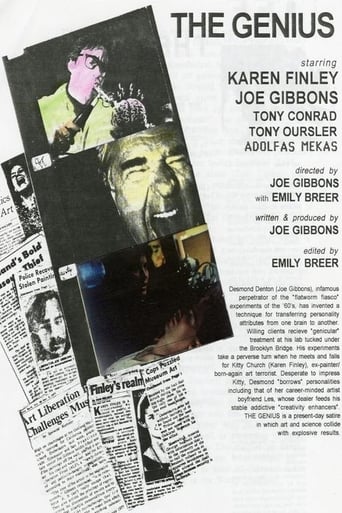 7.0
7.0A ramshackle underground SF satire set and shot in the self-absorbed art world of lower Manhattan, written, produced, and directed by Joe Gibbons, who also plays one of the lead parts. Gibbons plays a mad scientist who's developed a technique for transferring personalities from one person's body to another; he becomes obsessed with an outlaw artist (played by performance artist Karen Finley) who destroys paintings in various galleries as a form of anarchist, anticapitalist protest.
The Genius
1993
1970s · 5 titles
5.8A home movie by Adolfas Mekas and wife Pola Chapelle on their travels to Lithuania and Europe. It was filmed concurrently with the more highly regarded “Reminiscences of a Journey to Lithuania” by Jonas Mekas, brother to Adolfas.
Going Home
1972
8.0The film consists of continuous panning shots up a series of 367 human legs.
Up Your Legs Forever
1971
 7.0
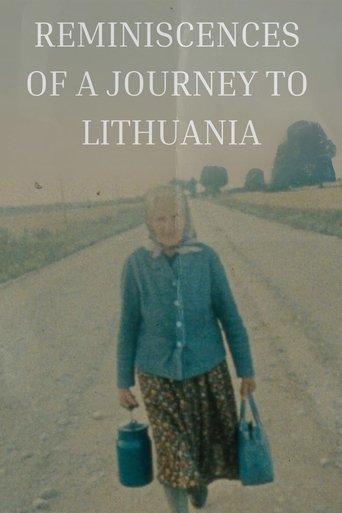
7.0Jonas Mekas weaves an elegiac diary film from his 1971–72 return to Lithuania, chronicling a visit to his birthplace of Semeniškiai after decades in exile. Blending personal memory with documentary observation, the film becomes both a portrait of homecoming and a meditation on displacement, family, and the passage of time.
Reminiscences of a Journey to Lithuania
1972
 7.0
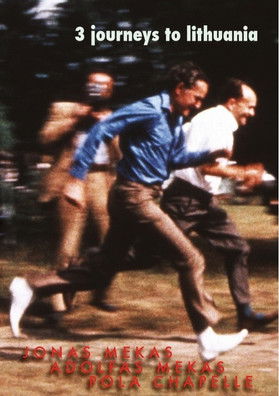
7.0During the trip back to Lithuania, Jonas Mekas made Reminiscences of a Journey to Lithuania, Adolfas Mekas made Going Home, while Pola Chapelle, Adolfas’ wife, made this Journey to Lithuania, which both Jonas and Adolfas said was the best of these three films.
Journey to Lithuania
1971
 7.1
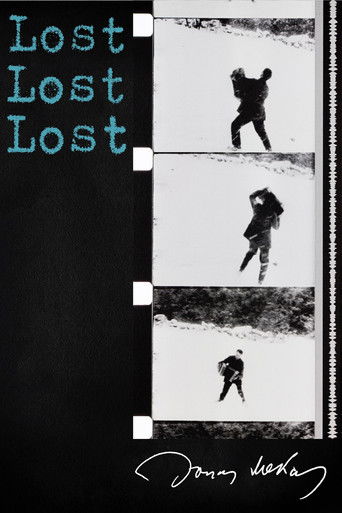
7.1Drawn from footage shot between 1949 and 1963, Jonas Mekas’s autobiographical diary film chronicles his early years in exile, capturing the struggle to build a new life in New York and his gradual discovery of a vibrant artistic community.
Lost, Lost, Lost
1976
1960s · 7 titles
7.3Also known as Walden, Jonas Mekas’s first diary film is a six-reel chronicle of his life in 1960s New York, interweaving moments with family, friends, lovers, and artistic idols. Blending everyday encounters with portraits of the avant-garde art scene, it forms an epic, personal meditation on community, creativity, and the passage of time.
Diaries, Notes, and Sketches
1968
7.3Barbara, a young woman consumed by despair, contemplates suicide, while a man she meets in a church and a married couple struggle to persuade her that life is still worth living. Mekas’s film weaves this intimate drama into a larger reflection on alienation, politics, and the turbulence of early 1960s America.
Guns of the Trees
1961
 10.0
10.0Arthouse portraiture of a disestablishmentarian during his six-year draft dodge.
Windflowers
1968
 5.8
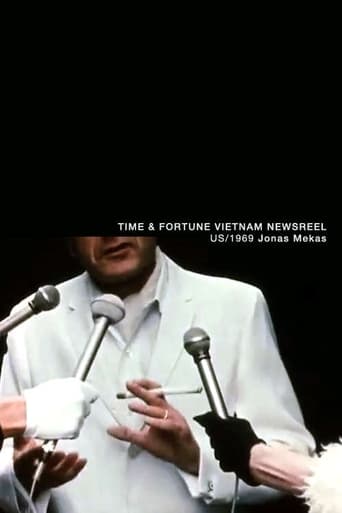
5.8Jonas Mekas zoomed in from a completely different angle for his Time & Fortune Vietnam Newsreel. This fake interview with ‘Lapland’s Minister of Foreign Affairs’ brings an outsider’s perspective to bear on the US war, and discusses with ironic perplexity if it might not be possible to kill off the Viet Cong more cheaply. For, whilst white students in the US primarily took issue with the war in South-eastern Asia, African-Americans remained predominantly concerned with their own situation. For them, daily discrimination at home and the Vietnam War were simply two faces of the same racist coin
Time & Fortune Vietnam Newsreel
1969
 NR
NRInternational Cast of Actors: Jonas Mekas, from Lithuania, poet and film-maker; Louis Brigante, from Madagascar, poet and publisher; Storm De Hirsch, from Holland, poetess, seer and film-maker; Pola Chapelle, from Tierra del Fuego, singer and motel operator; Adolfas Mekas, from Lapland, basket weaver and film director; Contessa Angela Maria Andrecci di Castiglione, from Italy, opera singer.
A Matter of Baobab
1968
 NR
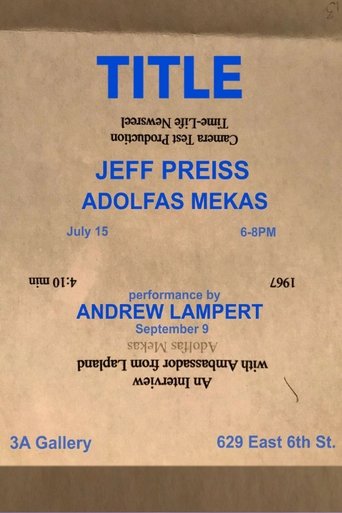
NRAdolfas starred in, directed, and edited this Vietnam comedy, produced by Pola Chapelle and shot by Jonas Mekas.
An Interview with the Ambassador from Lapland
1967
 NR
NRA rare behind-the-scenes view of the exploding New York “underground” in the late sixities, a turbulent time and place that was to change American culture forever. A German TV crew, led by journalist Gideon Bachmann, explores the epicenter of the sixties revolution in art, music, poetry and film and interviews the main players in the “New American Cinema,” that was born on the streets of New York. Against a backdrop of cultural upheaval in all of the arts and growing political agitation against the Vietnam War, Bachman interviews the most prominent figures in “underground film,” including Jonas Mekas, Shirley Clarke, the Kuchar Brothers and Bruce Connor, and visits the most notorious location in the New York art world of the era - Andy Warhol’s Factory - to conduct an interview with the genius of Pop Art himself.
Underground New York
1968
Behind the camera
6.2Jack and Leo vie for the affections of Vera – who appears a little differently to each man – over the course of a series of energetic sketches, flashbacks and homages.
Hallelujah the Hills
1963
6.2Jack and Leo vie for the affections of Vera – who appears a little differently to each man – over the course of a series of energetic sketches, flashbacks and homages.
Hallelujah the Hills
1963
5.8A home movie by Adolfas Mekas and wife Pola Chapelle on their travels to Lithuania and Europe. It was filmed concurrently with the more highly regarded “Reminiscences of a Journey to Lithuania” by Jonas Mekas, brother to Adolfas.
Going Home
1972
 9.0
9.0An Adolfas Mekas directed short parodying Italian art films of the time. It was created for use in a scene of the Broadway musical, "Skyscraper," starring Julie Harris and Peter Marshall, with a book by Peter Stone, music by Jimmy Van Heusen and lyrics by Sammy Cahn.
Skyscraper
1965
10.0Arthouse portraiture of a disestablishmentarian during his six-year draft dodge.
Windflowers
1968
10.0Arthouse portraiture of a disestablishmentarian during his six-year draft dodge.
Windflowers
1968
 9.0
9.0Interesting and sometimes funny adaptation of a Mark Twain short story. Hatfield is a carpetbagger who marries the daughter of a prominent plantation owner in order to humiliate him. He mistreats his wife, but she stoically refuses to complain to her father.
The Double-Barrelled Detective Story
1965
9.0Interesting and sometimes funny adaptation of a Mark Twain short story. Hatfield is a carpetbagger who marries the daughter of a prominent plantation owner in order to humiliate him. He mistreats his wife, but she stoically refuses to complain to her father.
The Double-Barrelled Detective Story
1965
Early Short by Adolfas Mekas, apparently credited as "George Binkey."
Antifilm #2
1951
 9.0
9.0A feature documentary about Cuba’s youth: the student, the worker, the peasant, the teacher, the soldier. These young compañeras and compañeros illustrate what the Cuban Revolution is really all about as they discuss their thoughts on the revolution, theories on guerrilla warfare, commitment to building Che’s “New Man”, and camaraderie with those fighting for change across the globe.
Compañeras and Compañeros
1970
NRAdolfas starred in, directed, and edited this Vietnam comedy, produced by Pola Chapelle and shot by Jonas Mekas.
An Interview with the Ambassador from Lapland
1967