

Directing
Len Lye
Born — Died
1901-07-05 — 1980-05-15
Place of birth
Christchurch, New Zealand
Known for
Directing
Credits
39 titles
Leonard Charles Huia "Len" Lye (5 July 1901 – 15 May 1980), was a Christchurch, New Zealand-born artist known primarily for his experimental films and kinetic sculpture. His films are held in archives including the New Zealand Film Archive, British Film Institute, Museum of Modern Art in New York City, and the Pacific Film Archive at University of California, Berkeley.
Known for
 5.0
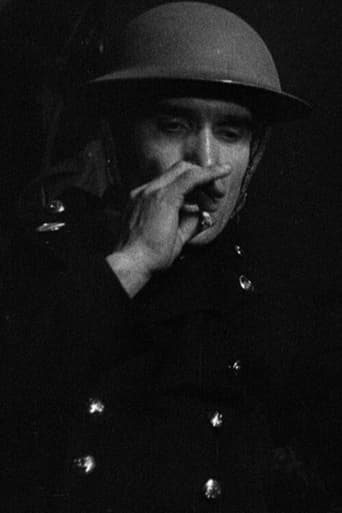
5.0The story of how newspapers were distributed during the Blitz, stressing the importance of an accurate and objective press on the home front.
Newspaper Train
1942
 7.0
7.0Jonas Mekas assembles 160 portraits, appearances, and fleeting sketches of underground and independent filmmakers captured between 1955 and 1996. Fast-paced and archival in spirit, the film celebrates the avant-garde as its own “nation of cinema,” a vital community existing outside the dominance of commercial film.
Birth of a Nation
1997
 6.0
6.0BBC Four’s new documentary takes us on a journey through more than a century of animation. It examines the creative and technical inventiveness of some of the great animation pioneers who have worked in Britain – trailblazing talents such as Len Lye, John Halas and Joy Batchelor, Joanna Quinn, and Bristol’s world-conquering Aardman Animations.
Secrets of British Animation
2018
 6.8
6.8Experimental filmmaker Pip Chodorov traces the course of experimental film in America, taking the very personal point of view of someone who grew up as part of the experimental film community.
Free Radicals: A History of Experimental Film
2011
 NR
NRThis film documents the major directions in modern American art during the first seven years of the 1960s. The keynote is that the artist has expanded his realm from the two-dimentional picture frame, climaxed by the artists of the 40s and early 50s, merged color with sculpture, and sought out modern media to express himself. This has produced the characteristic wide spectrum of interest, ideas, and products in contemporary art.
Art of the Sixties
1967
 6.5
6.5A fictional enactment of the deadly contest between a British soldier and a German sniper hiding in a tree. Kill or Be Killed differs from most army instructional films because of its powerful dramatization.
Kill or Be Killed
1942
Film credits

2010s · 2 titles
6.0BBC Four’s new documentary takes us on a journey through more than a century of animation. It examines the creative and technical inventiveness of some of the great animation pioneers who have worked in Britain – trailblazing talents such as Len Lye, John Halas and Joy Batchelor, Joanna Quinn, and Bristol’s world-conquering Aardman Animations.
Secrets of British Animation
2018
6.8Experimental filmmaker Pip Chodorov traces the course of experimental film in America, taking the very personal point of view of someone who grew up as part of the experimental film community.
Free Radicals: A History of Experimental Film
2011
1990s · 3 titles
7.0Jonas Mekas assembles 160 portraits, appearances, and fleeting sketches of underground and independent filmmakers captured between 1955 and 1996. Fast-paced and archival in spirit, the film celebrates the avant-garde as its own “nation of cinema,” a vital community existing outside the dominance of commercial film.
Birth of a Nation
1997
 9.0
9.0Several well-known and pioneering abstract filmmakers discuss the history of non-objective cinema, the works of those that came before them and their own experiments in the field of visionary filmmaking.
Abstract Cinema
1993
 NR
NRDocumentary about the Kiwi artist Len Lye and his legacy.
Flip & Two Twisters
1995
Behind the camera
5.0The story of how newspapers were distributed during the Blitz, stressing the importance of an accurate and objective press on the home front.
Newspaper Train
1942
6.5A fictional enactment of the deadly contest between a British soldier and a German sniper hiding in a tree. Kill or Be Killed differs from most army instructional films because of its powerful dramatization.
Kill or Be Killed
1942
In 1944 Lye moved to New York City, initially to direct for the documentary newsreel The March of Time. He settled in the West Village, where he mixed with artists who later became the Abstract Expressionists, encouraged New York’s emerging filmmakers such as Francis Lee, taught with Hans Richter, and assisted Ian Hugo on Bells of Atlantis. Color Cry was based on a development of the “rayogram” or “shadow cast” process, using fabrics as stencils, with the images synchronized to a haunting blues song by Sonny Terry, which Lye imagined to be the anguished cry of a runaway slave. —Harvard Film Archive
Color Cry
1952
 6.6
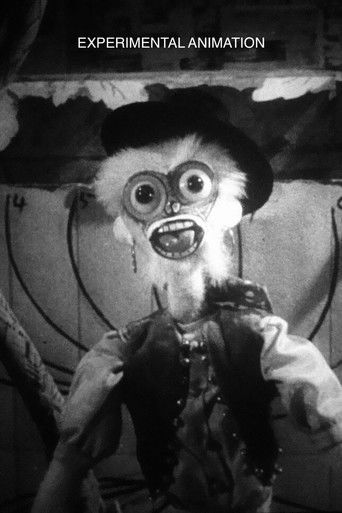
6.6Len Lye scraped together enough funding and borrowed equipment to produce a two-minute short featuring his self-made monkey, singing and dancing to 'Peanut Vendor', a 1931 jazz hit for Red Nichols. The two foot high monkey had bolted, moveable joints and some 50 interchangeable mouths to convey the singing. To get the movements right, Lye filmed his new wife, Jane, a prize-winning rumba dancer.
Experimental Animation
1933
6.6Len Lye scraped together enough funding and borrowed equipment to produce a two-minute short featuring his self-made monkey, singing and dancing to 'Peanut Vendor', a 1931 jazz hit for Red Nichols. The two foot high monkey had bolted, moveable joints and some 50 interchangeable mouths to convey the singing. To get the movements right, Lye filmed his new wife, Jane, a prize-winning rumba dancer.
Experimental Animation
1933
6.6Len Lye scraped together enough funding and borrowed equipment to produce a two-minute short featuring his self-made monkey, singing and dancing to 'Peanut Vendor', a 1931 jazz hit for Red Nichols. The two foot high monkey had bolted, moveable joints and some 50 interchangeable mouths to convey the singing. To get the movements right, Lye filmed his new wife, Jane, a prize-winning rumba dancer.
Experimental Animation
1933
 7.0
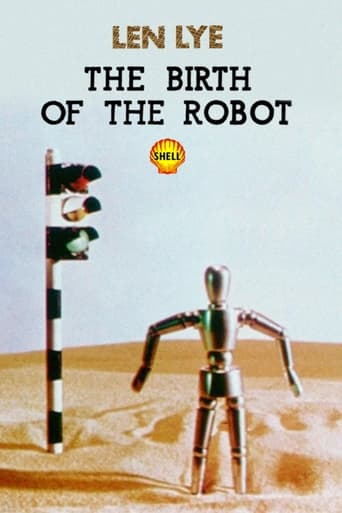
7.0This experiment was a “prestige advertisement” for Shell Motor Oil. As conventional animation became dominated by Walt Disney, many European filmmakers turned to puppets as an alternative, and Lye enlisted the help of avant-garde friends such as Humphrey Jennings and John Banting to make the amusing puppets. Exploring the still-complex color process, which involved the combination of three separate images, Lye creates such a vivid storm scene that reviewers hailed it as “proof that the color film has entered a new stage.” The music is Holst’s The Planets. - Harvard Film Archive
The Birth of the Robot
1936
 NR
NRLen Lye made this experiment in animating poetry circa 1953 utilising a clip of Sir John Gielgud reciting a passage from The Tempest.
Ariel’s Song / Full Fathom Five
1953
 NR
NRThis was another sample promotional film, which Lye offered to television stations. He scratched some dramatic black-and-white abstract images, hand-coloured them, and combined them with African drum music. The film gives us a taste of what Free Radicals would have looked like if it had been made in colour rather than black-and-white.
Prime Time
1958
 6.0
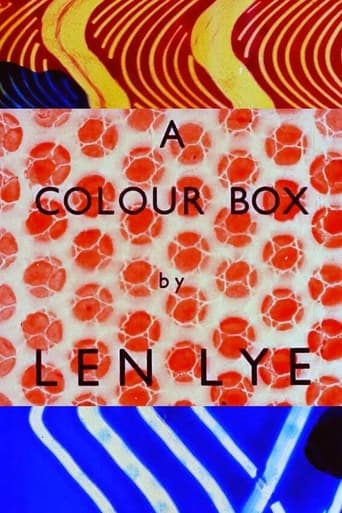
6.0Animated shapes dance to Cuban music. This was one of the first animations to be painted directly onto the film.
A Colour Box
1935
 6.5
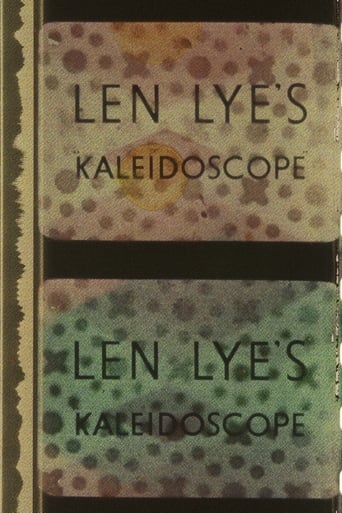
6.5For Kaleidoscope, which was sponsored by Churchman Cigarettes, Lye animated stenciled cigarette shapes and is said to have experimented by cutting out some of the shapes so that the light of the projector hit the screen directly. As in Colour Box Lye uses music by Don Baretto and his Cuban Orchestra. - Harvard Film Archive
Kaleidoscope
1935
 6.1
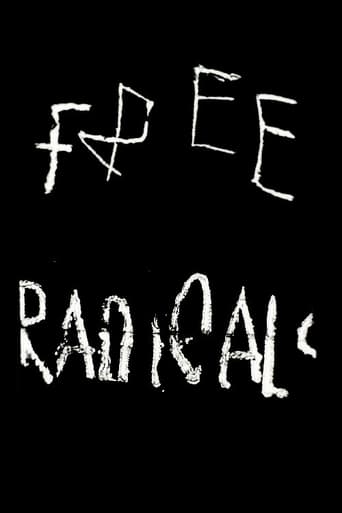
6.1In this powerful abstract film with a soundtrack of African drum music, Lye scratched "white ziggle-zag-splutter scratches" on to black leather, using a variety of tools from saw teeth to arrow heads. The first version of the film won a major award at the International Experimental Film Festival Held in Brussels in 1958 in association with the World's Fair. Stan Brakhage described the film as "an almost unbelievably immense masterpiece".
Free Radicals
1958
Short comedic documentary about crops.
Planned Crops
1942
 6.0
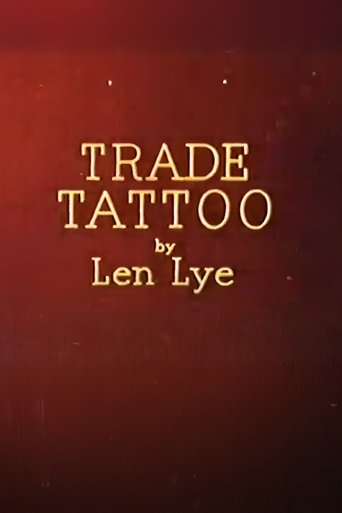
6.0Trade Tattoo went even further than Rainbow Dance in its manipulation of the Gasparcolor process. The original black and white footage consisted of outtakes from GPO Film Unit documentaries such as Night Mail. Lye transformed this footage in what has been described as the most intricate job of film printing and color grading ever attempted. Animated words and patterns combine with the live-action footage to create images as complex and multi-layered as a Cubist painting. Music was provided by the Cuban Lecuona Band. With its dynamic rhythms, the film seeks (in Lye’s words) to convey “a romanticism about the work of the everyday in all walks of life."
Trade Tattoo
1937
 5.8
5.8A tribute to the cameramen of the newsreel companies and the service film units, in the form of a compilation of film of the cameramen themselves, their training and some of their most dramatic film.
Cameramen at War
1943
 NR
NRLen Lye made Pictures for Percussion as a sample for television stations while living in the United States.
Pictures for Percussion
1958
 6.7
6.7Correspondence between young lovers nearly ends in disaster through a mistake in postal district. Fortunately the GPO spots the error and all ends well, but with the moral that correspondents should get the address right.
N or NW
1938
 7.3
7.3Surrealism, avant-garde sound montage, and irreverent wit might be the last thing you'd expect from a government-sponsored film about wartime cookery. But director, artist, animator and all-round firework of a man Len Lye specialised in the unexpected. A simple tale of a mother cheering up her daughter with a pie from her rationing-stricken pantry (interestingly the war is never directly referred to) is skilfully crafted into a work of real artistic depth, while retaining an unpretentious charm.
When the Pie Was Opened
1941
 4.5
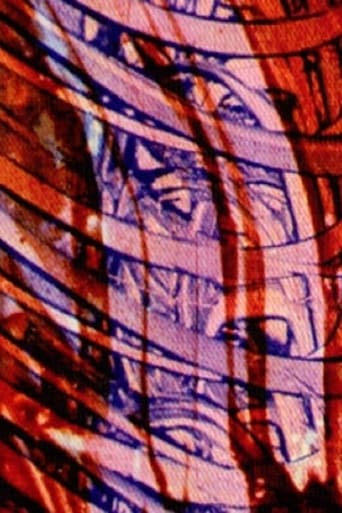
4.5Len Lye usually timed his films with great care to match their soundtracks, but for All Souls Carnival, he and composer Henry Brant worked separately, preferring to see if the score and visual track would synchronise by chance. Lye also experimented with a new Direct Film technique, drenching the filmstrip in colourful paint and marker pen.
All Souls Carnival
1957
Intended as a publicity film for Chrysler, Rhythm uses rapid editing to speed up the assembly of a car, synchronizing it to African drum music. The sponsor was horrified by the music and suspicious of the way a worker was shown winking at the camera; although Rhythm won first prize at a New York advertising festival, it was disqualified because Chrysler had never given it a television screening. P. Adams Sitney wrote, “Although his reputation has been sustained by the invention of direct painting on film, Lye deserves equal credit as one of the great masters of montage.” And in Film Culture, Jonas Mekas said to Peter Kubelka, “Have you seen Len Lye’s 50-second automobile commercial? Nothing happens there…except that it’s filled with some kind of secret action of cinema.” - Harvard Film Archive
Rhythm
1957
Len Lye’s camera-less film animates “swing” versions of the popular Lambeth Walk—featuring Django Reinhardt on guitar and Stéphane Grappelli on violin—through scratched and painted imagery directly on celluloid. Sponsored by the Tourist and Industrial Development Association after Lye and his family fell into hardship, the film blends vibrant visual rhythms with music, free of advertising slogans, and stands out as one of Lye’s most playful experiments in direct cinema.
Swinging the Lambeth Walk
1940
 5.9
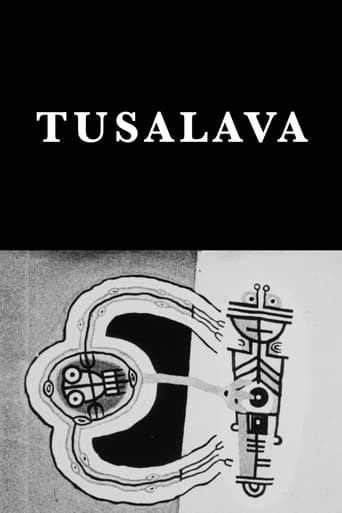
5.9With the screen split asymmetrically, one part in positive, the other negative, the film documents the evolution of simple celled organic forms into chains of cells then more complex images from tribal cultures and contemporary modernist concepts. The images react, interpenetrate, perhaps attack, absorb and separate, until a final symbiosis (or redemption?) is achieved.
Tusalava
1929
 NR
NRIn 1959 the United Nations commissioned Lye to make this one-minute film, “Fountain of Hope,” to publicize United Nations Day (24th October). The film was screened worldwide in cinemas and on television. Lye superimposed the word for “peace” in many different languages over some of his kinetic sculptures, while a United Nations choir sang related music by Henry Brant that combined many national styles. Lye’s work was selected because the United Nations wanted to overcome language barriers, using visual images with a strong emotional impact and “universal appeal”. Lye was delighted to be associated with a message of world peace.
Fountain of Hope/Peace
1959
 6.8
6.8Lye created a series of scratched images in the 1950s – more regular or geometric than his usual style – to accompany Rock ‘n’ Rye, a track by jazz guitarist Tal Farlow, but he did not get far with the editing. He returned to the material in 1980 but died before it was completed. His assistant Steven Jones finished the film under the supervision of Lye’s widow Ann, who had been closely involved with all of Lye’s American films. - Harvard Film Archive
Tal Farlow
1981
Documentary about New York night clubs.
March of Time: Night Club Boom
1945
 5.5
5.5Life’s Musical Minute, recently re-discovered, is a short promotional film of this kind, based on Gene Krupa’s drum solo from “Golden Wedding” by the Woody Herman jazz band. It was Lye’s attempt to gain support from Life Magazine.
Life's Musical Minute
1953
 NR
NRDocumentary about women factory workers.
Work Party
1942
Experimental documentary about recycling.
Collapsible Metal Tubes
1942
Lye completed his last great film a few months before his death at the age of 78. The film returned to the black-and-white techniques of Free Radicals. Lye created what he called “vibrant little images” or “zig-zags” with a sense of “zizz”. The clusters of small scratches gave the film a unique texture – the images looked rough but were in fact extremely subtle. The title Particles in Space referred to flashes of energy of the kind sometimes seen by astronauts in space. The soundtrack combined “Jumping Dance Drums” from the Bahamas with drum music by the Yoruba of Nigeria and the sounds of Lye’s metal kinetic sculptures. The opening titles demonstrated Lye’s mastery of the scratching of letters and words on film, a method imitated by other film-makers such as Stan Brakhage.
Particles in Space
1980
A British WWII propaganda short warning citizens that Nazi sympathizers could be listening to their everyday conversations to discover important information about the war effort.
Musical Poster #1
1942
This riot of color was a showcase for Lye’s hand-painted and stenciled imagery. Sponsored by Imperial Airways, it incorporates the airline’s “speedbird” symbol, and the music consists of “Honolulu Blues” by Red Nichols and a rumba by the Lecuona Cuban Boys. Time Magazine raved about the film, describing Lye as England’s alternative to Walt Disney (a David-and-Goliath comparison!). Like Lye’s other films, Colour Flight was not eligible for distribution in the US due to its status as an overseas advertising film. - Harvard Film Archive
Colour Flight
1937