
Acting
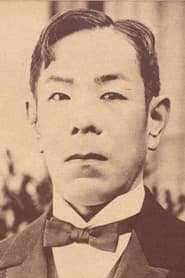
Matsunosuke Onoe
Born — Died
1875-09-12 — 1926-09-11
Place of birth
Okayama, Japan
Known for
Acting
Credits
50 titles
Matsunosuke Onoe sometimes known as Medama no Matchan ("Eyeballs" Matsu), was a Japanese actor. His birth name is Tsuruzo Nakamura.[1] He is sometimes credited as Yukio Koki, Tamijaku Onoe, or Tsunusaburo Onoe, and as a kabuki artist he went by the name Tsurusaburo Onoe. He gained great popularity, appearing in over 1000 films, and has been called the first superstar of Japanese cinema.
Known for
 NR
NRThe commission of a triptych sends a guilty painter into a downward spiral.
TS-CAM
2026
 5.6
5.6Jiraiya is some sort of super-ninja with superpowers. He can fly, he can avoid detection by turning himself into a toad, and he has some sort of ability to vanish.
Jiraiya the Hero
1921
No synopsis available yet.
Iwami Jûtarô
1924
Horror short.
Iwami Jûtarô
1911
No synopsis available yet.
Iwami Jûtarô
1922
 5.8
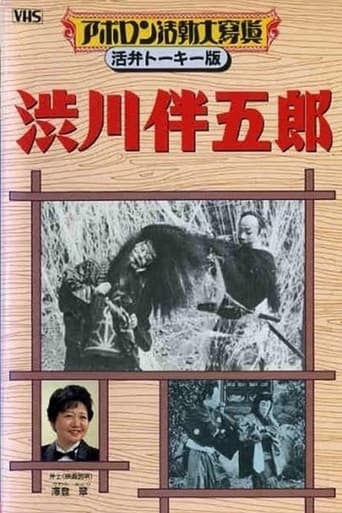
5.8A film on the life of Shibukawa Bangorō, the founder of the Shibukawa-ryū school of jūjutsu. To paraphrase Satō Tadao’s blurb on the back cover of the video, this is an important film for three reasons. 1. it is an almost perfectly well preserved copy of one of only a few full-length movies still available of the first superstar in Japanese cinema history, the very famous Onoe Matsunosuke. 2. it uses a method that was common in the silent era, the dyeing/tinting of film to mark given moments of day (for ex., blue for night-time) or given situations (for ex., red for fire) – and even though most films that used this technique have been redeveloped in straight b&w, this one is available in its original form. 3. it is an early SFX (special effects) movie that uses the basic tools of the trade - a great action movie full of swordsmanship and monsters (bakemono).
Shibukawa Bangorō
1922
Film credits
2020s · 1 titles
1920s · 14 titles
5.6Jiraiya is some sort of super-ninja with superpowers. He can fly, he can avoid detection by turning himself into a toad, and he has some sort of ability to vanish.
Jiraiya the Hero
1921
No synopsis available yet.
Iwami Jûtarô
1924
No synopsis available yet.
Iwami Jûtarô
1922
5.8A film on the life of Shibukawa Bangorō, the founder of the Shibukawa-ryū school of jūjutsu. To paraphrase Satō Tadao’s blurb on the back cover of the video, this is an important film for three reasons. 1. it is an almost perfectly well preserved copy of one of only a few full-length movies still available of the first superstar in Japanese cinema history, the very famous Onoe Matsunosuke. 2. it uses a method that was common in the silent era, the dyeing/tinting of film to mark given moments of day (for ex., blue for night-time) or given situations (for ex., red for fire) – and even though most films that used this technique have been redeveloped in straight b&w, this one is available in its original form. 3. it is an early SFX (special effects) movie that uses the basic tools of the trade - a great action movie full of swordsmanship and monsters (bakemono).
Shibukawa Bangorō
1922
The legendary tale of the forty-seven samurai and their mission to avenge the death of their master.
Zōho kaitei Chūshingura
1927
The 1000th film for actor Matsunosuke Onoe, made for Nikkatsu Studios.
Araki Mataemon
1925
No synopsis available yet.
Iwami Jûtarô: kôhen
1920
Japanese horror movie from 1920.
Sugawara denju tenarai kagami terakoya
1920
short film about Banchō Sarayashiki.
Banchō Sarayashiki
1923
 NR
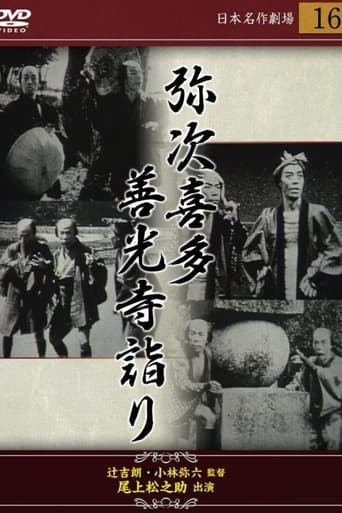
NRNo synopsis available yet.
弥次喜多 前篇 善光寺詣りの巻
1921
Film about Ghost-Cat.
Nabeshima no nekô
1922
Japanese horror movie from 1921.
Tenjiku Tokubei
1921
Japanese horror movie from 1920.
Kasamori ôsen
1920
Film about Ghost-Cat.
Arima no neko
1920
1910s · 34 titles
Horror short.
Iwami Jûtarô
1911
Horror short.
Iwami Jûtarô
1914
Arima Ghost-Cat movie.
Arima no nekô sôdô
1916
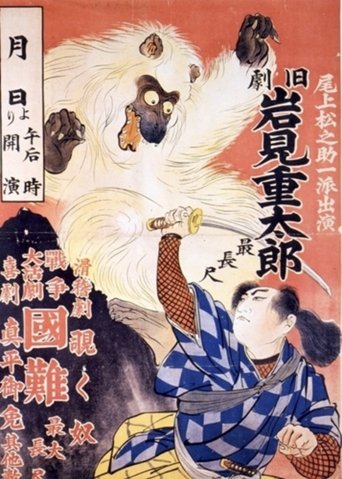 NR
NRNo synopsis available yet.
Iwami Jûtarô
1917
Japanese horror movie from 1916. Produced by Nikkatsu.
Kaiketsu Ondo maru
1916
Okazaki Ghost-Cat movie.
The Okazaki Cat
1914
Japanese horror movie from 1914.
The Ground Spider
1914
No synopsis available yet.
Botan Dōrō
1914
Film about Ghost-cat.
Monster-Cat of Sanno
1914
 9.0
9.0An adventure film with Benshi performers. Sometimes considered the 'first Japanese feature film', it survives today as a compilation of scenes from various different 1910s adaptations totaling nearly three hours in length. The bulk of the content comes from the 1911 adaptation by legendary Japanese filmmaker Makino Shozo.
The 47 Loyal Ronin
1910
No synopsis available yet.
Yotsuya Kaidan (Jitsoroku Oiwa)
1918
No synopsis available yet.
Iwami Jûtarô
1919
Japanese horror movie from 1918.
Sakura Sôgorô
1918
No synopsis available yet.
The Loyal 47 Ronin
1913
Japanese horror movie from 1913.
Life Story of Iwami Jutaro
1913
The first version of a kabuki ghost story which would be filmed numerous times, the story is based on a historical incident which occurred in 1622 when an assassination attempt Tokugawa lemitsu, during his visit to Utsunomiya Castle. This alleged plan involved luring lemitsu into a "death-trap" room with a falling ceiling filled with rocks. A sub-plot involves retribution by the ghost of a man murdered and buried in a well.
The Hanging Ceiling at a Utsunomiya
1910
Japanese horror movie from 1914.
Tenjiku Tokubei
1914
short film about Banchō Sarayashiki.
Bancho sarayashiki
1914
Film about Ghost-cat.
Cat Chaos at Kamakura Palace
1914
Film about Ghost-Cat.
Nabeshima kaibyô
1917
Film about Ghost-Cat.
Ekō-in no nekotsuka
1918
Legend tells the Watanabe-no-Tsuna, one of Raiko's demon-hunters, was summoned to Rashomon where an evil she-demon, Idaraki-doji, was praying on traveler's. He hacked off the demon's arm, but she later tricked him into returning it.
Rashomon
1911
Japanese horror movie from 1919.
Sugawara tenjin ki
1919
Japanese horror movie from 1914.
100 Weird Legends of Murumachi Palace
1914
Film about Ghost-Cat.
Ôkazaki kaibyoden
1919
Sequel to the film "The Mito Kōmon Chronicles" (1910).
The Mito Kōmon Chronicles: Part Two
1910
Japanese horror movie from 1917.
Kaidan chibusa enoki
1917
First film adaptation of Mito Kōmon.
The Mito Kōmon Chronicles
1910
Japanese horror movie from 1919.
Tenjiku tokubei
1919
Japanese horror movie from 1919.
Utsunomiya tsuritenjô
1919
Japanese horror movie from 1912.
Sakura Sôgorô
1912
Japanese horror movie from 1918.
Banchō Sarayashiki
1918
Film about Ghost-Cat.
Nabeshima Cat Riot
1919
A tale of betrayal, murder and revenge.
Yotsuya Kaidan
1912