
Known for
 9.0
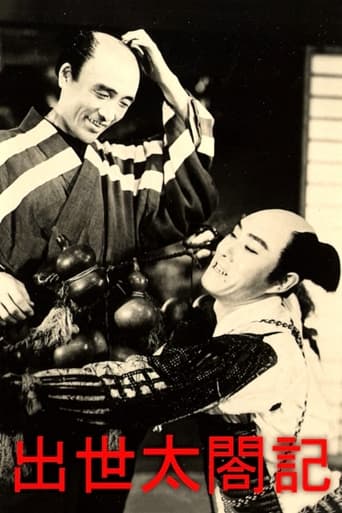
Taikoki is a legendary biography of Toyotomi Hideyoshi, who rose to the office of taikō. And the story of this film is about the rise to power of Toyotomi Hideyoshi from a farmer's son.
Taiko's Rising in the World
1938
No synopsis available yet.
Rônin-gai - Dai-san-wa: Tsukareta hitobito
1929
 8.0
No synopsis available yet.
Keai-dori
1928
No synopsis available yet.
Akuma no hoshî no shita nî
1927
 10.0
This film tells the story of a ronin falsely accused of a crime and unable to convince others of his innocence.
Beheading Place
1929
In old Edo, Kakunojo (Chiezo), a dandy about town, falls in love with Oichi (Isuzu Yamada), whose merchant family is much beyond Kakunojo's status. He nevertheless pursues her until her initial disgust breaks down into fondness, then romantic feelings, inducing her to abandon her fiance on their wedding day.
Banquet Under the Midnight Sun
1932
Behind the camera
9.0Taikoki is a legendary biography of Toyotomi Hideyoshi, who rose to the office of taikō. And the story of this film is about the rise to power of Toyotomi Hideyoshi from a farmer's son.
Taiko's Rising in the World
1938
No synopsis available yet.
Rônin-gai - Dai-san-wa: Tsukareta hitobito
1929
8.0No synopsis available yet.
Keai-dori
1928
No synopsis available yet.
Akuma no hoshî no shita nî
1927
10.0This film tells the story of a ronin falsely accused of a crime and unable to convince others of his innocence.
Beheading Place
1929
In old Edo, Kakunojo (Chiezo), a dandy about town, falls in love with Oichi (Isuzu Yamada), whose merchant family is much beyond Kakunojo's status. He nevertheless pursues her until her initial disgust breaks down into fondness, then romantic feelings, inducing her to abandon her fiance on their wedding day.
Banquet Under the Midnight Sun
1932
 NR
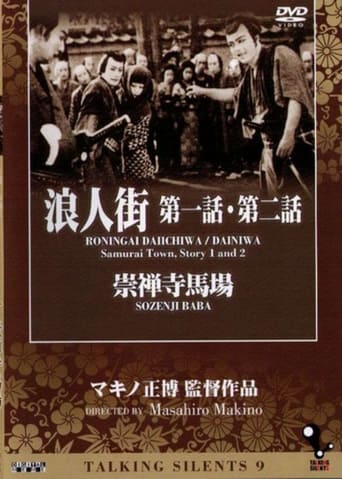
A representative film directed by Masahiro Makino, son of Shozo Makino ("the father of Japanese film"). This film lent status to ensemble casts that did not rely on famous stars. The unique setting of the samurai town, exquisite camera work and fast-paced sword fighting scenes all have an original appeal that audiences can related to even today.
Samurai Town Story Part II
1929
 6.0
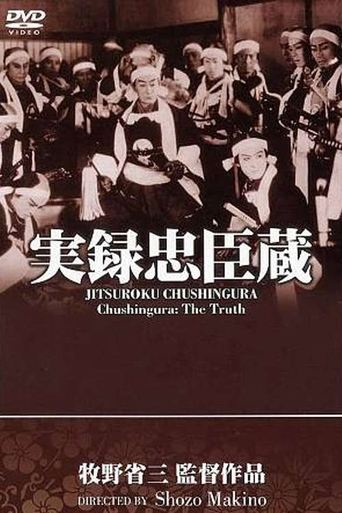
Lord Asano Takumi-no-Kami Naganori was charged with receiving a group of envoys from the Imperial Court in Kyoto. He was young and slightly inexperienced, so Lord Kira Kozuke-no suke Yoshinako was given the task of instructing Lord Asano in the customs of the ceremony. On the day of the reception, something went terrible wrong, and Lord Asano attempted to kill Lord Kira. For this, Lord Asano was order to commit seppuku. However, in violation of existing law, Lord Kira was not punished. The ruling Shogun Tokugawa Tsunayoshi eventually confiscated Lord Asano's land and dismissed the samurai that had served him so faithfully, effectively making them all ronin. Two years later, Oishi Kuranosuke Yoshi led a group of samurai loyal to Lord Asano in an attack on Kira's compound. Their aim was to capture and kill him.
Chushingura: The Truth
1928
All that remains of the first Samurai Town Story is the concluding battle.
Samurai Town Story Part I
1928
The third in a trilogy of Kunisada Chuji films by Hiroshi Inagaki.
Kunisada Chuji: Hareru Akagi no maki
1933
Sozenji Baba is a 1928 black and white Japanese silent film directed by Masahiro Makino. It is an ambitious film in which Makino deals with the difficult issue of the agony of a person who killed for revenge.
Sozenji Baba
1928