
Directing
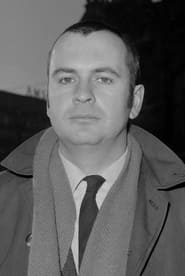
Johan van der Keuken
Born — Died
1938-04-07 — 2001-01-07
Place of birth
Amsterdam, Netherlands
Known for
Directing
Credits
47 titles
Johan van der Keuken (4 April 1938 – 7 January 2001) was a Dutch documentary filmmaker, author, and photographer. In a career that spanned 42 years, Van der Keuken produced 55 documentary films, six of which won eight awards. He also wrote nine books on photography and films, his field of interest. For all his efforts, he received seven awards for his life work, and one other for photography.
Known for
 NR
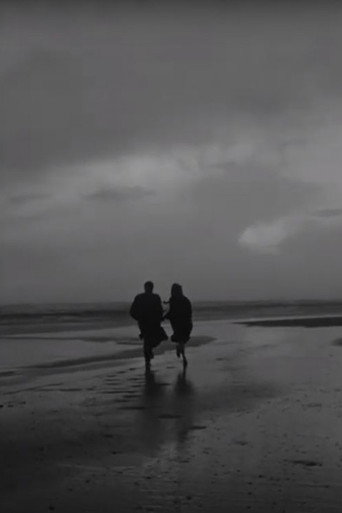
NRRare fictional short, written by Remco Campert, in the veins of existentialism. About a young man who is in love with the girlfriend of his best pal.
Een zondag
1960
An short anti-cruise missile film created in collaboration with a group of filmmakers.
Toy
1984
A "revolutionary theater" troupe from North Vietnam performs in Amsterdam.
Vietnam Opera
1973
 6.0
6.0Face Value is a film combining a conscious approach with spontaneity, and contemplation with action. It presents us with the differing views of a region we call “Europe”, an imaginary Europe situated somewhere between London, Marseilles, Prague and the Netherlands.
Face Value
1991
 NR
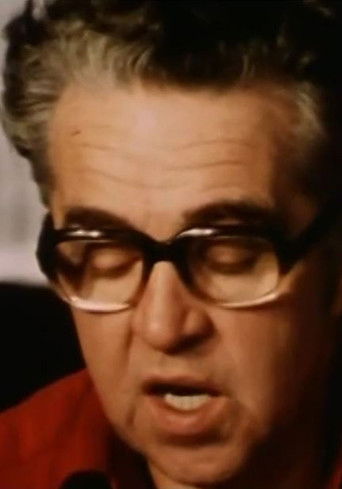
NRFive portraits from the mid-seventies. The nouveau riches and the nouveau pauvres take their places. With Joop Uchtman, Claude Menard, Ome Joop Beaux, Doris Schwert en Jan van Haagen.
Spring
1976
 9.0
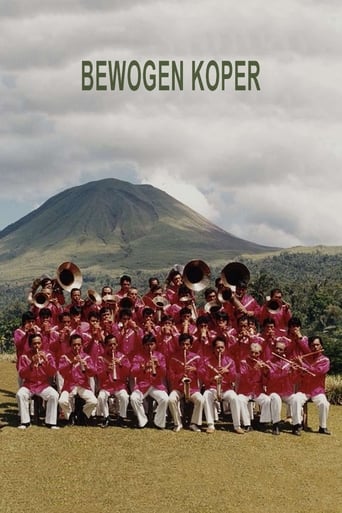
9.0Documentary shows brass bands from Nepal, Surinam, Indonesia and Ghana.
Brass Unbound
1993
Film credits
2000s · 4 titles
 7.4
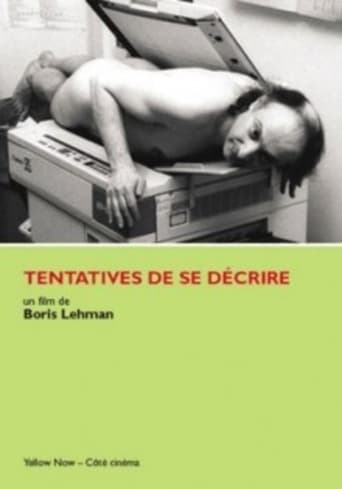
7.4Trying to describe oneself is a movie about representation. How it is possible, through film, to describe oneself and describe others. With the camera as mirror and third eye. At first, a collage-like combination of letter-writing, investigation and journey, something between documentary and feature film. Finally, a portrait of Boris Lehman from 1989 to 1995, part II of BABEL.
Trying to Describe Oneself
2005
Following in the footsteps of his uncle, this film documents the last days of Johan van der Keuken.
Last Words
2002
 NR
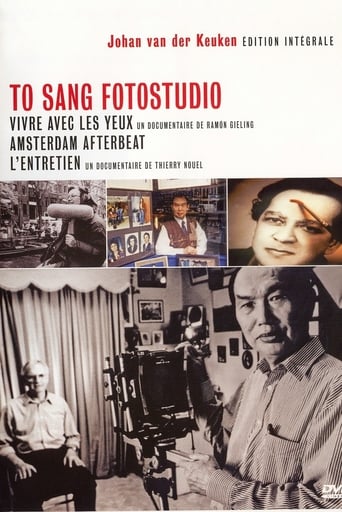
NRDuring the shooting of this film, four long interviews were recorded by Thierry Nouel, marking out the different stages of the life and work of the Dutch director. Johan van der Keuken analyzes the relationships between art and reality, morality and the political, gives his conception of exchanges and conflicts between interiority and the outside world. He explains with precision this research which goes at all to the intimate, and which did not progress without rejections and moments of doubt. Shortly before his death, he had reviewed this document and wanted it to be shown as such, in its unedited state.
L'Entretien (avec Johan van der Keuken)
2001
Documentary by Jan Sebening and Daniel Sponsel.
The Last Documentary
2000
1990s · 2 titles
 7.0
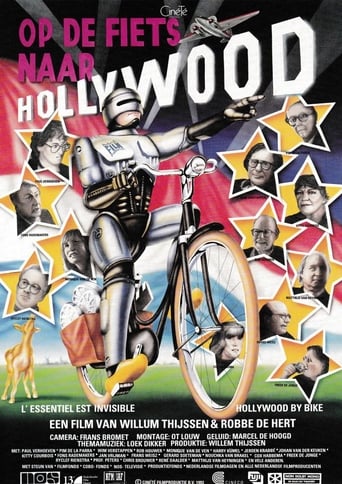
7.0Documentary that looks back at 35 years of Dutch cinema, with Paul Verhoeven and others.
Hollywood by Bike
1993
Last Words: My Sister Yoka (1998) is the director's tribute to his sister, who speaks to the camera just days before she dies of cancer.
Last Words: My Sister Yoka
1998
Behind the camera
NRRare fictional short, written by Remco Campert, in the veins of existentialism. About a young man who is in love with the girlfriend of his best pal.
Een zondag
1960
NRRare fictional short, written by Remco Campert, in the veins of existentialism. About a young man who is in love with the girlfriend of his best pal.
Een zondag
1960
An short anti-cruise missile film created in collaboration with a group of filmmakers.
Toy
1984
A "revolutionary theater" troupe from North Vietnam performs in Amsterdam.
Vietnam Opera
1973
6.0Face Value is a film combining a conscious approach with spontaneity, and contemplation with action. It presents us with the differing views of a region we call “Europe”, an imaginary Europe situated somewhere between London, Marseilles, Prague and the Netherlands.
Face Value
1991
NRFive portraits from the mid-seventies. The nouveau riches and the nouveau pauvres take their places. With Joop Uchtman, Claude Menard, Ome Joop Beaux, Doris Schwert en Jan van Haagen.
Spring
1976
9.0Documentary shows brass bands from Nepal, Surinam, Indonesia and Ghana.
Brass Unbound
1993
9.0Documentary shows brass bands from Nepal, Surinam, Indonesia and Ghana.
Brass Unbound
1993
 NR
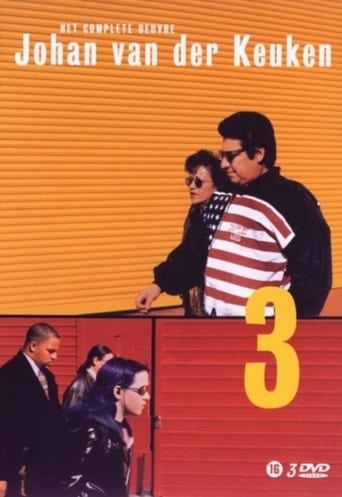
NRFilm essay about the slums of 1960's Amsterdam.
Four Walls
1965
 6.0
6.0Detective Beauty undertakes an investigation into reality. He tries to understand a world he cannot grasp, to capture the things that escape him.
Beauty
1970
 6.5
6.5This film is a playful and experimental film object. The images of several films by Johan van der Keuken are mounted in a rhythmic and circular way to emphasize the repetition and similarity of the gestures they give to see: the daily gestures of men and women at work, throughout the world.
Temps/Travail
1999
 7.1
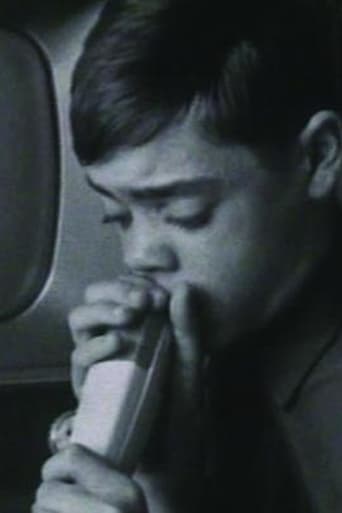
7.1With the use of montage sequences, voiced over with the observations of the children, van der Keuken was able to use artistic expression to portray the sightless children’s unique perspective of the world.
The Blind Child
1964
In the district of Amsterdam where Johan van der Keuken lived with his family for more than twenty years, the "Islands of the West", the inhabitants were mobilised during then ‘70s in order to protest against the city’s policy of demolishing housing to make way for big commercial buildings. One misty October morning, they all got together to make a vast painting on one of the walls of a narrow road going through the district. A great day of community spirit. When the mural is finished, one can see the cranes and half demolished houses still there and a little further away the uninterrupted flow of traffic continues.
De Muur
1973
Van der Keuken follows the creative process of Lucebert, a Dutch painter annex poet. Episode four of four in a series for the VPRO.
Lucebert
1962
 NR
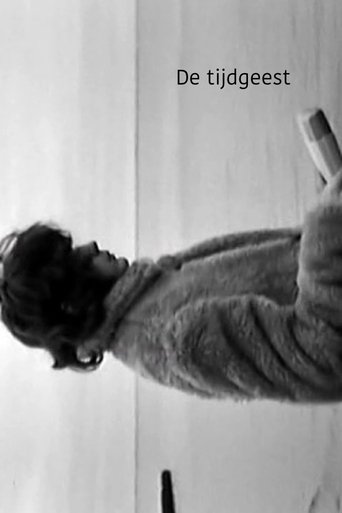
NRIn SPIRIT OF THE TIME (1968) van der Keuken presents a collage of "drop-outs," protesters (both left and right), musicians and "hippies." He organizes these figures around an idea of "mental readjustment," otherwise known as the counterculture. Acting upon a political and social withdrawal into self, they have tried to find new ways of living together.
The Spirit of the Times
1968
 6.8
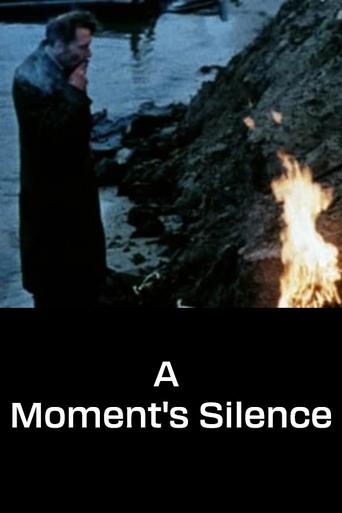
6.8In his very first ‘independent film’, Dutch master filmmaker Johan Van der Keuken presents an image of Amsterdam in the sixties. He set out taking just his camera, without any pre-defined concept. The result is a poetic observation of Amsterdam by a deeply committed filmmaker.
A Moment's Silence
1963
One of Van der Keuken's earliest fictional shorts.
Indische jongen
1964
 6.8
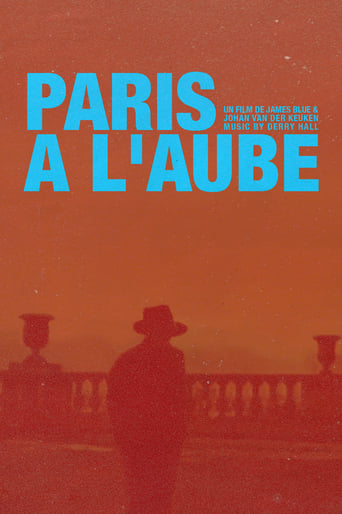
6.8Johan van der Keuken's first film is a uniquely beautiful portrait of Paris at dawn.
Paris at Dawn
1957
 6.0
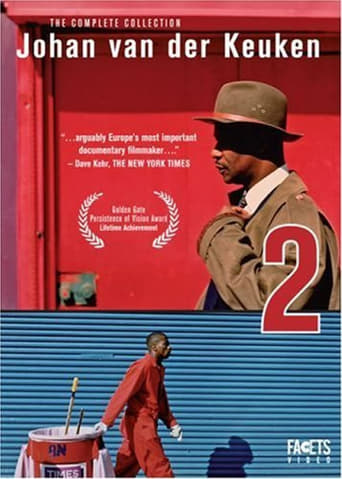
6.0Johan van der Keuken: 'We kept the ends of a lot of shots in Amsterdam Global Village: the camera leaves the subject and pans to the sound woman, who quickly taps the microphone. These taps later in the cutting become the references for synchronising picture and sound. This film is the rhythmic sequence of these taps, in which something of a story can be seen.
Amsterdam Afterbeat
1997
A short portrait of poet Bert Schierbeek, who reads from his poetry.
Bert Schierbeek/The Door
1973
A short portrait of poet Bert Schierbeek, who reads from his poetry.
Bert Schierbeek/The Door
1973
 6.9
6.9"I am far away on a distant journey through my own city", filmmaker Johan van der Keuken says at the end of his four-hour portrait of Amsterdam. The city is presented as a place where people from all corners of the world live, who all exert their cultural influence on the life in the city. With a motor courier as his central figure, the filmmaker introduces the audience to birds of different feathers. We see diverse cultural expressions, like the house scene, the entry of St. Nicholas and a Ghanese mourning ritual. The binding factor in the film is the concept of 'travelling', in other words Amsterdam as a global village. The camera travels through the film in three ways: over land, over water (canals) and through the air.
Amsterdam Global Village
1996
6.9"I am far away on a distant journey through my own city", filmmaker Johan van der Keuken says at the end of his four-hour portrait of Amsterdam. The city is presented as a place where people from all corners of the world live, who all exert their cultural influence on the life in the city. With a motor courier as his central figure, the filmmaker introduces the audience to birds of different feathers. We see diverse cultural expressions, like the house scene, the entry of St. Nicholas and a Ghanese mourning ritual. The binding factor in the film is the concept of 'travelling', in other words Amsterdam as a global village. The camera travels through the film in three ways: over land, over water (canals) and through the air.
Amsterdam Global Village
1996
Last Words: My Sister Yoka (1998) is the director's tribute to his sister, who speaks to the camera just days before she dies of cancer.
Last Words: My Sister Yoka
1998
 NR
NRThe opening segment for a planned larger documentary by Johan van der Keuken. Unfortunately, this is all that was completed before his death. These are small portraits of people he met during his travels.
For the Time Being
2002
 5.4
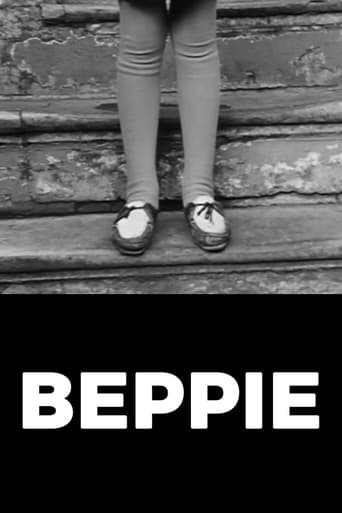
5.4BEPPIE is a moving and disarming portrait of an Amsterdam street urchin. Van der Keuken once described her as follows: 'She was ten years old and the joy of the Achtergracht, where I was living at the time. An Amsterdam child, sweet and crooked as a corkscrew.' He films her while she skims the city with some friends and knocks at strangers' doors. Her family has nine children and is not well off. In those days, a visit to the De Miranda swimming pool cost a quarter, but only ten cents if the weather was bad. At school, Beppie gets a poor mark because she is too boisterous, but when the whole class rattles off the multiplication tables, she joins in at the top of her voice. All of TV-watching Holland was wildly enthusiastic about this portrait, with which Van der Keuken even made the front page of the national newspaper De Telegraaf.
Beppie
1965
5.4BEPPIE is a moving and disarming portrait of an Amsterdam street urchin. Van der Keuken once described her as follows: 'She was ten years old and the joy of the Achtergracht, where I was living at the time. An Amsterdam child, sweet and crooked as a corkscrew.' He films her while she skims the city with some friends and knocks at strangers' doors. Her family has nine children and is not well off. In those days, a visit to the De Miranda swimming pool cost a quarter, but only ten cents if the weather was bad. At school, Beppie gets a poor mark because she is too boisterous, but when the whole class rattles off the multiplication tables, she joins in at the top of her voice. All of TV-watching Holland was wildly enthusiastic about this portrait, with which Van der Keuken even made the front page of the national newspaper De Telegraaf.
Beppie
1965
The point of departure for this film is the 1981 composition De Tijd by Dutch composer Louis Andriessen. Van der Keuken leaves the music undisturbed as an autonomous soundtrack and has the images engage in a sort of battle with it. These images are associations, fragments of events, scenes and situations. The film is preceded by a text by Bert Schierbeek.
Time
1984
In this short documentary by Johan van der Keuken, he films young women walking the streets of Amsterdam.
Wat zijn mooie meisjes
1959
The indomitable laughter of a radical. A collage. Third of four in a series for the VPRO.
Opland
1962
 7.2
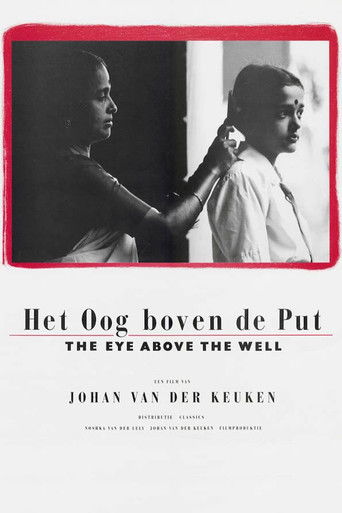
7.2A poetic depiction of life and ritual in the south Indian state of Kerala. We see how knowledge is passed down from generation to generation: within the family, through the village economy, and especially from teachers to students. Performance footage shows how song, dance, martial arts, and religion constitute the building blocks of a culture.
The Eye Above the Well
1988
7.2A poetic depiction of life and ritual in the south Indian state of Kerala. We see how knowledge is passed down from generation to generation: within the family, through the village economy, and especially from teachers to students. Performance footage shows how song, dance, martial arts, and religion constitute the building blocks of a culture.
The Eye Above the Well
1988
 6.0
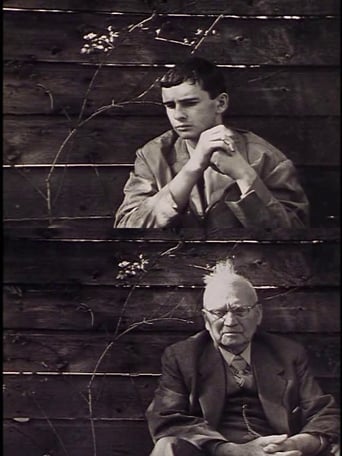
6.0The film is put together as a collection of autonomous images which, once combined, make up van der Keuken's mental universe: family happiness, fragments of some of his earlier films, a homage to the saxophonist Ben Webster, two poems by the great contemporary poets Remco Campert and Lucebert, a portrait of the director's grandfather, who taught him photography at the age of twelve... "One of those small masterpieces one encounters by surprise..." Jean-Paul Fargier, Cahiers du Cinéma, 1975
Filmmaker's Holiday
1974
 NR
NRExperimental documentary by Johan van der Keuken about Dutch painter and poet Lucebert.
A Film for Lucebert
1967
No synopsis available yet.
De straat is vrij
1968
 5.5
5.5In the late sixties, the American saxophone player and living jazz legend Ben Webster lived in Amsterdam for a year. Webster, who was born in Kansas City in 1909, was a unique personality in the world of jazz and blues. In the thirties, he played with all the great names. During his Amsterdam period, he stayed with an elderly landlady, Mrs Hardloper, with whom he appeared on a national talk show. In conversations with Van der Keuken, he muses on the past; on the fantastic experience of playing in the renowned Duke Ellington band; or on one of his best friends, who was so deft at eating with a knife and fork. Short, fragmented remarks, which Van der Keuken has edited in a loose, improvised editing style.
Big Ben: Ben Webster in Europe
1967
 8.3
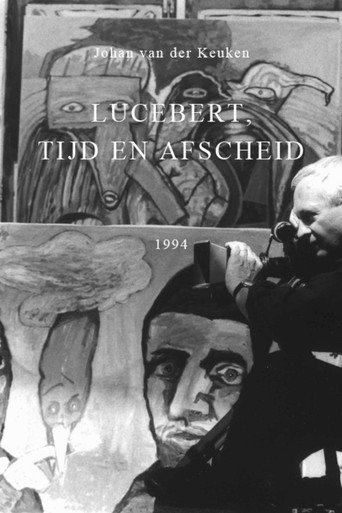
8.3Three-part film about the Dutch painter and poet Lucebert who died in 1994. Director Johan van der Keuken made three short films about his friend and inspiration Lucebert. The black-and-white film Lucebert, dichter-schilder was shot in 1962 on a very low budget. In 1967 Een film voor Lucebert was released. Unlike Van der Keuken's first film about Lucebert, this one had a political message. It is a film for an artist about the world. Lucebert died in May 1994. A reaction to his death is contained in Als je weet waar ik ben zoek me dan. In this film, shot in Lucebert's studio, the presence of the artist is evoked once more through his absence. In Lucebert, Time and Farewell, Van der Keuken puts the three films together into a new entity that exploits the tension between changing and standing still over a period of 32 years.
Lucebert, Time and Farewell
1994
In the person of To Sang, a Chinese-born photographer living and working in Amsterdam, JVDK has found his perfect counterpart and alter ego. To Sang's monumental, stagey portrait photos reach back toward painting, just as JVDK's carefully composed film images recall still photography. Like JDVK, To Sang works in close collaboration with his wife. As image-makers, both men gently but firmly impose their way of seeing on the world. "Although we laugh at first, in the end he is master of the situation," says JVDK about To Sang in Gieling's film.
To Sang Fotostudio
1997
Collage film in which Van der Keuken makes use of Eddy Posthuma de Boer's source material.
In ’t nest met de rest
1965
 NR
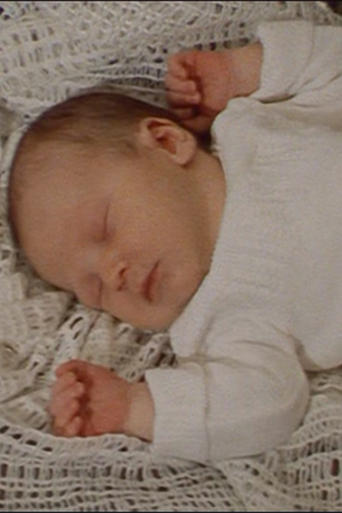
NRThe tools people adopt to try and control nature. In parallel with the early history of Van der Keuken's child.
Diary
1972