
Production
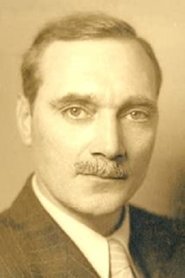
John Grierson
Born — Died
1898-04-26 — 1972-02-19
Place of birth
Kilmadock, Stirlingshire, Scotland, UK
Known for
Production
Credits
51 titles
John Grierson (1898–1972) was a pioneering Scottish filmmaker and producer who shaped the documentary film movement, earning recognition as the father of British and Canadian documentary cinema. He famously coined the term "documentary" in 1926 and championed the idea that film should serve as a tool for social education and reform. As the driving force behind the British documentary movement, he founded the GPO Film Unit, which produced groundbreaking works like Night Mail (1936), and later played a key role in establishing the National Film Board of Canada (NFB) in 1939, turning it into one of the world's most influential documentary institutions. Grierson’s vision and advocacy for documen…
Known for
Made to mark the fiftieth anniversary of the London County Council, responsible for many of the changes celebrated in the film – modern hospitals, schools and services.
The Londoners
1939
 NR
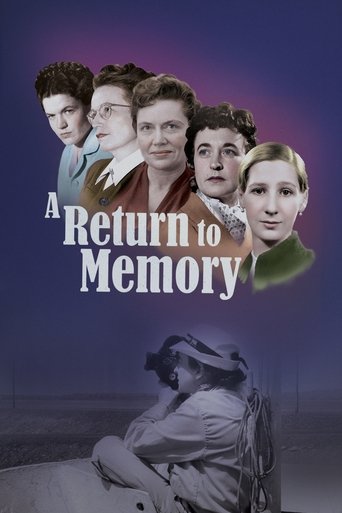
NRWhen Canada entered World War II, the National Film Board suddenly had an urgent new mission—and hundreds of women stepped forward, helping to create Canadian cinema as we now know it.
A Return to Memory
2024
 7.3
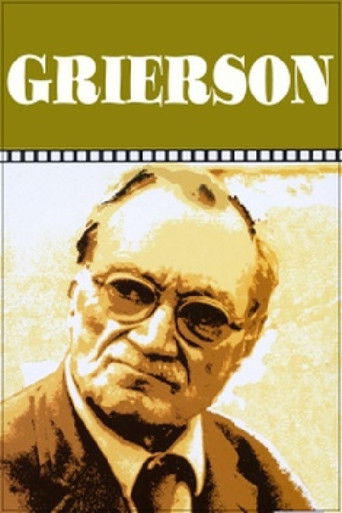
7.3A portrait of John Grierson, the first Canadian Government Film Commissioner and founder of the National Film Board in 1939. Interweaving archival footage, interviews with people who knew him and footage of Grierson himself, this film is a sensitive and informative portrait of a dynamic man of vision. Grierson believed that the filmmaker had a social responsibility, and that film could help a society realize democratic ideals. His absolute faith in the value of capturing the drama of everyday life was to influence generations of filmmakers all over the world. In fact, he coined the term 'documentary film'.
Grierson
1973
A boy pursues his ambition to be a jockey
Devil on Horseback
1954
 7.0
7.0The history of Scotland and the factors that have shaped the character of its people.
The Face of Scotland
1938
 6.2
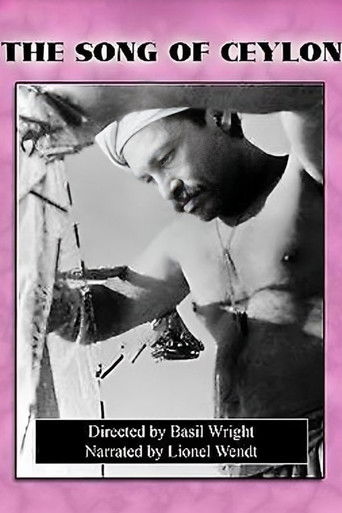
6.2Ambitious documentary chronicling the cultural life and religious customs of the Sinhalese and the effects of advanced industrialism on such customs.
The Song of Ceylon
1934
Film credits
2010s · 1 titles
1960s · 1 titles

1950s · 2 titles
1930s · 3 titles
7.0The history of Scotland and the factors that have shaped the character of its people.
The Face of Scotland
1938
Short documentary about a trawler fishing for hake.
On the Fishing Banks of Skye
1935
 6.2
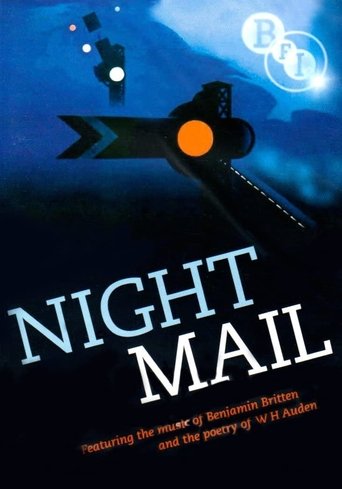
6.2This documentary short examines the special train on which mail is sorted, dropped and collected on the run, and delivered in Scotland on the overnight run from Euston, London to Glasgow.
Night Mail
1938
Behind the camera
Made to mark the fiftieth anniversary of the London County Council, responsible for many of the changes celebrated in the film – modern hospitals, schools and services.
The Londoners
1939
A boy pursues his ambition to be a jockey
Devil on Horseback
1954
6.2Ambitious documentary chronicling the cultural life and religious customs of the Sinhalese and the effects of advanced industrialism on such customs.
The Song of Ceylon
1934
 NR
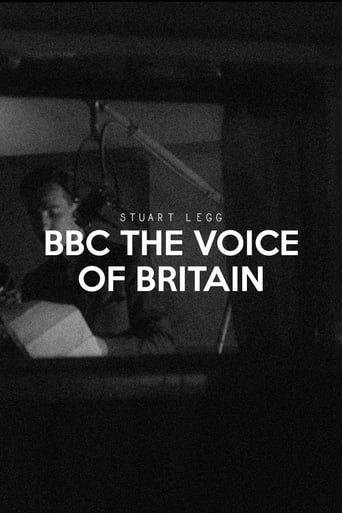
NRA behind-the-scenes GPO Film Unit documentary (directed by Stuart Legg) that races from studio rehearsals and newsrooms to control rooms and transmitters, weaving speeches, music, and outside broadcasts—featuring voices like H. G. Wells and Ramsay MacDonald—into a kinetic portrait of how the BBC’s national “voice” is made.
BBC: The Voice of Britain
1935
Farming techniques and modern methods bring new crops to market.
Spring Comes to England
1934
Part of BFI collection "Police and Thieves."
Four Men in Prison
1950
 2.0
2.0Short documentary showing the workings of a large London sorting office.
6.30 Collection
1934
 6.0
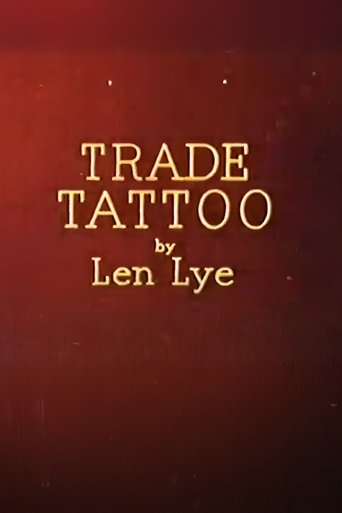
6.0Trade Tattoo went even further than Rainbow Dance in its manipulation of the Gasparcolor process. The original black and white footage consisted of outtakes from GPO Film Unit documentaries such as Night Mail. Lye transformed this footage in what has been described as the most intricate job of film printing and color grading ever attempted. Animated words and patterns combine with the live-action footage to create images as complex and multi-layered as a Cubist painting. Music was provided by the Cuban Lecuona Band. With its dynamic rhythms, the film seeks (in Lye’s words) to convey “a romanticism about the work of the everyday in all walks of life."
Trade Tattoo
1937
 10.0
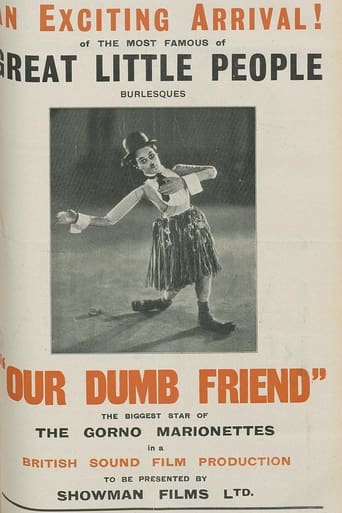
10.0Marionette parody of Charlie Chaplin.
Our Dumb Friend
1930
A film made by the British General Post Office (GPO) in 1933, promoting the automation of telephone exchanges.
The Coming of the Dial
1933
 5.6
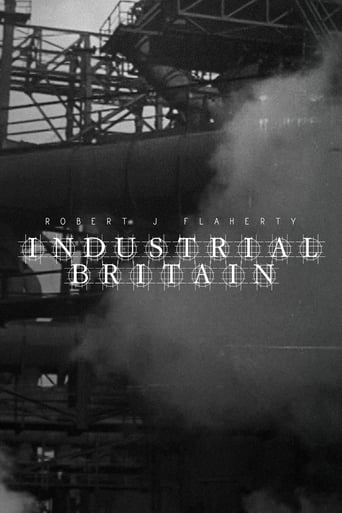
5.6Developed from John Grierson's opportunistic recruitment of the well-known director and anthropologist Robert Flaherty, Industrial Britain provides a traditional picture of Britain as is interrupted by industrial stacks billowing smoke. A dramatic illustration of how the young British documentary movement grappled with the influence of the genre’s founding father, Flaherty's ethos was essentially that of a 19th-century conservative individualist, attracted to the elemental extremes of nature and suspicious of the mechanisation of the modern world.
Industrial Britain
1931
A Cockney lad trains to be a messenger boy.
A Job in a Million
1937
 7.1
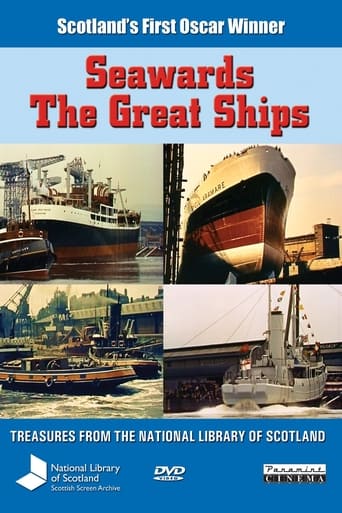
7.1Documentary about shipbuilding on the Clyde. In 1960, Glasgow and other towns and ports on the River Clyde, on the west coast of Scotland, were still one of the world's great centres of shipbuilding. The film gives an idea of the business of building a ship - the largest moving thing made by man - from the naval architects who design her to the workmen, the shipbuilders in the yard, through to a ship's launching.
Seawards the Great Ships
1960
Marionette parody of Cherry Kearton.
Kerri Cheertum in Jungle-Tungle
1930
Short documentary about a trawler fishing for hake.
On the Fishing Banks of Skye
1935
Short documentary about a trawler fishing for hake.
On the Fishing Banks of Skye
1935
Short documentary about a trawler fishing for hake.
On the Fishing Banks of Skye
1935
 NR
NRA celebration of the importance of the British countryside.
The Country Comes to Town
1933
An overview of the shepherd's life during the lambing season.
O'er Hill and Dale
1932
 NR
NR“Catching up with gossip, inspecting new ducklings, clambering over gates, walking across meadows - the life of a postman appears idyllic, but this Devon postie has some startling ideas about improving efficiency... The inimitable Richard Massingham, a doctor turned actor and filmmaker, co-directed this film, and appears in it as the testy Mr Proctor. This film was produced by John Grierson, often hailed as the father of British documentary. It was made for the General Post Office (GPO) Film Unit, one of the most remarkable creative institutions that Britain has produced. It provided a springboard for many of the best-known and critically acclaimed figures in the British Documentary Movement.” - BFI
Daily Round
1937
 10.0
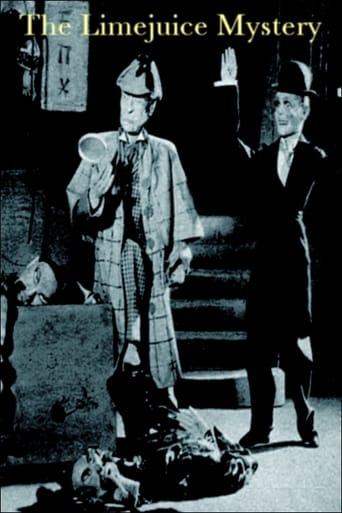
10.0In this parody of Sherlock Holmes, the Great Detective goes to an opium den of inequity in the dangerous London district of London and challenges Tong assassins in order to rescue a woman.
Herlock Sholmes in Be-a-Live-Crook
1930
 6.2
6.21935 documentary about the hard working life of Welsh coal miners.
Coal Face
1935
 5.0
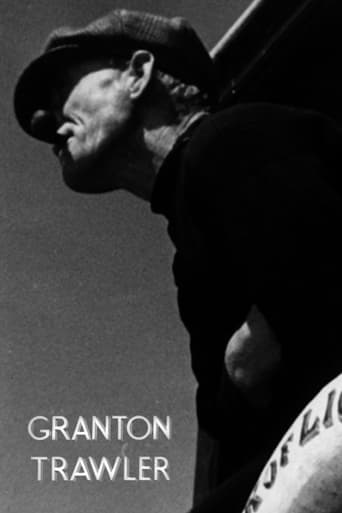
5.0Documentary following an Edinburgh fishing trawler, the "Isabella Grieg".
Granton Trawler
1934
5.0Documentary following an Edinburgh fishing trawler, the "Isabella Grieg".
Granton Trawler
1934
5.0Documentary following an Edinburgh fishing trawler, the "Isabella Grieg".
Granton Trawler
1934
 7.0
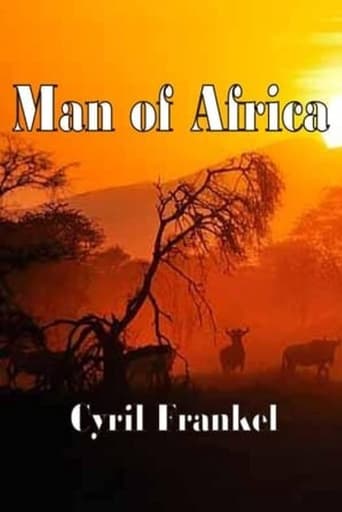
7.0Filmed in Uganda, Man of Africa was assembled by legendary documentary producer John Grierson. The film depicts the mass migration of the Bakija and Batwa tribes to a new territory after the natural resources of their native soil has been depleted. The pro-ecological message is always present, but never so much as to degenerate into fatuous speechmaking. As a means to introduce the semblance of a plot, writer/director Cyril Frankel concentrates on the trials and tribulations of clerk-cum-farmer Jonathan (Frederick Bijurenda) and his native sweetheart Violet (Violet Mukabuerza). Print quality in Man of Africa varies from adequate to murky.
Man of Africa
1953
 5.9
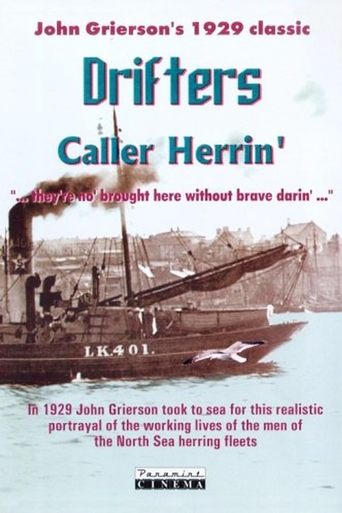
5.9The story of the North Sea herring fleets from Yarmouth and Lowestoft to Shetland.
Drifters
1929
 NR
NRThe building and launch of a new long-wave radio transmitter - just as the TV age is about to be born.
Droitwich: The World's Most Modern Long Wave Transmitter
1935
Marionette parody of Tom Mix.
Tom Mixup
1930
Life on a farm at springtime, including blossom, piglets and ducklings.
Spring on the Farm
1933
 NR
NRA record of an educational experiment in the small town of Chesterfield in Derbyshire.
The New Generation
2025
 NR
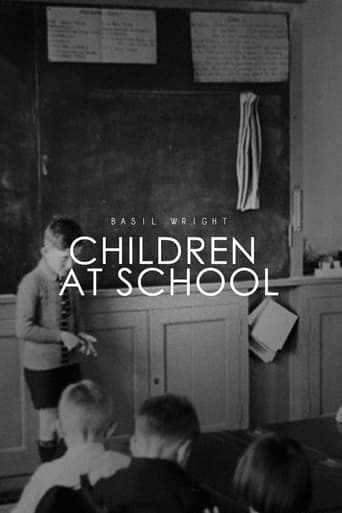
NRShort documentary about British education in the late 1930s.
Children at School
1937
 6.0
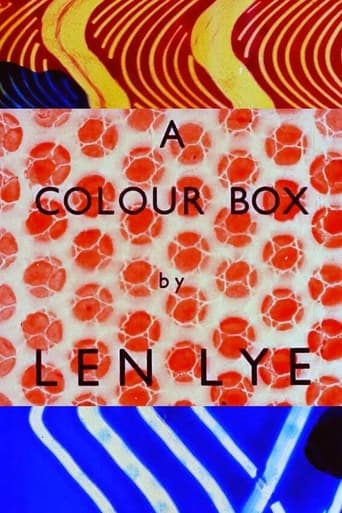
6.0Animated shapes dance to Cuban music. This was one of the first animations to be painted directly onto the film.
A Colour Box
1935
Story of salmon fishers and the methods they use; captures the migration of salmon up a Highland river for spawning.
Upstream
1932
Short documentary about weather forecasting, emphasising the importance of the GPO's telecommunications systems.
Weather Forecast
1934
 10.0
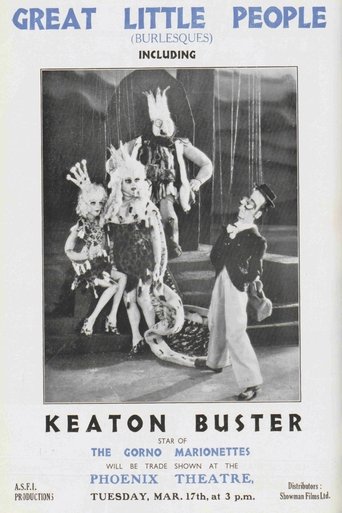
10.0Marionette parody of Buster Keaton.
Kuster Beaton
1930
A short GPO documentary showing how undersea telephone cables are repaired.
Cable Ship
1933
 NR
NRA stark warning about Britain’s coal-fired smog, charting its damage to health, buildings, and the economy while advocating cleaner gas/electric power, processed smokeless fuels, and better housing—presaging the Great Smog of 1952 and the Clean Air Act of 1956.
The Smoke Menace
1937
Early documentary, slung together from footage depicting the first invasion of North America by Europeans, designed to show industrial technology's role in the development of North America. Used footage from the 1923 feature "The Covered Wagon" as though it were history. Produced by the Empire Marketing Board, which was established by the Conservative Party in 1926 to promote inter-imperial trade.
Conquest
1930
 5.3
5.3Humphrey Jennings' first film as a director, a brief overview of the British postal service.
Post-Haste
1934