
Directing
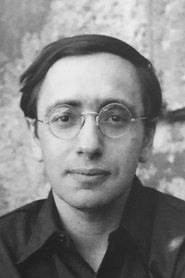
Ernie Gehr
Born
1941-01-01 (85)
Known for
Directing
Credits
44 titles
"Born in 1941, he began making eight-millimeter films in the mid-’60s. The precipitating event, he told the writer Scott MacDonald in a 2002-3 interview, was a program of Stan Brakhage films that Mr. Gehr caught in New York on a rainy night. The works excited him partly because in their abstraction and attention to color, texture and rhythm they were closer to his experience of 20th-century painting than of movies, and he continued to seek out more of the same. He eventually ended up at the Millennium Film Workshop and borrowing a light meter from the filmmaker Ken Jacobs (with whom Mr. Gehr shares an interest in early cinema). As he walked around New York reading light, as it were, Mr. Gehr…
Known for
 6.0
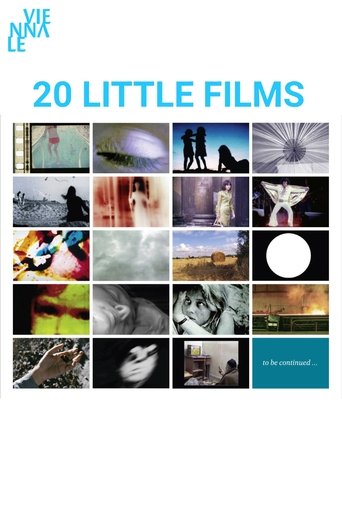
6.0Since 1995, the Viennale has invited renowned directors to create short, one-minute films as personal contributions to the festival. Ranging from home movies to political essays, musical sketches to abstract studies, these “little films” form a unique anthology of cinematic moments. 20 Little Films collects a selection of these works, premiering together for the Viennale’s 50th anniversary at the Locarno Film Festival.
20 Little Films
2012
 4.5
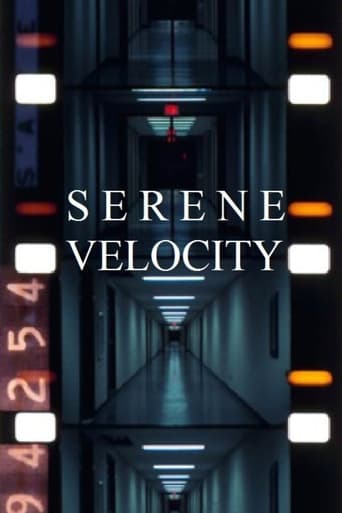
4.5An experimental short film which shows a time-lapse in the basement hallway of a Binghamton University building.
Serene Velocity
1970
 7.0
7.0Jonas Mekas assembles 160 portraits, appearances, and fleeting sketches of underground and independent filmmakers captured between 1955 and 1996. Fast-paced and archival in spirit, the film celebrates the avant-garde as its own “nation of cinema,” a vital community existing outside the dominance of commercial film.
Birth of a Nation
1997
 NR
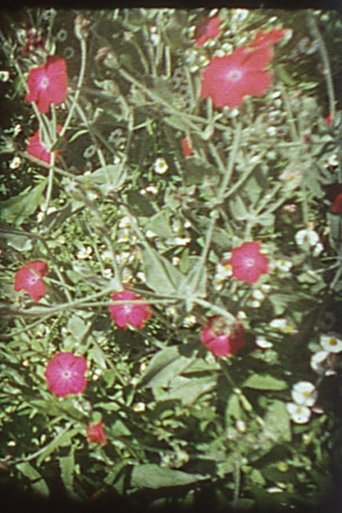
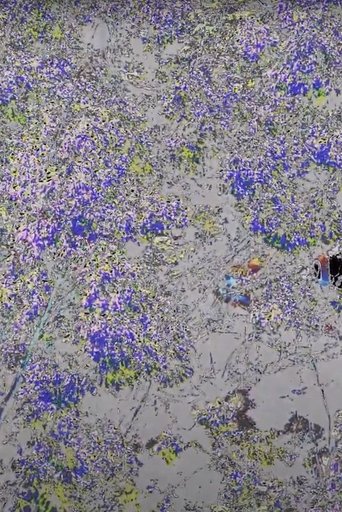
NRA stereoscopic view of a suburban backyard.
Precarious Garden
2004
 NR
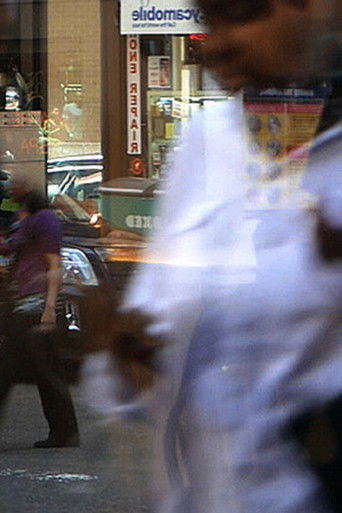
NR2022. USA. Directed by Ernie Gehr. Digital. 8 min.
Lisbon Views
2022
 NR
NR“It’s a mysterious field, this screen rectangle populated by haunting phantasmagoric phenomena, be it representational or just patterns of color, light and darkness. Realism has no place here, but lifelike re-presentations of consciousness and the imagination do. Even in the most fleeting of spaces…. hmm, spaces on a 2-dimensional plane? Never mind! Look at the above still image. Intrigued? Then perhaps the work from where it came might interest you.” - Ernie Gehr
Floating Particles
2021
Film credits
1960s · 2 titles
A brief excerpt from Huge Pupils that has been shown on its own. Portrait of filmmaker Ernie Gehr shown at FIAF's Symposium on the Importance of Non-Industrial Cinema Within Our Cultural Heritage in 1984.
A Portrait of Ernie Gehr
1968
 NR
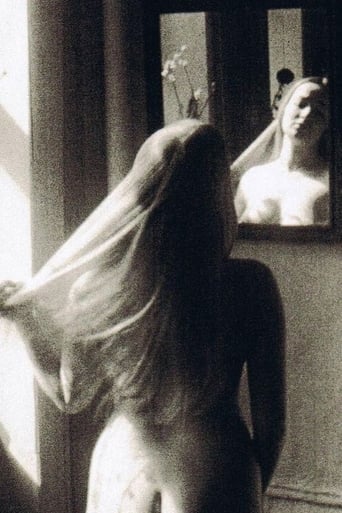
NRIn 1968, Noren finished Huge Pupils, a gorgeous, sensuous, sexually outrageous visual study of his daily life, and part I of an ongoing series he would come to call The Adventures of the Exquisite Corpse.
Huge Pupils
1968
Behind the camera
6.0Since 1995, the Viennale has invited renowned directors to create short, one-minute films as personal contributions to the festival. Ranging from home movies to political essays, musical sketches to abstract studies, these “little films” form a unique anthology of cinematic moments. 20 Little Films collects a selection of these works, premiering together for the Viennale’s 50th anniversary at the Locarno Film Festival.
20 Little Films
2012
4.5An experimental short film which shows a time-lapse in the basement hallway of a Binghamton University building.
Serene Velocity
1970
NRA stereoscopic view of a suburban backyard.
Precarious Garden
2004
NR2022. USA. Directed by Ernie Gehr. Digital. 8 min.
Lisbon Views
2022
NR“It’s a mysterious field, this screen rectangle populated by haunting phantasmagoric phenomena, be it representational or just patterns of color, light and darkness. Realism has no place here, but lifelike re-presentations of consciousness and the imagination do. Even in the most fleeting of spaces…. hmm, spaces on a 2-dimensional plane? Never mind! Look at the above still image. Intrigued? Then perhaps the work from where it came might interest you.” - Ernie Gehr
Floating Particles
2021
 NR
NRAvant-garde work by Ernie Gehr.
Bon Voyage
2015
 10.0
10.0An ode to digital interlace, which is to video what intervals between frames are to film…
Crystal Palace
2011
 NR
NR"The other Gehr installation, Modern Navigation, is a two-screen piece that shows people looking at fish in an aquarium. It is dark and mysterious, and seemed to me to be a witty and even slightly ironic comment on museum-going and art viewing in museums, which interpretation Gehr confirms was part of his intent. It's a good idea to see it from different positions, including from different upper-level locations at the top of the ramp." - Fred Camper
Modern Navigation
2002
 NR
NRErnie working his magic.
Construction Sight
2018
City is grounded in the familiar everyday world of the street. Yet, the ground often gives way plastically, opening up a dense and paradoxical field for visual musings and delights as colours, solids and transparencies as well as spaces within spaces weave a tapestry of a somewhat familiar ‘city’.
City
2002
 NR
NRNothing extraordinary. Just a ride on the S-Bahn (elevated train) through a small section of what used to be East Berlin. An anxious journey fraught with projections. A ride very much in the present, but due to history and family history, also a journey into and out of time.- Ernie "The GOAT" Gehr
Passage
2003
 NR
NR“We are confronted with everyday images in a romantic way. If you are patient, you eventually see a deli sign that says ‘Carroll Gardens,’ a bike, a stroller. These images are initially obscured, but through repetition become recognizable, until Ernie intuitively knows when to cut once you understand what you are looking at. You are rewarded after every cut.” -Larry Gottheim
Carroll Gardens
2024
 NR
NRAmerican avant-garde master Ernie Gehr’s stunning Waterfront Follies (USA) is a work of extended sublime that presents a view of the Brooklyn harbour as it is continuously interrupted by the flow of human interaction. The film’s structure and soundtrack work as a reminder of the constant intersections between life’s impulsiveness and beauty. - Peter Knegt
Waterfront Follies
2009
 NR
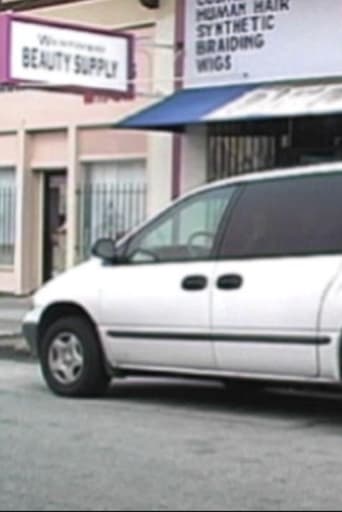
NRFrom a train trip home, legendary experimental filmmaker Ernie Gehr creates a triptych cum structural trajectory in which composition and perception convene into a “phantom ride. Departure sharpens the senses as it penetrates a recognizable yet reframed landscape.
Departure
2012
 NR
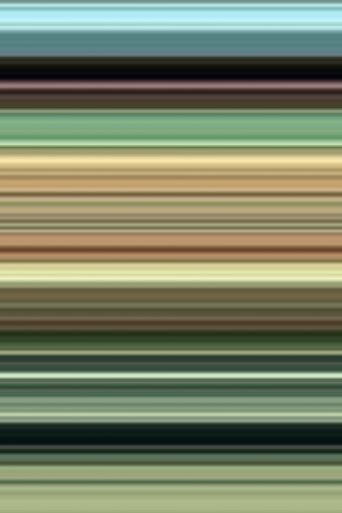
NRAbstract short featuring mirrored images.
Auto-Collider
2010
NRAbstract short featuring mirrored images.
Auto-Collider
2010
 NR
NRA translation of volumes in space into a vibratory painted desert and living lines. A new register in an optical Richter scale.
Brooklyn Series
2013
 NR
NRIn New York Lantern and Photographic Phantoms, a new narrative lyricism and political outspokenness enters Gehr’s cinema, haunted now by ghosts, from long-ago travels and struggles, that are gifted with an uncanny voice and presence.
Photographic Phantoms
2013
 NR
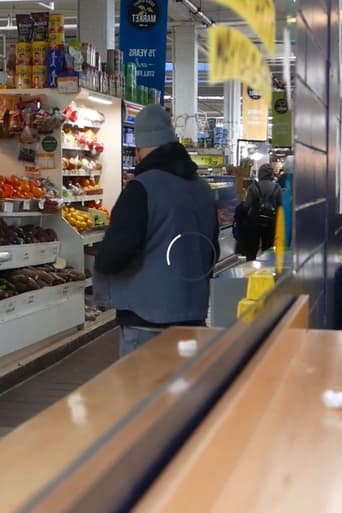
NR"The second piece on this program, Aproposessexstreetmarket, is what I consider to be the heart of the trilogy. It offers glimpses to the kind of activities I often encountered inside the old Essex Street Market, and I dedicate this screening to all the people who appear in the work—shoppers as well as vendors" - EG
Aproposessexstreetmarket
2018
 NR
NRThe ever changing Lower East Side.
Autumn
2017
"What drives the collector? Textures. Colors. Dust. Phantasmagoric memories and associations. A scattering. The present. The passage of time. Sleep." - E.G.
The Collector
2004
 5.7
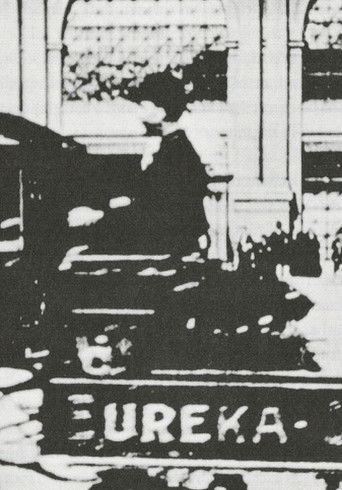
5.7"This is a film that not only documents a place in time, but a modern spatial vision, a look and technology that makes this street the sort of place it is. And here in this preserved piece of history, one also sees the chemical dance of film grain that makes up the material of Gehr’s own History. We do not simply see Market Street circa 1902, but a film of Market Street, and it is as fascinating as the site itself. Film may in some sense exist indifferent to emotions, objects, beings, or ideas. But early in his work Gehr realized that film, even conceived as a thing in itself, can never exist outside of history. The very dance of grain on the screen acquires a history of its production, its screenings, its viewings. History is the place no place can avoid.” - Tom Gunning
Eureka
1974
 10.0
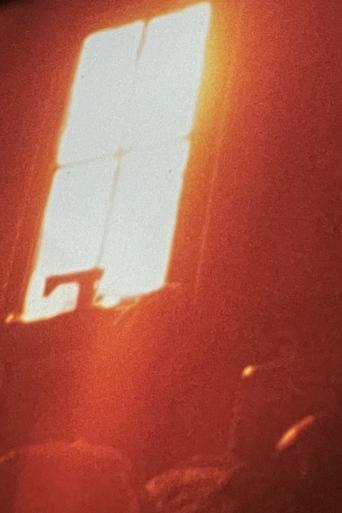
10.0"A poetic visual rendition of morning, and an evocation of my awakening to working with some basic elements of filmmaking – film emulsion responsiveness to light, as well as an initial approach to the relationship between a frame and a shot. My first 16mm work. The beginning of a new day." –Ernie Gehr
Morning
1968
 NR
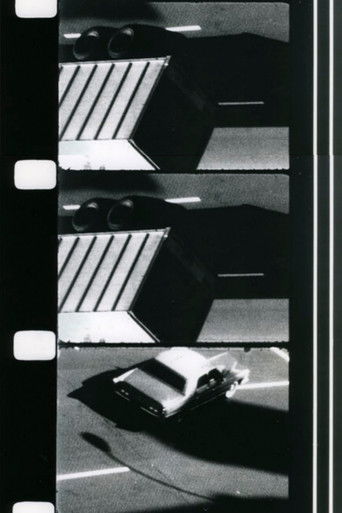
NR“For Gehr, SHIFT broke new ground, hence perhaps a pun in its title. The film is his first to employ extensive montage. The actors are all mechanical – a series of cars and trucks filmed from a height of several stories as they perform on a three-lane city street. Gehr isolates one or two vehicles at a time, inverting some shots, so that a car hangs from the asphalt like a bat from a rafter, using angles so severe the traffic often seems to be sliding off the earth, and employing a reverse motion so abrupt that the players frequently exit the scene as though yanked from a stage by the proverbial hook. A sparse score of traffic noises accompanies the spastic ballet mecanique...” – J. Hoberman
Shift
1974
 NR
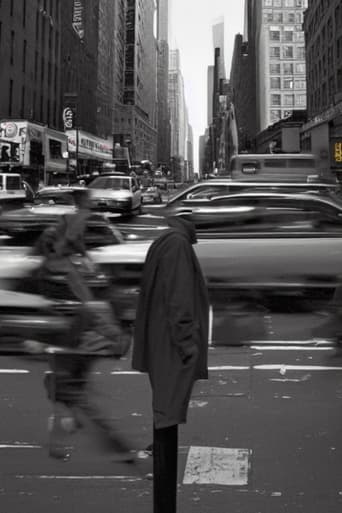
NRAnimation created from early paper films.
Street Scenes
2017
 NR
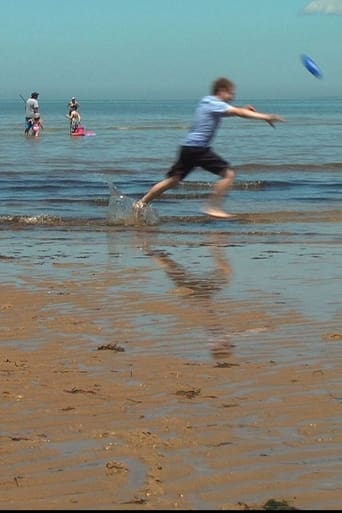
NR“Frolicking on the beach in early June, before the start of the summer season.” - Ernie Gehr
Brewster, MA
2011
 NR
NR“The eyes may be attracted to look left and right – and please let them – but the center is also intriguing and not separable from the rest. Among other things, a side view is transformed into a frontal view, but of course, that is not all.” - Ernie Gehr
Undertow
2021
 NR
NR2022. USA. Directed by Ernie Gehr. Digital. 15 min.
Medicine Cabinet
2023
 NR
NR"a five-minute film of the view west across the Soho street to a brick building. Gehr sat there from one day from 10:00 a.m. to 4:00 or 5:00 p.m. and shot it with his Bolex camera, one frame at a time. It conveys the settled relief of being home, as against the pace of the monochromatic working day seen in the three prior films. It is closer to his earlier films in its abstraction of forms and play with time-lapse and film speed. In the beginning, the forms are screamingly reddish-orange and incomprehensible, but as the afternoon progresses shadows slip across the surfaces and windows, fire escapes, and bricks become visible: a world is revealed with the clarity of Vermeer’s famed Little Street (1657-8)." - Jason Rosenfeld
Greene Street
2004
 9.0
9.0"Abstraction in Gehr behaves like an X-ray, revealing unexpected patterns of order under the skin of things. A film like Mirage, one of those most sensuous of Gehr’s abstract films may resemble superficially a strip painting by Kenneth Noland. But it is essential to realize that the bands of color Gehr captures come from the world, shot through a simple clear tube that strips away form and lets only chromatic patterns and motion come through. Even in his most abstract films, Gehr is relating to a world outside his consciousness and trying to stake out a relation to it, testing its order and chaos, its beauty and its threats." – Tom Gunning
Mirage
1981
 NR
NR"It was recorded over Summer of 2020, we were isolating ourselves. We live in the ground floor in an apartment building, we have the full backyard which ended up being my interaction with nature – that’s where 'Flying Over Brooklyn' was recorded. Just looking around, what on earth can I do here? I was looking at this reflection of leaves from trees from our neighbour to one of our fences and became interested and began to look at these reflections, some transformed themselves almost day by day, sometimes it was difficult to really catch some of these – it’s creature-like faces I tended to see there. The shadows were exotic for me, they had quality of the tropics, at the same time it’s flat and there are vertical lines which for me denoted prison in a way – you have these bars there, so it’s a contained jungle and that mean different implications for me. The sound we hear, though somewhat amplified, were recorded with the same camera, not necessarily at that moment." – Ernie Gehr
Delirium
2020
 4.0
4.0"This collapse of separate times into one image creates another push/pull with the experience of depth. The superimpositions seem to lie on top of the image, yet they move into depth, creating what Gehr describes as a 'teasing play with planes.' But the play with space and position here involves more than tension between layers. The variations on light and shadow on the two levels cause the double-exposures to pop in and out of depth. A shadow on the first level can give the superimposition a sudden burst of solidity. Gehr calls our attention to the multiplicity of depth cues that operate in a film in addition to perspective recession. The cue of overlap creates much of the amusement of the film, as the vehicles on one level plow through the phantoms on the other. Gehr was particularly fascinated by the way depth cues provided by color (with warm colors coming forward) interact with the logic of space..." – Tom Gunning
Still
1971
 NR
NR"I have a number of doctors that I have to see – getting older and it’s an issue all the time, and they are on the Upper East Side. I take the F train to 63rd St. Station and walk two and a half blocks to this building where my doctors share, it’s on this route that all this footage was recorded. It was like my way of saying: 'I am not dead yet!' […] At one point someone says 'Can I help you?', it’s a line I got many times, people thinking 'Good god he can’t even hold the camera!' […] It’s going back and forth, it’s a kaleidoscope. I don’t want to see the screen any longer – I mean the two-dimensional plane, I tend to exert it quite frequently in other works. Here I wanted to shatter, totally shatter." – Ernie Gehr
Pedestrian Activities
2023
Silence dominates the work, as does the screen rectangle, which cuts off the “image” from a life time-space continuum and imposes upon the image its particular character. Within it, there is a play between tonalities, textures, large and small shapes.
Mist
2010
 9.0
9.0"Reverberation began as an attempt at a portrayal, a representing of a life situation by way of film, and turned in the making of it into a presentation of the physical movement of film itself, stranding the photo-memory of persons/objects/their relationships in a cinematic force-field wherein images are offered up and simultaneously swept away by conflicting energies. Sound as it comes from a speaker has its own quality. No matter how close it comes in reproducing sound of living beings or objects, this quality is always the sound of the projector, the wires, the tubes and the speakers. This is its actuality. And it can be heard and experienced as sound, a form of energy." -Ernie Gehr
Reverberation
1969
 5.2
5.2"Completed shortly after Morning, Wait is a vivid depiction of the cinematic process of recording images on film. From frame to frame……. this work offers a sense of film emulsion coming to life, and responding to the forces of light. In addition shifting camera positions, panning, tilting, using the zoom, framing and focusing are all part of the work. A sculpturing of a space from frame to frame on a surface where there is no space. The title, Wait .... is asking the viewer to forgo our conditioned focus on the photographic image as a representation of a life situation, and instead, focus on the visual kinetic here and now. Physical therapy for the eyes, and delight for the senses." – Ernie Gehr
Wait
1968
 NR
NRA meditation on silence, vanishings, and phantoms of light.
Shadow
2007
 NR
NRA four-channel video work taking inspiration from a lush park environment and the proliferating presence of security cameras in public life.
Surveillance
2010
 NR
NR"Untitled begins with a flat, out-of-focus, reddish-pink screen on which blurry white patterns quickly appear and disappear. After awhile a space seems to emerge behind the screen. The swiftly changing patterns generate an experience of soft floating motion, through a field of snowflakes that whirl about in the wind. There is simultaneous serenity and agitation in the portrayed motions. The background appears soft, almost quivering at first, as if alive, and the reddish color suggests warmth and contrast with the snow. As the film progresses the snowflakes get smaller and better focused, yielding a kind of distance perspective and the background acquires more and more substantiality. At some point and often quite suddenly, the trans-like floating experience is broken by the discovery of what lies ahead: a red brick wall! The entire meaning of the earlier experience undergoes a sudden shift as this prototype of the impenetrable obstacle becomes apparent."– Robert Becklen
Untitled
1977
 NR
NR"[A] view from a Brooklyn apartment sublimates Hitchcock's voyeurism into a frenzied engagement with the visible. The film varies exposure or racks focus so that the flickering, spatially ambiguous patterns that press the limits of the frame momentarily dissolve themselves as tree branches or a fire escape or a shadow caught on the screen of someone's laundry rippling in the breeze. 'I cupped one of my hands in front of the camera lens and attempted to make tactile to myself light, color and image,' Gehr explains in his notes, linking the film to his father's death and calling it a 'hopeless attempt' to render the ephemeral tangible." - J. Hoberman, The Village Voice
Rear Window
1991