
Directing
Ricardo de Baños
Born — Died
1881-12-31 — 1939-01-01
Place of birth
Barcelona, Catalonia, Spain
Known for
Directing
Credits
19 titles
Known for
 NR
No synopsis available yet.
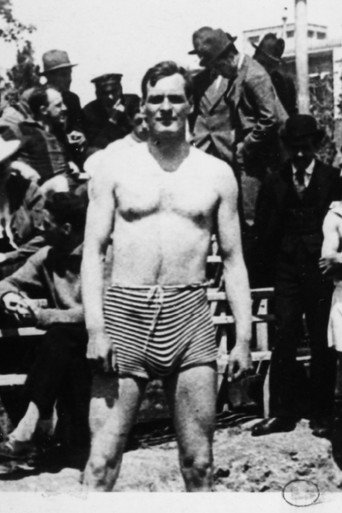
Arthur Cravan
1916
 6.0
"The Confessor", attributed to the pioneering Baños brothers, is a curious and not very well known pornographic silent film that constitutes a true exception in the treatment of religion in Spanish silent cinema. In this way, the pornographic attraction of "The Confessor" is built through the perversion of the priestly vow of celibacy and the sacrament of penance. This film can be considered as another chapter in the cultural tradition of criticizing the vices of the clergy, and as a consequence of the environment and the new leisure culture that took place in the Europe of the so-called "frivolous twenties".
The Confessor
1920
 5.0
Pyrenees mountain range, 17th century. Before dying, Diego de Robles, leader of a ruthless gang of highwaymen, has his daughter Carmen, a beautiful young woman full of courage, recognized as the new leader of the gang. (Partially preserved film: with a running time of approximately twenty-five minutes, about nineteen survive. There are doubts about the true identities of those involved in the production, both technical and artistic crew.)
Carmen, the Bandit's Daughter
1912
No synopsis available yet.
The Reliquary
1933
 6.5
A pro-Republican drama/propaganda film made during the Spanish Civil War.It tells the story of Manolo, a young worker who, after the military coup, joins the militias to fight for freedom.
And What Do You Do?
1937
Very early footage of the streets of Barcelona, filmed from a tram.
Barcelona by Tram
1908
Behind the camera
NRNo synopsis available yet.
Arthur Cravan
1916
6.0"The Confessor", attributed to the pioneering Baños brothers, is a curious and not very well known pornographic silent film that constitutes a true exception in the treatment of religion in Spanish silent cinema. In this way, the pornographic attraction of "The Confessor" is built through the perversion of the priestly vow of celibacy and the sacrament of penance. This film can be considered as another chapter in the cultural tradition of criticizing the vices of the clergy, and as a consequence of the environment and the new leisure culture that took place in the Europe of the so-called "frivolous twenties".
The Confessor
1920
5.0Pyrenees mountain range, 17th century. Before dying, Diego de Robles, leader of a ruthless gang of highwaymen, has his daughter Carmen, a beautiful young woman full of courage, recognized as the new leader of the gang. (Partially preserved film: with a running time of approximately twenty-five minutes, about nineteen survive. There are doubts about the true identities of those involved in the production, both technical and artistic crew.)
Carmen, the Bandit's Daughter
1912
No synopsis available yet.
The Reliquary
1933
No synopsis available yet.
The Reliquary
1933
6.5A pro-Republican drama/propaganda film made during the Spanish Civil War.It tells the story of Manolo, a young worker who, after the military coup, joins the militias to fight for freedom.
And What Do You Do?
1937
Very early footage of the streets of Barcelona, filmed from a tram.
Barcelona by Tram
1908
 1.0
The very first Spanish full feature-length film is based on musical composed by Enric Morera on a libretto by Francesc Pujols i Morgades, based on a work by Víctor Balaguer premiered on October 7, 1922 at the Tívoli Theater in Barcelona. The action takes place around the Catalan gang in the seventeenth century; it is a story of impossible love between "nyerros" and "cadells" that culminates with the execution of the titled protagonist.
Don Juan de Serrallonga
1910
Based on Meller's first screen appearance, "Los Arlequines de Seda y Oro", where two brothers are separated and reunited as adults, he a famed torero (bullfighter) she a singer raised by gypsies. This is a reduced version centered on her character.
The Rags of Silk and Gold
1919
 5.0
Since Juan Gallardo was a child wishes to be a bullfighter and he achieves to be come a recognizable figure. He marries Carmen, his childhood friend, but he fall s in love with the widow of a diplomat, a sophisticated woman of the world with whom he starts a relationship that will end up destroying him. While he is recovering be cause he had been severely gored in his sevillian house, Juan receives a visit f rom his great admirer the bandit “Plumitas” who makes him see the parallelism be tween their life experiences. The visit is interrupted with the Civil Guard lying in wait of the bandit. Juan drifts a long time from failure to failure because he is now a fraid of the bull and he is again humiliated by his beloved Mrs. Sol. Finally he gets a bullfight in Madrid and Carmen, his wife, has a bad omen and comes to the bullring.
Blood and Sand
1917
 1.0
Felipe I el Hermoso provokes with his behavior the madness of his wife, Juana de Castilla.
Mad Love
1909
1.0Felipe I el Hermoso provokes with his behavior the madness of his wife, Juana de Castilla.
Mad Love
1909
No synopsis available yet.
El idiota de Sevilla
1916
No synopsis available yet.
El idiota de Sevilla
1916
 6.4
Don Juan Tenorio makes a bet with a friend as to which of them will commit more outrages in a year. He wins, killing twirty-two men and seducing seventy-two women. In the end, however, he is saved from damnation through a return to true belief and the love of a saintly woman, Doña Inés.
Don Juan Tenorio
1922
6.4Don Juan Tenorio makes a bet with a friend as to which of them will commit more outrages in a year. He wins, killing twirty-two men and seducing seventy-two women. In the end, however, he is saved from damnation through a return to true belief and the love of a saintly woman, Doña Inés.
Don Juan Tenorio
1922
 3.9
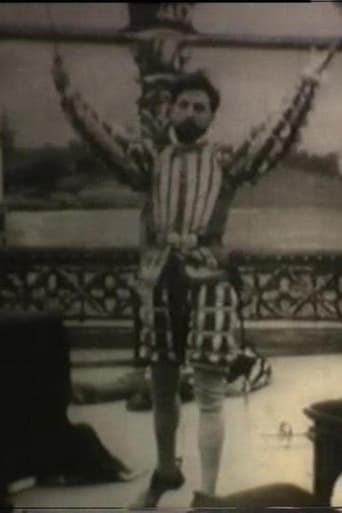
The silent Spanish version of the story of Don Juan Tenorio.
Don Juan Tenorio
1908
 6.0
No synopsis available yet.
The White Gypsy Girl
1919
 2.7
The bastard brothers Fadrique, Enrique and Tello de Trastámara conspire against King Pedro I, who orders Fadrique to be assassinated and who, in turn, dies at the hands of Enrique in the presence of Bertrán Duglesclín.
Don Pedro the Cruel
1911