
Writing
Roland Barthes
Born — Died
1915-11-12 — 1980-03-26
Place of birth
Cherbourg, Manche, France
Known for
Writing
Credits
7 titles
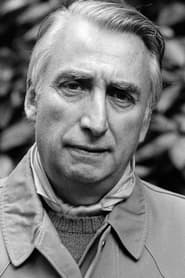
Roland Gérard Barthes (12 November 1915 – 26 March 1980) was a French literary theorist, essayist, philosopher, critic, and semiotician. His work engaged in the analysis of a variety of sign systems, mainly derived from Western popular culture. His ideas explored a diverse range of fields and influenced the development of many schools of theory, including structuralism, anthropology, literary theory, and post-structuralism. Barthes is perhaps best known for his 1957 essay collection Mythologies, which contained reflections on popular culture, and 1967 essay "The Death of the Author," which critiqued traditional approaches in literary criticism. During his academic career he was primarily as…
Known for
 8.5
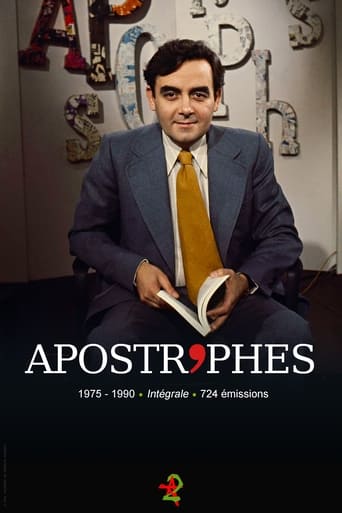
Apostrophes was a live, weekly, literary, prime-time, talk show on French television created and hosted by Bernard Pivot. It ran for fifteen years (724 episodes) from January 10, 1975, to June 22, 1990, and was one of the most watched shows on French television (around 6 million regular viewers). It was broadcast on Friday nights on the channel France 2 (which was called "Antenne 2" from 1975 to 1992). The hourlong show was devoted to books, authors and literature. The format varied between one-on-one interviews with a single author and open discussions between four or five authors.
Apostrophes
1975
 6.0
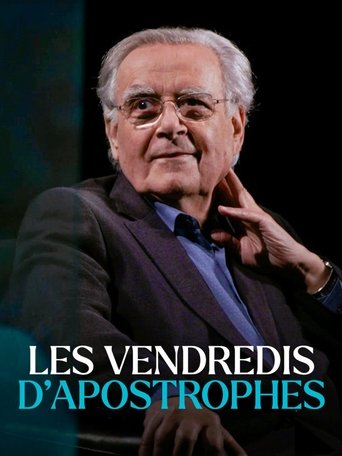
Hours and historical meetings, Pierre Assouline has composed an anthology of the best extracts presented in the form of a primer, which he had commented on by a surprised Bernard Pivot.
Les vendredis d'Apostrophes
2015
 5.8
In a small presbytery in Yorkshire, England, living under the watchful eyes of their aunt and father, a strict Anglican pastor, the Bronte sisters write their first works and quickly become literary sensations.
The Bronte Sisters
1979
 NR
Most of the time, Roland Barthes is classified in the category of the 1970s intellectuals, where all his fascinating singularity fades. Our movie holds exactly to the desire of making perceptible his singularity. In this purpose, the movie is constituted by an editing of archives, articulated around Barthes presence and the progress of his career. It is thus a kind of a Roland Barthes’s cinematic version by Roland Barthes, a self–portrait that could be resumed by a point of view as accurate as possible.
Roland Barthes, 1915-1980: Le théâtre du langage
2015
 7.5
In 1961, philosopher Roland Barthes collaborated with filmmaker Hubert Aquin to produce a film, for Canadian television, intended to reveal the poetics of sport and spectatorship. The question 'what is sport' is answered by Barthes' eloquently scripted commentary. The recurring theme of purging violence from society into the spectacle of sport runs through the film.
Of Sport and Men
1961
 10.0
An essay film about Jean-Paul Sartre and the French Existentialists, featuring Roland Barthes' last interview.
Paris '50 - Existence imagined
1981
Film credits
2010s · 2 titles
6.0Hours and historical meetings, Pierre Assouline has composed an anthology of the best extracts presented in the form of a primer, which he had commented on by a surprised Bernard Pivot.
Les vendredis d'Apostrophes
2015
NRMost of the time, Roland Barthes is classified in the category of the 1970s intellectuals, where all his fascinating singularity fades. Our movie holds exactly to the desire of making perceptible his singularity. In this purpose, the movie is constituted by an editing of archives, articulated around Barthes presence and the progress of his career. It is thus a kind of a Roland Barthes’s cinematic version by Roland Barthes, a self–portrait that could be resumed by a point of view as accurate as possible.
Roland Barthes, 1915-1980: Le théâtre du langage
2015
Series credits
Behind the camera
7.5In 1961, philosopher Roland Barthes collaborated with filmmaker Hubert Aquin to produce a film, for Canadian television, intended to reveal the poetics of sport and spectatorship. The question 'what is sport' is answered by Barthes' eloquently scripted commentary. The recurring theme of purging violence from society into the spectacle of sport runs through the film.
Of Sport and Men
1961
 NR
Set against the glittering backdrop of Seoul, ‘Love Story: Fragments’ intertwines three touching love stories that converge on a single, unforgettable summer night. Yon and Chung Myeong take the delicate first steps of their relationship, while Choo Yon and Kim face the challenges of jealousy that threaten their bond. Meanwhile, Mimì and DonYul grapple with the pain of a final farewell.
Lover’s Story: Fragment
2024