

Directing
Paul Sharits
Born — Died
1943-02-07 — 1993-07-08
Place of birth
Denver, Colorado, USA
Known for
Directing
Credits
51 titles
Trained as a graphic artist and a painter, Paul Sharits became an avant-garde filmmaker noted for manipulating the film stock itself to create a variety of fascinating, abstract light and colorplays when projected on the screen. Fans hail the effects hallucinogenic, while his detractors find them garish. Sharits is also known for establishing experimental film groups at prominent universities, including one at the University of Indiana where he studied. He later taught and developed an undergraduate film program at Antioch College. Between 1973 and 1992, Sharits taught at the Center for Media Study at the State University of New York. His films can be seen in various U.S. and European museum…
Known for
 7.8
7.8A compilation of over 30 years of private home movie footage shot by Lithuanian-American avant-garde director Jonas Mekas, assembled by Mekas "purely by chance", without concern for chronological order.
As I Was Moving Ahead Occasionally I Saw Brief Glimpses of Beauty
2000
 4.9
4.9Cinématon is a 156-hour long experimental film by French director Gérard Courant. It was the longest film ever released until 2011. Composed over 36 years from 1978 until 2006, it consists of a series of over 2,821 silent vignettes (cinématons), each 3 minutes and 25 seconds long, of various celebrities, artists, journalists and friends of the director, each doing whatever they want for the allotted time. Subjects of the film include directors Barbet Schroeder, Nagisa Oshima, Volker Schlöndorff, Ken Loach, Benjamin Cuq, Youssef Chahine, Wim Wenders, Joseph Losey, Jean-Luc Godard, Samuel Fuller and Terry Gilliam, chess grandmaster Joël Lautier, and actors Roberto Benigni, Stéphane Audran, Julie Delpy and Lesley Chatterley. Gilliam is featured eating a 100-franc note, while Fuller smokes a cigar. Courant's favourite subject was a 7-month-old baby. The film was screened in its then-entirety in Avignon in November 2009 and was screened in Redondo Beach, CA on April 9, 2010.
Cinématon
1978
 NR
NRFeature-length compilation program presenting 37 out of 41 original fluxfilms produced and directed in the 1960s by Fluxus artists, including George Maciunas, Nam June Paik, Yoko Ono, Robert Watts, Paul Sharits, et al.
Fluxfilm Anthology 1962-1970
2010
 NR
NRHome movies shot on Super 8mm by W+B Hein over 10 years.
Home Movies 1971-81
1985
 7.0
7.0Jonas Mekas assembles 160 portraits, appearances, and fleeting sketches of underground and independent filmmakers captured between 1955 and 1996. Fast-paced and archival in spirit, the film celebrates the avant-garde as its own “nation of cinema,” a vital community existing outside the dominance of commercial film.
Birth of a Nation
1997
Reel 13 of Gérard Courant's on-going Cinematon series.
Cinématon XIII
1981
Film credits
2000s · 2 titles
7.8A compilation of over 30 years of private home movie footage shot by Lithuanian-American avant-garde director Jonas Mekas, assembled by Mekas "purely by chance", without concern for chronological order.
As I Was Moving Ahead Occasionally I Saw Brief Glimpses of Beauty
2000
 NR
NRA recording of a meeting in the studio where Jeffrey Schier and Woody show colleagues and teachers a new tool. Between 1976 and 1980, Woody and Schier designed a prototype device, the Vasulka Imaging System, or Digital Image Articulator. It was one of the first digital audiovisual tools to generate image algorithms and convert them to an analog signal. In the 1970s and 1980s, the Department of Media Study at the State University of New York at Buffalo became one of these places of, teaching and mediating, in the area of Media Art, developing into what was perhaps to the most influential school for media in the twentieth century. Teaching there under the leadership of the founder Gerald O’Grady were the (meanwhile canonized) structuralist, avantgarde filmmakers Hollis Frampton, Tony Conrad, and Paul Sharits, documentary filmmaker James Blue, video artists Steina and Woody Vasulka, and Peter Weibel.
Funtime at the Vasulkas
2006
1980s · 4 titles
NRHome movies shot on Super 8mm by W+B Hein over 10 years.
Home Movies 1971-81
1985
Reel 13 of Gérard Courant's on-going Cinematon series.
Cinématon XIII
1981
 NR
NRNo synopsis available yet.
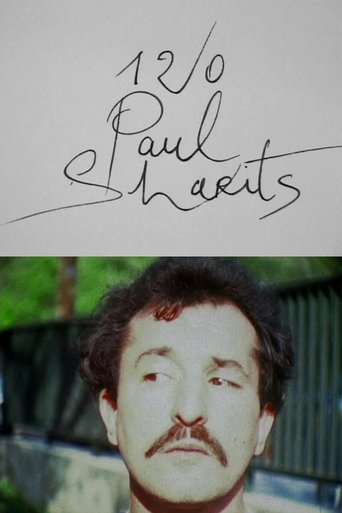
Cinématon n°120 : Paul Sharits
1981
 NR
NR'Rapture' is a fierce vision of a Dionysian experience, a tightly controlled visual statement about the abandonment of self to heightened transportive states. It is also an exploration of the similarity between 'religious' and 'visionary' ecstasy and psychotic states.
Rapture
1987
1970s · 3 titles
4.9Cinématon is a 156-hour long experimental film by French director Gérard Courant. It was the longest film ever released until 2011. Composed over 36 years from 1978 until 2006, it consists of a series of over 2,821 silent vignettes (cinématons), each 3 minutes and 25 seconds long, of various celebrities, artists, journalists and friends of the director, each doing whatever they want for the allotted time. Subjects of the film include directors Barbet Schroeder, Nagisa Oshima, Volker Schlöndorff, Ken Loach, Benjamin Cuq, Youssef Chahine, Wim Wenders, Joseph Losey, Jean-Luc Godard, Samuel Fuller and Terry Gilliam, chess grandmaster Joël Lautier, and actors Roberto Benigni, Stéphane Audran, Julie Delpy and Lesley Chatterley. Gilliam is featured eating a 100-franc note, while Fuller smokes a cigar. Courant's favourite subject was a 7-month-old baby. The film was screened in its then-entirety in Avignon in November 2009 and was screened in Redondo Beach, CA on April 9, 2010.
Cinématon
1978
 NR
NRThis is a rare video interview with one of America’s finest film artists, shot in New York towards the end of his abruptly terminated career.
Paul Sharits Interview with Gerard O'Grady
1976
 5.1
5.1“Freud established that jokes were structurally akin to dreams in their use of condensation, displacement, representation by opposites, punning and ‘nonsense’. All of these strategies are much in evidence in (Land’s) marvelously duplicitous ON THE MARRIAGE BROKER JOKE… [...] so clever and original a filmmaker as to make most others – not to mention his critics – seem flat-footed by comparison. ON THE MARRIAGE BROKER JOKE harks back to Bunuel’s early work. Not only is it structured like a dream and filled with sexual imagery, but like Un Chien Andalou, it smacks of being an insider’s joke played upon the avant-garde. Where Bunuel used the insights of psychoanalysis to satirize Christianity, Land– with an almost equal perversity – reverses the process and uses Christianity to send up Freud.” – J. Hoberman, American Film
On the Marriage Broker Joke as Cited by Sigmund Freud in Wit and Its Relation to the Unconscious, or Can the Avant-Garde Artist Be Wholed?
1977
Behind the camera
NRFeature-length compilation program presenting 37 out of 41 original fluxfilms produced and directed in the 1960s by Fluxus artists, including George Maciunas, Nam June Paik, Yoko Ono, Robert Watts, Paul Sharits, et al.
Fluxfilm Anthology 1962-1970
2010
 NR
NRThree-screen film. On the first screen, close-ups of an agitated match in front of a young woman's fearful face. On the soundtrack: matches, warnings of a rattlesnake, the phrase: "Listen, I will not speak." The ribbon runs at variable speeds, sometimes blurring, sometimes slowing down, to stop, on which the image / celluloid begins to fry and to burn, then leaves, runs, stops again, leaves again ... On the second screen we see the first rephotographed; here the "burns" are both fixed or new (a burn in the second degree). On the third screen, we see the second screen rephotographed. The subject of the film is the fragility of the film, as medium, as well as the vulnerability of man. Both the film and the figure resist threats / intimidation / mutilations.
3rd Degree
1982
 NR
NRA highly varied and playful series of short sketches involving induced camera "mistakes," printing "errors" and various "assaults" upon film (some rephotographed) which in one way or another reveal the process/materiality of cinema. The "unframing" called for in this film (bringing the top frame line down into the viewing area as is possible by adjusting the projector framer) is a way of heightening the intended unmasking of the usually hidden vulnerability/fragility of the film strip.
Analytical Studies II: Unframed Lines
1971
 NR
NR"There is a paradox in such artistically special (and significant) films as Sharits' very real and reflexively beautiful AXIOMATIC GRANULARITY. It is that in becoming so accessible and authentic through its refusal to be anything but itself - emulsion grain seen in color and movement - the film for most viewers is likely to be impenetrable ... the film begins to evoke a quiet flow of thought. That thought, however, is repeatedly returned to the light perceived on the screen as the film calls attention to itself through the random appearances of scratches, becoming simply and pleasantly what it is, refreshingly nothing more." - Anthony Bannon, Buffalo Evening News
Axiomatic Granularity
1973
 8.0
8.0The film is a transfixing “flicker” film that distills the cinematic experience to projected light and color patterns, allowing “the viewer to become aware of the electrical-chemical functioning of his own nervous system.”
Ray Gun Virus
1966
 7.4
7.4Discovered in summer of 1985, of a set of “haiku-imagistic films” I did before coming to my characteristic style, as in Ray Gun Virus; I thought I’d destroyed all these pre-pure films, in about 1969-1970, the time of my separation from my first marriage. The film concerns my marriage, which lasted seven years; it was shot during its first year, when I was a painting student at the University of Denver. It is full of apprehensions, in a montage style which counterposes “opposites”: sexuality and religion; seasonal opposites; hopefulness undercut by fears of eventual separation (the image of a statue of two women, arm in arm, reading a book). I find it visually and kinetically interesting, after all these years. (Paul Sharits) —Canyon Cinema
Wintercourse
1962
Two projectors pulse in tandem
Shutter Interface
1975
 5.3
5.3Two reels of mis-takes in shooting Part II of 3RD DEGREE; Film was loaded in camera improperly and the image slides about off-center and becomes blurred, creating some rather amusing and mysterious imagery. A made “found” object.
Bad Burns
1982
 6.8
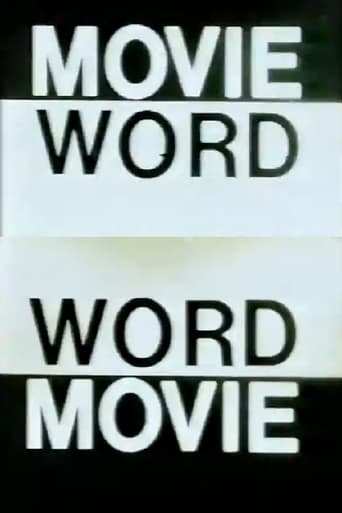
6.8Single frame exposures of words.
Word Movie
1966
 NR
NRThe visual "degeneration" of the image ... through successive rephotography is paralleled by the compression of verbal information to the point of its loss of legibility; yet, both the "degenerated" sound and image are perceptually engaging, even in the most advanced stages of "degeneration". It is obvious why the film has its title, because of the strategies of its coming into being, but, paradoxically, at the level of effect, its dynamics arise from its "Episodic Degeneration".
Episodic Generation
1978
 NR
NRA mapping of an image of the linear passage of '16mm film frames' and 'emulsion scratches' onto actual 16mm film strip (the unperceived film 'print')/the aural word 'miscellaneous' is extended to a length of 8 minutes by serial fragmentation, looping, staggering and overlaying/a variational but non-developmental strand thru time.
Inferential Current
1971
A flicker film of colorful squares.
Tirgu Jiu
1976
NR'Rapture' is a fierce vision of a Dionysian experience, a tightly controlled visual statement about the abandonment of self to heightened transportive states. It is also an exploration of the similarity between 'religious' and 'visionary' ecstasy and psychotic states.
Rapture
1987
NR'Rapture' is a fierce vision of a Dionysian experience, a tightly controlled visual statement about the abandonment of self to heightened transportive states. It is also an exploration of the similarity between 'religious' and 'visionary' ecstasy and psychotic states.
Rapture
1987
 3.0
3.0Sound Strip / Film Strip is Paul Sharits' first "Locational" work, made in collaboration with Bill Brand. The piece was commissioned for the 1972 opening exhibition of the Contemporary Arts Museum, Houston,Texas. “...Sound Strip / Film Strip consists of four film loops simultaneously projected sideways so that the four images abut one another horizontally. Sharits made each loop by filming colored surfaces, scratching the film, projecting it so that the sprocket holes showed on the screen; he then filmed that projection, scratched the result, and projects that as the final object. The resulting image is a continuous flicker of various color ranges with both actual and ‘virtual’ scratches and sprocket holes running horizontally (normally vertically) across the screen. Thus, Sharits is working with filmic abstraction which employs no image save for that inherent in the medium itself....”
Sound Strip/Film Strip
1972
 4.3
4.3Streaming, scratched lines continuously appear two at a time over images of flowing water.
S:TREAM:S:S:ECTION:S:ECTION:S:S:ECTIONED
1971
 4.2
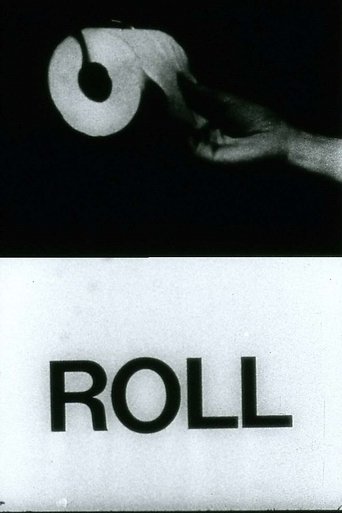
4.2Toilet paper event, single frame exposures.
Unrolling Event
1965
 6.8
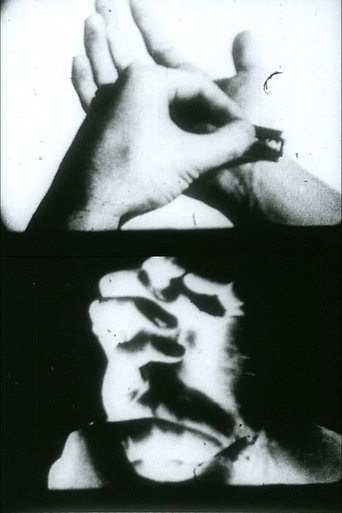
6.8Various gestures of hand held razorblade, single frame exposures.
Wrist Trick
1965
 5.8
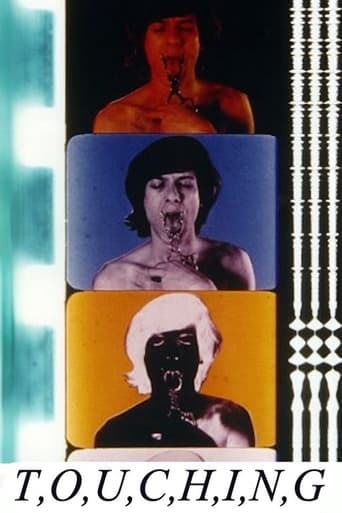
5.8T,O,U,C,H,I,N,G uses flickering frames of solid color juxtaposed with positive and negative still images of a man—sometimes cutting off his own tongue with glitter-covered scissors, sometimes suffering a series of glitter-stained fingernail scratches across the face. Other rapidly alternating still images of eye surgery and a couple in the midst of intercourse. The soundtrack is a continuous looped recording of the word "destroy" over the entire length of the film.
T,O,U,C,H,I,N,G
1969
 NR
NRA chronicle of Sharits' 1977 visit to Romania to experience three of Brancusi's most famous sculptures.
Brancusi's Sculpture Garden at Tirgu Jiu
1984
 7.2
7.2A series of tail ends of varied strips of film, with sometimes recognizable images dissolving into light flares, appear to run through and off of a projector. A romantic "narrative," suggesting an "ending," is inferred. This film can be projected at either sound speed (3 minutes) or silent speed (5 minutes).
Tails
1976
Particles throb in three dimensions.
3D Movie
1975
Paul Sharits short work
Vertical Contiguity
1974
 NR
NRThe images for this project were first obtained by enlarging, with an optical printer, frames of evenly distributed grain particles from a black and white strip of underexposed 8mm Tri-X film. The resulting 16mm black and white Plus-X copy was again blown up with an optical printer to make a negative on high contrast stock.
Apparent Motion
1975
Footage of a strip of damaged film.
The Forgetting of Impressions and Intentions
1974
Blank color frequencies space out and optically feed into monochrome images of one lovemaking act which is seen simultaneously from both sides of its space and both ends of its time.
Piece Mandala/End War
1966
 NR
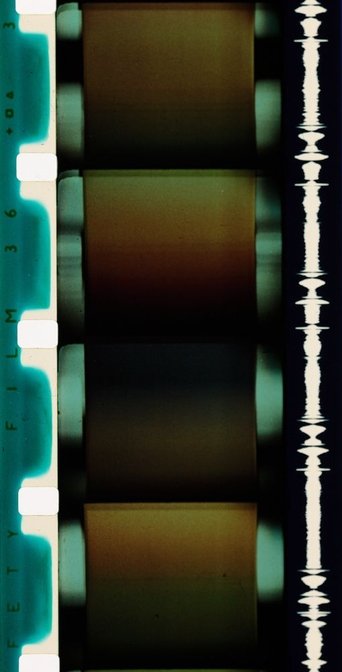
NRNo synopsis available yet.
Synchronousoundtracks
1974
 NR
NRLike ANALYTICAL STUDIES I, these short works each develop a different rhythmic and/or melodic idea using only rapid successions of color frames. The "Specimens" are called such because they are the "subjects" of (rephotography) analysis: "Specimen II" was intended to be the subject for the film EPISODIC GENERATION - although the footage, in itself, was successful, I did not find it adequate for its intended purpose; therefore, "Specimen IV" was created and was used (rephotographed) for EPISODIC GENERATION. The other works were studies for sections of the film DECLARATIVE MODE. (After titles, focus should be shifted to sharpen the edges of the screen.)
Analytical Studies IV: Blank Color Frames
1976
Film by Paul Sharits presented as double projection theatrically and quadruple projection in galleries.
Dream Displacement
1976
The footage, in order of appearance, is: 1. rock strata – along the banks of the Niagara River, before it empties into Lake Ontario, 1975, while an artist-in-residence at Artpark, Lewiston, N.Y. (Originally a three-screen panorama study); 2. flow patterns of the Niagara River. Same place/time as the rock strata. (Originally a four-screen panorama study); 3. fire juxtaposed to a rhythmic flow of cloud formations. Shot during S.W. American desert trip, 1971. The fire is a burning car which Indians had set on fire to attract and trick passing cars at night. The Indians sat off in the darkness, getting a great deal of amusement from watching concerned travelers come up to inspect the scene of the “disaster”; the Indians were having their laughs, as if watching a hilarious TV program. The clouds were shot to create a sort of inventory of “cloudness” – thousands of shots of thousands of different cloud formations; these are edited in rhythms like those of fire’s flame pulses.
Element Studies: Earth/Water/Sky/Fire
1971
 NR
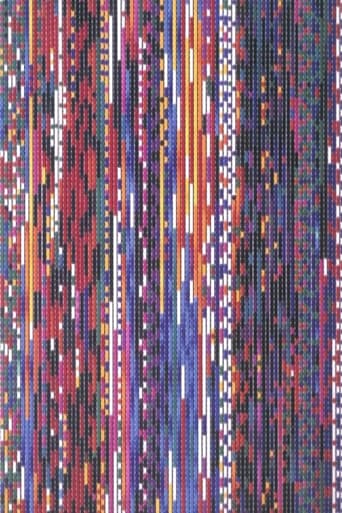
NRThe film consists of two identical prints shown simultaneously, one projected inside the image of the other. The inner image is out of sync one second in advance of the larger image creating a dynamic inter-play between the overlapping frames.
Declarative Mode
1977
NRThe film consists of two identical prints shown simultaneously, one projected inside the image of the other. The inner image is out of sync one second in advance of the larger image creating a dynamic inter-play between the overlapping frames.
Declarative Mode
1977
No synopsis available yet.
Figment I: Fluxglam Voyage in Search of the Real Maciunas
1986
 NR
NRThe film consists of seven sections: the first section, "Specimen I," a "flicker" film, is the subject for the other sections of ANALYTICAL STUDIES III. ... "Specimen I," as with most of my other works, also exists as a "Frozen Film Frame," wherein the entire footage of the film is cut into strips and aligned serially between sheets of clear plexiglas.
Analytical Studies III - Color Frame Passages
1974
 4.9
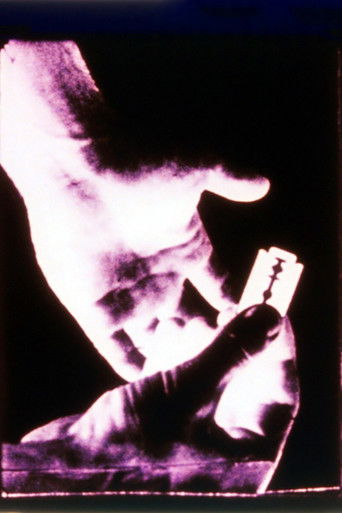
4.9In Razor Blades, Paul SHARITS consciously challenges our eyes, ears and minds to withstand a barrage of high powered and often contradictory stimuli. In a careful juxtaposition and fusion of these elements on different parts of our being, usually occurring simultaneously, we feel at times hypnotised and re-educated by some potent and mysterious force.
Razor Blades
1968
While composed of pure/blank color frames (often “flickering”), this is not a “Structural Film”; there’s no predetermined overall structure to the work (which is, anyway, only “chapter one” of a sort of “abstract novel” in progress, a novel which can become extremely lengthy in its projected series of chapters, a novel with a beginning, a middle but no preconceived ending). The film moves from “episodes” of different lengths and moods/rhythms/melodies, without any apparent cause-effect, like life itself, which passes on (“passare” – to pass, to pass on) from one unpredictable event/emotion to another. Each ‘episode’ is based upon some feeling, event or place and is aesthetically resolved; but there are no links from one episode to another. The episodes may be as short as one second or as long as ten minutes; each is my subjective interpretation of actual incidents, places, feelings, etc. into the terms of pure temporal color. Everything is in actual chronological order.
Passare I (Italia)
1979
 4.5
4.5“The screen, illuminated by Paul Sharits’ N:O:T:H:I:N:G, seems to assume a spherical shape, at times – due, I think, to a pearl-like quality of light his flash-frames create … a baroque pearl, one might say – wondrous! … One of the most beautiful films I’ve seen.” – Stan Brakhage
N:O:T:H:I:N:G
1968
2 screen projection
Sketches in Hawaii
1981
 5.8
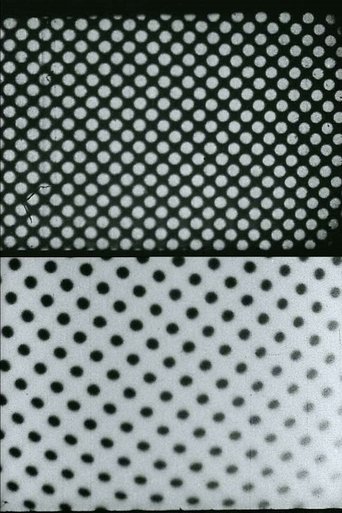
5.8Single frame exposures of dot-screens.
Dots 1 & 2
1965
 NR
NRA set of short pure color studies, usually exploring one dominant hue. Most of these works were studies for longer projects. The last four "migraine" studies are rhythmically based around the five-cycle-per-second oscillation pulse of the typical fortification illusions preceding a migraine attack; this onset period, with its visually dynamic effects, is reported to be a quite vibrant and enjoyable state.
Analytical Studies I: The Film Frame
1971