
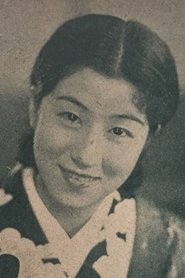
Acting
Setsuko Shinobu
Born 1914-07-22 · Tokyo, Japan
Acting credits
 6.7
6.7A reformatory in the remote countryside houses 200 delinquents and problem children. The teachers and caretakers face much trouble. The school is often short on water, and one day, the well runs dry.
Introspection Tower
1941
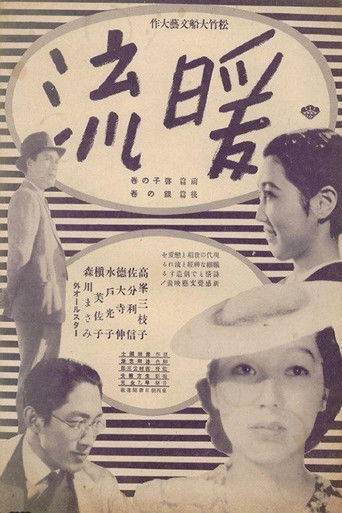 5.3
5.3Adaptation of Kishida Kunio's novel. Set against the backdrop of a power struggle within a hospital, depicts the love lives of the director's daughter, the administrative director, a doctor, and a nurse.
Warm Current
1939
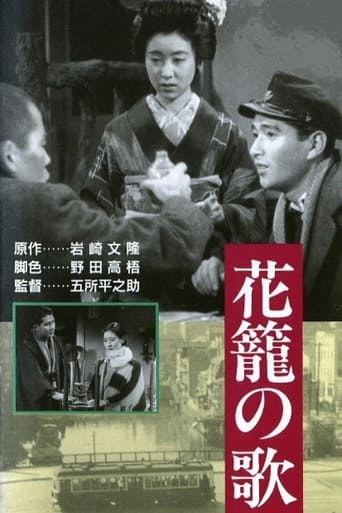 8.0
8.0Three men fall in love with the same young girl who works in a tonkatsu restaurant in the Shitamachi district of Tokyo.
Song of the Flower Basket
1937
 6.9
6.9After the death of her husband, an elderly woman and her youngest, unmarried daughter are forced to sell their house to cover his debts and decide to move in with one of the former's children, each of whom is scarcely happy to accommodate.
Brothers and Sisters of the Toda Family
1941
 7.0
7.0Yuki is a young, single mother supporting herself and her son, Haru, with a job as a bar hostess.
Forget Love for Now
1937
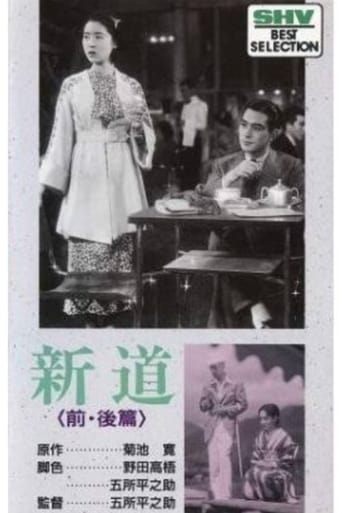 8.5
8.5The eldest daughter of a noble family is in love with an aviator while being courted by a fellow aristocrat she thinks is a dullard. This part is told from the perspective of Akemi.
The New Road: Akemi
1936
 6.6
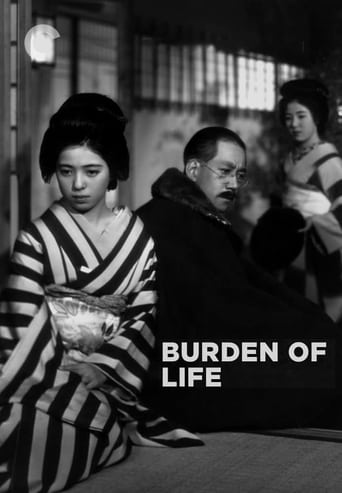
6.6A middle-aged father has just married off his third daughter, but still has his nine year old son to raise whom he resents as he was unwanted.
Burden of Life
1935
 7.0
7.0Pretty Oshige is deceived by her first love. After this, she lives a hard lifestyle, working at a number of jobs. Her only pleasure is her nephew, who eventually becomes a merchant marine. When Oshige meets her old love ten years later, she is able to forgive him and even thank him for the path her life has taken.
A Certain Woman
1942
 NR
NRThe events of the film are based on the real facts of the Pacific War, when in June 1944 the American troops began landing on the Saipan island. On July 7, an order comes that everyone must die in order not to be captured by the enemy.
The Last Women
1954
 NR
NRInoue was something of a rarity in the sense, that he was a Shochiku house director who seems to have worked mostly in period films, often with big stars like Hasegawa or Bando. "Sumidagawa", named after the river that runs through Tokyo, is also a period film, but thematically a modern one. All the themes that you associate with the normal Shochiku women's films set in the present day are in this film, just in a different context: love, the planning of a marriage, career, family relations and societal melancholy. There is no action or swordplay.
Sumida River
1942
 7.0
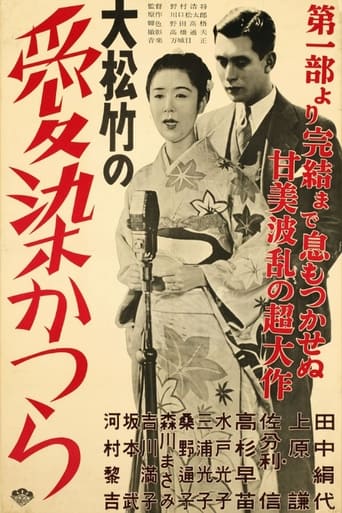
7.0A young doctor, Kozo Tsumura, falls for young nurse Katsue Takaishi. But she's got a secret: she's a widow with a son. Kozo and Katsue decide to run away to Kyoto, but her child suddenly became sick and she just missed the train and Kozo. She makes it to Kyoto finally, but is unable to meet him. Plus she isn't accepted into Kyoto society. She goes back to her hometown and tries to forget him. She quits the hospital to concentrate on her singing. She makes her professional debut with the hit "Aizen Katsura". Kozo is in the audience.
The Tree of Love
1938
 NR
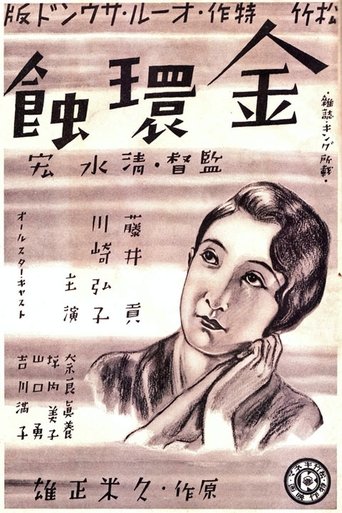
NRThe story is centered around the devastating experiences of two villagers, Osaki Shuichi, and his cousin, Nishimiura Kinue, when they leave their hometown for the metropolis of Tokyo. They are in love with each other, but Kinue is expected to marry the lawyer Kanda Seiji. In consequence, Shukichi leaves for Tokyo, where he becomes tutor to the son of the rich Iwaki family. The heartbroken Kinue also makes her way to the capital, where she becomes a bar hostess.
Eclipse
1934
 6.2
6.2A spirited young teacher challenges the conservative school employing her with liberal thinking and teaching methods.
Nobuko
1940
 7.1
7.1In Depression-era Japan, a courteous bus driver carries an eclectic group of passengers from the mountainous Izu to Tokyo.
Mr. Thank You
1936
 6.6
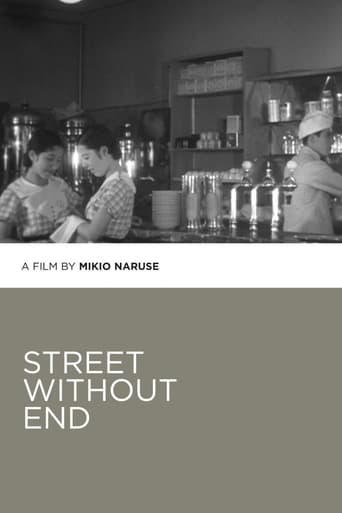
6.6Mikio Naruse’s final silent film is a gloriously rich portrait of a waitress, Sugiko, whose life, despite a host of male admirers and even some intrigued movie talent scouts, ends up taking a suffocatingly domestic turn after a wealthy businessman accidentally hits her with his car.
Street Without End
1934
 6.8
6.8A period piece about the love of a wealthy blind woman, a teacher of koto and shamisen, and her devoted manservant. Based on a novella by Tanizaki Junichiro.
Okoto and Sasuke
1935
A 1937 Japanese film.
Goodbye to the Front
1937
10 minutes 18fps, 35mm, silent, black and white. The film records the members of Studio F enjoying a cherry blossom viewing party, with the smiling faces of Gosho, Naruse Mikio, Fujimoto Masumi, Chiba Sachiko, Shinobu Setsuko, Kobayashi Jyukuji, and Kawakita Sotaro. The original is 8mm. Around 1935.
Hana Yori Dango: Studio F's Cherry Blossom Viewing
1935
 8.0
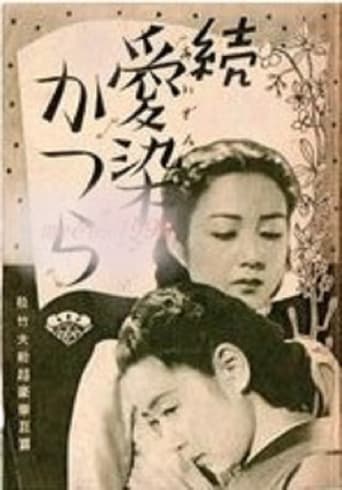
8.01939 Japanese movie
Zoku aizen katsura
1939
 8.0
8.0No synopsis available yet.
The Young Women of Izu
1945
 NR
NRNo synopsis available yet.
We Never Let You Go
1955
 6.7
6.7Movie about a devoted and single woman and her daughter. The mother's nickname is "Bokuseki" (wooden head) because of his supposed stubbornness. No.10 in the list of "The 10 best films of 1940" by Kinema Junpo.
Wood and Stone
1940
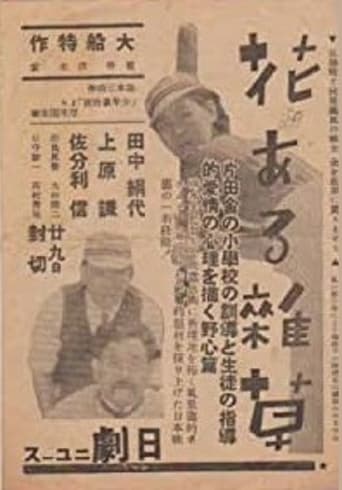 NR
NRWeed with Flowers
Weeds with flowers
1939
A newlywed couple faces tension when the wife, after her husband leaves for work, becomes completely unmotivated to handle household chores and goes back to sleep. Her neglect of daily duties starts to strain their marriage, and the couple is on the brink of divorce. However, a close friend of the husband, determined to save their relationship, introduces a hypnotist to uncover something.
The Groom Talks in His Sleep
1935