
Acting
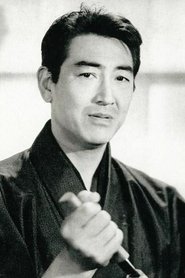
Koji Tsuruta
Born — Died
1924-12-06 — 1987-06-16
Place of birth
Hamamatsu, Japan
Known for
Acting
Credits
68 titles
Eiichi Ono (小野 榮一, Ono Eiichi, December 6, 1924 – June 16, 1987), better known by his stage name Kōji Tsuruta (鶴田 浩二, Tsuruta Kōji), was a Japanese actor and singer. He appeared in almost 260 feature films and had a unique style of singing.
Known for
 NR
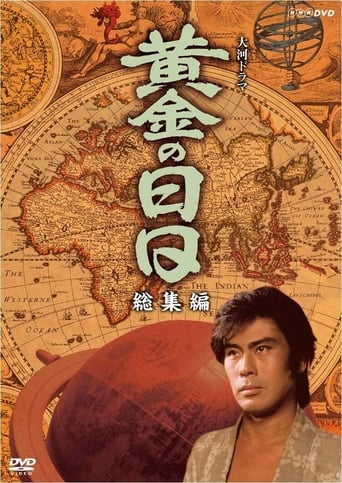
Luzon Sukezaemon is a merchant who imports vases from the Philippines. The vases are highly valued as tea utensils and he makes a huge profit. This was the first taiga drama to concentrate on the lives of commoners and the reviled merchant class of the Tokugawa period. It documents the rise and fall of the merchant city of Sakai, as seen by its most famous resident, the semilegendary Luzon.
Ōgon no Hibi
1978
 8.2
The series depicts the employees of a security company from different generations and backgrounds facing many difficult questions. It features a guard who survived a suicide mission during the war and his conflicts, rebellion, empathy and reconciliation with the younger generation born after the war.
The Roads Men Travel
1976
 NR
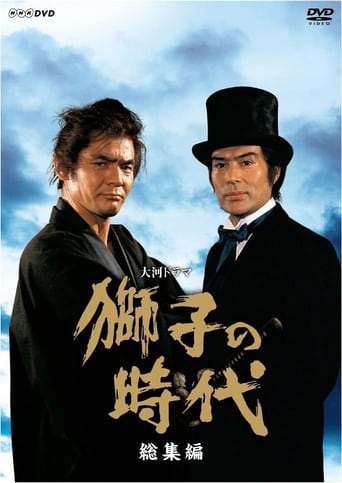
It depicts how the winner, the Satsuma Clan, and the loser, the Aizu Clan, survive through the Edo period and the Meiji Restoration in their respective ways of life.
The Lion Era
1980
 7.2
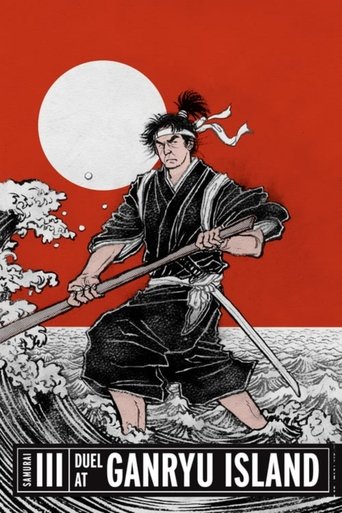
A humble and simple Takezo abandons his life as a knight errant. He's sought as a teacher and vassal by Shogun, Japan's most powerful clan leader. He's also challenged to fight by the supremely confident and skillful Sasaki Kojiro. Takezo agrees to fight Kojiro in a year's time but rejects Shogun's patronage, choosing instead to live on the edge of a village, raising vegetables. He's followed there by Otsu and later by Akemi, both in love with him. The year ends as Takezo assists the villagers against a band of brigands. He seeks Otsu's forgiveness and accepts her love, then sets off across the water to Ganryu Island for his final contest.
Samurai III: Duel at Ganryu Island
1956
 7.5
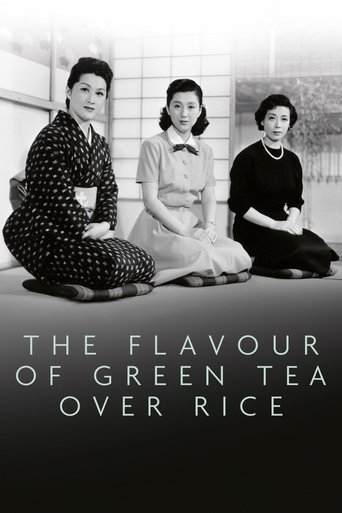
The arranged marriage between a capricious woman from Tokyo high society and a quiet rustic man is tested by a marital crisis.
The Flavor of Green Tea Over Rice
1952
 NR
From the Taisho era to the Showa 30s, known as the father of popular literature who left many masterpieces and was also a teacher of Shotaro Ikebana and Yumie Hiraiwa, this omnibus work was produced based on the works of Shin Hasegawa and broadcasted from 1972 to 1973 with a total of 30 episodes.
The Shin Hasegawa Series
1972
Film credits
1980s · 5 titles
 6.6
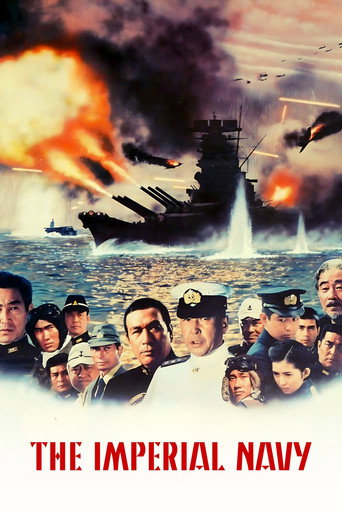
A lavish retelling of the true story of the final voyage and ultimate destruction and sinking of the battleship Yamato, Japan's greatest flagship during the Second World War.
The Imperial Navy
1981
 NR
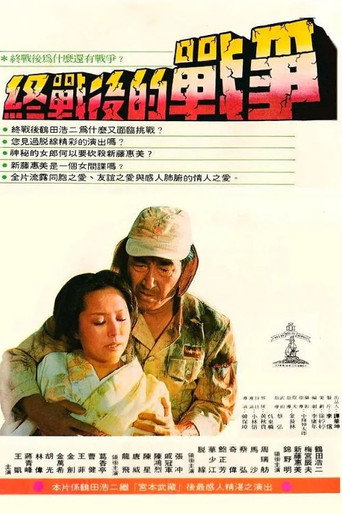
Why did Koji Tsuruta face new challenges after the war ended? Have you ever seen a truly outrageous and hilarious performance? Why would a mysterious woman want to kill Shindo Emi? Is Emi Shindo a female spy? The entire film exudes love for compatriots, love of friendship, and deeply moving love between lovers.
War After Truce
1982
 7.2
The story of Shinsuke, a young man who lives through a stormy life as a poverty-stricken coal miner. Ranging from Shinsuke's infanthood to his mid-teens. Coal workers and the mines dominate nearly every aspect of his life. Shinsuke's father a group leader at the mine, dies while bravely using dynamite to rescue a group of trapped Korean miners. Several older men attempt to help he and his mother cope, including a friendly Harley-riding yakuza boss. This movie has it all, drama, romance, sex, yakuza and violence! It is based on a story by Hiroyuki Itsuki that was originally serialized in the magazine Shukan Gendai in 1969-70.
Gate of Youth
1981
 NR
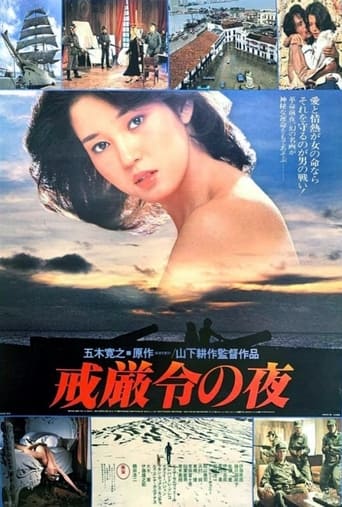
No synopsis available yet.
The Night of Martial Law
1980
 6.0
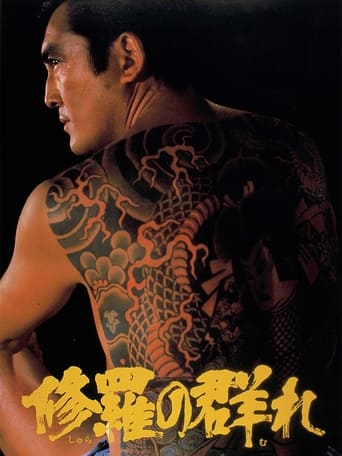
During the Showa era, a young yakuza survives war and injury and rises to become a clan boss with the help and respect of his sworn brothers.
The Story of a Man Among Men
1984
1970s · 17 titles
 7.8
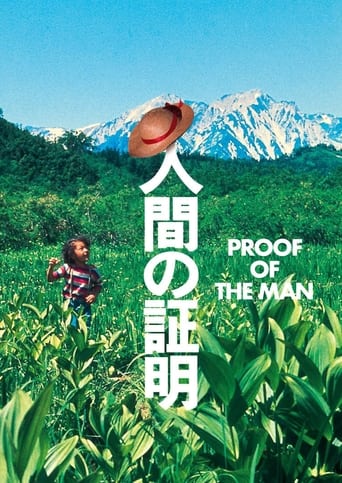
When an American is murdered in a Japanese inn, Tokyo police detective Munesue follows the trail of the killer to New York. There he is joined by a New York City detective named Shuftan and together they sort out the crime.
Proof of the Man
1977
 5.7
From Hokkaido to Tokyo, hunting dog Goro embarks on a long and grueling journey to reach home. With the loss of his master who held a secret to a weapons smuggling case and the corruptions of those who are involved, Goro's adventure unfolds.
Dog of Fortune
1979
 7.2
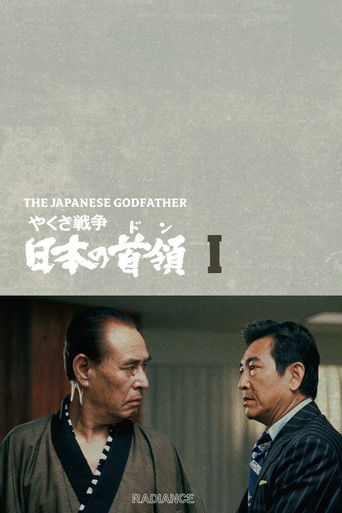
A yakuza leader must balance his violent tactics necessary for the rough streets of 1960s Tokyo with the domestic needs of his daughters.
Japan's Don
1977
 5.5
Duke Togo (codename: Golgo 13) is a ruthless assassin who's accepted a tricky assignment from an American drug syndicate. His mission is to "rub out" Hong Kong's underworld kingpin. His main obstacle is the relentless Detective 'Smitty' Smith, determined to stop Togo no matter the cost. The result is an explosive adventure through the seamy, violent streets of Hong Kong.
Golgo 13: Assignment Kowloon
1977
 7.1
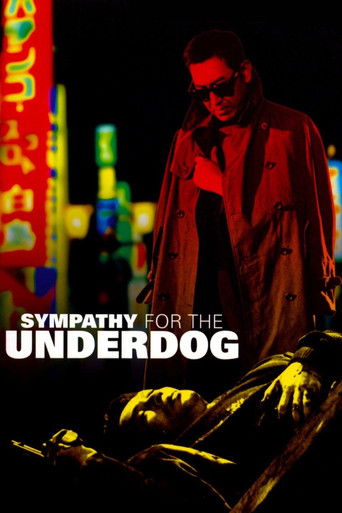
A yakuza gang gets driven out of Yokohama by a big gang from Tokyo. They relocate to Okinawa to violently start over.
Sympathy for the Underdog
1971
 7.0
The ninth and final film in the Contemporary Tales of Chivalry series.
Contemporary Tales of Chivalry: The Traitor Shall Die
1972
 7.8
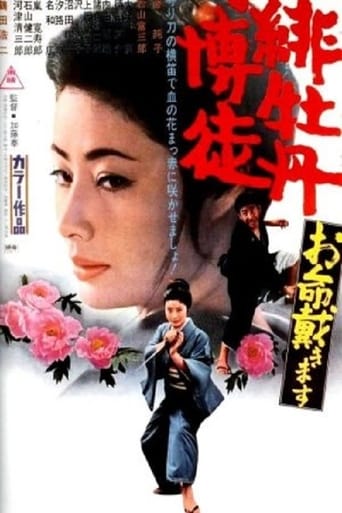
The seventh chapter of the stunning Hibotan Bakuto series. Many years have passed since Oryu the Red Peony began her soul-searching journey after her father was killed. In her travels, she meets villagers whose crops and livelihoods are being destroyed by pollution from a local factory. They seem to work out an agreement, but Oryu must help the poor villagers when the greedy factory owner and corrupt politicians betray them…
Red Peony Gambler: Here to Kill You
1971
 7.0
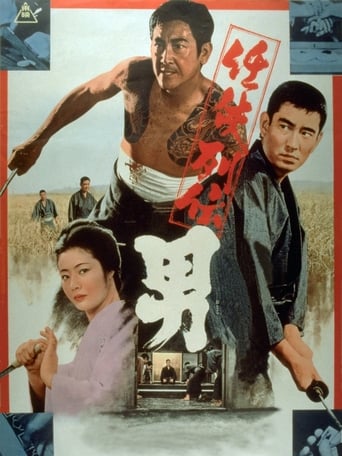
Japanese movie.
The Man
1971
 8.5
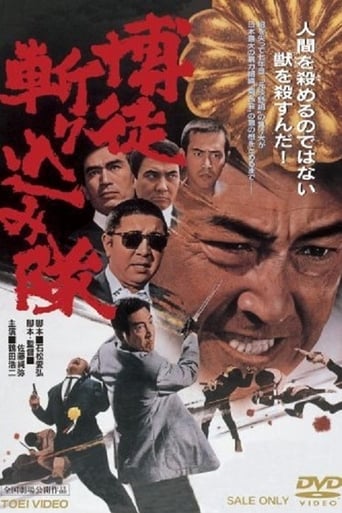
Aiba is a gang boss who has just got out of jail, and finds everything has changed. His old gang has broken up, and only a few people still respect him. So he becomes a consultant to another gang who are about to be clobbered by a much larger gang moving in from out of town. Aiba proves a crafty tactician, and does very well at playing gangs off against each other in order to save the smaller gang. His advice is not always taken by those he tries to help, but he is generally proved right.
The Gambler's Counterattack
1971
 7.4
The story takes place in the sunset days of the yakuza in 1965. The postwar turmoil that created the black market and lubricated illegal business opportunities was giving way to Japan Inc. A young Bunta Sugawara takes over as the oyabun of a crime syndicate in Yokohama, where he is struggling to keep operations at the port there alive. As his syndicate is eroding quickly, a major heavy industries company offers his gang the chance to chase some vagrants out of a shantytown where they are squatting on land where a factory is to be built. The job would secure steady profits for Bunta's crime ring for years to come. However, Bunta and other members of his outfit grew up in the shanty, and they would be muscling their friends and neighbors. This sets the stage for an internal struggle that complicates the violent struggle with a rival mafia organization in Tokyo.
Bloodstained Clan of Honor
1970
 7.0
With World War II is coming to its end and Japan nearing defeat, Japanese military leaders step up suicide attacks on Allied ships. Toei legend Koji Tsuruta stars as a Kamikaze squad leader who has second thoughts about suicide runs. He becomes torn between his own morality and his duty to his country when he must deal with a pilot under his command who refuses to complete his mission.
The Last Kamikaze
1970
 NR
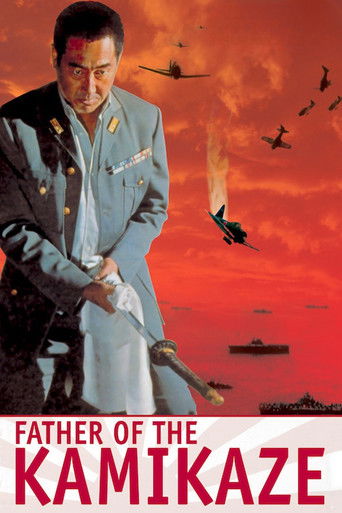
Vice Admiral Takajiro Ohnishi could see that Japan's defeat in WWII was inevitable. He came to realize that the only way to force a negotiated solution was to convince the Americans that invading Japan would cause massive casualties on both sides. The cold logic of suicide attacks, where one man and one plane could kill hundreds, seemed the only solution. In one of the cruel ironies of fate, Ohnishi actually succeeded; he convinced the Americans that invading Japan would be too costly in lives. But what he could not foresee was that America had another way of ending the war.
Father of the Kamikaze
1974
 8.0
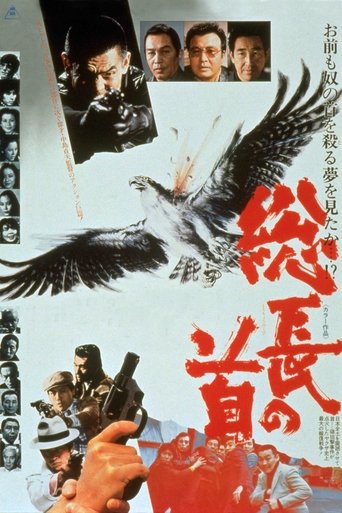
In pre-war Japan, two members of a large yakuza syndicate instigate a turf war that embroils the highest echelons of Tokyo's underworld.
Down with The Big Boss
1979
 9.0
8th part of the Gamblers / Bakuchi-uchi series.
The Drifting Gambler
1970
 7.5
In the 20th century, the Japanese government exploits prisoners as expendable slave laborers in a coal mine, which results in conflict between the prisoners and the warden to escalate.
The Hard Core Criminal
1973
 7.5
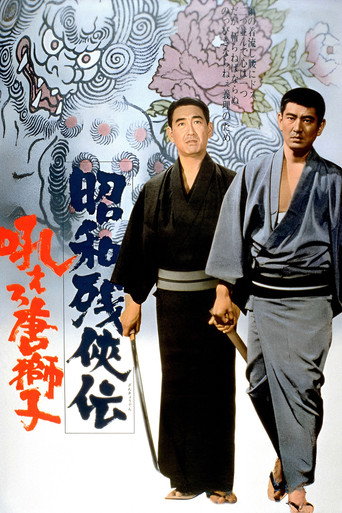
The story of a lone wolf struggling with human compassion and duty.
Contemporary Tales of Chivalry: Forbidden Love
1971
 6.8
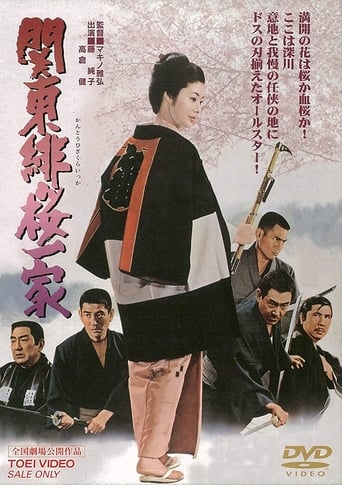
The Ni Family is the most well know and respected group of firefighters in the Kanto region. When their leader dies and the successor disappears, Tsuruji, a beautiful yet tough geisha, becomes the boss. But will she be able to confront a yakuza gang trying to take over the area?
The Kanto Scarlet Cherry Gang
1972
1960s · 21 titles
 7.0
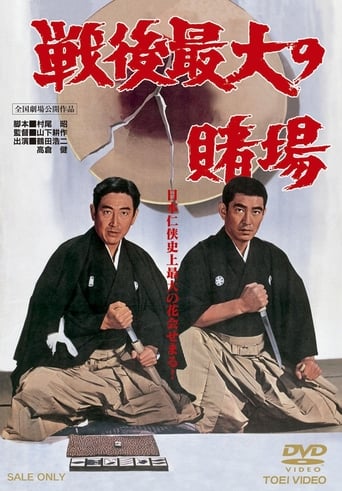
When Honjo is selected as Kansai district's chairman, Iwasa of the rival gang asks Itsuki to do everything possible to have Honjo step down, which puts Itsuki between a rock and a hard place.
The Biggest Gamble
1969
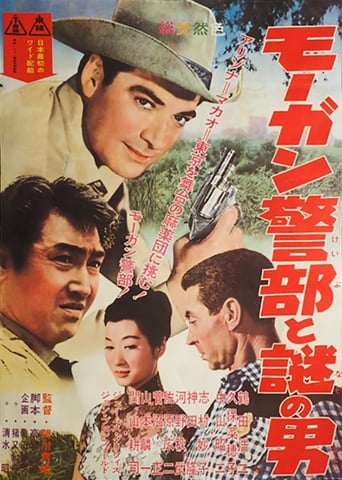 NR
Detective Morgan and the Japanese police cooperate to unveil the truth of the mysterious death of Morgan’s friend in Arizona.
Officer Morgan and a Man of Mystery
1961
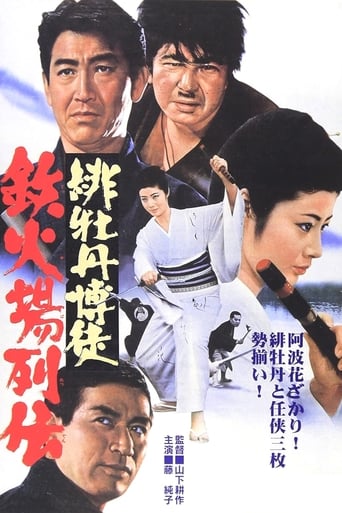 6.2
Oryu the Red Peony, a wandering female yakuza on a soul-searching journey after the death of her father. After collecting her sickly follower from jail, she is taken in by a fishing village. Feeling indebted to their generosity, she stays to work for the village and promises to leave her yakuza ways behind. When a dispute breaks out for the gambling rights to a local festival, the villagers are harassed by a gang of thugs. When the harassment turns violent, Oryu must decide wither to keep her promise or protect the villagers.
Red Peony Gambler: Biographies of a Gambling Room
1969
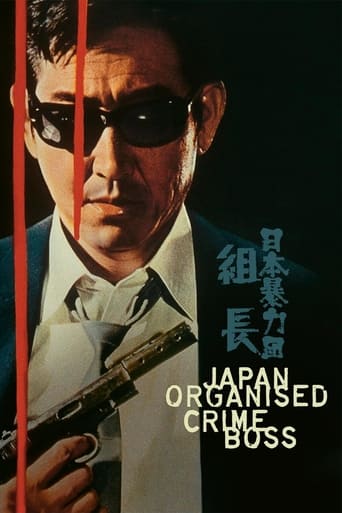 7.4
Coming out of jail and hoping for a quiet life, Yokohama yakuza has to take the lead of his gang after the death of his boss. His small group is is taken in a crossfire between a big yakuza group from Osaka at war with the Tokyo alliance for the control of the city. He tries to keep to the old yakuza code but he is no match for the new thugs who live and fight without honor.
Japan Organized Crime Boss
1969
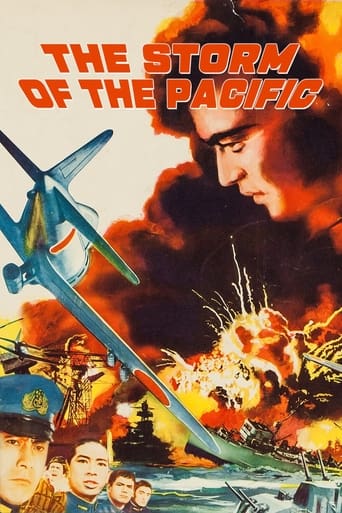 6.0
Lt. Koji Kitami is a navigator-bombardier in Japan's Naval Air Force. He participates in the Japanese raid on the U.S. Naval Base at Pearl Harbor in 1941 and is welcomed with pride in his hometown on his return. As Japan racks up victory after victory in the Pacific War, Kitami is caught up in the emotion of the time and fights courageously for the standard of Japanese honor. But his assuredness of his government's righteousness is shaken after the Japanese navy is defeated in the debacle of Midway.
The Storm of the Pacific
1960
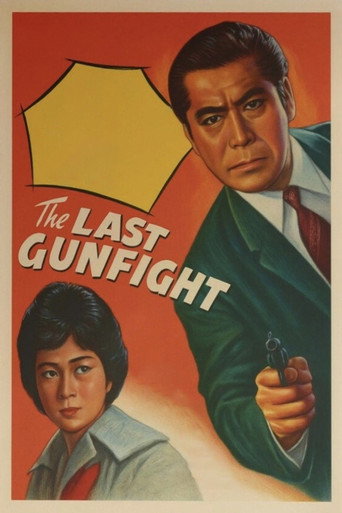 6.2
Japanese police detective Saburo Fujioka is suspected of corruption, demoted, and sent to the city of Kojin. Kojin is the scene of fierce fighting between rival gangs. Fujioka is assigned to investigate the death of the wife of gangster Tetsuo Maruyama of the Kozuka gang, probably at the hands of one of the Oka gang. During a gang gunfight, Maruyama is rescued by Detective Fujioka and the two become friends. But Maruyama insists on avenging his wife's murder, even if it means conflict with his new friend.
The Last Gunfight
1960
 6.5
Men are being murdered by a killer who uses a matter-transmitting device to locate his victims.
The Secret of the Telegian
1960
 9.0
A film about the confrontation between two yakuza groups in the brutal Miike prison, which contained 1,500 inmates. The second film in the series Gambler / Bakuto directed by Shigehiro Ozawa.
Prison Gambler
1964
 7.5
No synopsis available yet.
The Tattooed Lord
1965
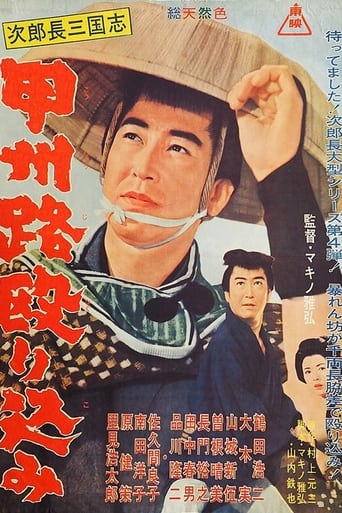 8.0
The continuing adventures of the Jirocho gang.
The Kingdom of Jirocho 4
1965
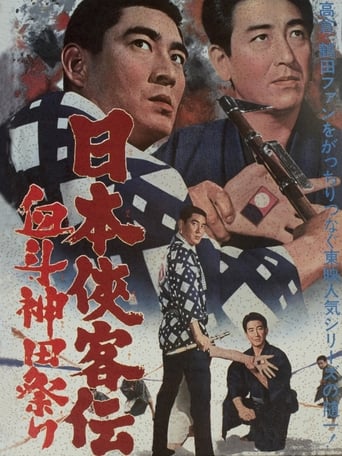 9.0
The Domain: Kanda Festival Showdown
The Domain: Kanda Festival Showdown
1966
 7.2
A local yakuza boss of a silk farming town shows kindness to the wandering gambler Oryu by letting her stay at his residence. When a rival yakuza gang, who wants to take over the town’s businesses, murders him, Oryu is obliged to protect his children and business.
Red Peony Gambler: Gambler's Obligation
1968
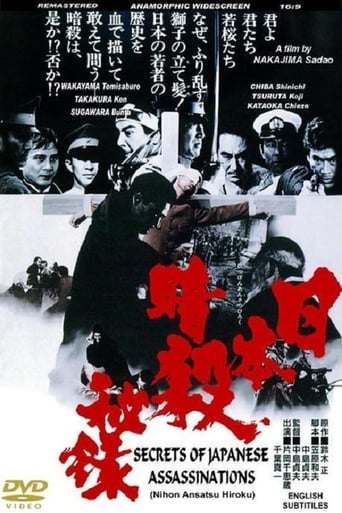 7.5
This anthology film consists of nine incidents in the late 19th and early 20th centuries when assassins changed the course of Japanese history.
Memoir of Japanese Assassinations
1969
 6.8
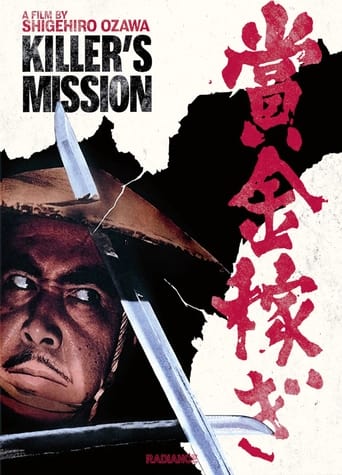
Ichibei is assigned by Shogun Tokugawa to prevent the sale of a Dutch ships-load of rifles to the hostile Shogun Satsuma. On his mission he meets a cowardly Ronin who becomes his assistant, as well as a female spy and a female warrior...
Killer's Mission
1969
 8.0
Jirocho and his henchmen befriend Ishimatsu, a wanderer in Mishima.
The Kingdom of Jirocho 2
1963
 6.3
A gang of bank robbers plan a big robbery, but they all plot to betray each other after the heist for different reasons.
Flower, Storm and Gangster
1961
 7.0
With his penultimate film, Uchida revisited one of his popular prewar titles, 1936’s Theatre of Life, an adaptation of Shiro Ozaki’s eponymous novel. Three-time Seijun Suzuki collaborator Goro Tanada wrote a gangsterized adaptation of Ozaki’s story for Uchida at a time when the yakuza had eclipsed the samurai genre as Toei's main cash crop. Protagonist Hishakaku murders a man in a quarrel over a barmaid and goes to jail. In his temporary absence, his girlfriend Otoyo, a former geisha, falls for Hishakaku’s brother, inciting a dangerous love triangle that, in typical yakuza fashion, ends tragically.
Hishakaku and Kiratsune: A Tale of Two Yakuza
1968
 9.0
The main character Tachibana Isaburo is released from prison and discovers that his boss is dead. He is offered to become the leader of the group, but refuses. A young fashion villain, a Yakuza boss wants to get into politics. He makes a deal with the Osaka Railway Company, leaving many poor people homeless. Tachibana engages in a fierce battle with villains for the poor.
Gambler
1964
 4.8
Second film of Makino's Nihon Kyokakuden series set in Osaka's harbor. The series also known as "The Domain" Each a stand alone film in it's own, none are connected other than starring the famous Ken Takakura as the main Character. This story begins with Ken Takakura's character coming to Osaka after his brother's death. Another exciting yakuza story with superb yakuza action!!
The Domain: The Naniwa Story
1965
 NR
No synopsis available yet.
Seven Fugitives
1966
 NR
Ninkyo with Kôji Tsuruta. An elderly yakuza brother tries to clear an underling’s name.
Tears of Banishment
1967
1950s · 17 titles
7.2A humble and simple Takezo abandons his life as a knight errant. He's sought as a teacher and vassal by Shogun, Japan's most powerful clan leader. He's also challenged to fight by the supremely confident and skillful Sasaki Kojiro. Takezo agrees to fight Kojiro in a year's time but rejects Shogun's patronage, choosing instead to live on the edge of a village, raising vegetables. He's followed there by Otsu and later by Akemi, both in love with him. The year ends as Takezo assists the villagers against a band of brigands. He seeks Otsu's forgiveness and accepts her love, then sets off across the water to Ganryu Island for his final contest.
Samurai III: Duel at Ganryu Island
1956
7.5The arranged marriage between a capricious woman from Tokyo high society and a quiet rustic man is tested by a marital crisis.
The Flavor of Green Tea Over Rice
1952
 NR
A romance between a young koto prodigy and the head of a koto school’s daughter.
Symphony of Love
1958
 7.2
After years on the road establishing his reputation as Japan's greatest fencer, Takezo returns to Kyoto. Otsu waits for him, yet he has come not for her but to challenge the leader of the region's finest school of fencing. To prove his valor and skill, he walks deliberately into ambushes set up by the school's followers.
Samurai II: Duel at Ichijoji Temple
1955
 NR
A heartbroken beauty has slipped into the ranks of the "Golden Horse" circus troupe. The circus's two star performers, vying for her affection, face off on a perilous trapeze, staking their love and friendship on the outcome.
Spark
1956
 NR
No synopsis available yet.
Tenryū shibukigasa
1958
 NR
Centered on a young college student who puts his youthful passion into developing true judo and the fiery mentor he admires and studies under.
The Birth of Judo
1955
 5.4
In the Tokugawa Era, the clan of Lord Yagyu has hidden away three scrolls containing clan secrets which, if revealed, would cause revolution and disaster for the clan. The information is divided among the three scrolls, all of which must be possessed for the secrets to be understood. When Princess Yuhime steals the scrolls, Tasaburo, a samurai with magical powers, and his brother Senshiro are sent to retrieve them. In Part II, the search for the scrolls continues.
Yagyu Secret Scrolls: Ninjitsu - Part II
1958
 NR
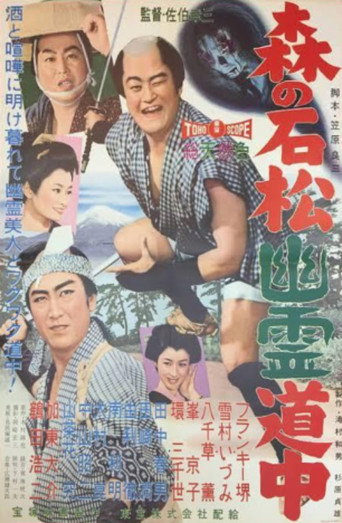
Period comedy with fantasy elements.
Ishimatsu Travels with Ghosts
1959
 NR
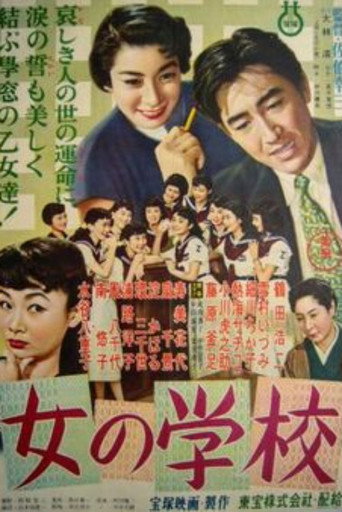
No synopsis available yet.
School Girls
1955
 NR
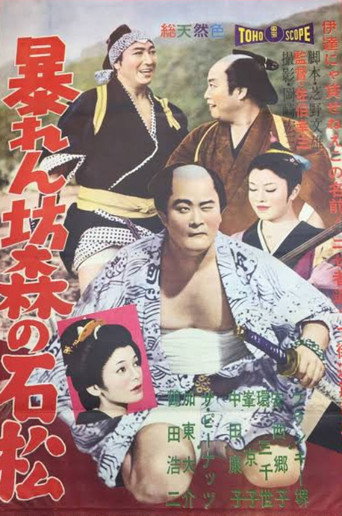
No synopsis available yet.
Violent Ishimatsu
1959
 6.2
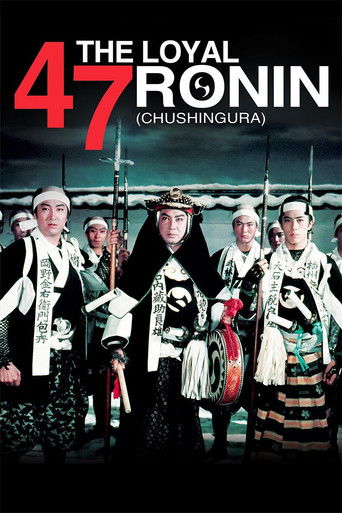
Japan, 1701. A group of samurai become rônin after their lord is forced to commit seppuku for assaulting a court official, who will become the target of a merciless revenge.
The Loyal 47 Ronin
1958
 6.3
When Sergeant Okubo's brother is murdered at a Japanese outpost in Northern China during the Second World War, Okubo poses as a war correspondent and seeks out his brother's killer.
Desperado Outpost
1959
 6.5
In the Tokugawa Era, the clan of Lord Yagyu has hidden away three scrolls containing clan secrets which, if revealed, would cause revolution and disaster for the clan. The information is divided among the three scrolls, all of which must be possessed for the secrets to be understood. When Princess Yuhime steals the scrolls, Tasaburo, a samurai with magical powers, and his brother Senshiro are sent to retrieve them.
Yagyu Secret Scrolls
1957
 NR
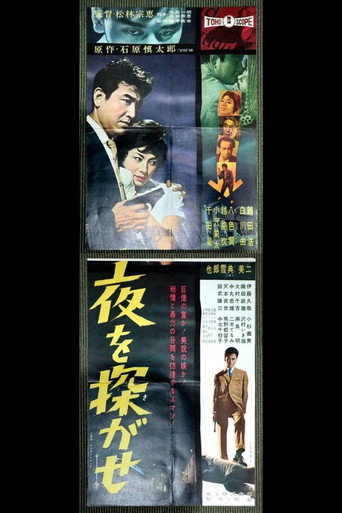
Story of an ex-sailor, caught up in a murder mystery involving gold dust buried in Manchuria, while romancing a woman whose father may be the center of the intrigue.
The Doom of Night
1959
Historical drama about a sleepy-eyed ronin.
The Spell of the Hidden Gold
1958
 6.8
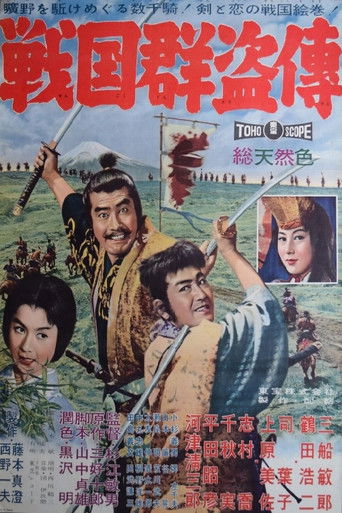
Lord Taro must deliver a money chest but is robbed by brigands led by Jibu. One of Jibu's men, Rokuro, steals the money from Jibu, but after meeting and befriending Taro, Rokuro decides to return the money to Taro. But Taro's unscrupulous brother Jiro falsely accuse Taro of the theft, and Taro reactively joins the outlaw band and encourages them to steal from the nobles and give to the poor.
Saga of the Vagabonds
1959
Series credits
NRLuzon Sukezaemon is a merchant who imports vases from the Philippines. The vases are highly valued as tea utensils and he makes a huge profit. This was the first taiga drama to concentrate on the lives of commoners and the reviled merchant class of the Tokugawa period. It documents the rise and fall of the merchant city of Sakai, as seen by its most famous resident, the semilegendary Luzon.
Ōgon no Hibi
1978
8.2The series depicts the employees of a security company from different generations and backgrounds facing many difficult questions. It features a guard who survived a suicide mission during the war and his conflicts, rebellion, empathy and reconciliation with the younger generation born after the war.
The Roads Men Travel
1976
NRIt depicts how the winner, the Satsuma Clan, and the loser, the Aizu Clan, survive through the Edo period and the Meiji Restoration in their respective ways of life.
The Lion Era
1980
NRFrom the Taisho era to the Showa 30s, known as the father of popular literature who left many masterpieces and was also a teacher of Shotaro Ikebana and Yumie Hiraiwa, this omnibus work was produced based on the works of Shin Hasegawa and broadcasted from 1972 to 1973 with a total of 30 episodes.
The Shin Hasegawa Series
1972
 NR
Shukichi, the owner of a shirt shop in Tsukuda, Tokyo, is a stubborn craftsman devoted to his work. Through clumsy in his expressions of affection, the mini-series depicts the sincerity, pride and pathos of a man who has supported his family to the best of his ability by devoting himself to his work. One day, his wife and son explode their daily frustrations with Shukichi and leave home...
The Tailor-Made Shirt
1986
 NR
A TV drama series aired on TV Asahi's Saturday Wide Gekijo based on Shizuko Natsuki's Bengoshi Asabuki Riyako series.
Onna Bengoshi Asabuki Riyako
1978
 NR
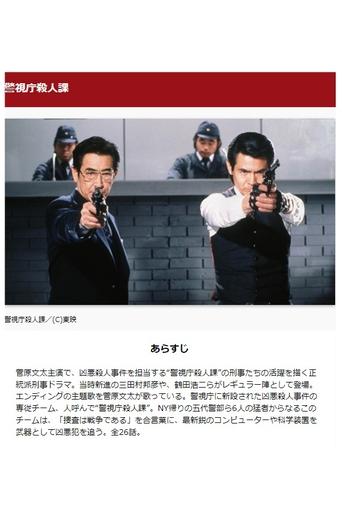
No synopsis available yet.
警視庁殺人課
—
 NR
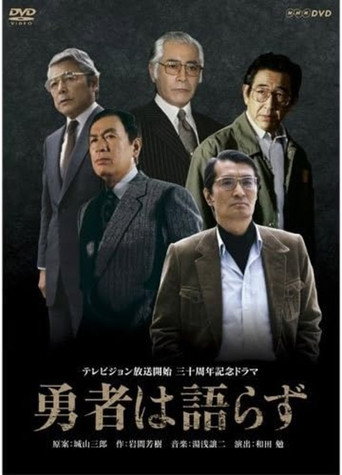
A four-episode TV drama commemorating the 30th anniversary of the start of television broadcasting, set in the automobile industry.
The Brave Man Says Little
1983