
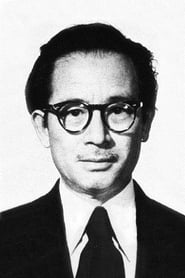
Directing
Hiroshi Inagaki
Born — Died
1905-12-30 — 1980-05-21
Place of birth
Tokyo, Japan
Known for
Directing
Credits
42 titles
Hiroshi Inagaki (稲垣 浩 Inagaki Hiroshi, 30 December 1905 – 21 May 1980) was a Japanese filmmaker most known for the Academy Award-winning Samurai I: Musashi Miyamoto, which he directed in 1954. Born in Tokyo as the son of a shinpa actor, Inagaki appeared on stage in his childhood before joining the Nikkatsu studio as an actor in 1922. Wishing to become a director, he joined Chiezō Kataoka's Chiezō Productions and made his directorial debut in 1928 with Tenka taiheiki. Returning to Nikkatsu, he continued making jidaigeki and participated in the Naritaki Group of young filmmakers such as Sadao Yamanaka and Fuji Yahiro who collaboratively wrote screenplays under the made up name "Kinpachi Kajiw…
Known for
 7.0
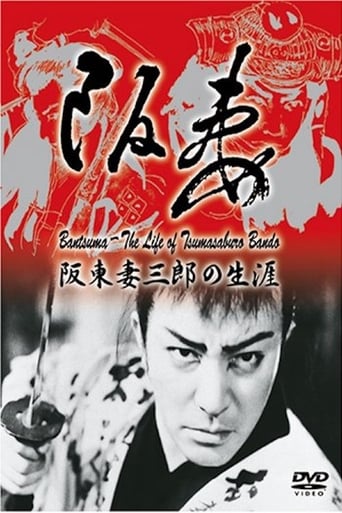
7.0The tale of Nakayama Yasubei’s duel is famous, even if he in reality probably did not cut down 18 opponents. The story has been related in film, rakugo, kodan and on stage many times, in part because Nakayama later joined the famous 47 Ronin (Chushingura) as Horibe Yasubei. But Makino and Inagaki’s version gives no hint of this more serious future, playing up the thrills and the comedy with Bando’s bravura performance. The multiple pans of Yasubei running to the duel are an exemplar of the experimental flourishes of 1930s Japanese cinema and the final duel, performed virtually like a dance number, is a marker of Makino’s love of rhythm and one of the best sword fights in Japanese film history. The film was originally released under the title Chikemuri Takadanoba (Bloody Takadanobaba) with a length of 57 minutes, but suffered some cuts and a title change when it was re-released in 1952.
Blood Spilled at Takadanobaba
1937
 7.2
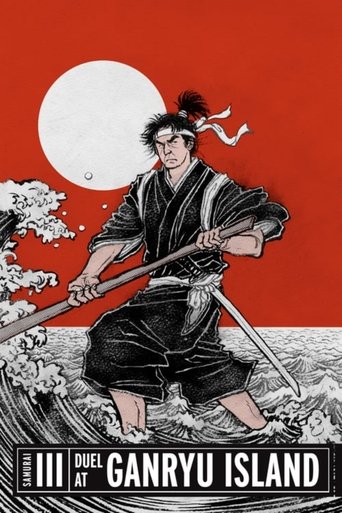
7.2A humble and simple Takezo abandons his life as a knight errant. He's sought as a teacher and vassal by Shogun, Japan's most powerful clan leader. He's also challenged to fight by the supremely confident and skillful Sasaki Kojiro. Takezo agrees to fight Kojiro in a year's time but rejects Shogun's patronage, choosing instead to live on the edge of a village, raising vegetables. He's followed there by Otsu and later by Akemi, both in love with him. The year ends as Takezo assists the villagers against a band of brigands. He seeks Otsu's forgiveness and accepts her love, then sets off across the water to Ganryu Island for his final contest.
Samurai III: Duel at Ganryu Island
1956
 7.1
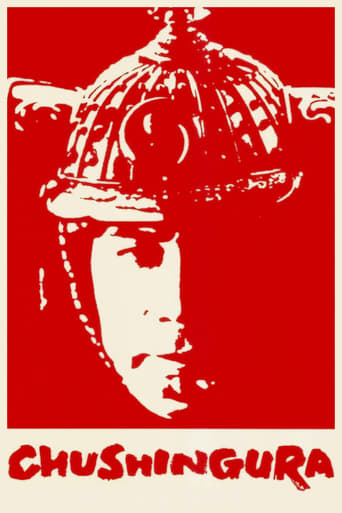
7.1After their lord is tricked into committing ritual suicide, forty-seven samurai warriors await the chance to avenge their master and reclaim their honor.
Chûshingura
1962
 7.2
7.2A poor rickshaw driver finds himself helping a young woman and her son after the woman's husband dies suddenly.
The Rickshaw Man
1958
 7.2
7.2After years on the road establishing his reputation as Japan's greatest fencer, Takezo returns to Kyoto. Otsu waits for him, yet he has come not for her but to challenge the leader of the region's finest school of fencing. To prove his valor and skill, he walks deliberately into ambushes set up by the school's followers.
Samurai II: Duel at Ichijoji Temple
1955
 5.5
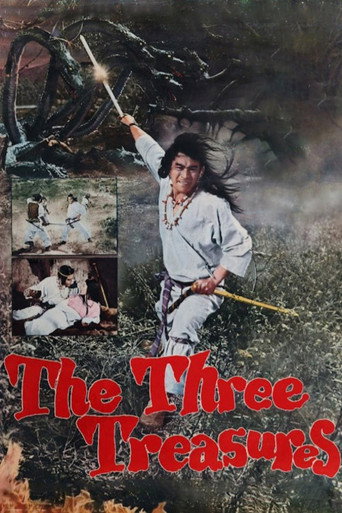
5.5The legend of the birth of Shintoism. In Fourth Century Japan, the Emperor's son Ouso expects to succeed his father on the throne, but Otomo, the Emperor's vassal, prefers Ouso's stepbrother, and conspires to have Ouso die on a dangerous mission he has contrived. But Ouso prevails in the mission and returns to his father's castle under a new name, Prince Yamato Takeru. Otomo plots to have the Prince sent into even greater danger, but Otomo is unaware that the gods have favored the Prince and the outcome is far from what any of them expected.
The Three Treasures
1959
Film credits
Behind the camera
7.0The tale of Nakayama Yasubei’s duel is famous, even if he in reality probably did not cut down 18 opponents. The story has been related in film, rakugo, kodan and on stage many times, in part because Nakayama later joined the famous 47 Ronin (Chushingura) as Horibe Yasubei. But Makino and Inagaki’s version gives no hint of this more serious future, playing up the thrills and the comedy with Bando’s bravura performance. The multiple pans of Yasubei running to the duel are an exemplar of the experimental flourishes of 1930s Japanese cinema and the final duel, performed virtually like a dance number, is a marker of Makino’s love of rhythm and one of the best sword fights in Japanese film history. The film was originally released under the title Chikemuri Takadanoba (Bloody Takadanobaba) with a length of 57 minutes, but suffered some cuts and a title change when it was re-released in 1952.
Blood Spilled at Takadanobaba
1937
7.2A humble and simple Takezo abandons his life as a knight errant. He's sought as a teacher and vassal by Shogun, Japan's most powerful clan leader. He's also challenged to fight by the supremely confident and skillful Sasaki Kojiro. Takezo agrees to fight Kojiro in a year's time but rejects Shogun's patronage, choosing instead to live on the edge of a village, raising vegetables. He's followed there by Otsu and later by Akemi, both in love with him. The year ends as Takezo assists the villagers against a band of brigands. He seeks Otsu's forgiveness and accepts her love, then sets off across the water to Ganryu Island for his final contest.
Samurai III: Duel at Ganryu Island
1956
7.2A humble and simple Takezo abandons his life as a knight errant. He's sought as a teacher and vassal by Shogun, Japan's most powerful clan leader. He's also challenged to fight by the supremely confident and skillful Sasaki Kojiro. Takezo agrees to fight Kojiro in a year's time but rejects Shogun's patronage, choosing instead to live on the edge of a village, raising vegetables. He's followed there by Otsu and later by Akemi, both in love with him. The year ends as Takezo assists the villagers against a band of brigands. He seeks Otsu's forgiveness and accepts her love, then sets off across the water to Ganryu Island for his final contest.
Samurai III: Duel at Ganryu Island
1956
7.1After their lord is tricked into committing ritual suicide, forty-seven samurai warriors await the chance to avenge their master and reclaim their honor.
Chûshingura
1962
7.1After their lord is tricked into committing ritual suicide, forty-seven samurai warriors await the chance to avenge their master and reclaim their honor.
Chûshingura
1962
7.2A poor rickshaw driver finds himself helping a young woman and her son after the woman's husband dies suddenly.
The Rickshaw Man
1958
7.2A poor rickshaw driver finds himself helping a young woman and her son after the woman's husband dies suddenly.
The Rickshaw Man
1958
7.2After years on the road establishing his reputation as Japan's greatest fencer, Takezo returns to Kyoto. Otsu waits for him, yet he has come not for her but to challenge the leader of the region's finest school of fencing. To prove his valor and skill, he walks deliberately into ambushes set up by the school's followers.
Samurai II: Duel at Ichijoji Temple
1955
7.2After years on the road establishing his reputation as Japan's greatest fencer, Takezo returns to Kyoto. Otsu waits for him, yet he has come not for her but to challenge the leader of the region's finest school of fencing. To prove his valor and skill, he walks deliberately into ambushes set up by the school's followers.
Samurai II: Duel at Ichijoji Temple
1955
5.5The legend of the birth of Shintoism. In Fourth Century Japan, the Emperor's son Ouso expects to succeed his father on the throne, but Otomo, the Emperor's vassal, prefers Ouso's stepbrother, and conspires to have Ouso die on a dangerous mission he has contrived. But Ouso prevails in the mission and returns to his father's castle under a new name, Prince Yamato Takeru. Otomo plots to have the Prince sent into even greater danger, but Otomo is unaware that the gods have favored the Prince and the outcome is far from what any of them expected.
The Three Treasures
1959
 7.4
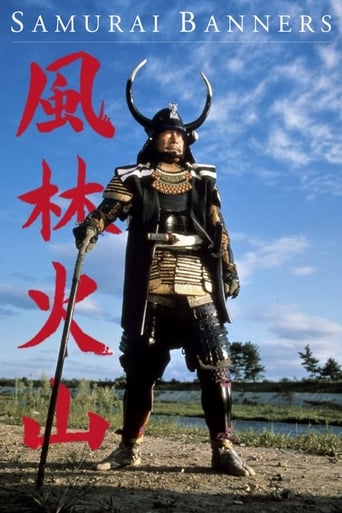
7.4Kansuke Yamamoto is a samurai who dreams of a country united, peaceful from sea to sea. He enters the service of Takeda, the lord of Kai domain. He convinces Takeda to kill the lord of neighboring Suwa and take his wife as a concubine. He then convinces the widow, Princess Yu, to accept this arrangement and to bear Takeda a son. He pledges them his life. He then spends years using treachery, poetic sensibility, military and political strategy to expand Takeda's realm, advance the claim of Yu's son as the heir, and prepare for an ultimate battle with the forces of Echigo. Has Kansuke overreached? Are his dreams, blinded by love, too big?
Samurai Banners
1969
7.4Kansuke Yamamoto is a samurai who dreams of a country united, peaceful from sea to sea. He enters the service of Takeda, the lord of Kai domain. He convinces Takeda to kill the lord of neighboring Suwa and take his wife as a concubine. He then convinces the widow, Princess Yu, to accept this arrangement and to bear Takeda a son. He pledges them his life. He then spends years using treachery, poetic sensibility, military and political strategy to expand Takeda's realm, advance the claim of Yu's son as the heir, and prepare for an ultimate battle with the forces of Echigo. Has Kansuke overreached? Are his dreams, blinded by love, too big?
Samurai Banners
1969
 7.2
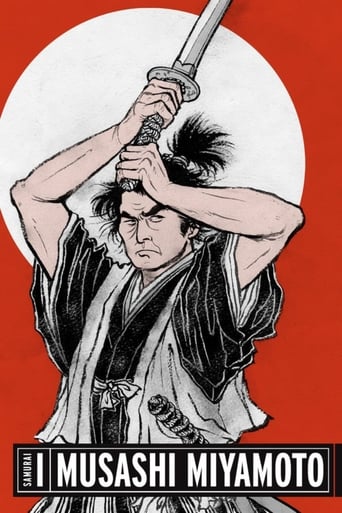
7.2Struggling to elevate himself from his low caste in 17th century Japan, Miyamoto trains to become a mighty samurai warrior.
Samurai I: Musashi Miyamoto
1954
7.2Struggling to elevate himself from his low caste in 17th century Japan, Miyamoto trains to become a mighty samurai warrior.
Samurai I: Musashi Miyamoto
1954
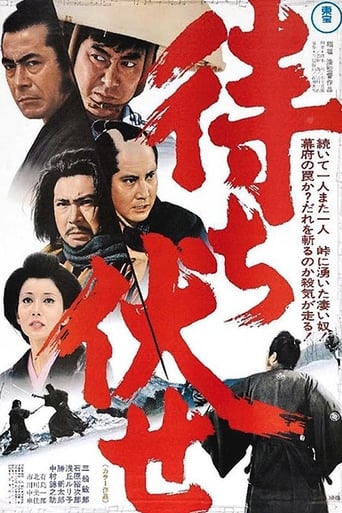 6.9
6.9In the Edo period, a nameless ronin accepts an assignment to go to a mountain pass and wait. Near the pass he stops at an inn where a collection of characters gather, including a gang set on stealing shogunate gold that's soon to come over the pass. When the Ronin's assignment becomes clear, to help the gang, he's ordered to kill the inn's residents, including a woman he's rescued from an abusive husband. He's reluctant to murder innocent people; then he learns that the gold shipment is a trap and he's part of a double cross. How he sorts through these divided loyalties tests of his samurai honor, and perhaps of his love for a woman.
Incident at Blood Pass
1970
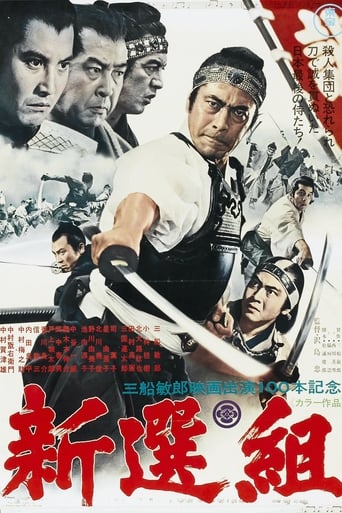 6.9
6.9Near the end of the nineteenth century, as the balance of power shifts from Shogunate towards the Emperor, Japan restlessly awaits the dawning of a new age. But not all are content...The Shinsengumi, a small army of samurai, farmers and peasants, band together to do battle against the tide of history. Their leader, Isami Kondo is a man who rises from farmer to fighter to head the fierce Shinsengumi brigade. Using a stern hand and a heart of gold, he rallies his men in defense of the tottering Shogunate. But bloodshed and treachery lurk around every corner.
Shinsengumi: Assassins of Honor
1969
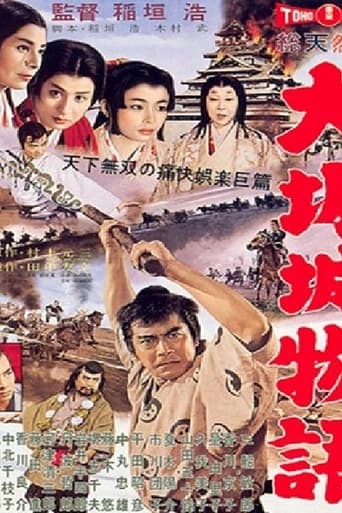 7.5
7.5During the raging war between the Toyotomi and Tokugawa clans, the swordsman Mohei (whose family has been completely decimated) is recruited by Toyotomi to overcome the seat of power, Osaka Castle. Mohei's daredevil skills will be put to severe tests.
Daredevil in the Castle
1961
7.5During the raging war between the Toyotomi and Tokugawa clans, the swordsman Mohei (whose family has been completely decimated) is recruited by Toyotomi to overcome the seat of power, Osaka Castle. Mohei's daredevil skills will be put to severe tests.
Daredevil in the Castle
1961
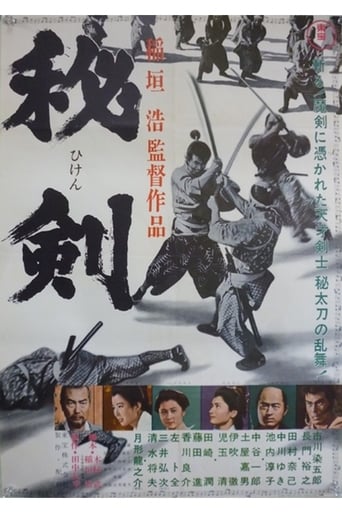 6.7
6.7This Japanese action-adventure is set in the 17th century when all forms of swordplay were banned. One fighter, an excellent swordsman believes the law is unfair. His brother keeps his opinions about the law to himself. The swordsman vents his frustration by cutting off the thumbs of an enemy. The fighter is then banished. To live, he becomes a thief. To restore the family's lost honor, the other brother is forced to challenge the fighter to a duel.
Young Swordsman
1963
6.7This Japanese action-adventure is set in the 17th century when all forms of swordplay were banned. One fighter, an excellent swordsman believes the law is unfair. His brother keeps his opinions about the law to himself. The swordsman vents his frustration by cutting off the thumbs of an enemy. The fighter is then banished. To live, he becomes a thief. To restore the family's lost honor, the other brother is forced to challenge the fighter to a duel.
Young Swordsman
1963
 6.7
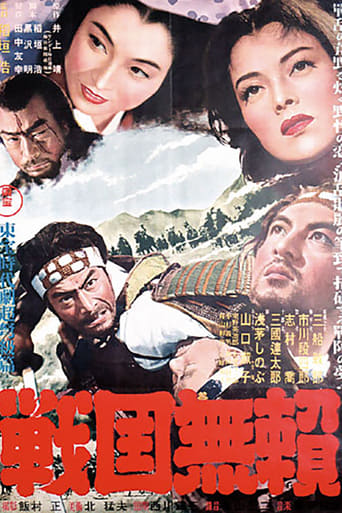
6.7Soldiers Hayate and Yaheiji secretly escape from their besieged castle. Hayate has left behind his lover, Kano. On his way, Hayate is wounded and cared for by O’Ryo, who falls in love with him. But when Hayate accidentally kills her caretaker, he flees, with O’Ryo in pursuit. Subsequently, Hayate's comrade Yaheiji falls in love with Oryo. Kano, the lover left behind by Hayate, believes him dead, and becomes involved with another soldier, Jurota. When Jurota defects to the opposing army, he takes Kano with him. A double set of love triangles has developed, wherein each man and each woman loves one and is loved by another. Finally only combat and self-sacrifice can untangle the weave.
Sword for Hire
1952
6.7Soldiers Hayate and Yaheiji secretly escape from their besieged castle. Hayate has left behind his lover, Kano. On his way, Hayate is wounded and cared for by O’Ryo, who falls in love with him. But when Hayate accidentally kills her caretaker, he flees, with O’Ryo in pursuit. Subsequently, Hayate's comrade Yaheiji falls in love with Oryo. Kano, the lover left behind by Hayate, believes him dead, and becomes involved with another soldier, Jurota. When Jurota defects to the opposing army, he takes Kano with him. A double set of love triangles has developed, wherein each man and each woman loves one and is loved by another. Finally only combat and self-sacrifice can untangle the weave.
Sword for Hire
1952
 9.0
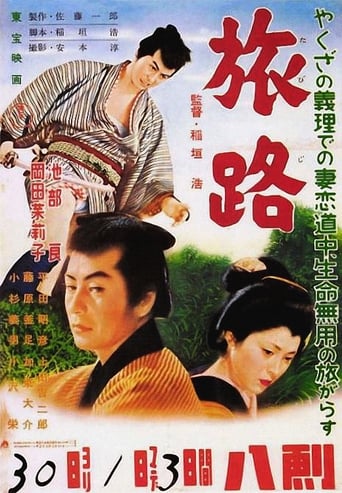
9.0Forced on the road by yakuza obligations, a man sets out on a reckless journey to Tsumagoi. Movie posters for local cinemas were often displayed at sento (public baths) too. The handwritten text on the bottom here announces the film will play at Hassen for 3 days.
The Lone Journey
1955
9.0Forced on the road by yakuza obligations, a man sets out on a reckless journey to Tsumagoi. Movie posters for local cinemas were often displayed at sento (public baths) too. The handwritten text on the bottom here announces the film will play at Hassen for 3 days.
The Lone Journey
1955
 6.5
6.5In the Tokugawa Era, the clan of Lord Yagyu has hidden away three scrolls containing clan secrets which, if revealed, would cause revolution and disaster for the clan. The information is divided among the three scrolls, all of which must be possessed for the secrets to be understood. When Princess Yuhime steals the scrolls, Tasaburo, a samurai with magical powers, and his brother Senshiro are sent to retrieve them.
Yagyu Secret Scrolls
1957
6.5In the Tokugawa Era, the clan of Lord Yagyu has hidden away three scrolls containing clan secrets which, if revealed, would cause revolution and disaster for the clan. The information is divided among the three scrolls, all of which must be possessed for the secrets to be understood. When Princess Yuhime steals the scrolls, Tasaburo, a samurai with magical powers, and his brother Senshiro are sent to retrieve them.
Yagyu Secret Scrolls
1957
 10.0
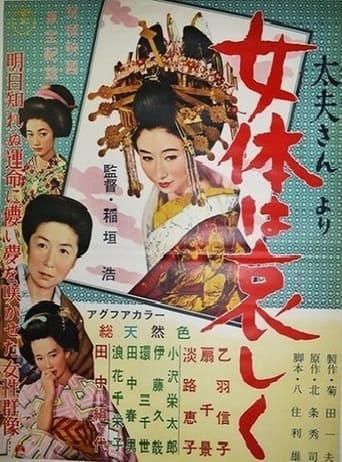
10.0Directed by Hiroshi Inagaki, the drama, set in the brothels of Shimabara in post-war Kyoto, is a moving look at the lives of women of tenacity and resilience.
Geisha in the Old City
1957
 9.0
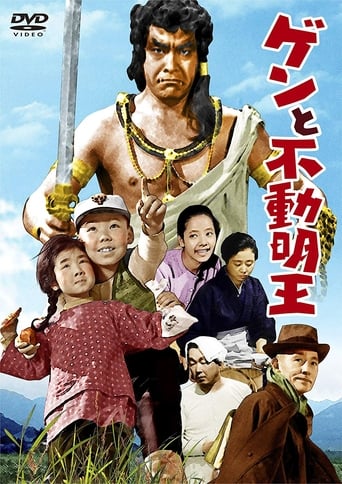
9.0Gen is a lonely orphan boy. His sole sense of companionship comes from an imaginary friend, the god Prince Fudo-Myo. Prince Fudo-Myo comes to the boy's rescue in times of difficulty.
The Youth and His Amulet
1961
 6.6
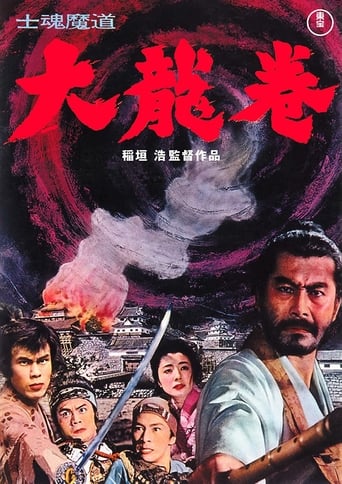
6.6Set at the end of the Siege of Osaka this film follows the exploits of several members of the defeated Toyotomi clan as they cope with the post battle chaos and the persecution of the Shogun's army. Five samurai decide on different fates when it becomes clear that their side is being destroyed. One wants to attack the enemy head on in a final honorable death. Another decides to commit hari-kiri but wants to find a glorious view to do it. His close friend, the "coward", just wants to run and give up the life of a samurai. The final two set their own castle on fire to garner favors from the enemy and therefore avert their own death during the massacre of all defeated soldiers as
Whirlwind
1964
6.6Set at the end of the Siege of Osaka this film follows the exploits of several members of the defeated Toyotomi clan as they cope with the post battle chaos and the persecution of the Shogun's army. Five samurai decide on different fates when it becomes clear that their side is being destroyed. One wants to attack the enemy head on in a final honorable death. Another decides to commit hari-kiri but wants to find a glorious view to do it. His close friend, the "coward", just wants to run and give up the life of a samurai. The final two set their own castle on fire to garner favors from the enemy and therefore avert their own death during the massacre of all defeated soldiers as
Whirlwind
1964
 6.0
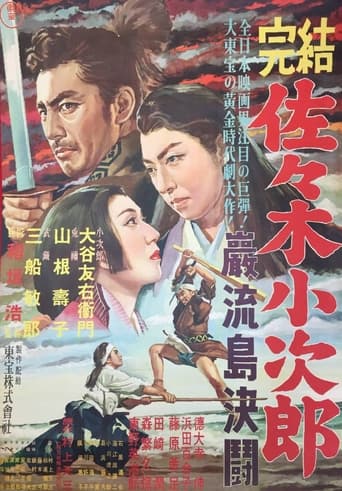
6.0Director Hiroshi Inagaki's early version of the life and death of famed swordsman Sasaki Kojiro. Otani Tomoemon gives a brilliant performance as Sasaki Kojiro, who rises from humble beginnings to national fame, and a young Toshiro Mifune appears as the legendary master swordsman Miyamoto Musashi for the first time and essentially sets the standard for future portrayals.This masterpiece is based on the original story as written by noted author Murakami Genzo and is far superior to any other versions. Following Kojiro from his earliest days through his fateful meeting with Musashi, this movie is filled with exciting and dramatic moments culminating in the best version of the final duel ever seen on film.
Sasaki Kojiro
1951
6.0Director Hiroshi Inagaki's early version of the life and death of famed swordsman Sasaki Kojiro. Otani Tomoemon gives a brilliant performance as Sasaki Kojiro, who rises from humble beginnings to national fame, and a young Toshiro Mifune appears as the legendary master swordsman Miyamoto Musashi for the first time and essentially sets the standard for future portrayals.This masterpiece is based on the original story as written by noted author Murakami Genzo and is far superior to any other versions. Following Kojiro from his earliest days through his fateful meeting with Musashi, this movie is filled with exciting and dramatic moments culminating in the best version of the final duel ever seen on film.
Sasaki Kojiro
1951
 9.0
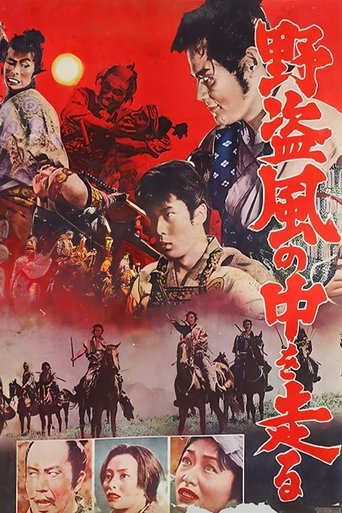
9.01961 Japanese movie
Bandits on the Wind
1961
9.01961 Japanese movie
Bandits on the Wind
1961
 6.9
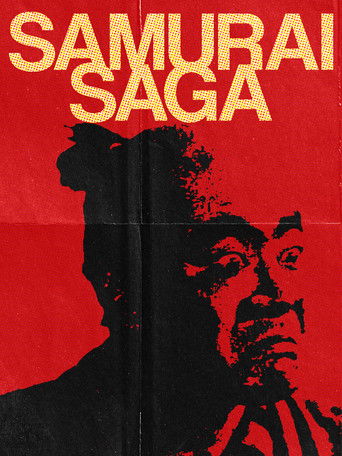
6.9Edmund Rostand's play Cyrano de Bergerac, transplanted to Japan. A poet-warrior with an oversized nose (matched only by his great heart) loves a lady. But she sees him only as a friend, so he helps another man to woo her by giving him the poetry of his own heart.
Samurai Saga
1959
6.9Edmund Rostand's play Cyrano de Bergerac, transplanted to Japan. A poet-warrior with an oversized nose (matched only by his great heart) loves a lady. But she sees him only as a friend, so he helps another man to woo her by giving him the poetry of his own heart.
Samurai Saga
1959
 6.2
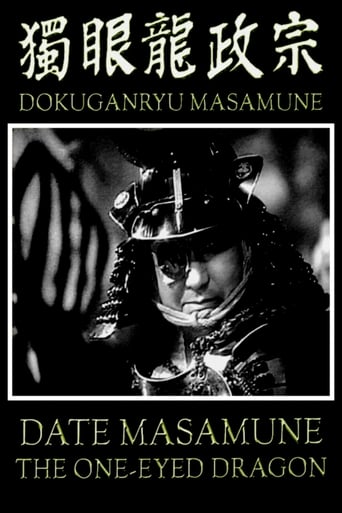
6.2The life, adventures and exploits of warlord Date Masamune the One-eyed Dragon: his early youth as an aggressive warrior, the battles he won until subduing almost all his enemies, the lonely comprehension of knowing that he actually can not take over the whole country because he was born too late.
Date Masamune the One-Eyed Dragon
1942
6.2The life, adventures and exploits of warlord Date Masamune the One-eyed Dragon: his early youth as an aggressive warrior, the battles he won until subduing almost all his enemies, the lonely comprehension of knowing that he actually can not take over the whole country because he was born too late.
Date Masamune the One-Eyed Dragon
1942
 NR
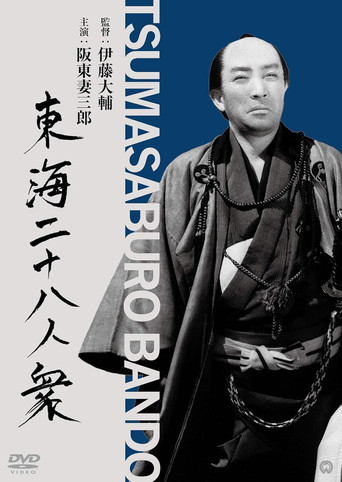
NRNo synopsis available yet.
Tōkai suikoden
1945
 7.8
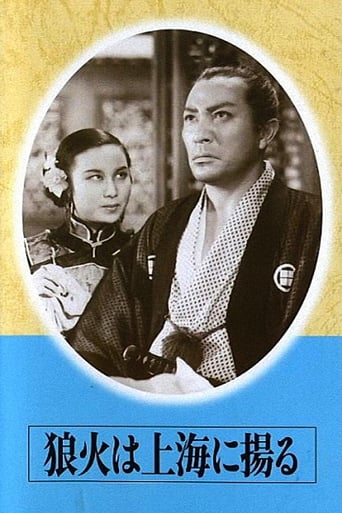
7.8During the Taiping Rebellion of the mid-19th century, anti-Qing (Manchu) Chinese forces led by Taiping commander Li Xiucheng march on Shanghai. Although the Western powers are officially neutral, the British consul in Shanghai sides with the Qing imperial government, and counter to his own government's policy he retains American adventurer Frederick Townsend Ward to raise a mercenary force of foreigners in Shanghai and oppose the Taipings. Ward's force is routed, with heavy casualties, but since many of the casualties are British, the British army soon is drawn in on the side of the Qings. The only support for the Chinese comes from Japanese in Shanghai and anti-imperialist demonstrations in Japan. A family drama plays out against this historical background. After a Chinese home is destroyed by careless British shelling, killing the father and crippling a daughter, the surviving son vows revenge but begins to see that his true friends may be the Japanese.
Signal Fires of Shanghai
1944