

Acting
Ági Szirtes
Born
1955-09-21 (71)
Place of birth
Budapest, Hungary
Known for
Acting
Credits
36 titles
Known for
 7.0
A switchman at a seaside railway witnesses a murder but does not report it after he finds a suitcase full of money at the scene of the crime.
The Man from London
2008
 5.0
No synopsis available yet.
Bábel tornya
1982
 7.0
After her husband is assassinated, housewife Nóra reluctantly has to take charge of the criminal business of her family.
Underworld
2019
 8.6
A young, revolutionary couple aboard the last train leaving Budapest after the Russian invasion of 1956. Based on a novel by the Austrian writer Stefan Zweig.
Mastergame
2023
 NR
A woman has lost her grandmother. The grandma's apartment is now lifeless, only a few boxes lie in the living room. But is that truly all that is left behind her?
Legacy
2023
 7.4
In 1585 the Turks and Vallons are looting the Látrány region.
The Aga's Testament
1967
Film credits
2020s · 3 titles
8.6A young, revolutionary couple aboard the last train leaving Budapest after the Russian invasion of 1956. Based on a novel by the Austrian writer Stefan Zweig.
Mastergame
2023
NRA woman has lost her grandmother. The grandma's apartment is now lifeless, only a few boxes lie in the living room. But is that truly all that is left behind her?
Legacy
2023
 9.0
A cardiologist is sent into retirement, but he feels at loss without his work. He returns to his home village to work as a general practitioner. This is the start of his ordeal: he's confronted with raw reality, which finally brings him to his knees. But music has the last word.
Final Report
2020
2010s · 7 titles
 NR
No synopsis available yet.
Nem tűntem el - Richter Gedeon története
2014
 6.0
Emerenc, an elderly and private woman, is hired to be the housekeeper of a struggling writer, Magda. An event in the writer's life prompts Emerenc to disclose details of her traumatizing past, which will bond the two women forever. Based on the novel by Magda Szabó.
The Door
2012
 7.0
An unsettling feeling overwhelms a small Hungarian town when two orthodox Jews arrive with a mysterious trunk. As residents begin to speculate on the purpose of the visit of these two strangers, order starts to crumble in town with some pursuing devious plans and others finding remorse in their hearts.
1945
2017
 6.1
In 1957 the Soviet Union decides to give Hungary the chance to choose the world's first cosmonaut, who can be the very first person in space. It seems like the best candidate is Lajkó, the gypsy spraying pilot.
Lajko: Gypsy in Space
2018
 8.5
The reformed priest of Gát, Pap Énók, gets married. He is engaged to the worthy Miss Ica Zádor from Malomsk and Zádor. At the Easter 'priestess election ball', Énók could have chosen a wife from among thirty-five Gáti girls, but he asked the thirty-sixth, Ica, a young lady from Pest. Enoch, of peasant origin, had studied his way up to the middle-class intellectuals of the countryside. Ica, the scion of a ruined noble family, comes from Budapest to a low-class marriage, but Ica's rise to office could bring her back into the higher social circles she had lost through the family's decline. They married for love, but both were guided by interest and expectation. Ica is a vivacious woman of the world, dissatisfied, bored, longing to return to life and society in Pest. She finds strange amusements: sometimes she embraces, sometimes she torments her master. Enoch is head over heels in love, puts up with everything, and in return happily accepts the kisses he is rewarded with.
A galamb papné
2013
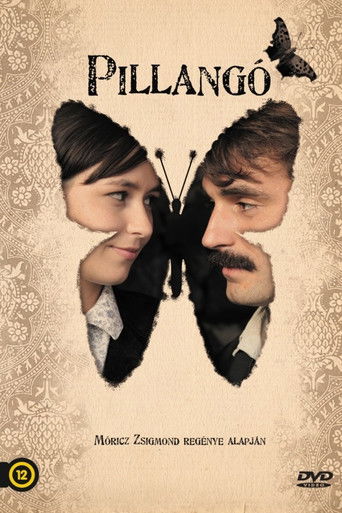 NR
Zsigmond Móricz wrote his novel Butterfly in just a few days in 1924. Móricz tells the story of a mighty love that triumphs over adversity and is all-powerful in the language of ordinary people. The love of Zsuzsika and Jóska is presented through the "lightning and veil-soft" emotions of the director, László Vitézy's television adaptation. After The Legend of Hortobágy (Komorló) and The Sky Bird, this is the third film made by László Vitézy based on the writings of Zsigmond Móricz.
Pillangó
2012
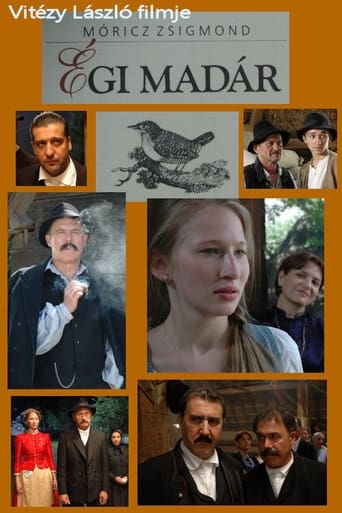 3.5
Panni becomes the wife of the landowner Komáromi and thus the first woman of the village. Marriage only brings her wealth, she does not love her lord, her new family despises her, and she does not even get a maid from her former girlfriends. His old lover, Miska, unexpectedly returns to the village and visits the woman. Panni receives him with a smile and, after mutual recriminations, expels him. She tells her husband everything, but Komáromi, unmanly, does not defend his wife himself, but throws Mishka out of the ball with others, and she hates him forever. When Panni meets Miska again, she refuses to let him go back to Pest alone. Another adaptation of Zsigmond Móricz's work.
Égi madár
2011
2000s · 11 titles
7.0A switchman at a seaside railway witnesses a murder but does not report it after he finds a suitcase full of money at the scene of the crime.
The Man from London
2008
 8.5
The film takes place in a present-day small Hungarian village in the middle of nowhere. Strangers hardly ever come to this place, everything outside of it seems to be in another world for the inhabitants. But one day everything changes, when a stranger from Budapest enters the pub. He is on his way to a vacation in Portugal and wants to spend some days in this village. He soon starts a love affair with the pub owner's daughter. The ex-policeman of the village doesn't like this at all...
Portugal
2000
 5.1
Bruno, a bisexual but closeted young man lives in rural Hungary with his girlfriend Mari. Also on the scene is her homosexual brother Ringo. Mari doesn't know that when the boys go off to work together in the city they raise cash by turning tricks and burglarizing houses.
This I Wish and Nothing More
2000
The main character, Béla Hackspacher, is a forklift driver. He lives in a small rented flat with his wife Irén, his two children, his mother-in-law and Rózsika, a subtenant who is about to become a dance singer. Béla learns at a community cultural programme that he has a 12 on the toto. The show stops, to great joy. The day arrives, 23 October 1956, when Béla can collect his prize.
Telitalálat
2003
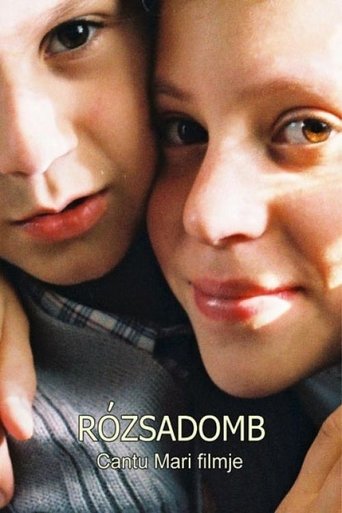 9.0
The film shows the times directly before and after the revolution of 1956 in a Rosehill villa and its garden, guarded by the state security, from the perspective of a powerful party functionary’s children living there. The children witness a lot of things they do not understand, mysterious things, which they interpret in their own way.
Rosehill
2003
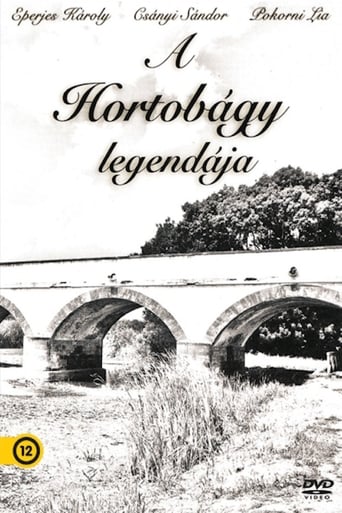 NR
The film weaves together three stories from Hortobágy. It takes a sacred approach to the honesty, fallibility, stubbornness and deep emotions of the ancient people of Hortobágy. The director was inspired by Zsigmond Móricz's short story "Komor Ló" and the writer's realistic yet mystical vision to film two other stories told by the people of the Hortobágy, set in 1945 and after the communist coup.
A Hortobágy legendája
2008
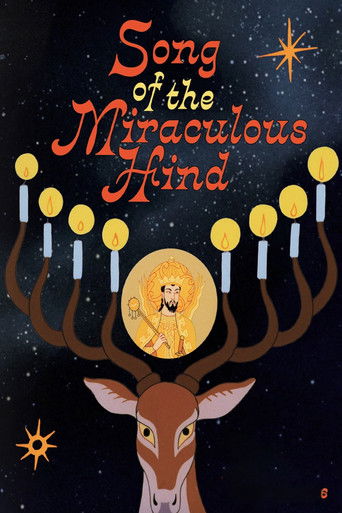 7.3
Divided into four sections, "Song" is inspired by the Siberian and Finno-Ugric legends about Creation, in which the world begins with characters who are only half-human, one being half-bird, the other half-bear. The narrator delves into the origins of Hungarian culture, the Iranian and Turkish influences that impacted the society, and finally the story of Stephen, the emperor who brought Christianity to the country and shifted the capital west in an attempt to link with Europe.
Song of the Miraculous Hind
2002
 4.6
Three young friends, from the Hungarian countryside, want more sex and excitement in their life. Together they undertake a journey to Lake Balaton, where they hope to find plenty of summer fun as well as a temporary job.
Eastern Sugar
2004
 9.0
In the second half of the 1800s, the daughter of a Debrecen family marries a landowner, Kálmán Jablonczay. The couple move to the husband's castle. The marriage starts off happily but the new wife, Mária Rickl, soon finds herself at odds with the gentry lifestyle, her husband and her father-in-law...
An Old-Fashioned Story
2006
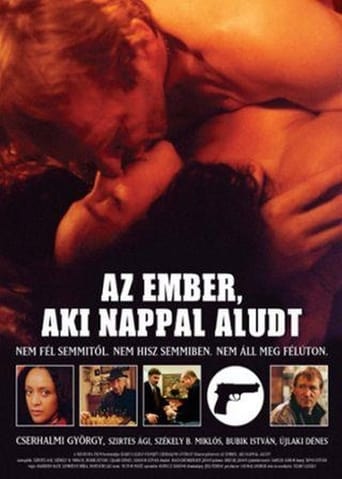 10.0
Detective Sebők is shot at by a fleeing criminal and then pushed off the road. Sebők breaks his leg. Left by his wife, pensioned by his boss on the basis of false reports, he has a clash with banker Gömöri at the colonel’s party.
The Man Who Slept at Daylight
2003
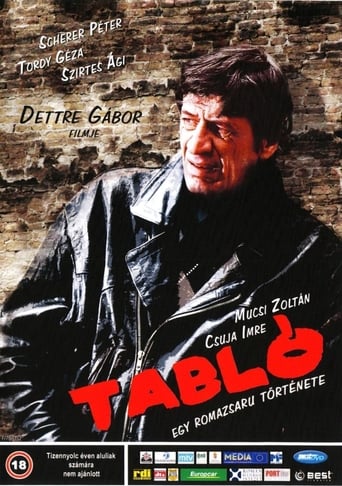 4.3
Karcsi, a Roma policeman, lives with Eva, a Swede. One day he is called to the scene of the murder of a wealthy trafficker named Schulter. He begins to investigate the crime, interrogate neighbours and suspects, and untangle a complex situation - one that he, himself, complicates even further. For he is a gypsy, who despite being adopted and raised by "regular" Hungarians, has his nose rubbed in his minority status every day. The film, which is based on the novel by Ákos Kertész, is a shrewd genre work full of dusky humour and surreal situations. Tabló follows a vivid succession of strange images that eventually lead to the emergence of the central story about a charismatic police officer on a tireless quest for the truth, though he must fight against virtually everyone and is just as fallible as the next person. Tabló makes a statement on the issue of race and racism - or, indeed, relations between any minority and majority.
Tabló
2008
1990s · 4 titles
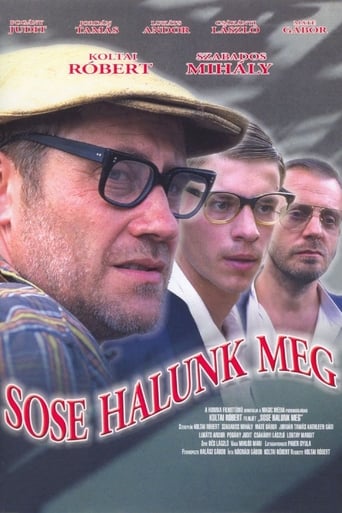 6.7
In 1960s Hungary, an introverted teenager’s life is turned upside down by a few days in the company of his coat hanger salesman uncle: a roguish charmer with a zest for life and a weakness for horse racing and women.
We Never Die!
1993
 5.9
Mr. Schneider became wealthy after the end of the communism, but still remained a simple man. Her wife although wants a lackey.
Hippolyt
1999
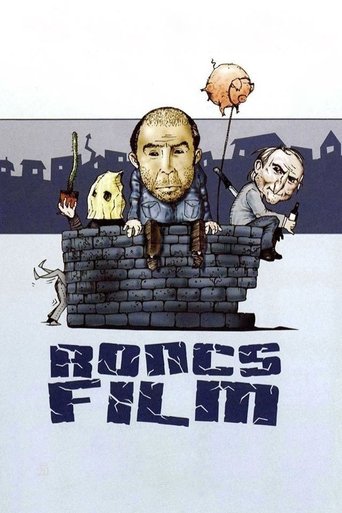 6.5
It is 1989, the year of the demise of socialism in eastern Europe. Nevertheless, the one theme of Junk Movie does not refer to this historical moment of high ideals, quite the contrary, the wild, burlesque of a motif-mozaic seems merely to stick it’s tongue out at the arrogant players of politics who have their heads stuck in the clouds. The film rudely points out the mystery and unapproachability surrounding the every-day existence of politics. The scene is a greasy, falling-down block of a pub called the Gólya and its immediate surroundings.
Junk Movie
1992
At the time of the regime change, Imre Kopa travels to Austria with three suspicious characters to buy various items for his client. But in Vienna, nothing goes as planned.
Itt a szabadság!
1991
1980s · 3 titles
5.0No synopsis available yet.
Bábel tornya
1982
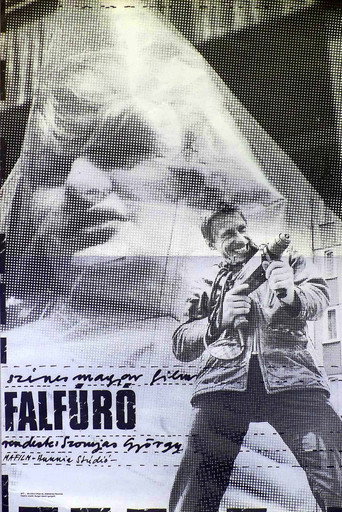 6.9
The sad tale of a proletarian malcontent ensconced in a monstrously depressing housing project who—even less effectually than the heroes of Bald-Dog Rock—attempts to change his life. Purchasing a power drill and slinging it across his shoulder like the anti-hero of a spaghetti western, he turns entrepreneur, boring holes in his neighbors’ walls so that they can hang mirrors or pictures.
Wall Driller
1986
 9.0
Misi Mókus was born in the spacious, comfortable den of a huge tree in the forest with his four little brothers and sisters. He was the liveliest and the biggest of the four. He could be distinguished from his siblings not only by his features, but also by a peculiar characteristic: his tail was black. Although there are species of squirrel that have black fur, Misi's family belonged to the red squirrel family. Father Squirrel was angry enough to say - Red squirrels have red tails. If it's black, it's caused by some bad spell.The parents asked Uncle Squirrel Squirrel for advice on what to do about Misi's boys' black tails. The wise old Squirrel Squirrel predicted good luck for his boys.
The Adventures of Sam the Squirrel
1984
1970s · 4 titles
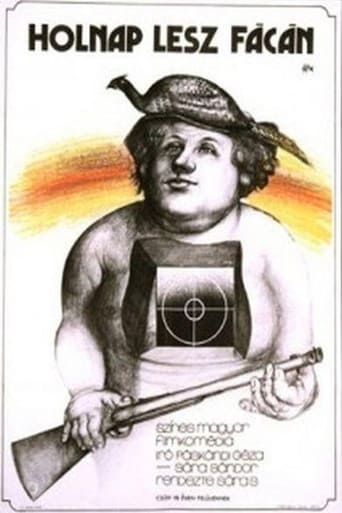 6.2
The loving couple of this grotesque parable parody of the Kádár-regime, Mária and István row to an uninhabited, idyllic island. Soon crazy tent-pitchers swarm to the island, led by an official representative of the regime.
Pheasant Tomorrow
1974
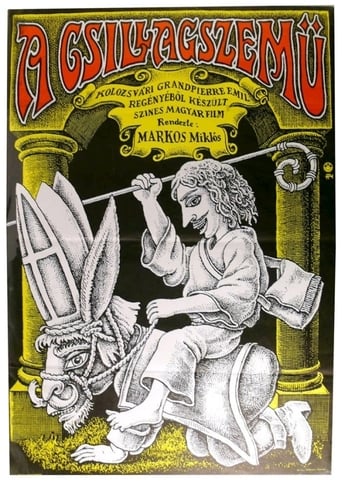 7.0
The powerful, all-powerful lord, Bishop Ambrus, keeps the unfortunate serfs of his county kingdom in fear. But one day, a young man - the youngest son of the poorest serf - stands up to him. The people of the area call him Star-Eyed.
A csillagszemű
1977
 5.9
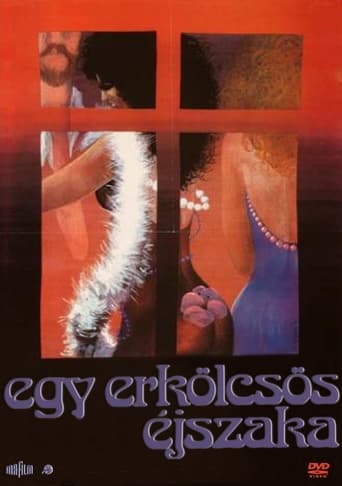
A brothel in a small Hungarian town becomes the home of a medical student after his favorite working girls find out he's out of rent money. Trouble brews as they learn his mother is coming for a visit and they must transform the house.
A Very Moral Night
1977
 NR
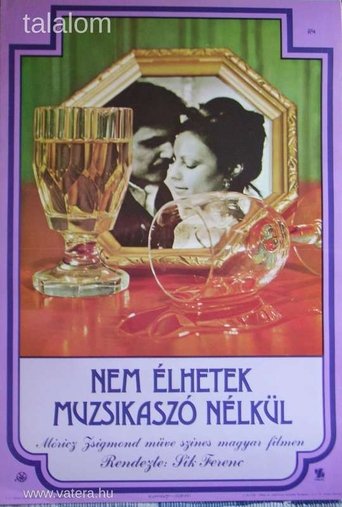
Pólika, tired of her husband Balázs Nyiri’s partying, moves in with her aunt. Nyiri, desperate to win her back, tries everything but fails. Aunt Zsani seeks help from her brother, Uncle Lajos. They sing Pólika’s songs at a pub, joined by the household. Aunt Zsani’s housekeeper, Pepi, serves them food, while servants share news of the Nyiri farm’s sale. Frustrated by the scandals, Pólika tells Nyiri to run away with her if he wants.
The Music's the Thing
1979

