
Directing
Aleksandr Sokurov
Born
1951-06-14 (75)
Place of birth
village Podorvikha, Irkutsk Region, RSFSR, USSR, (now Russia)
Known for
Directing
Credits
81 titles
Aleksandr Sokurov (born June 14, 1951) is a Russian director of avant-garde and independent films that have won him international acclaim. Described as a heir to Tarkovsky, spare, gloomy and contemplative, he often blurs lines between image and world. His noticable trademark and style includes long, accurate shots of real painterly compositions, disorted field of view, zooms and use of wide angle lenses. Often plotless with emphasis on aesthetics and impressionism his films are noted for philosophical approach to history and nature. Sokurov underlines the importance of film, not to yield to the modern audience laziness, and to stay away from mere entertainment. His most significant works i…
Known for
 7.7
7.7A worldwide guided tour of the greatest movies ever made and the story of international cinema through the history of cinematic innovation.
The Story of Film: An Odyssey
2011
 7.2
7.2A ghost and a French marquis wander through the Winter Palace in St Petersburg, encountering scenes from many different periods of its history.
Russian Ark
2002
 6.6
6.6A doctor in early 19th-century Germany becomes infatuated with the sister of a man he unintentionally killed and bargains with the Devil incarnate to conjure their union in exchange for his soul.
Faust
2011
 6.7
6.7A man goes for a walk through the countryside with his dying mother.
Mother and Son
1997
 6.5
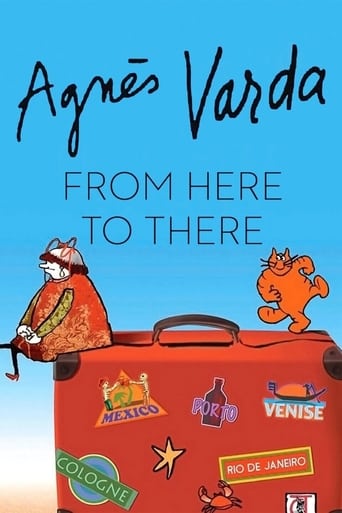
6.5Agnès Varda takes us on a journey of discovery as she travels the globe—from Stockholm to St. Petersburg, Lisbon to Rio de Janeiro, Mexico City to Los Angeles—meeting with friends, artists, and fellow filmmakers.
Agnès Varda: From Here to There
2011
 6.7
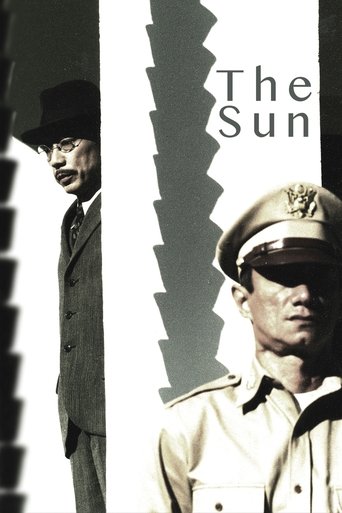
6.7A re-imagination of Japanese Emperor Hirohito’s final days in power as WWII draws to a close.
The Sun
2005
Film credits
2020s · 2 titles
 NR
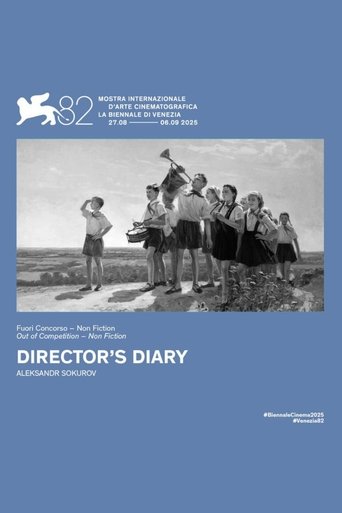
NRFrom 1961 to 1995, Alexander Sokurov kept a personal diary, recording both important events and everyday trivia. Now these candid recordings are taking on a new life in a large-scale five-hour documentary, intertwined with footage from iconic films of that era. This is not just the autobiography of a famous director, but a personal look at the history of the second half of the 20th century, full of reflections and observations.
Director's Diary
2025
 NR
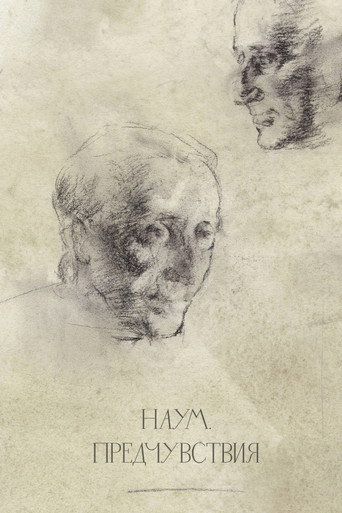
NRA portrait of Naum Kleiman — film scholar, historian, and sage. In conversation with him, a vast cultural landscape unfolds, where Pushkin meets Godard, Sokurov, Dionysius, Eisenstein, Snyders, Glass, Ozu, and many others. Kleiman reveals the simplicity of mystery, and in doing so, reveals himself.
Naum. Predictions
2026
2010s · 8 titles
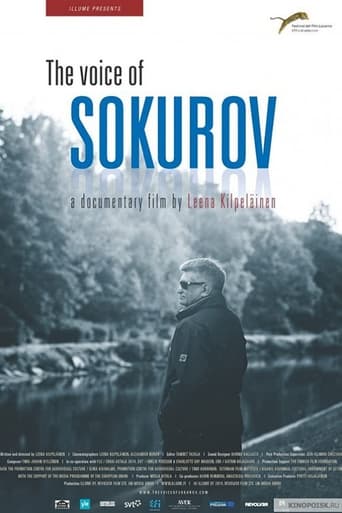 6.5
6.5Five years in the making, based on six lengthy interviews filmed on six different locations in Saint Petersburg, we meet an outspoken artist who covers here his entire life and prolific career. The locations were Sokurov’s own favourites, where he felt at home.
Voice of Sokurov
2014
 7.6
7.6Agnès Varda travels around the world to meet friends, artists and filmmakers for an expansive view of the global contemporary art scene.
Agnès Varda: From Here to There
2011
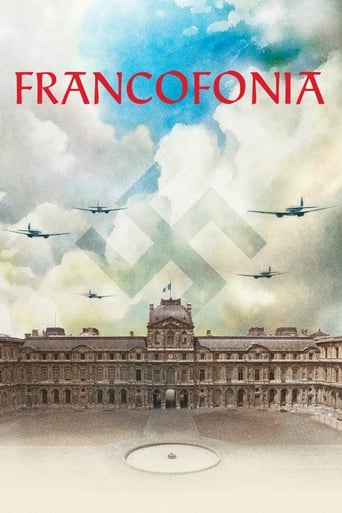 6.5
6.5Master filmmaker Alexander Sokurov (Russian Ark) transforms a portrait of the world-renowned museum into a magisterial, centuries-spanning reflection on the relation between art, culture and power.
Francofonia
2015
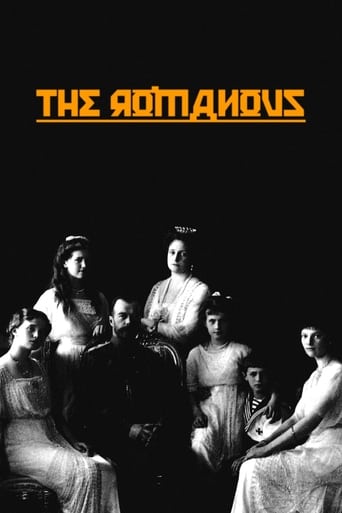 6.2
6.2Yekaterinburg, Russia, July 17th, 1917. Czar Nicholas II Romanov and his entire family are brutally murdered by the Bolsheviks. This tragic event puts an end to the long dynasty that had ruled the country with an iron hand since the coronation of Michael I Romanov in 1613.
The Romanovs: Glory and Fall of the Czars
2013
 NR
NRA documentary grotesque in which even the walls speak. Famous directors of St. Petersburg cinema recall their lives and work, and images of old films come to life to remind the viewer of themselves.
Voices in the Old Walls
2019
 NR
NRThe film is dedicated to the life and work of the Russian director, who deservedly received worldwide recognition due to his incredible talent
Alexander Sokurov. Temptation
2012
 NR
NRThe life stories of two elderly women living in a remote region of Kurdish Iraq.
We Need Happiness
2010
Documentary film from the set of Igor Olshansky’s debut short film “Easter”. Igor Olshansky is a participant of Alexander Sokurov’s programme “Example of Intonation”, a non-commercial film support foundation.
Film about the film
2013
2000s · 10 titles
7.2A ghost and a French marquis wander through the Winter Palace in St Petersburg, encountering scenes from many different periods of its history.
Russian Ark
2002
 NR
NRExplores some of the most innovative attempts by contemporary artists, filmmakers, architects etc to explore multiple Temporalities and to counter the uniform sense of time promoted by our technology-driven society.
The Art of Time
2009
 6.8
6.8Making of Russian Ark, with on camera personal views by members of the cast and crew of the major film.
In One Breath: Alexander Sokurov's Russian Ark
2003
 7.4
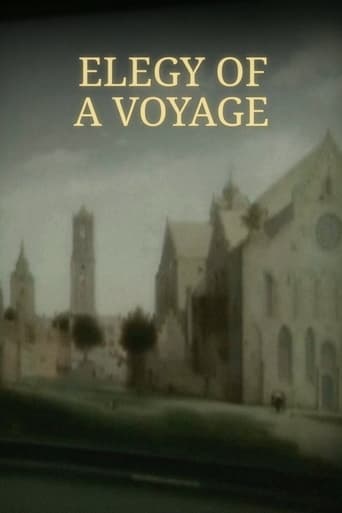
7.4This intimately narrated journey from Russia to Rotterdam, via rail, road and Finnish ferry, is a melancholy meditation on divinity, time and place in art, purpose (or its lack) and the loneliness of the soul. Passing through misty snowscapes, half-glimpsed cities and the icy night sea-swell.
Elegy of a Voyage
2009
 6.9
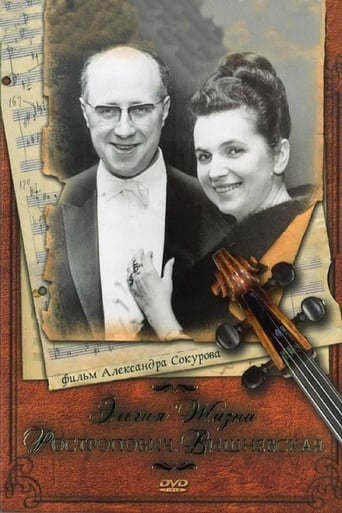
6.9A documentary about the famous musician Mstislav Rostropovich and his wife, Galina Vishnevskaya.
Elegy of Life: Rostropovich, Vishnevskaya
2006
 NR
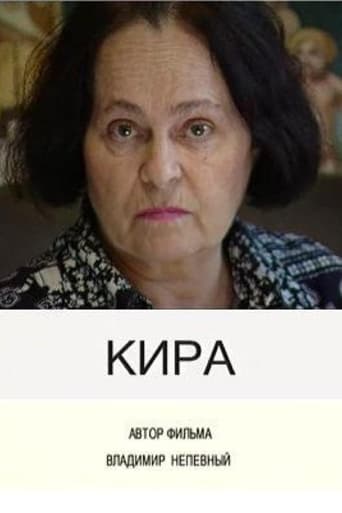
NRFilm about the work of Ukrainian film director Kira Muratova.
Kira
2003
Proskurina's personal homage to her friends and mentor Alexandr Sokurov. The intimate yet objective portrait comprises frank conversations with the master and footage of the shooting of Russian Ark,
Islands. Alexander Sokurov
2003
 NR
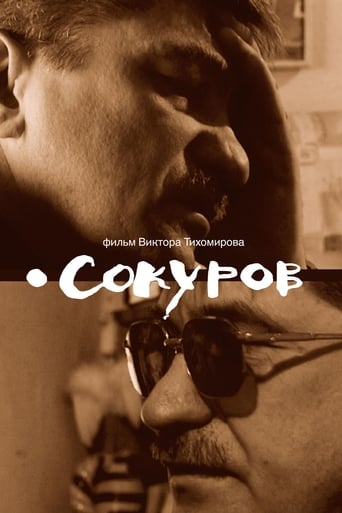
NRPoetic portrait of a filmmaker. The famous director reflects on creativity and love. His friends and associates take part in the film: artist Vladimir Shinkarev, engineer Vladimir Nikolaev, actress Elena Kramer (Spiridonova), director, film critic Oleg Kovalov, necrorealist directors Yevgeny Yufit, Igor Bezrukov.
Sokurov
2006
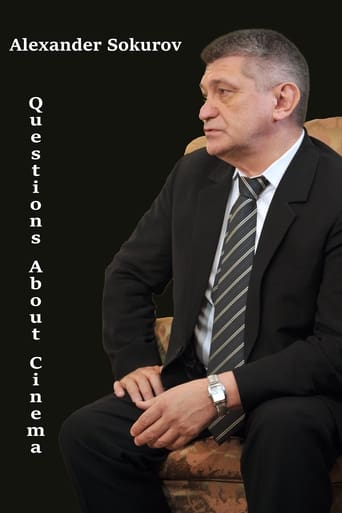 5.0
5.0An encounter with the great Russian film director Alexander Sokurov, which gives rise to a lot of questions about his artistic stand and the problems he touches upon and resolves in his works. The film presents the director’s thoughts about the history of cinema, about the power of the sound and image, about the past and future of cinema, accompanied by fragments from his films and various archival materials.
Alexander Sokurov: Questions about cinema
2008
 NR
NRThe film is dedicated to the 100th anniversary of the birth of the outstanding Russian writer Alexander Solzhenitsyn.
Aleksandr Solzhenitsyn Lightning strikes a tall tree
2008
1990s · 11 titles
The second film of Alexander Sokurov's documentary series "Petersburg Diary" is dedicated to the outstanding Soviet film director Grigory Kozintsev
Petersburg Diary: Kozintsev's Apartment
1998
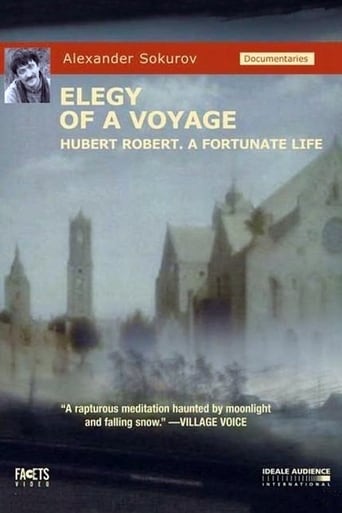 6.2
6.2Aleksander Sokurov brings the treasures of the Hermitage back into the light by making films about artists and their paintings. He has chosen the painter Hubert Robert, who spent a long time in Italy, and whose preference was for creating ancient ruined landscapes and naturalistic portrayals of times past. He was successful with the wealthy, who bought his works from him. The camera pans across the paintings while Sokurov speaks of a happy era, when the artist was at one with the spirit of the times, and agreed with the taste of his clients. Just how far removed from us this is, is shown by pictures of a "Nô" performance which are inter-cut on the screen. No words are necessary to describe what everybody knows today.
Robert. A Fortunate Life
1997
The second film by Sokurov featuring Boris Yeltsin as the principal character. Now he is the President of Russia, invested with power, bearing the full responsibility for the destinies of his distant compatriots as well as his closest kin and friends.
An Example of Intonation
1991
 7.3
7.3The Dialogues with Solzhenitsyn is a two-part Russian television documentary by Russian filmmaker Alexander Sokurov on Aleksandr Solzhenitsyn. The documentary shot in Solzhenitsyn’s home shows his everyday life and covers his reflections on Russian history and literature.
The Knot
1998
 4.5
4.5This small film came out of the material edited for Sokurov's five-hour documentary Spiritual Voices.
A Soldier's Dream
1995
 6.2
6.2A surreal journey of a displaced spirit as he wanders in the interminable darkness through the temporal landscape of a quaint and isolated feudal-era fishing village. Guided by a series of faintly illuminated rooms, the wandering spirit comes upon ancient souls who take on physical forms as they recount their personal stories of daily existence, loss, and tragedy in the peasant community. Intrigued by his initial visit to a curiously distracted elderly woman, the spirit returns to her home in order to ask a fundamental question - "What is happiness?" - an existential query that is innocently answered with innate humility and accepted unknowingness.
Oriental Elegy
1996
 NR
NRA documentary film about the Russian director Sergei Kosintsev.
The Diary of St. Petersburg: Kozintsev's Flat
1998
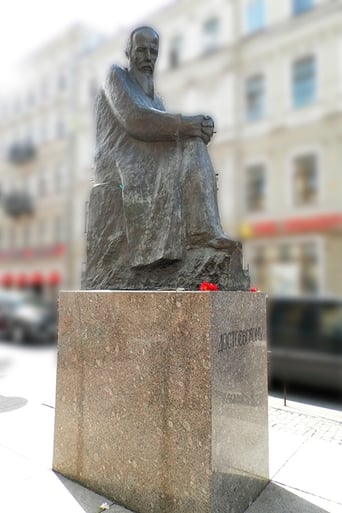 NR
NRPetersburg Diary - Opening of the monument to Dostoevsky
The Diary of St. Petersburg: Inauguration of the Monument to Dostoevsky
1997
 6.0
6.0The office of the President of Lithuania, 1990. Inside, silence reigns, contrasting to the shouting of the crowds outside the windows of the governmental building. At the same time, this silence is mirrored by the intense silence of several women, whose faces remain on the screen for a long time. The silence is broken by music. The President plays the piano.
Simple Elegy
1990
 NR
NRAlexander Nikolayevich Sokurov talks with the young director of independent experimental cinema Edward Shelganov.
Edward Shelganov visiting Sokurov
1997
 4.8
4.8A montage of Leningrad newsreel becomes a composite collage made up of documents-shots, divided in 16 parts, presenting the author's point of view on Russia and modern times. In the title, Sokurov appears as 'compiler' and the selection of the documents is just like an artistic process.
Leningrad Retrospective
1990
1980s · 5 titles
 6.5
6.5A 1988 documentary film directed by Alexander Sokurov, about the later life and death of Soviet Russian filmmaker Andrei Tarkovsky. The film was originally intended to mark the 50th birthday of Tarkovsky in 1982, which would have been before his death. Controversy with Soviet authorities about the film's style and content led to significant delays in the production.
Moscow Elegy
1987
 3.0
3.01945, an attack aviation regiment is based at the field airfield, which is served by a team of young girls. The last days of the war are coming... In one of the battles, Lieutenant Volynin’s attack aircraft, damaged by a shell fragment, landed in territory occupied by the Germans. Air gunner Shchepov carried the wounded commander out of the burning plane. With the help of the Polish teacher Anna, they managed to get to theirs. And everyday life at the front began again. A few days before the Victory, Dima Shchepov died. Volynin took the death of his friend seriously. But it was even harder for him to learn about the death of Anna, whom he loved and whom he promised to find after the war...
You Should Survive
1981
 5.2
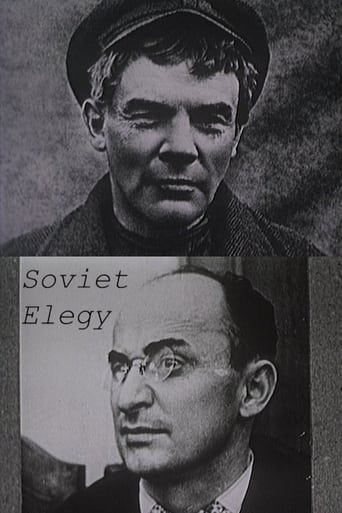
5.2In "The Soviet Elegy" the long train of photos of the Soviet leaders, dead or alive, stops at the portrait of Yeltsin. At the time of shooting Yeltsin had fallen down from the assembly of the Communist Party deities, and participated in the earthly life through connections of different kinds.
Soviet Elegy
1989
 6.0
6.0The story about the life of Shaliapin’s family, and an emotional generalization of the life of people in modern Leningrad.
Petersburg Elegy
1989
 5.2
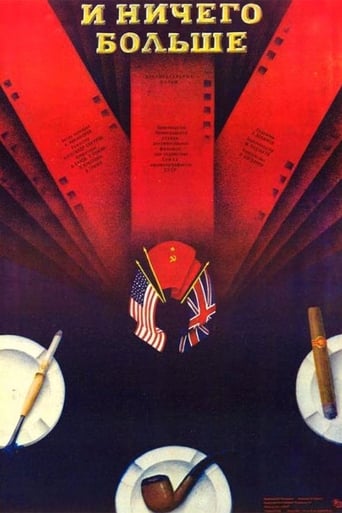
5.2The picture is about the anti-Hitler coalition of the USSR, England and America, which developed as a counterweight to the aggressive policy of Nazi Germany during the Second World War. The unique newsreel footage of these years, shot by operators of different warring countries, is connected with today's thoughts of the author about the fate of the post-war world, about the humanitarian losses of both sides and about gaining unstable hopes for the unity of the world in countering evil.
And Nothing More
1987
1970s · 1 titles
Series credits
7.7A worldwide guided tour of the greatest movies ever made and the story of international cinema through the history of cinematic innovation.
The Story of Film: An Odyssey
2011
6.5Agnès Varda takes us on a journey of discovery as she travels the globe—from Stockholm to St. Petersburg, Lisbon to Rio de Janeiro, Mexico City to Los Angeles—meeting with friends, artists, and fellow filmmakers.
Agnès Varda: From Here to There
2011
No synopsis available yet.
Matussek trifft
2010
Behind the camera
7.2A ghost and a French marquis wander through the Winter Palace in St Petersburg, encountering scenes from many different periods of its history.
Russian Ark
2002
7.2A ghost and a French marquis wander through the Winter Palace in St Petersburg, encountering scenes from many different periods of its history.
Russian Ark
2002
6.6A doctor in early 19th-century Germany becomes infatuated with the sister of a man he unintentionally killed and bargains with the Devil incarnate to conjure their union in exchange for his soul.
Faust
2011
6.6A doctor in early 19th-century Germany becomes infatuated with the sister of a man he unintentionally killed and bargains with the Devil incarnate to conjure their union in exchange for his soul.
Faust
2011
6.7A man goes for a walk through the countryside with his dying mother.
Mother and Son
1997
6.7A re-imagination of Japanese Emperor Hirohito’s final days in power as WWII draws to a close.
The Sun
2005
 6.2
6.2This film was Sokurov's first feature at Lenfilm, roughly based on a short story by the contemporary Soviet writer Grigory Baklanov about the transitional period from power to subordinance.
The Degraded
1980
6.2This film was Sokurov's first feature at Lenfilm, roughly based on a short story by the contemporary Soviet writer Grigory Baklanov about the transitional period from power to subordinance.
The Degraded
1980
 6.2
6.2In 1942 Bavaria, Eva is alone, when Adolf arrives with Josef, his wife Magda, and Martin to spend a couple of days without politics.
Moloch
1999
 5.0
5.0Inspired by Flaubert’s Madame Bovary, Sokurov’s Save and Protect recalls the most crucial events of Emma’s decline and fall: affairs with the aristocratic Rodolphe and the student Leon, the humiliation that follows her husband’s botching of the operation on the stable boy’s clubfoot. The universality of the theme of eternal struggle between the soul and the flesh is conveyed through the absence of specific reference to time or place: although the film seems to begin in 1840, its surreal mode effortlessly accommodates an automobile and the strains of “When the Saints Go Marching In” on an off-screen radio. Focusing on passion from a woman’s perspective and downplaying plot, Sokurov explores his subject in exquisite detail, capturing not only the heat of passion but also the quiet moments before and after and the innocent sensuousness of the body.
Save and Protect
1990
 5.8
5.8Unfolding over two days in 1924, the film depicts the dying Lenin, world revolutionary and father of the USSR, now powerless and isolated at his Gorki estate. Cared for by his wife, Nadezhda Krupskaia, sister Maniasha, his German doctor and several attendants, Lenin raves about his diminishing faculties, discusses the deaths of great figures (including Marx), rides a car to a picnic in a meadow and ponders his historic legacy.
Taurus
2001
 5.3
5.3A young night watchman at the Anton Chekhov museum in Yalta encounters a mysterious, weary intruder who appears to be the playwright himself, returned from the dead. Over the course of a single night, the two share a series of quiet, existential interactions within the preserved rooms of the estate.
Stone
1992
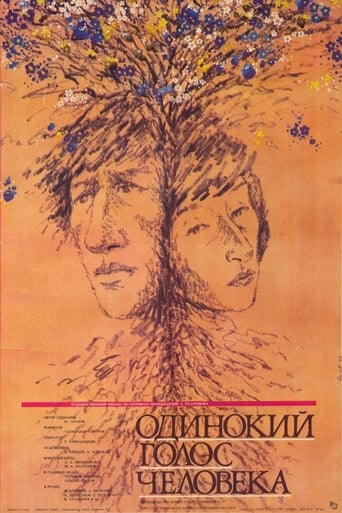 5.8
5.8Set in the early 1920s after the end of the Russian Civil War, Red Army soldier Nikita returns to his hometown to see his partner Lyuba, both of whom are scarred by the trauma of the Russian Empire of yesteryear.
The Lonely Voice of Man
1987
6.5Master filmmaker Alexander Sokurov (Russian Ark) transforms a portrait of the world-renowned museum into a magisterial, centuries-spanning reflection on the relation between art, culture and power.
Francofonia
2015
6.5Master filmmaker Alexander Sokurov (Russian Ark) transforms a portrait of the world-renowned museum into a magisterial, centuries-spanning reflection on the relation between art, culture and power.
Francofonia
2015
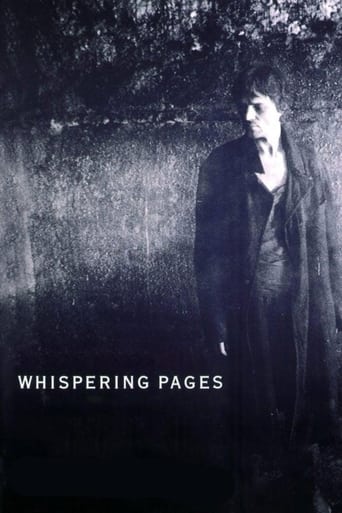 6.3
6.3An anonymous man wanders through decomposing, fog-enshrouded catacombs and encounters a series of “the degraded and the humiliated,” including a holy prostitute and a Kafkaesque bureaucrat.
Whispering Pages
1994
6.3An anonymous man wanders through decomposing, fog-enshrouded catacombs and encounters a series of “the degraded and the humiliated,” including a holy prostitute and a Kafkaesque bureaucrat.
Whispering Pages
1994
NRFrom 1961 to 1995, Alexander Sokurov kept a personal diary, recording both important events and everyday trivia. Now these candid recordings are taking on a new life in a large-scale five-hour documentary, intertwined with footage from iconic films of that era. This is not just the autobiography of a famous director, but a personal look at the history of the second half of the 20th century, full of reflections and observations.
Director's Diary
2025
NRFrom 1961 to 1995, Alexander Sokurov kept a personal diary, recording both important events and everyday trivia. Now these candid recordings are taking on a new life in a large-scale five-hour documentary, intertwined with footage from iconic films of that era. This is not just the autobiography of a famous director, but a personal look at the history of the second half of the 20th century, full of reflections and observations.
Director's Diary
2025
NRFrom 1961 to 1995, Alexander Sokurov kept a personal diary, recording both important events and everyday trivia. Now these candid recordings are taking on a new life in a large-scale five-hour documentary, intertwined with footage from iconic films of that era. This is not just the autobiography of a famous director, but a personal look at the history of the second half of the 20th century, full of reflections and observations.
Director's Diary
2025
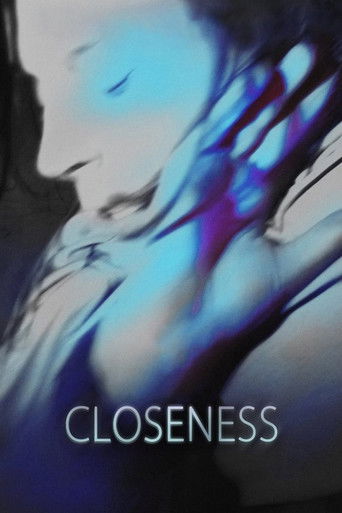 6.7
6.71998, Nalchik. A Jewish family is in trouble: the youngest son and his bride do not come home, and in the morning, a ransom note arrives. The ransom is so high that the family is forced not only to sell its small business, but also to seek help from its fellow tribesmen.
Closeness
2017
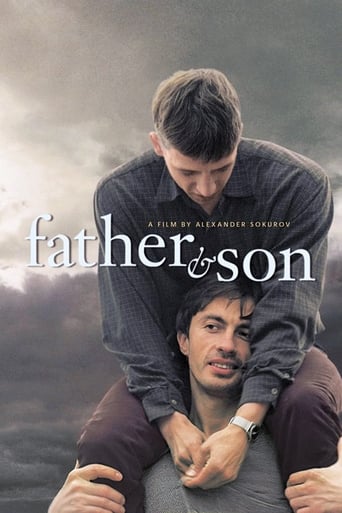 5.7
5.7In this dreamlike film, a nameless father and his son, Aleksei, live together in an apartment in St. Petersburg. Aleksei's mother has died and consequently the two have a very close relationship. When Aleksei acquires a girlfriend, she refuses to take a back seat to his bond with his dad, and breaks up with him. Aleksei is also experiencing nightmares, dreading separation from his father to be a part of the military as his father was.
Father and Son
2003
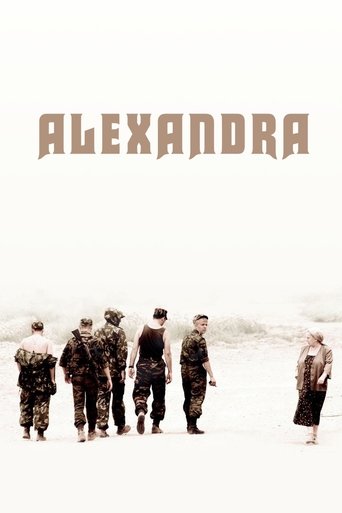 6.1
6.1Elderly Aleksandra visits her Russian soldier grandson, Denis, at the Chechen war front, providing comfort as she tours his army. All the while, Denis ponders the reason for her unexpected appearance.
Alexandra
2007
6.1Elderly Aleksandra visits her Russian soldier grandson, Denis, at the Chechen war front, providing comfort as she tours his army. All the while, Denis ponders the reason for her unexpected appearance.
Alexandra
2007
The second film of Alexander Sokurov's documentary series "Petersburg Diary" is dedicated to the outstanding Soviet film director Grigory Kozintsev
Petersburg Diary: Kozintsev's Apartment
1998
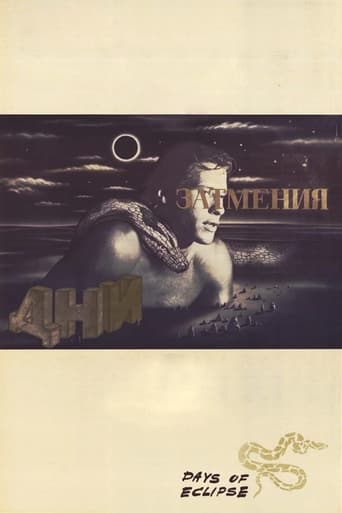 6.1
6.1This bleak late soviet-era drama follows the career of Malyanov, a young medical school graduate who has been sent to work in Turkmenia. Here he runs into a hodge-podge of people of differing ethnicities, all of them victims of the government's earlier mania for relocating and eliminating whole ethnic groups and classes of people. These desperately unhappy people are unable to find any pleasure in this diverse companionship, but instead are antagonistic to it, and often resort to desperate measures in their doomed attempts to ease their pain.
Days of Eclipse
1988
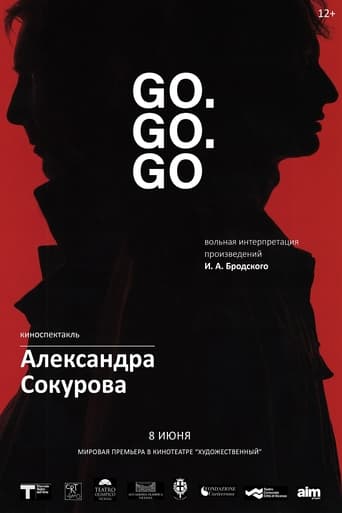 NR
NRVideo version of the dramatic dystopian performance staged by Alexander Sokurov in Vicenza, on the stage of the world's oldest theater Teatro Olimpico. The plot is based on a free interpretation of the works of I. A. Brodsky, which tells about two characters doomed to life imprisonment.
Go. Go. Go
2016
NRVideo version of the dramatic dystopian performance staged by Alexander Sokurov in Vicenza, on the stage of the world's oldest theater Teatro Olimpico. The plot is based on a free interpretation of the works of I. A. Brodsky, which tells about two characters doomed to life imprisonment.
Go. Go. Go
2016
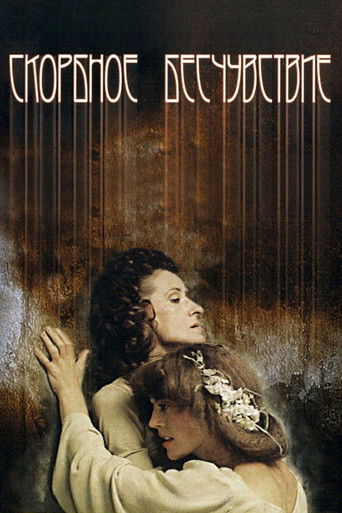 4.9
4.9The action in this lavishly produced film takes place at an oddly ark-shaped mansion during World War I, and in spirit (although not in story) it reflects the play which inspired it, the ferociously antiwar Heartbreak House by George Bernard Shaw. A large group of family and friends have gathered at this country house to dance, drink, and converse. Their conversation, in particular, is adorned with erudite literary references and quotations. Despite their apparent refinement, their preoccupations are simple: sex and violence. Disquieting images break the tranquility of the vacationers' inappropriate idyll: some of these include documentary footage of starving African children, images (both real and re-enacted) of George Bernard Shaw going about his daily life, and a corpse coming to life on an autopsy table, only to cheapen that miracle by scolding a group of women. The music used in the film ironically points to its disturbing message and is uniformly anachronistic.
Mournful Unconcern
1987
6.5A 1988 documentary film directed by Alexander Sokurov, about the later life and death of Soviet Russian filmmaker Andrei Tarkovsky. The film was originally intended to mark the 50th birthday of Tarkovsky in 1982, which would have been before his death. Controversy with Soviet authorities about the film's style and content led to significant delays in the production.
Moscow Elegy
1987
6.5A 1988 documentary film directed by Alexander Sokurov, about the later life and death of Soviet Russian filmmaker Andrei Tarkovsky. The film was originally intended to mark the 50th birthday of Tarkovsky in 1982, which would have been before his death. Controversy with Soviet authorities about the film's style and content led to significant delays in the production.
Moscow Elegy
1987
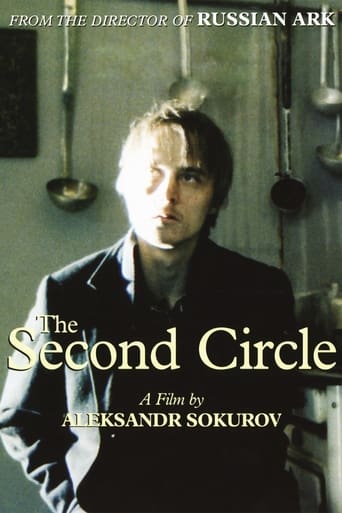 6.5
6.5A man tries to come to terms with his father's death and to deal with the mundane details of his burial in a society cut off from spirituality.
The Second Circle
1990
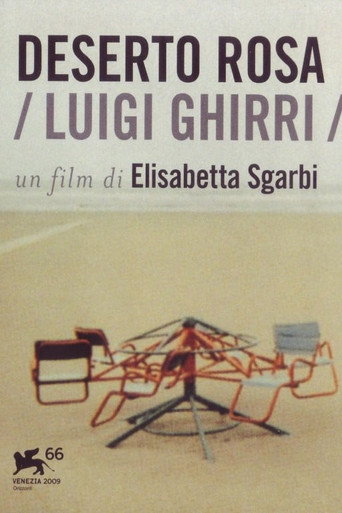 NR
NRLuigi Ghirri's final project, unfortunately unrealized, was a "house of the seasons": to purchase a farmhouse, which appears in the photographer's last works, near his home in Roncocesi, and to stage exhibitions there, each linked to the current season, thus creating a close connection between natural time and artistic time. This interrupted project inspired "Pink Desert," in which the camera 'visits' a series of landscapes photographed by Ghirri according to the changing seasons: Spring, Summer, Autumn, Winter, and Nocturnal Spring. Aleksandr Sokurov narrates each season depicted in the film, focusing in narrative form on Luigi Ghirri's sense of the cyclical nature of time.
Deserto rosa. Luigi Ghirri
2009
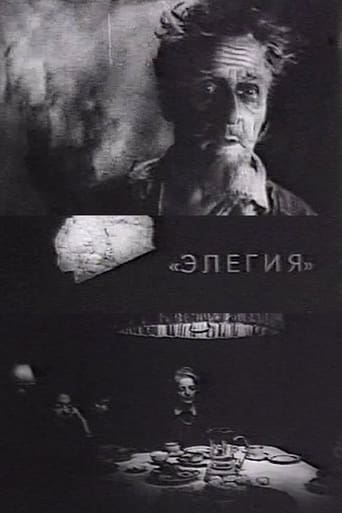 6.2
6.2The reburial of great Russian singer Feodor Chaliapin from Les Batignolles cemetery in Paris to Novo–Devitchye cemetery in Moscow. The daughters from Chaliapin’s second marriage travel to the Soviet Union for the ceremony.
Elegy
1986
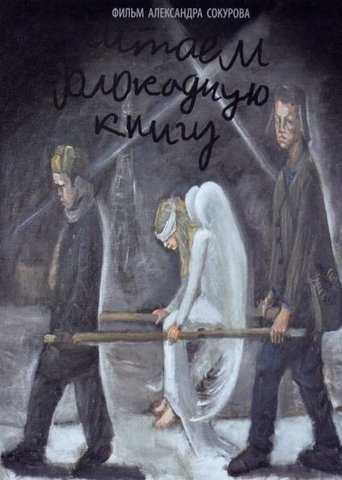 4.5
4.5Famous actors and ordinary people from all walks of life read stories from a book describing the 900-day siege of Leningrad during World War II.
Reading Book of Blockade
2009
No synopsis available yet.
Documenta X - Die Filme
1997
 NR
NRThe life and work of Russian film director Andrei Tarkovsky is celebrated and explored in three documentary films: Tempo Di Viaggio (1983) directed by Andrei Tarkovsky and Tonino Guerra, Moscow Elegy (1988) directed by Alexander Sokurov, and One Day In The Life Of Andrei Arsenevitch (2000) directed by Chris Marker.
The Andrei Tarkovsky Companion
2007
 NR
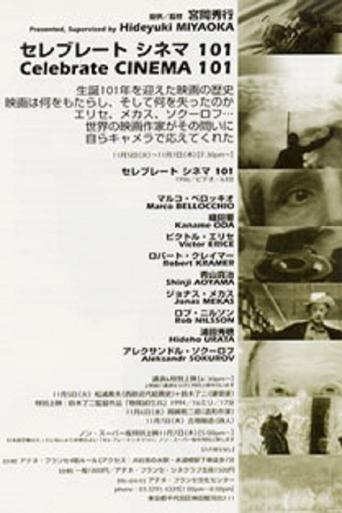
NRThis film project was made in 1996 to commemorate the 100th anniversary of the birth of the cinema.
Celebrate Cinema 101
1996
 6.8
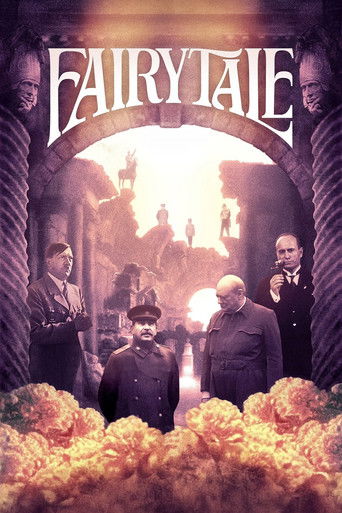
6.8A civil and artistic statement about those who determined the fate of the planet: Stalin, Churchill, Mussolini, Hitler, according to a Russian newspaper.
Fairytale
2022
6.8A civil and artistic statement about those who determined the fate of the planet: Stalin, Churchill, Mussolini, Hitler, according to a Russian newspaper.
Fairytale
2022