
Directing
Hartmut Bitomsky
Born — Died
1942-05-10 — 2025-09-24
Place of birth
Bremen, Germany
Known for
Directing
Credits
54 titles
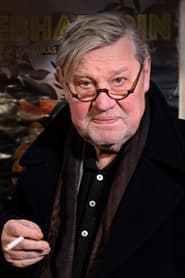
Hartmut Bitomsky was a German filmmaker and film producer. He was the director of the German Film and Television Academy Berlin from 2006 to 2009.
Known for
Annual awarding of the Grimme Awards.
Grimme Award
1964
 NR
NRShort thriller about an older woman and an escaped convict.
Das Vöglein
1966
 5.8
5.8How should one define the relationship of documentary film to reality? Does it aim at authenticity or is it rather an “exile of reality”, a “foreign homeland of reality”, where the pre-filmic, stripped of its immediacy, comes to its own right in the first place? Where in its mis-en-scène would be the line drawn to a fictional film, if drawing a line would succeed at all? These are the kind of questions this film essay on the history and aesthetics of documentary film deals with in its seven chapters.
The Cinema and the Wind and Photography
1991
 1.0
1.0A man and a woman meet in a bar. They walk through the night without any reason. At dawn they separate again. A long take.
Sparrows
2009
Melanie Straub lives aimlessly into the day, or more accurately: into a Saturday. She′s alone at home, surrounded by the emptiness of her new life.
Half Hours
2007
 6.4
6.4A look at the pervasive power of dust from its tiny particles settling in unseen places to its ability to cause illnesses and create the cosmos.
Dust
2007
Film credits
1990s · 2 titles
 6.5
6.5Barrage and Bunker is an essay film about the (narrative) space imagined by fiction films. Reflections and associations about movement in space are the basis of every kind of story-telling. The film is sometimes referred to as part of Bitomsky's Cinema Trilogy. Sequences from over 20 movies are quoted and commented on by a team of three "researchers" (Bitomsky, Petzold, Tanner) in a sort of laboratory. TV-monitors, production stills and screenshots are used as well as quotations from books. A long night's work.
Barrage and Bunker
1991
 6.2
6.2James Benning's "Four Corners" uses a specific geographical location to pose larger questions about the United States. Here, the geographic and wholly imaginary place Four Corners, that favorite tourist destination where Colorado, New Mexico, Arizona, and Utah meet, becomes a kind of theoretical ground zero, the site from which Benning can give voice to other, pointedly unofficial American stories.
Four Corners
1997
1980s · 4 titles
 7.0
7.0An unconventional essay film that interrogates the visual and ideological legacy of the Vietnam War. Blending staged scenes, archival footage, photographs, and philosophical dialogue, the film follows various characters — including an American soldier captured by North Vietnamese villagers — as they reflect on violence, memory, and image-making. Set partly in West Berlin and partly in reconstructed spaces representing Vietnam, the film avoids traditional dramatic narrative in favor of a fragmented montage of voices, documents, and reenactments. Interweaving love stories, political debate, and historical commentary, Farocki creates a critical reflection on how war is represented, seen, and imagined, both in cinema and in public consciousness. The result is a complex meditation on images as weapons and instruments of perception.
Before Your Eyes - Vietnam
1982
 6.5
6.5“Why does cinema need death, when it can’t show it?” The filmmaker’s monologue and the discourse of images meet
Cinema and Death
1988
 NR
NRAn issue of the magazine Kino 81, designed for the film department of WDR by staff of FILMKRITIK
"Kino 81" - Stillness, a film magazine by film critics
1981
 7.0
7.0IT specialist Victor Faber makes a living securing computers for large corporations and banks. His reclusive private life is upended when he falls in love with a strange woman named Juliet. Her friend convinces Faber to exploit his knowledge to rob a bank.
Closed Circuit
1983
1970s · 4 titles
 7.1
7.1A look into the life of Holger Meins, the German cinematography student who became a revolutionary and a prominent voice in the Vietnam War protest movement. This film is comprised of interviews with his associates.
Es stirbt allerdings ein jeder, fragt sich nur wie und wie Du gelebt hast (Holger Meins)
1976
 10.0
10.0An educational film about an aspect of political economy. The concepts of use value, barter value and labor as a commodity are the subjects; they are intended to introduce the process of understanding the theory of value of work and the law of values, alienation and fetish.
Something Self Explanatory (15x)
1971
 7.0
7.0A West Berlin doctor, married with a two-year-old child, leaves her husband to go to Munich to work in the birth clinic of a hospital. Her husband doesn’t know that she’s pregnant with their second child. Will she have to choose between motherhood and her career?
Kampf um ein Kind
1975
Straschek's film points to the gap between workers and intellectuals and describes the "difficulties of the revolution" in a biting and witty way.
Zum Begriff des 'kritischen Kommunismus' bei Antonio Labriola (1843-1904)
1970
1960s · 2 titles
 9.0
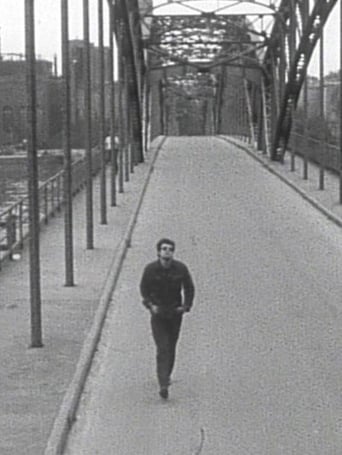
9.0“Six young people move through a city in order to establish the starting point of their joint action. But they can’t agree on the topic. In the end everybody goes their own way and leaves the city.” - Hartmut Bitomsky
3000 Houses
1967
A documentary about the events at the German Film and Television Academy Berlin (dffb) in November 1968, which led to the termination of the training contracts of 18 students. While Director Heinz Rathsack dictates to his secretary Helene Schwarz the letter lifting the ban from the premises against 18 students, the students plan a general assembly inside the dffb despite the ban.
Wochenschau I: Requiem für eine Firma
1969
Series credits
Behind the camera
NRShort thriller about an older woman and an escaped convict.
Das Vöglein
1966
NRShort thriller about an older woman and an escaped convict.
Das Vöglein
1966
5.8How should one define the relationship of documentary film to reality? Does it aim at authenticity or is it rather an “exile of reality”, a “foreign homeland of reality”, where the pre-filmic, stripped of its immediacy, comes to its own right in the first place? Where in its mis-en-scène would be the line drawn to a fictional film, if drawing a line would succeed at all? These are the kind of questions this film essay on the history and aesthetics of documentary film deals with in its seven chapters.
The Cinema and the Wind and Photography
1991
5.8How should one define the relationship of documentary film to reality? Does it aim at authenticity or is it rather an “exile of reality”, a “foreign homeland of reality”, where the pre-filmic, stripped of its immediacy, comes to its own right in the first place? Where in its mis-en-scène would be the line drawn to a fictional film, if drawing a line would succeed at all? These are the kind of questions this film essay on the history and aesthetics of documentary film deals with in its seven chapters.
The Cinema and the Wind and Photography
1991
1.0A man and a woman meet in a bar. They walk through the night without any reason. At dawn they separate again. A long take.
Sparrows
2009
Melanie Straub lives aimlessly into the day, or more accurately: into a Saturday. She′s alone at home, surrounded by the emptiness of her new life.
Half Hours
2007
6.4A look at the pervasive power of dust from its tiny particles settling in unseen places to its ability to cause illnesses and create the cosmos.
Dust
2007
6.4A look at the pervasive power of dust from its tiny particles settling in unseen places to its ability to cause illnesses and create the cosmos.
Dust
2007
6.4A look at the pervasive power of dust from its tiny particles settling in unseen places to its ability to cause illnesses and create the cosmos.
Dust
2007
9.0“Six young people move through a city in order to establish the starting point of their joint action. But they can’t agree on the topic. In the end everybody goes their own way and leaves the city.” - Hartmut Bitomsky
3000 Houses
1967
9.0“Six young people move through a city in order to establish the starting point of their joint action. But they can’t agree on the topic. In the end everybody goes their own way and leaves the city.” - Hartmut Bitomsky
3000 Houses
1967
 NR
NRNo synopsis available yet.
Putting Things Straight
1979
 8.5
8.5Die UFA, a film essay about the eponymous German studio.
Die UFA
1992
8.5Die UFA, a film essay about the eponymous German studio.
Die UFA
1992
 7.0
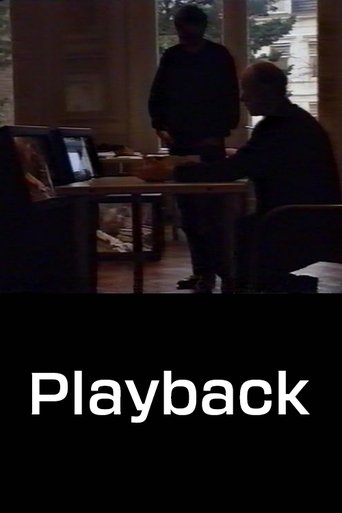
7.0The film documents a debate about early 20th century films, mainly 1910 to 1920, from short news reels to excerpts from full-length movies. At Amsterdam's Film Museum, film directors, students, and film researchers and archivists look at the moving images and discuss their meaning, in the social and technical contexts. Moody live music was added to the edited film.
Playback
1995
7.0The film documents a debate about early 20th century films, mainly 1910 to 1920, from short news reels to excerpts from full-length movies. At Amsterdam's Film Museum, film directors, students, and film researchers and archivists look at the moving images and discuss their meaning, in the social and technical contexts. Moody live music was added to the edited film.
Playback
1995
10.0An educational film about an aspect of political economy. The concepts of use value, barter value and labor as a commodity are the subjects; they are intended to introduce the process of understanding the theory of value of work and the law of values, alienation and fetish.
Something Self Explanatory (15x)
1971
10.0An educational film about an aspect of political economy. The concepts of use value, barter value and labor as a commodity are the subjects; they are intended to introduce the process of understanding the theory of value of work and the law of values, alienation and fetish.
Something Self Explanatory (15x)
1971
6.5“Why does cinema need death, when it can’t show it?” The filmmaker’s monologue and the discourse of images meet
Cinema and Death
1988
6.5“Why does cinema need death, when it can’t show it?” The filmmaker’s monologue and the discourse of images meet
Cinema and Death
1988
 NR
NRNo synopsis available yet.
Kino/Kritik. Über die Wörter, den Sinn und das Geld von Filmen
1974
NRNo synopsis available yet.
Kino/Kritik. Über die Wörter, den Sinn und das Geld von Filmen
1974
 9.0
9.0This compilation film focuses on the contents of Nazi propaganda shorts such as "The Beauty of Work" (1934), "We Have No Problems" (1933), or "The Will To Live" (1944) that preceded the feature films in German movie theaters between 1933 and 1945. The shorts reveal that men and women workers were idealized, uniformity was stressed, optimism in the face of adversity was the goal, and, in general, all the classic lies that dictatorships use to control and mold their citizens are featured.
Deutschlandbilder
1984
9.0This compilation film focuses on the contents of Nazi propaganda shorts such as "The Beauty of Work" (1934), "We Have No Problems" (1933), or "The Will To Live" (1944) that preceded the feature films in German movie theaters between 1933 and 1945. The shorts reveal that men and women workers were idealized, uniformity was stressed, optimism in the face of adversity was the goal, and, in general, all the classic lies that dictatorships use to control and mold their citizens are featured.
Deutschlandbilder
1984
9.0This compilation film focuses on the contents of Nazi propaganda shorts such as "The Beauty of Work" (1934), "We Have No Problems" (1933), or "The Will To Live" (1944) that preceded the feature films in German movie theaters between 1933 and 1945. The shorts reveal that men and women workers were idealized, uniformity was stressed, optimism in the face of adversity was the goal, and, in general, all the classic lies that dictatorships use to control and mold their citizens are featured.
Deutschlandbilder
1984
No synopsis available yet.
Einmal wirst auch du mich lieben. Über die Bedeutung von Heftromanen
1973
No synopsis available yet.
Einmal wirst auch du mich lieben. Über die Bedeutung von Heftromanen
1973
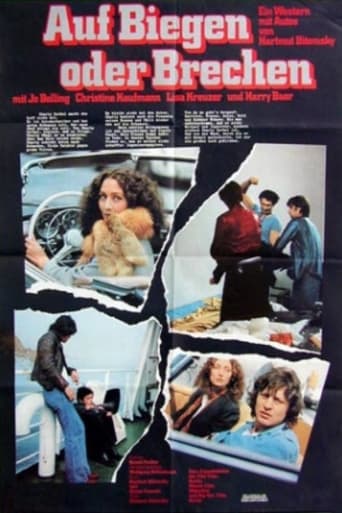 9.0
9.0A darkly comedic exploration of personal struggle and societal pressure, we follow the story of a middle-aged man named Max, who is trapped in a life of monotony and frustration. After a series of unexpected events, Max finds himself in increasingly absurd and challenging situations, forcing him to confront his own limitations and fears. With sharp humor and a critique of societal expectations, the film delves into the pressures that shape our lives and the lengths we go to in order to break free from them. A poignant yet quirky tale about bending to life's demands or breaking under the weight of it all.
Bent or Broken
1975
9.0A darkly comedic exploration of personal struggle and societal pressure, we follow the story of a middle-aged man named Max, who is trapped in a life of monotony and frustration. After a series of unexpected events, Max finds himself in increasingly absurd and challenging situations, forcing him to confront his own limitations and fears. With sharp humor and a critique of societal expectations, the film delves into the pressures that shape our lives and the lengths we go to in order to break free from them. A poignant yet quirky tale about bending to life's demands or breaking under the weight of it all.
Bent or Broken
1975
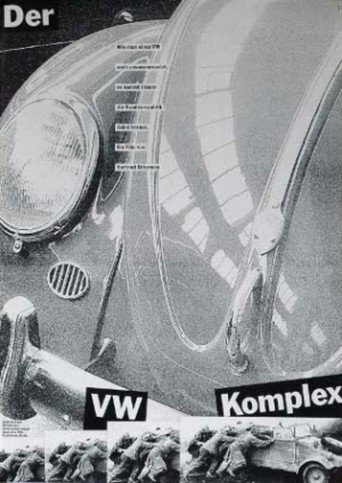 7.0
7.0It takes a day and a half to assemble a VW Golf 2. Hartmut Bitmosky traces a car’s journey through the fully automated production lines in Wolfsburg and explores the development of the VW Group using archival footage. Moving almost in time with the machines, the director constructs a documentary collage—a visual exploration of the corporate giant, which appears as dehumanized and automated as its production process.
The VW Complex
1989
7.0It takes a day and a half to assemble a VW Golf 2. Hartmut Bitmosky traces a car’s journey through the fully automated production lines in Wolfsburg and explores the development of the VW Group using archival footage. Moving almost in time with the machines, the director constructs a documentary collage—a visual exploration of the corporate giant, which appears as dehumanized and automated as its production process.
The VW Complex
1989
7.0It takes a day and a half to assemble a VW Golf 2. Hartmut Bitmosky traces a car’s journey through the fully automated production lines in Wolfsburg and explores the development of the VW Group using archival footage. Moving almost in time with the machines, the director constructs a documentary collage—a visual exploration of the corporate giant, which appears as dehumanized and automated as its production process.
The VW Complex
1989
 NR
NRA worker is sitting at a conveyor belt on which light bulbs are coming in at regular intervals. He takes the light bulbs from the conveyor belt and inserts them into a testing device. The light bulbs light up briefly and bathe the scene in glistening light. The worker puts the light bulb back on the conveyor belt, looks directly into the camera and shouts against the noise of the machines: "We create wealth."
Die Teilung aller Tage
1970
6.5Barrage and Bunker is an essay film about the (narrative) space imagined by fiction films. Reflections and associations about movement in space are the basis of every kind of story-telling. The film is sometimes referred to as part of Bitomsky's Cinema Trilogy. Sequences from over 20 movies are quoted and commented on by a team of three "researchers" (Bitomsky, Petzold, Tanner) in a sort of laboratory. TV-monitors, production stills and screenshots are used as well as quotations from books. A long night's work.
Barrage and Bunker
1991
6.5Barrage and Bunker is an essay film about the (narrative) space imagined by fiction films. Reflections and associations about movement in space are the basis of every kind of story-telling. The film is sometimes referred to as part of Bitomsky's Cinema Trilogy. Sequences from over 20 movies are quoted and commented on by a team of three "researchers" (Bitomsky, Petzold, Tanner) in a sort of laboratory. TV-monitors, production stills and screenshots are used as well as quotations from books. A long night's work.
Barrage and Bunker
1991
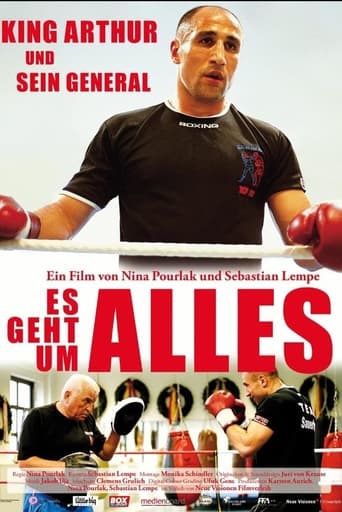 6.5
6.5No synopsis available yet.
Es geht um Alles
2008
 NR
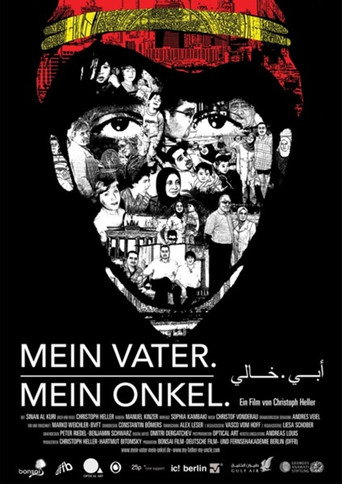
NRA charming young German meets his biological parents and siblings in Dubai. The wealthy Iraqi family has found their new home there. Their son Sinan grew up in Hesse with his German adoptive mother and now lives and works in Berlin. The camera is almost invisible and very precise in "My father. My uncle." is always present when Sinan encounters the family, language, religion and culture of his ancestors - it is the discovery of a foreign world, an alternative life that he would have lived if he had grown up with his brothers. For Sinan's parents, he has always been part of the family. They have longed all their lives for the return of their prodigal son and now accept him with unconditional love. They make plans, dream of a life together in Iraq and make suggestions for a future wife. Actually, it would also be nice if Sinan converted to Islam.
My Father. My Uncle
2009
 6.0
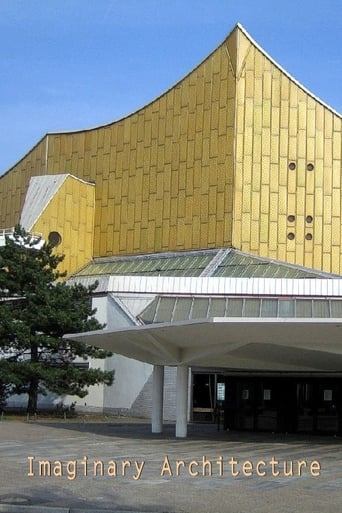
6.0Hans Scharoun has built houses which show not only structural substance and aesthetic forms but also how human beings should live in buildings. This depiction can only be imaginary - like reading invisible writing on walls. Bitomsky's film looks at several of Scharoun's buildings.
Imaginary Architecture, the architect Hans Scharoun
1995
6.0Hans Scharoun has built houses which show not only structural substance and aesthetic forms but also how human beings should live in buildings. This depiction can only be imaginary - like reading invisible writing on walls. Bitomsky's film looks at several of Scharoun's buildings.
Imaginary Architecture, the architect Hans Scharoun
1995
No synopsis available yet.
Isaak Babel - Die Reiterarmee
1990