

Known for
 NR
NRDolce Vita & Co is an Austrian television series.
Dolce Vita & Co
2001
 NR
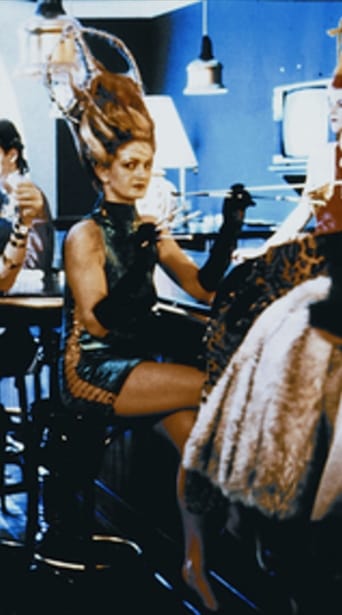
NR"This video film shows indecency in its modern form. While peddling naked female flesh was considered indecent in the past, we can see by the examples of today´s star athletes that skin full of advertising sells better. The same applies to politicians, of course, though in a more subtle way. Advertising on skin as the new indecency! I consider this film to be a continuation of my previous work with the body as a vehicle for social codes. While in the past it was religion that dictated male and female behaviour, which was also expressed in their physical appearance, business has now assumed this role. Business dictates physical behaviour, physical pressure in its most direct form, and even sets standards for how our bodies are to be represented. Religion no longer prescribes morality, that is now done by the global power of business, with its products and codes. Morality has found a new patron." (Valie Export)
Lust
1988
 6.7
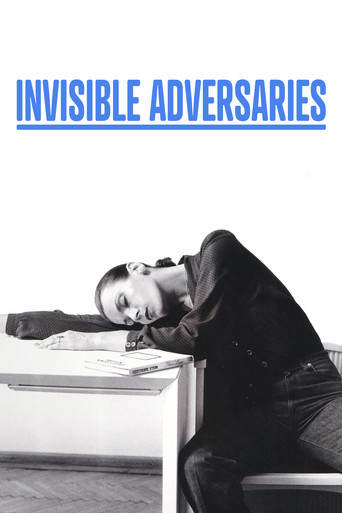
6.7Set in contemporary Vienna, the film involves a photographer, Anna, who discovers that extraterrestrial beings are colonizing the minds of her fellow citizens by raising the human aggression quotient. The outer world immediately becomes disjointed, yet the inner world does too, as Anna and her lover, Peter, try to hang onto their deteriorating relationship.
Invisible Adversaries
1977
 5.5
5.5Seven Women, Seven Sins (1986) represents a quintessential moment in film history. The women filmmakers invited to direct for the seven sins were amongst the world's most renown: Helke Sander (Gluttony), Bette Gordon (Greed), Maxi Cohen (Anger), Chantal Akerman (Sloth), Valie Export (Lust), Laurence Gavron (Envy), and Ulrike Ottinger (Pride). Each filmmaker had the liberty of choosing a sin to interpret as they wished. The final film reflected this diversity, including traditional narrative fiction, experimental video, a musical, a radical documentary, and was delivered in multiple formats from 16, super 16, video and 35mm.
Seven Women, Seven Sins
1986
 7.0
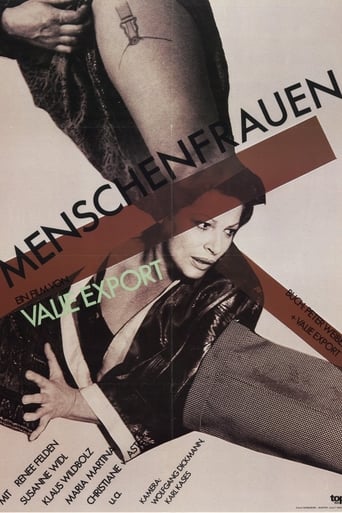
7.0A journalist runs a strict, scheduled routine to date four different women simultaneously, while keeping them completely separated from one another. His charade slowly starts falling apart.
Menschenfrauen
1980
On the 28th of October 1884 Daniel Paul Schreber, candidate of the National Liberal Party in Chemnitz, suffered a heavy defeat at the elections of the German Reichstag. He was taken up in the mental clinic of the Leipzig University soon afterwards. To his rehabilition he wrote an extensive piece of work, "Denkwürdigkeiten eines Nervenkranken" (Memoirs of My Nervous Illness), which was published in 1903 and led to his temporary dismissal. Hereby Schreber became the most quoted psychiatric patient in scientific literature. This second part was finished after Ernst Schmidt Jr. death by his assistant Susi Praglowski.
Memoirs of My Nervous Illness, Part 2
1988
Film credits
1980s · 4 titles
NR"This video film shows indecency in its modern form. While peddling naked female flesh was considered indecent in the past, we can see by the examples of today´s star athletes that skin full of advertising sells better. The same applies to politicians, of course, though in a more subtle way. Advertising on skin as the new indecency! I consider this film to be a continuation of my previous work with the body as a vehicle for social codes. While in the past it was religion that dictated male and female behaviour, which was also expressed in their physical appearance, business has now assumed this role. Business dictates physical behaviour, physical pressure in its most direct form, and even sets standards for how our bodies are to be represented. Religion no longer prescribes morality, that is now done by the global power of business, with its products and codes. Morality has found a new patron." (Valie Export)
Lust
1988
5.5Seven Women, Seven Sins (1986) represents a quintessential moment in film history. The women filmmakers invited to direct for the seven sins were amongst the world's most renown: Helke Sander (Gluttony), Bette Gordon (Greed), Maxi Cohen (Anger), Chantal Akerman (Sloth), Valie Export (Lust), Laurence Gavron (Envy), and Ulrike Ottinger (Pride). Each filmmaker had the liberty of choosing a sin to interpret as they wished. The final film reflected this diversity, including traditional narrative fiction, experimental video, a musical, a radical documentary, and was delivered in multiple formats from 16, super 16, video and 35mm.
Seven Women, Seven Sins
1986
7.0A journalist runs a strict, scheduled routine to date four different women simultaneously, while keeping them completely separated from one another. His charade slowly starts falling apart.
Menschenfrauen
1980
On the 28th of October 1884 Daniel Paul Schreber, candidate of the National Liberal Party in Chemnitz, suffered a heavy defeat at the elections of the German Reichstag. He was taken up in the mental clinic of the Leipzig University soon afterwards. To his rehabilition he wrote an extensive piece of work, "Denkwürdigkeiten eines Nervenkranken" (Memoirs of My Nervous Illness), which was published in 1903 and led to his temporary dismissal. Hereby Schreber became the most quoted psychiatric patient in scientific literature. This second part was finished after Ernst Schmidt Jr. death by his assistant Susi Praglowski.
Memoirs of My Nervous Illness, Part 2
1988