
Directing
Valie Export
Born — Died
1940-05-17 — 2026-05-14
Place of birth
Linz, Austria
Known for
Directing
Credits
59 titles
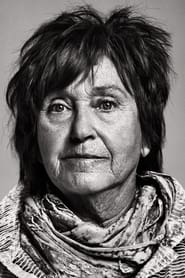
Valie Export (1940-2026), born Waltraud Lehner, was an Austrian artist. Her artistic work includes video installations, body performances, expanded cinema, computer animations, photography, sculptures and publications covering contemporary arts.
Known for
 NR
NRFrom the starting point of her admiration for the pioneering Ukrainian filmmaker Kira Muratova (1934-2018), the director poses a question: is cinema made by women really tougher, more violent? Seeking answers, she talks to great contemporary filmmakers like Catherine Breillat, Virginie Despentes, Alice Diop, Céline Sciamma, Ana Lily Amirpour, and Monika Treut, among others. It becomes obvious that the cinema screen is a space for the projection of real social problems and power relations.
No Mercy
2026
 6.7
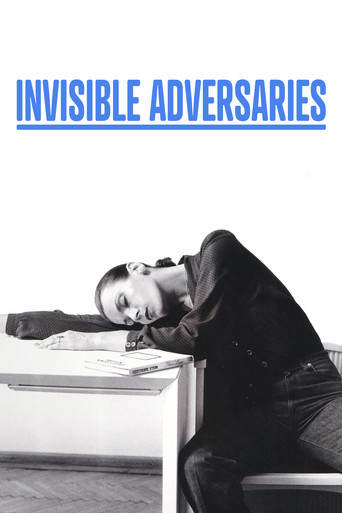
6.7Set in contemporary Vienna, the film involves a photographer, Anna, who discovers that extraterrestrial beings are colonizing the minds of her fellow citizens by raising the human aggression quotient. The outer world immediately becomes disjointed, yet the inner world does too, as Anna and her lover, Peter, try to hang onto their deteriorating relationship.
Invisible Adversaries
1977
 5.5
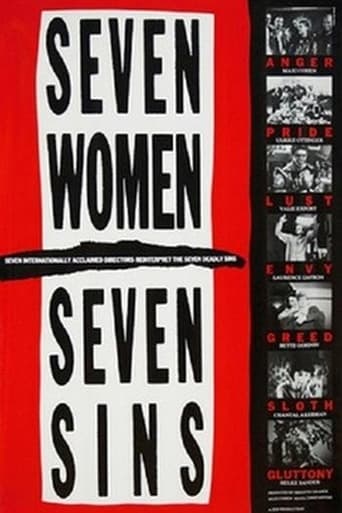
5.5Seven Women, Seven Sins (1986) represents a quintessential moment in film history. The women filmmakers invited to direct for the seven sins were amongst the world's most renown: Helke Sander (Gluttony), Bette Gordon (Greed), Maxi Cohen (Anger), Chantal Akerman (Sloth), Valie Export (Lust), Laurence Gavron (Envy), and Ulrike Ottinger (Pride). Each filmmaker had the liberty of choosing a sin to interpret as they wished. The final film reflected this diversity, including traditional narrative fiction, experimental video, a musical, a radical documentary, and was delivered in multiple formats from 16, super 16, video and 35mm.
Seven Women, Seven Sins
1986
 7.0
7.0Jonas Mekas assembles 160 portraits, appearances, and fleeting sketches of underground and independent filmmakers captured between 1955 and 1996. Fast-paced and archival in spirit, the film celebrates the avant-garde as its own “nation of cinema,” a vital community existing outside the dominance of commercial film.
Birth of a Nation
1997
 NR
NRHome movies shot on Super 8mm by W+B Hein over 10 years.
Home Movies 1971-81
1985
 NR
NRA comprehensive documentation of new art movements from 1945 to the present day. Beginning with the "Internationale Situationniste," "Cobra," "Spur," and "Wiener Gruppe" groups in Europe, and moving on to the international Happening and Fluxus movements, including the Viennese Actionists, and from 1970 onward to international Body and Performance Art, which also encompassed media art—film and video—the documentary presents film and photographic material from these art movements.
Aktionskunst International. Dokumente zum Internationalen Aktionismus
1989
Film credits
2010s · 2 titles
 5.0
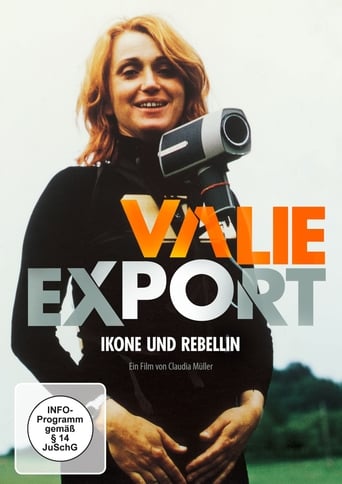
5.0She is the godmother of performance art. With her shocking public actions she created in the late 60s images that have burned into the general visual memory until today. The life and work of the Austrian artist Valie Export exemplify a development in art history in which women sought and found new ways and means of expression. Her work provides a feminist counterpart to the Viennese actionism of her time, which has influenced numerous artists of subsequent generations. The innovative diversity of her artistic approaches makes Valie Export an icon of 20th century art history.
Valie Export - Icon and Rebel
2015
 NR
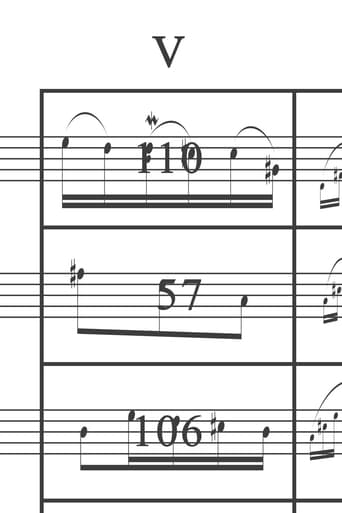
NRThe starting point for this film is an eighteenth-century musical dice game attributed to Wolfgang Amadeus Mozart. A sequence of short, precomposed musical options are randomly selected through rolling dice and following a table of rules; these sequences are then patched together to create a new composition. Here we see one possible result of this chance procedure.
Anagrammatical Composition with Dice by VALIE EXPORT (after W.A. Mozart, Piano) for Soprano Saxophone
2010
1980s · 6 titles
NRHome movies shot on Super 8mm by W+B Hein over 10 years.
Home Movies 1971-81
1985
NRA comprehensive documentation of new art movements from 1945 to the present day. Beginning with the "Internationale Situationniste," "Cobra," "Spur," and "Wiener Gruppe" groups in Europe, and moving on to the international Happening and Fluxus movements, including the Viennese Actionists, and from 1970 onward to international Body and Performance Art, which also encompassed media art—film and video—the documentary presents film and photographic material from these art movements.
Aktionskunst International. Dokumente zum Internationalen Aktionismus
1989
 9.0
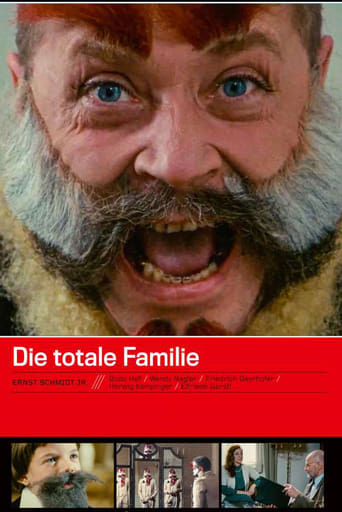
9.0Baron Childerich III of Bartenbruch considers himself to be a descendant of the Merovingian dynasty and he has drawn up a chart of marriages and adoptions which show that he is his own father, grandfather, father-in-law, and son-in-law. He aims at achieving the "total family" based on one man. He persuades his french relative, Pippin, to help him. But the latter lets him down and breaks up the family... Among those who belong to the (surrounding) world of the Baron are Dr. Döblinger, a writer, who has formed a band of muggers and Professor Horn, a psychiatrist, who quiets his patients by leading them on nose rings and beating them up... Family satire with numerous personal and literary allusions based on the novel of the Austrian writer, Heimito von Doderer.
The Total Family
1981
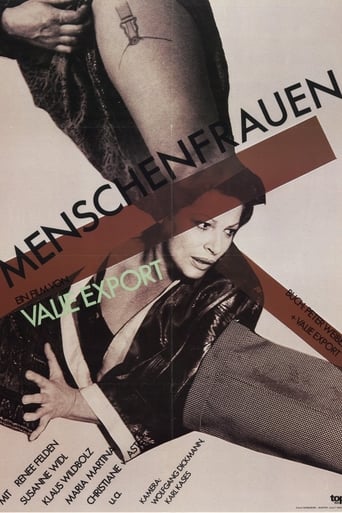
Katja Raganelli’s sole excursion into the realm of avant-garde cinema was this focus on Austrian experimental film axiom Valie Export. This portrayal of the filmmaker is quite special as it presents Export at a very particular moment in her career, during the shooting of a fiction feature, Menschenfrauen (1980), with which she was able to break into the avant-garde mainstream, shedding the skin of her path-breaking, often performance-based early works.
Valie Export: Portrait of a Filmmaker
1981
 NR
NRIn her three-part series VALIE EXPORT takes a look at the themes of "staged space - staged time", "real movement - movable reality", and "structural film", a genre which no longer exists on public-service television. Using numerous examples from films prepared for the specific media, for example by Wojciek Bruszewski, Malcolm LeGrice, Sergey Eisenstein, Maya Deren, Kurt Kren, Yvonne Rainer, Anne Severson, Alfred Hitchcock, Linda Christanell, Gary Beydler and Marc Adrian, narrative and non-narrative forms of story-telling are examined and compared. Adrian appears in a live interview, and he attempts to explain the conditions of production, methods and Zeitgeist through his own work, including his first computer film, Random (1963). The advanced level of this film is also indicated by the high density of theoretical quotes from Christian Metz, Charles S. Peirce, Vsevolod I. Pudovkin and Ferdinand de Saussure.
The Armed Eye – VALIE EXPORT in a Dialogue with the Film Avant-Garde
1984
 NR
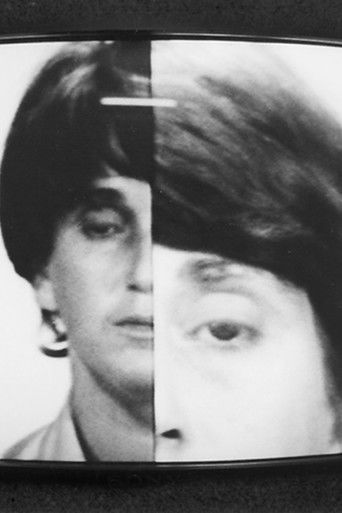
NRA work on the perception of space, where a video of a motionless figure in a room correlates four different camera positions with four different synthesized tones. We see the inert artist and how she calmly faces the cameras head-on. Six minute version.
Space Seeing - Space Hearing
1980
1970s · 6 titles
 7.0
7.0This film is a kind of anthology about Vienna, from the invention of film to the present day. The aim is to break down the usual clichéd "image of Vienna" such as that found in the traditional "Vienna Film" by juxtaposing documentary footage, newly shot material and subjective sequences created by various artists. Individual, self-contained sections of the film gain new meaning within the context of historical material. Familiar sites appear estranged when edited together with historical scenes. Other scenes appear like a persiflage or satirical. The film does not incorporate any commentary whatsoever. It is a collage of diverse materials aimed at conveying a distanced image of Vienna to the viewer
ViennaFilm 1896-1976
1977
 6.3
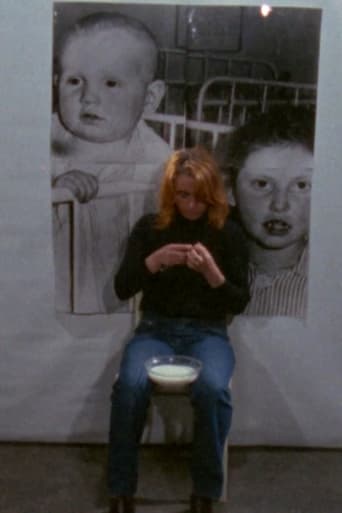
6.3With sometimes painful directness, Valie Export conducts a psychological investigation of the body in this film performance, externalizes an internal state. In front of a police photo showing two children who were sexually abused by their parents, she tortuously cuts into her cuticles until blood drips into a bowl of milk on her lap. On top of the symbolic plane of blood and milk, the physical effect on the viewer of her destructive act of self-mutilation is extreme.
...Remote..... Remote....
1973
 6.0
6.0Man & Woman & Animal shows a woman finding pleasure in herself, the whole film is a kind of assertion and affirmation of female sexuality and its independence from male values and pleasures... (Joana Kiernan)
Man & Woman & Animal
1973
 NR
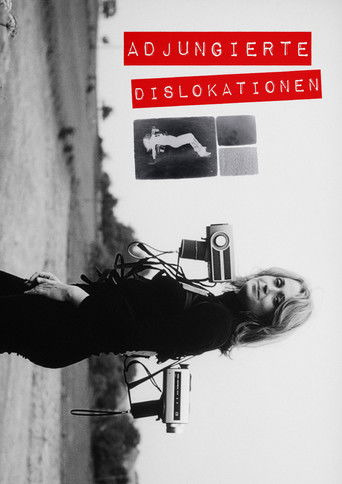
NR“This film deals with exploring one´s surroundings by means of the body, and the exploration of the surrounding body. Not only is something shown in this film, showing itself is shown, not only is something portrayed, portrayal itself is portrayed. A sense of space is created in a way possible only with film: seeing oneself from the front and back simultaneously, from above and below, and from outside in the center of the space. The film combines opposite parts of the space, which form the body´s imperceptible time-space continuum. Space is carried along, just like the camera.” – VALIE EXPORT
Adjunct Dislocations
1973
Space Seeing - Space Hearing uses sound and image editing, as well as split-screen effects, to create a performance from a motionless body. The work comprises six distinct sections that create a rhapsody of sound and image. The original full-length/linear film cut of the performance. Later edited into a different six minute work of the same name (released in 1980).
Seeing-Space and Hearing-Space - Original length/linear cut
1974
Performance by Valie Export.
Homo Meter II
1976
1960s · 3 titles
 10.0
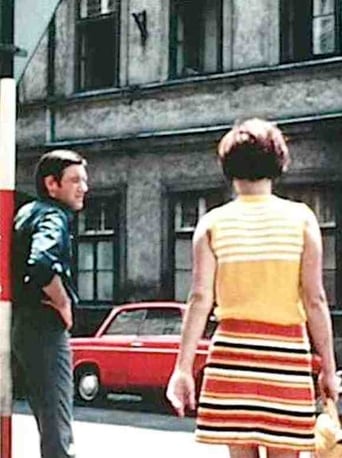
10.0Documentary and pseudo-documentary procedures were filmed simultaneously by two cameras from different viewpoints. The material was then divided into phases of movement. In the montage each phase was doubled. The techniques used in this process vary. Also the sound was doubled, again using different techniques. Two realities, differently perceived according to the conditions of this film, were edited into one synthetic reality, where everything is repeated. This doubling up destroys the postulate: identity of copy and image.
Hernals
1967
 NR
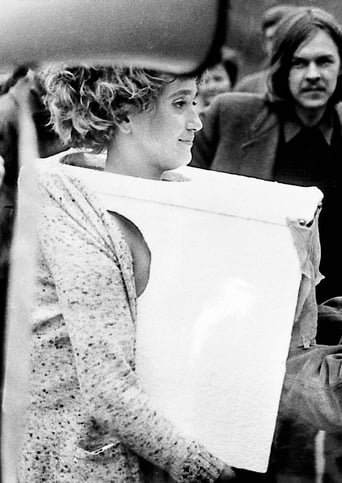
NRThe film is ‘shown’ in the dark. But the cinema has shrunk somewhat – only two hands fit inside it. To see (i.e. feel, touch) the film, the viewer (user) has to stretch his hands through the entrance to the cinema. Tap and Touch Cinema is an example of how re-interpretation can activate the public. Extract fom the documentary "Wiener Underground"
TAP and TOUCH CINEMA
1969
 NR
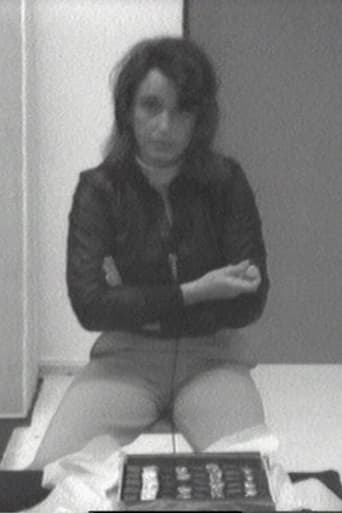
NRThe subtitle of this merry performance is "An Action Text", indicating that the artist's introduction for the vaudeville number was an inflammatory impetus. Export provides precise instructions for the use of a wrapped box of chocolate-covered candy produced by the renowned Viennese company Hofbauer. However, she has not made an advertisement for them and their presentation, but instead, she extols the packqge and confection as a work of art. Severe degradation of the surviving tape further blurs our perceptions.
The Sweet Number - An Experience of Consumption
1969
Behind the camera
6.7Set in contemporary Vienna, the film involves a photographer, Anna, who discovers that extraterrestrial beings are colonizing the minds of her fellow citizens by raising the human aggression quotient. The outer world immediately becomes disjointed, yet the inner world does too, as Anna and her lover, Peter, try to hang onto their deteriorating relationship.
Invisible Adversaries
1977
6.7Set in contemporary Vienna, the film involves a photographer, Anna, who discovers that extraterrestrial beings are colonizing the minds of her fellow citizens by raising the human aggression quotient. The outer world immediately becomes disjointed, yet the inner world does too, as Anna and her lover, Peter, try to hang onto their deteriorating relationship.
Invisible Adversaries
1977
6.7Set in contemporary Vienna, the film involves a photographer, Anna, who discovers that extraterrestrial beings are colonizing the minds of her fellow citizens by raising the human aggression quotient. The outer world immediately becomes disjointed, yet the inner world does too, as Anna and her lover, Peter, try to hang onto their deteriorating relationship.
Invisible Adversaries
1977
5.5Seven Women, Seven Sins (1986) represents a quintessential moment in film history. The women filmmakers invited to direct for the seven sins were amongst the world's most renown: Helke Sander (Gluttony), Bette Gordon (Greed), Maxi Cohen (Anger), Chantal Akerman (Sloth), Valie Export (Lust), Laurence Gavron (Envy), and Ulrike Ottinger (Pride). Each filmmaker had the liberty of choosing a sin to interpret as they wished. The final film reflected this diversity, including traditional narrative fiction, experimental video, a musical, a radical documentary, and was delivered in multiple formats from 16, super 16, video and 35mm.
Seven Women, Seven Sins
1986
5.5Seven Women, Seven Sins (1986) represents a quintessential moment in film history. The women filmmakers invited to direct for the seven sins were amongst the world's most renown: Helke Sander (Gluttony), Bette Gordon (Greed), Maxi Cohen (Anger), Chantal Akerman (Sloth), Valie Export (Lust), Laurence Gavron (Envy), and Ulrike Ottinger (Pride). Each filmmaker had the liberty of choosing a sin to interpret as they wished. The final film reflected this diversity, including traditional narrative fiction, experimental video, a musical, a radical documentary, and was delivered in multiple formats from 16, super 16, video and 35mm.
Seven Women, Seven Sins
1986
NRA comprehensive documentation of new art movements from 1945 to the present day. Beginning with the "Internationale Situationniste," "Cobra," "Spur," and "Wiener Gruppe" groups in Europe, and moving on to the international Happening and Fluxus movements, including the Viennese Actionists, and from 1970 onward to international Body and Performance Art, which also encompassed media art—film and video—the documentary presents film and photographic material from these art movements.
Aktionskunst International. Dokumente zum Internationalen Aktionismus
1989
 5.0
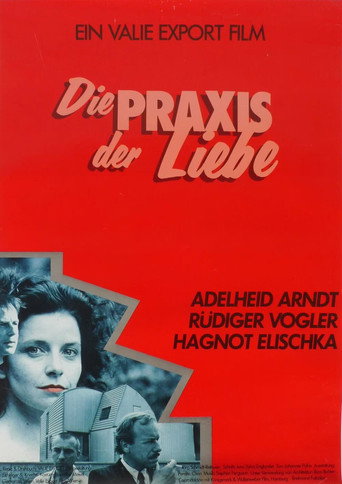
5.0Judith is a maverick reporter who is also seeking a satisfying relationship with various men. She finds corruption and power-games everywhere.
The Practice of Love
1985
5.0Judith is a maverick reporter who is also seeking a satisfying relationship with various men. She finds corruption and power-games everywhere.
The Practice of Love
1985
 NR
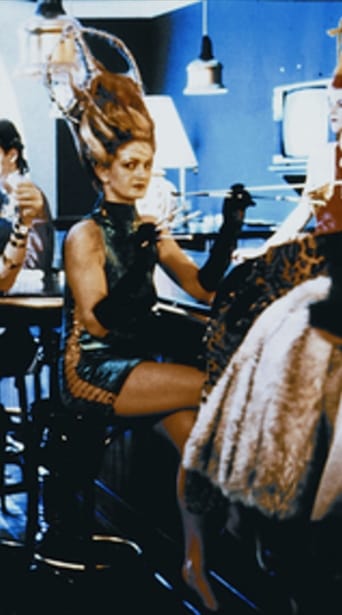
NR"This video film shows indecency in its modern form. While peddling naked female flesh was considered indecent in the past, we can see by the examples of today´s star athletes that skin full of advertising sells better. The same applies to politicians, of course, though in a more subtle way. Advertising on skin as the new indecency! I consider this film to be a continuation of my previous work with the body as a vehicle for social codes. While in the past it was religion that dictated male and female behaviour, which was also expressed in their physical appearance, business has now assumed this role. Business dictates physical behaviour, physical pressure in its most direct form, and even sets standards for how our bodies are to be represented. Religion no longer prescribes morality, that is now done by the global power of business, with its products and codes. Morality has found a new patron." (Valie Export)
Lust
1988
NR"This video film shows indecency in its modern form. While peddling naked female flesh was considered indecent in the past, we can see by the examples of today´s star athletes that skin full of advertising sells better. The same applies to politicians, of course, though in a more subtle way. Advertising on skin as the new indecency! I consider this film to be a continuation of my previous work with the body as a vehicle for social codes. While in the past it was religion that dictated male and female behaviour, which was also expressed in their physical appearance, business has now assumed this role. Business dictates physical behaviour, physical pressure in its most direct form, and even sets standards for how our bodies are to be represented. Religion no longer prescribes morality, that is now done by the global power of business, with its products and codes. Morality has found a new patron." (Valie Export)
Lust
1988
 7.0
7.0A journalist runs a strict, scheduled routine to date four different women simultaneously, while keeping them completely separated from one another. His charade slowly starts falling apart.
Menschenfrauen
1980
7.0A journalist runs a strict, scheduled routine to date four different women simultaneously, while keeping them completely separated from one another. His charade slowly starts falling apart.
Menschenfrauen
1980
 10.0
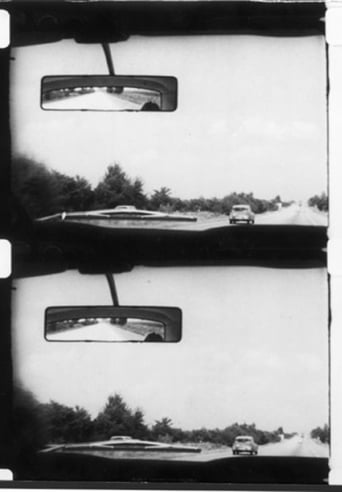
10.0"The middle line marking of the road is filmed through the windscreen of a moving car simultaneously with its own reflection in the driving mirror. The repeated interruptions of the space/time line are as big as a car. The car as a connecting link in time. The cinema as interruption of normal time flow.” – VALIE EXPORT
Interrupted Line
1972
 NR
NRTethered to one another by a rope, two figures standing on parallel escalators perform five ways of being together—“against each other,” “with each other,” “to each other,” “for each other,” and “each other”—challenging expectations of how people can and should coexist in public space.
Body Politics
1974
 2.0
2.0For Seven Easy Pieces Marina Abramovic reenacted five seminal performance works by her peers, dating from the 1960's and 70's, and two of her own, interpreting them as one would a musical score. The project confronted the fact that little documentation exists from this critical early period and one often has to rely upon testimony from witnesses or photographs that show only portions of any given performance. The seven works were performed for seven hours each, over the course of seven consecutive days, November 9 –15, 2005 at the Guggenheim Museum, in New York City. Seven Easy Pieces examines the possibilities of representing and preserving an art form that is, by nature, ephemeral.
Seven Easy Pieces
2007
 NR
NR“In her first film self-portrait, VALIE EXPORT wears an attention-getting curly wig and caresses a woman´s breasts in slow motion, then lasciviously closes and opens her eyes. The carefully applied makeup and wig tell of disguise and acting, and are simultaneously beautiful and terribly stony like the anonymous woman´s head. The brevity and slow speed are reminiscent of Andy Warhol´s Screen Tests, in which every single one of the face´s movements become visible.” – Brigitta Burger-Utzer
Self-Portrait with Head
1967
NRIn her three-part series VALIE EXPORT takes a look at the themes of "staged space - staged time", "real movement - movable reality", and "structural film", a genre which no longer exists on public-service television. Using numerous examples from films prepared for the specific media, for example by Wojciek Bruszewski, Malcolm LeGrice, Sergey Eisenstein, Maya Deren, Kurt Kren, Yvonne Rainer, Anne Severson, Alfred Hitchcock, Linda Christanell, Gary Beydler and Marc Adrian, narrative and non-narrative forms of story-telling are examined and compared. Adrian appears in a live interview, and he attempts to explain the conditions of production, methods and Zeitgeist through his own work, including his first computer film, Random (1963). The advanced level of this film is also indicated by the high density of theoretical quotes from Christian Metz, Charles S. Peirce, Vsevolod I. Pudovkin and Ferdinand de Saussure.
The Armed Eye – VALIE EXPORT in a Dialogue with the Film Avant-Garde
1984
6.3With sometimes painful directness, Valie Export conducts a psychological investigation of the body in this film performance, externalizes an internal state. In front of a police photo showing two children who were sexually abused by their parents, she tortuously cuts into her cuticles until blood drips into a bowl of milk on her lap. On top of the symbolic plane of blood and milk, the physical effect on the viewer of her destructive act of self-mutilation is extreme.
...Remote..... Remote....
1973
NRThe film is ‘shown’ in the dark. But the cinema has shrunk somewhat – only two hands fit inside it. To see (i.e. feel, touch) the film, the viewer (user) has to stretch his hands through the entrance to the cinema. Tap and Touch Cinema is an example of how re-interpretation can activate the public. Extract fom the documentary "Wiener Underground"
TAP and TOUCH CINEMA
1969
“A medical camera films the vaginal area of performer VALIE EXPORT. It penetrates her body. In the same way as in various installations that investigate the origin of the voice through filming of the glottis, the vagina´s interior is made visible here for the purpose of demonstrating what happens inside the body.” – Brigitta Burger-Utzer
Vaginan
1997
 NR
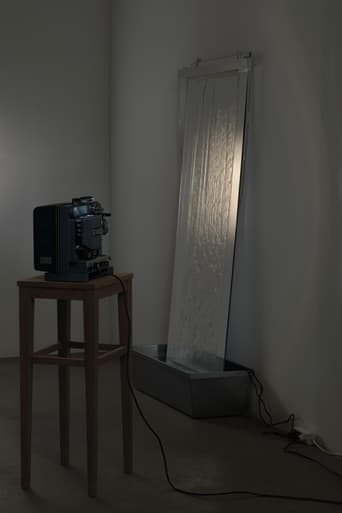
NRThe concept of “expanded” cinema developed by Export and Peter Weibel involved radical experiments with the filmic apparatus and materialist investigations of the production of illusion. Abstract Film No. 1 is an example of this critical investigation of the technology of image production. A film projector casts light on a mirror with tinted liquids running across it. The actual image appears as a reflection on a screen—or an abstract film. —Christian Kravagna
Abstract Film No. 1
1967
 NR
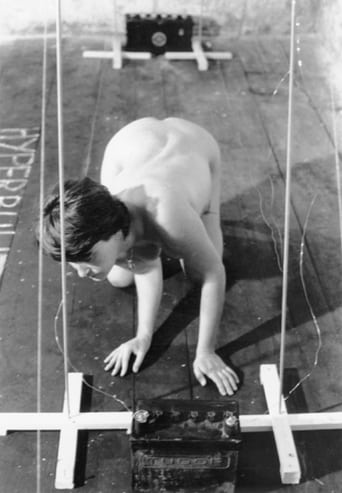
NR“The narrow passage or dangerous passage is a common motif in both funerary and initiation mythologies. I step inside and move through a corridor of electrically charged wires, constantly experiencing painful shocks and sinking to the floor. But I accept the challenge and, in a somewhat pathological increase in willpower, I press my head against the wires again and again. Society is a closed, structured space, which regulates all human energy through painful barriers. Only through an effort of will to overcome the pain (which is at the core of society) is one able to achieve a state of free expression.” – VALIE EXPORT
Hyperbulie
1973
 NR
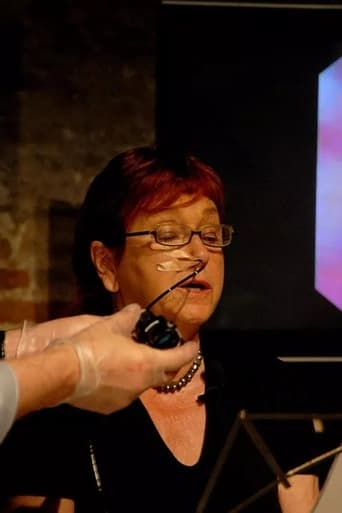
NRA recording of Valie Export’s performance from the 2007 Venice Biennale, filmed with a laryngoscope camera inside her throat.
The Voice as Performance, Act and Body
2007
6.0Man & Woman & Animal shows a woman finding pleasure in herself, the whole film is a kind of assertion and affirmation of female sexuality and its independence from male values and pleasures... (Joana Kiernan)
Man & Woman & Animal
1973
Second version of the video-poem "Visual Text: Finger Poem" (1968), by Valie Export, conceived after the eponymous photo poem from 1968: "I say what is shown in showing what is said" (freely adapted from Martin Heidegger).
Visual Text: Finger Poem
1973
NR“This film deals with exploring one´s surroundings by means of the body, and the exploration of the surrounding body. Not only is something shown in this film, showing itself is shown, not only is something portrayed, portrayal itself is portrayed. A sense of space is created in a way possible only with film: seeing oneself from the front and back simultaneously, from above and below, and from outside in the center of the space. The film combines opposite parts of the space, which form the body´s imperceptible time-space continuum. Space is carried along, just like the camera.” – VALIE EXPORT
Adjunct Dislocations
1973
 NR
NRBreath Text is a powerfully simple performance in which VALIE EXPORT creates tension by breathing compulsively. “she breathes heavily at the video camera lens while slowly moving her face across it, fogging up the entire space with her lung’s volume. Her piece takes Olson’s breathy poem ‘Gli Amanti’ a step further, not just aiming to capture the particularities of one’s pronunciation in an individual speech act but substituting the specific make her body creates – her ‘breath text,’ the moist gasp on the window glass in front of her – for the signs one would use to write an actual, linguistic ‘love poem.’” – Lisa Siraganian
Breath Text: Love Poem
1973
 NR
NR“Writer Elfriede Jelinek has repeatedly made statements about her television-watching habits. She watches a great deal, a wide variety of what is broadcast, though rarely for pleasure or the purpose of gaining knowledge. On the contrary, the TV program is one of her favorite objects of study. Three separate times on a particular day, while sitting in a comfy TV chair, she commented on Austrian TV news for VALIE EXPORT.” – Brigitta Burger-Utzer
Elfriede Jelinek. News from Home 18.8.88
1988
NR“Writer Elfriede Jelinek has repeatedly made statements about her television-watching habits. She watches a great deal, a wide variety of what is broadcast, though rarely for pleasure or the purpose of gaining knowledge. On the contrary, the TV program is one of her favorite objects of study. Three separate times on a particular day, while sitting in a comfy TV chair, she commented on Austrian TV news for VALIE EXPORT.” – Brigitta Burger-Utzer
Elfriede Jelinek. News from Home 18.8.88
1988
A densely symbolic video performance that became a scandal in 1977 when Staberl, one of Austria’s most infamous right-wing columnists, attacked Export as a violator of animal rights. Export won the ensuing court case with a beginner’s lesson in filmmaking for the judge and jury…
Asemie – The inability to express oneself through facial expressions
1973
A densely symbolic video performance that became a scandal in 1977 when Staberl, one of Austria’s most infamous right-wing columnists, attacked Export as a violator of animal rights. Export won the ensuing court case with a beginner’s lesson in filmmaking for the judge and jury…
Asemie – The inability to express oneself through facial expressions
1973
The focus of this documentary film, originally titled Speaking in Tongues: . The Unspeakable Speaking. Glossolalia among Natives, Christians, as an Emergency Language and Poetic Experiment, was the Pentecostal movement in America. The 45-minute video documentary, which was broadcast on Austrian television under the title The Unspeakable Speaking, used glossolalia to examine speech without apparent meaning. By examining speech defects, literary texts and the babbling of babies, forms of articulation for which normal linguistic logic plays no role were explored. The focus, which is beyond moral judgment, lies on various forms of expression and other, possible approaches and representations of reality.
The Unspeakable Speaking
1992
 NR
NR"The rebellious voice, the split voice. The voice is suture, the voice is seam, the voice is cut, the voice is tear, the voice is my identity, it is not body or spirit, it is not language or image, it is sign, it is a sign of the images, it is a sign of sensuality. It is a sign of symbols, it is boundary. It speaks the ‘split body,’ it is hidden in the clothing of the body, it is always somewhere else. The breath of life is its source." – VALIE EXPORT "That the vocal organs visually rhyme with female genitalia, that when they are in use, they create a fascinating flow of movement and change, makes this work a compelling new iteration by an artist who has given voice to her female body through a myriad of frames." – Maureen Turim
I turn over the pictures of my voice in my head
2009
 NR
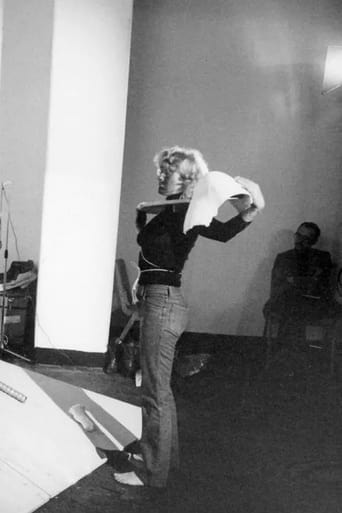
NRA drama in the continuum of perturbance in the mixed-gender relationship. Based on shoulder and hand symbolism as historical body language, the history of women in the world of men is broken wide open.
Delta. A Piece
1977
 NR
NR1: Touching 2: Boxing 3: Feeling 4: Hearing 5: Tasting 6: Pushing 7: Walking
Body Tape
1970
 6.4
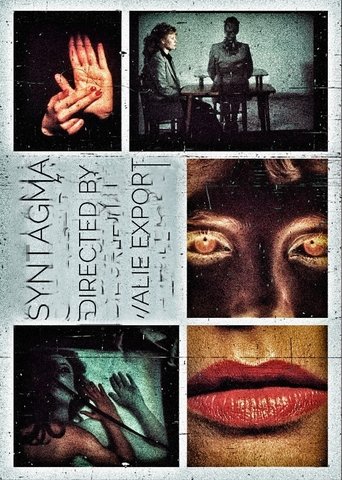
6.4The body and specifically the "woman's body" is often used as a focus for questions of origin, subject-object relations, political resistance and sexuality. Valie Export's notion of "body language" poses an ironic relation to these questions that acknowledges "the end of the body" or at least the final break with the way in which we understand it to be a biological, existential, or metaphysical entity. Export has broken away from any notion of unity - either body, space, or time - into the fragmented world of doubling and difference that is caught in representation.
Syntagma
1983
6.4The body and specifically the "woman's body" is often used as a focus for questions of origin, subject-object relations, political resistance and sexuality. Valie Export's notion of "body language" poses an ironic relation to these questions that acknowledges "the end of the body" or at least the final break with the way in which we understand it to be a biological, existential, or metaphysical entity. Export has broken away from any notion of unity - either body, space, or time - into the fragmented world of doubling and difference that is caught in representation.
Syntagma
1983
NRThe starting point for this film is an eighteenth-century musical dice game attributed to Wolfgang Amadeus Mozart. A sequence of short, precomposed musical options are randomly selected through rolling dice and following a table of rules; these sequences are then patched together to create a new composition. Here we see one possible result of this chance procedure.
Anagrammatical Composition with Dice by VALIE EXPORT (after W.A. Mozart, Piano) for Soprano Saxophone
2010
NRThe starting point for this film is an eighteenth-century musical dice game attributed to Wolfgang Amadeus Mozart. A sequence of short, precomposed musical options are randomly selected through rolling dice and following a table of rules; these sequences are then patched together to create a new composition. Here we see one possible result of this chance procedure.
Anagrammatical Composition with Dice by VALIE EXPORT (after W.A. Mozart, Piano) for Soprano Saxophone
2010
NRThe subtitle of this merry performance is "An Action Text", indicating that the artist's introduction for the vaudeville number was an inflammatory impetus. Export provides precise instructions for the use of a wrapped box of chocolate-covered candy produced by the renowned Viennese company Hofbauer. However, she has not made an advertisement for them and their presentation, but instead, she extols the packqge and confection as a work of art. Severe degradation of the surviving tape further blurs our perceptions.
The Sweet Number - An Experience of Consumption
1969