

Directing
Sharon Lockhart
Born 1964-06-05 · Norwood, Ohio, USA
Sharon Lockhart is an American artist whose work considers social subjects primarily through motion film and still photography, often engaging with communities to create work as part of long-term projects.
Acting credits

Behind the camera
This non-narrative film depicts the routines of a girls' basketball team in a junior high school near Tokyo. Shot with a stationary camera, it consists of six ten-minute segments, some of which show the girls' routine exercises, others of which are choreographed.
Goshogaoka
1998
Teatro Amazonas is an elaborate, intriguing formalist experiment investigating the cinematic gaze and cultural exchange, and offering an unconventional ethnographic record of its Amazonian subjects engaged (and disengaged) in the act of spectatorship.
Teatro Amazonas
1999
 NR
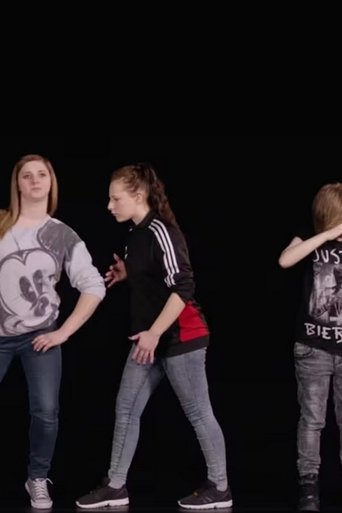
NRLittle Review is a precisely composed filmic portrait of the girls of the Youth Center for Sociotherapy in Rudzienko, Poland. Suggesting an abstract translation of the eponymous publication, the film comprises three acts and a satirical prologue performed by the young women evoking the resilient and candid spirit of Korczak’s newspaper. Set against a black background that refuses a single context, the scenes are resonant of the history of a diverse group of practices in both the visual and performing arts. Given this space to be seen and heard, the young women, like Korczak’s writers, command performances full of nuance and self-possession. The nearly hypnotic repetition of the English words “trust,” “hate,” “love,” and “hope” in the first scene is followed by a deconstructed piano solo.
Little Review
2017
 7.7
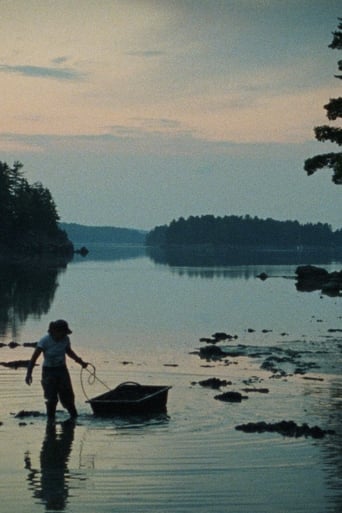
7.7Double Tide documents the work of a female clam digger in the mudflats of coastal Maine and is filmed on the rare occasion in which low tide occurs twice within daylight hours—once at dawn and once at dusk.
Double Tide
2009
7.7Double Tide documents the work of a female clam digger in the mudflats of coastal Maine and is filmed on the rare occasion in which low tide occurs twice within daylight hours—once at dawn and once at dusk.
Double Tide
2009
 NR
NRFilmed in real time and from a fixed camera angle, NО̄ creates a visual choreography from an everyday action. A Japanese peasant couple is bundling hay and later spreads it out again over the field. This action, which occurs in linear geometric precision from back to front and vice versa, ensures an observation of the landscape, perspective, light, and time. Lockhart’s work emerges as a landscape painting in real time.
NО̄
2003
Set in a small town in the Sierra Nevadas, Pine Flat is a look at youth and a meditation on nature, socialization, and solitude.
Pine Flat
2006
Set in a small town in the Sierra Nevadas, Pine Flat is a look at youth and a meditation on nature, socialization, and solitude.
Pine Flat
2006
 NR
NRThe filmmaker trains her camera on Milena for an adaptation and recreation of an iconic sequence from François Truffaut’s 1959 film The 400 Blows..
Antoine/Milena
2015
 2.0
2.0Shot in Gotland, Sweden, EVENTIDE is a 30-minute single take filmed as dusk turned to night during the annual Perseid meteor shower. From its stationary position, the camera records the slow entrance and exit of several figures exploring the rocky shore flashlights in hand. The rhythmic pacing of their explorations reveal a considered yet organic choreography of bodies slowly moving in and out of frame in the liminal space where land meets water, where day meets night, where earth meets stars. EVENTIDE, like much of Lockhart’s work, invites contemplation, asks us to consider what we see and hear. The film has a solemn, almost dreamlike quality, one heightened by the night sky, the silhouettes searching in the dark, and the overwhelmingness of nature.
EVENTIDE
2022
 4.0
4.0A collaborative work made with a group of adolescent girls living at the Youth Center for Socio-Therapy in Rudzienko, Poland.
Rudzienko
2016
 NR
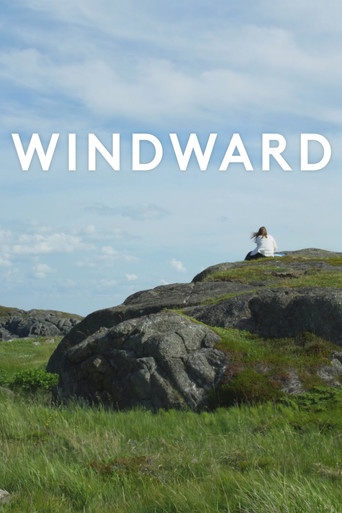
NRFilmed on Fogo Island, Windward unfolds across the landscape—its distinctive geological formations, climate, and austere beauty—through delicate portrayals of youth.
Windward
2025
 7.0
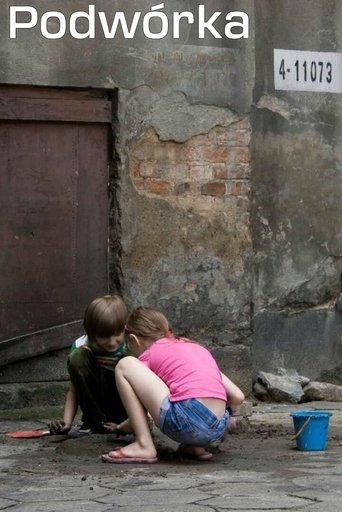
7.0‘Podwórka’ captures six groups of neighbourhood youth as they play in seemingly deserted yards, offering an intimate portrait of daily life in Łódź, Poland. Shot with a fixed camera, this single-channel video projection highlights American artist Sharon Lockhart’s concern for the interrelationship between the still and the moving image.
Podwórka
2009
Lunch Break features 42 workers as they take their midday break in a corridor stretching nearly the entire shipyard.
Lunch Break
2008
Lunch Break features 42 workers as they take their midday break in a corridor stretching nearly the entire shipyard.
Lunch Break
2008
 6.0
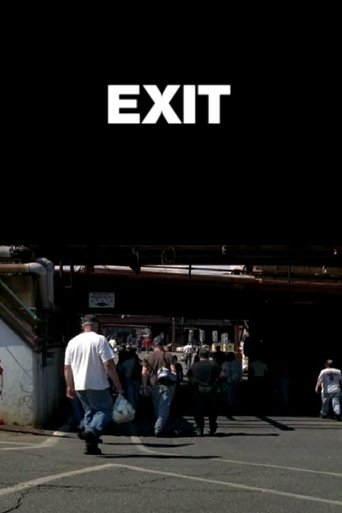
6.0Five static shots of workers leaving a factory. Filmed in the spirit of the Lumiere Brothers.
Exit
2008
 NR
NRSharon Lockhart's debut film from 1994 is divided into three parts. All parts are linked in showing the progression of a devastating skin disease of two ten-year-old boys which is successively revealed to be the progression of a skilfully applied special effects make-up. Shot against coloured backdrops, the first sections show portraits of the boys who are introduced by preceding titles as Khalil and Shaun. The third section is a dramatic sequence based on one of the last scenes in John Cassavetes's film A Woman Under the Influence (1974). Lockhart refrains from reproducing the scene literally. Instead, she places and collapses several moments into one, amplifying the main theme of the film - the attempt to pretend that everything is okay. Shaun is presented with his face horribly disfigured by blisters and wounds. His mother's pledges of future happiness thus become rather ominous.
Khalil, Shaun, A Woman Under the Influence
1994
 NR
NRThe project’s primary film installation features five of Eshkol’s dances, each of which is staged among different groupings of Eshkol’s wall carpets and projected onto a rectangular volume. Together with dancers from Eshkol’s group, Lockhart chose carpets based on shapes that complement each dance, mounted them to rectangular volumes similar to those onto which the five channels of the film are to be projected, and arranged the volumes within each performance. The variations of composition in each frame highlight the relationship between the dance and the textile work, drawing connections between the two that Eshkol herself perhaps never made. The dancers perform only to the sound of the metronome, with the speed varying slightly between each dance. Together, the five metronome beats create a new composition of music for the exhibition space. To create this unique score, Lockhart worked with composer and long-time collaborator Becky Allen.
Five Dances and Nine Wall Carpets by Noa Eshkol
2011
 NR
NRNoa Eshkol considered dance to be a piece choreographed for at least two dancers. The film installation Four Exercises in Eshkol-Wachman Movement Notation features four of Noa Eshkol’s dances, deemed here to be “exercises” as they are each performed by a single dancer – Ruti Sela, who began dancing with Eshkol in 1969. Sela moves among four identical gray volumes, which were designed by Lockhart to reference the space that the dancer’s body occupies as she moves through each exercise. Changing position for each dance, the volumes are sized according to the dancer’s measurements: the height of each volume is the height of the dancer with her arms raised, the width of each is equal to the dancer’s wingspan. The compositions of the volumes highlight the different spaces that each of the four dances occupy in space.
Four Exercises in Eshkol-Wachman Movement Notation
2011