
Directing
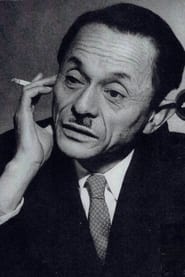
Kunio Watanabe
Born — Died
1899-06-03 — 1981-11-05
Place of birth
Shizuoka, Japan
Known for
Directing
Credits
41 titles
Kunio Watanabe was born on June 3, 1899 in Mishima, Shizuoka, Japan. He was a director and writer, known for Ikoku no oka (1949), Rajo no urei (1950) and Onna Sanshiro (1950). He died on November 5, 1981.
Known for
 NR
NRNo synopsis available yet.
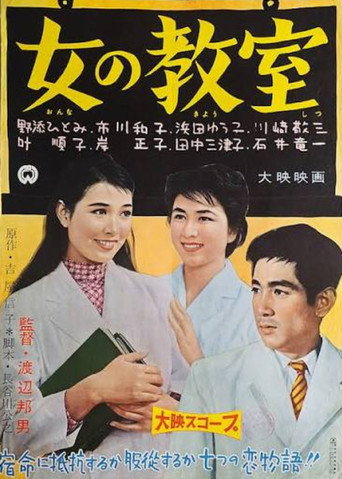
Women's Classroom
1959
 8.0
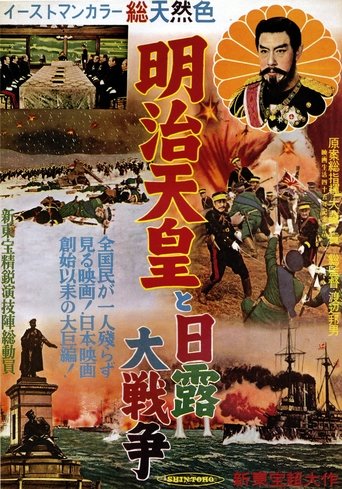
8.0Meiji Tenno portrays the buildup to the Russo-Japan War. In addition to showing the political events that led to war, it also shows the era from the story of a farm family in rural Japan that sends their son off to war. As such, it could be considered an anti-war movie, showing how, while war is devised by governments, the people do not really understand what war is, and its combatants often do not know what they are fighting for.
Emperor Meiji and the Great Russo-Japanese War
1957
 6.2
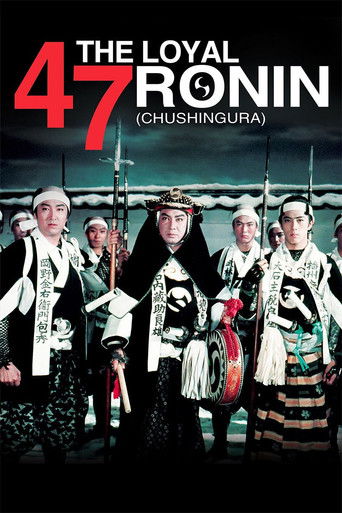
6.2Japan, 1701. A group of samurai become rônin after their lord is forced to commit seppuku for assaulting a court official, who will become the target of a merciless revenge.
The Loyal 47 Ronin
1958
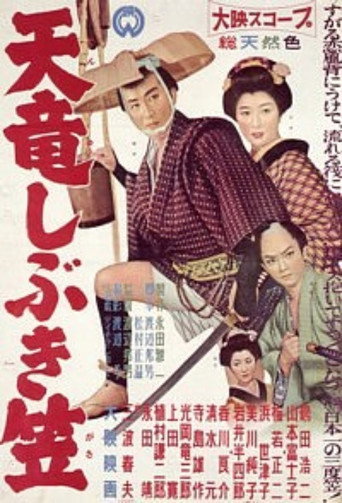 NR
NRNo synopsis available yet.
Tenryū shibukigasa
1958
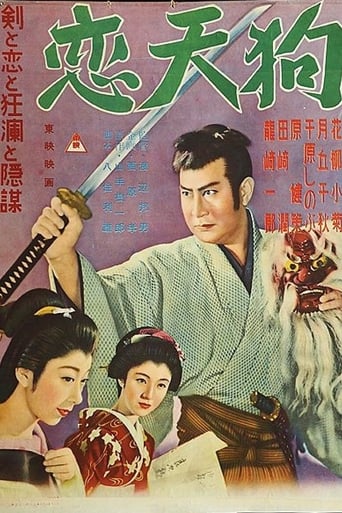 NR
NRNo synopsis available yet.
Goblin Warrior
1955
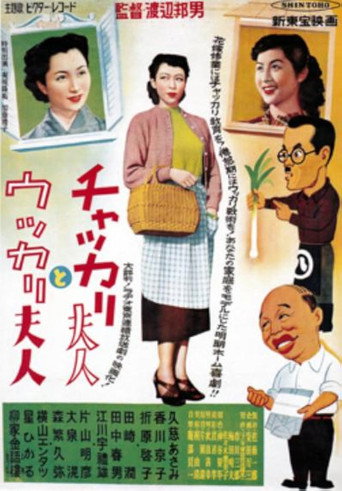 NR
NRThe Chakkari and Ukkarai families live in a modest residential neighborhood on the outskirts of Tokyo. Both husbands are ordinary office workers at the same company. Mrs. Chakkari, Satoko, is incredibly shrewd, while Mrs. Ukkarai, Sachiko, is incredibly absent-minded. As a result, a series of hilarious and tragicomic situations unfolds.
Chakkari fujin to ukkari fujin
1952
Film credits
1920s · 1 titles
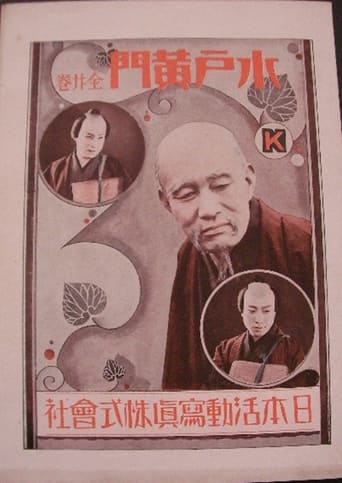
Behind the camera
NRNo synopsis available yet.
Women's Classroom
1959
8.0Meiji Tenno portrays the buildup to the Russo-Japan War. In addition to showing the political events that led to war, it also shows the era from the story of a farm family in rural Japan that sends their son off to war. As such, it could be considered an anti-war movie, showing how, while war is devised by governments, the people do not really understand what war is, and its combatants often do not know what they are fighting for.
Emperor Meiji and the Great Russo-Japanese War
1957
8.0Meiji Tenno portrays the buildup to the Russo-Japan War. In addition to showing the political events that led to war, it also shows the era from the story of a farm family in rural Japan that sends their son off to war. As such, it could be considered an anti-war movie, showing how, while war is devised by governments, the people do not really understand what war is, and its combatants often do not know what they are fighting for.
Emperor Meiji and the Great Russo-Japanese War
1957
6.2Japan, 1701. A group of samurai become rônin after their lord is forced to commit seppuku for assaulting a court official, who will become the target of a merciless revenge.
The Loyal 47 Ronin
1958
6.2Japan, 1701. A group of samurai become rônin after their lord is forced to commit seppuku for assaulting a court official, who will become the target of a merciless revenge.
The Loyal 47 Ronin
1958
NRNo synopsis available yet.
Tenryū shibukigasa
1958
NRNo synopsis available yet.
Tenryū shibukigasa
1958
NRNo synopsis available yet.
Goblin Warrior
1955
NRThe Chakkari and Ukkarai families live in a modest residential neighborhood on the outskirts of Tokyo. Both husbands are ordinary office workers at the same company. Mrs. Chakkari, Satoko, is incredibly shrewd, while Mrs. Ukkarai, Sachiko, is incredibly absent-minded. As a result, a series of hilarious and tragicomic situations unfolds.
Chakkari fujin to ukkari fujin
1952
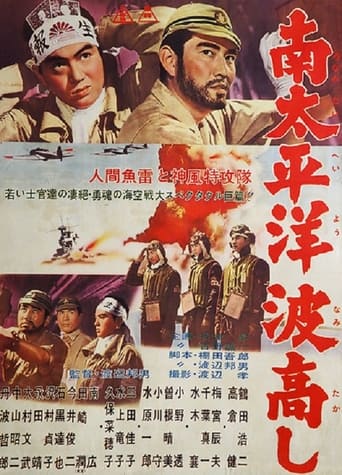 NR
NR1962 Japanese movie
South Pacific Waves Are High
1962
NR1962 Japanese movie
South Pacific Waves Are High
1962
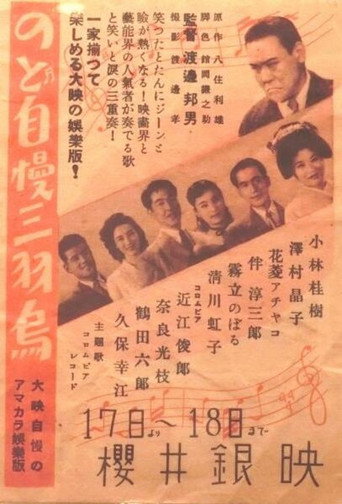 NR
NRNo synopsis available yet.
Nodo jiman sanbagarasu
1951
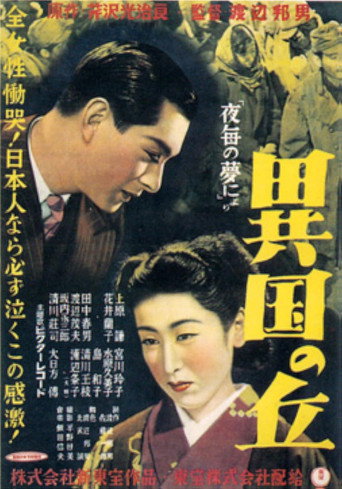 NR
NRNo synopsis available yet.
Hills of a Foreign Country
1949
NRNo synopsis available yet.
Hills of a Foreign Country
1949
NRNo synopsis available yet.
Hills of a Foreign Country
1949
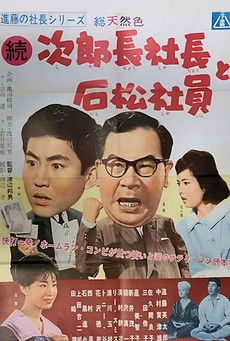 NR
NR1961 Toei comedy
Tale of A Company Boss Pt.2
1961
NR1961 Toei comedy
Tale of A Company Boss Pt.2
1961
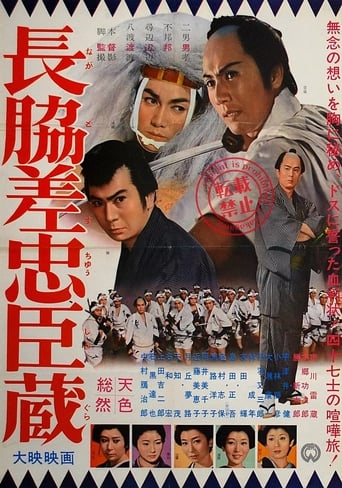 NR
NRNo synopsis available yet.
Long Swords of the Loyal Forty-Seven
1962
NRNo synopsis available yet.
Long Swords of the Loyal Forty-Seven
1962
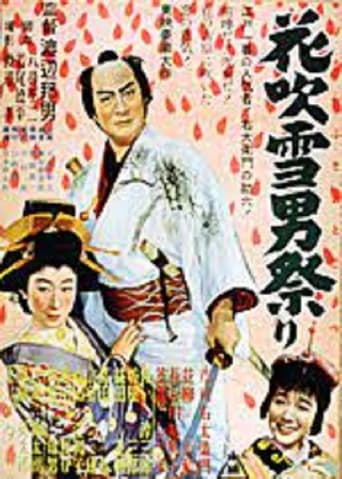 NR
NRNo synopsis available yet.
花吹雪男祭り
1952
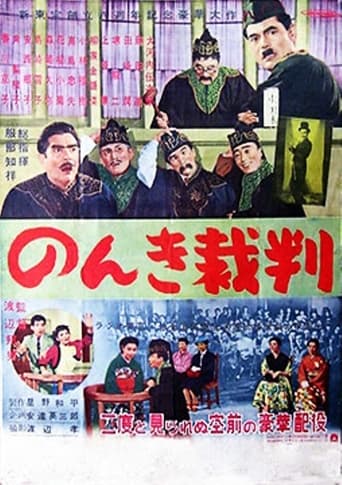 NR
NRA spectacular comedy with a star-studded cast that depicts unusual trials and unexpected verdicts regarding the five deadly sins: the crime of beauty, the crime of a terrifying wife, the crime of taking the wrong course, the crime of seducing, and the crime of killing with laughter.
Nonki saiban
1955
NRA spectacular comedy with a star-studded cast that depicts unusual trials and unexpected verdicts regarding the five deadly sins: the crime of beauty, the crime of a terrifying wife, the crime of taking the wrong course, the crime of seducing, and the crime of killing with laughter.
Nonki saiban
1955
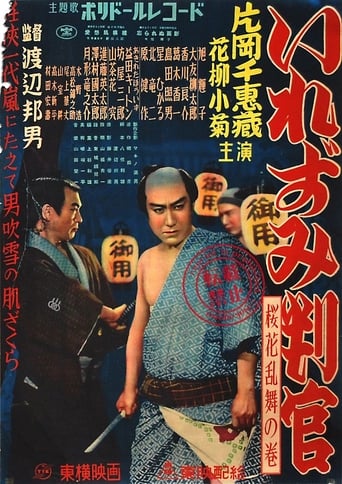 NR
NRNo synopsis available yet.
The Tattooed Magistrate: Cherry Blossoms Dance Volume
1950
Song of the White Orchid was a co-production of Toho and Mantetsu, the railway that served the colonial region of Manchuria, and the first film in the Kazuo Hasegawa/Shirley Yamaguchi (Ri Koran) “Continental Trilogy.” Handsome Hasegawa (representing Japan) runs up against an impertinent Yamaguchi (representing the continent); not surprisingly, in the course of the film the woman comes around and realizes the benevolent intentions of the Japanese. In Song of the White Orchid Yamaguchi leaves Hasegawa, who plays an expatriate working for the railway, because of a misunderstanding. She joins a communist guerilla group plotting to blow up the Manchurian railway. Learning of the subterfuge that led to the misunderstanding, she renews her faith in Hasegawa—and by extension Japan—and tries to undermine the plot.
Song of the White Orchid
1939
Kingoro Yanagiya's 100th film.
親馬鹿花合戦
1953
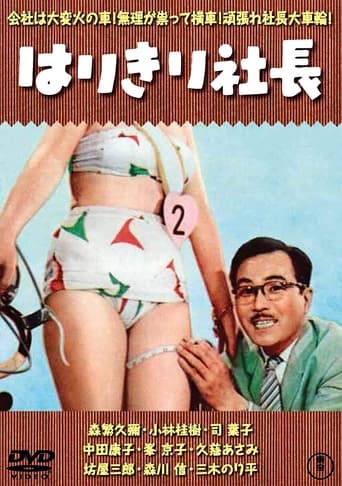 8.0
8.0The third installment in the Shacho Series.
Three Generations of Company Presidents
1956
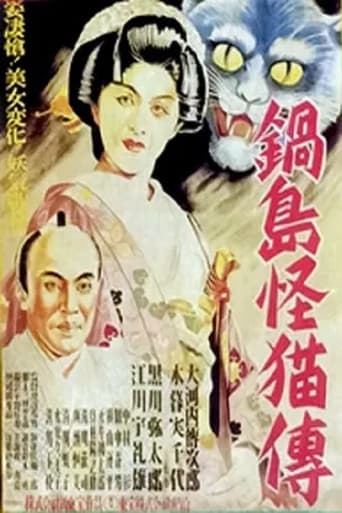 6.5
6.5Tanuma Kandayuu is a high class samurai of the house of Nabeshima. He finds a lavish board of Go (a Chinese Board game) at Kinbei's store. He recommend Kinbei to offer it to his lord. Kinbei hesitates at first, since he knows the board has a mysterious legend surrounding it; it's believed that for every game played on the board, one death is required.
Ghost Cat of Nabeshima
1949
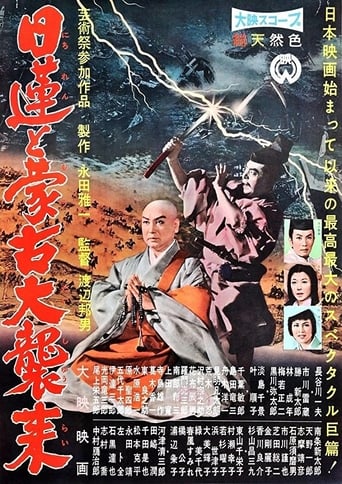 7.0
7.0During the 1200's, legendary Buddhist monk Nichiren returns from his studies to lead Japan out of moral crisis and prepare to fight Mongol invaders by creating a new form of Buddhism. He runs afoul of the existing Buddhist sects and their government supporters and is persecuted. Can Nichiren persevere before the Mongol fleet reaches Japanese shores?
Nichiren and the Great Mongol Invasion
1958
7.0During the 1200's, legendary Buddhist monk Nichiren returns from his studies to lead Japan out of moral crisis and prepare to fight Mongol invaders by creating a new form of Buddhism. He runs afoul of the existing Buddhist sects and their government supporters and is persecuted. Can Nichiren persevere before the Mongol fleet reaches Japanese shores?
Nichiren and the Great Mongol Invasion
1958
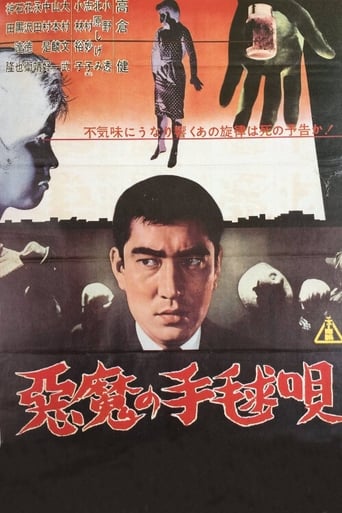 7.0
7.01961 Toei adaptation of Yokomizo's novel.
Devil's Nursery Rhyme
1961
7.01961 Toei adaptation of Yokomizo's novel.
Devil's Nursery Rhyme
1961
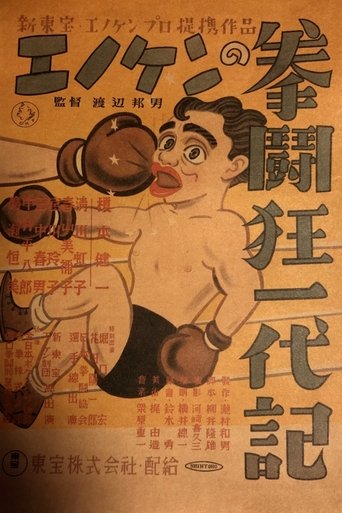 NR
NRNear the end of the Taisho era (1912-1926), Enokichi, a popular figure in the world of boxing entangled in the Yakuza business.
Enoken’s Boxing Generation
1949
NRNear the end of the Taisho era (1912-1926), Enokichi, a popular figure in the world of boxing entangled in the Yakuza business.
Enoken’s Boxing Generation
1949
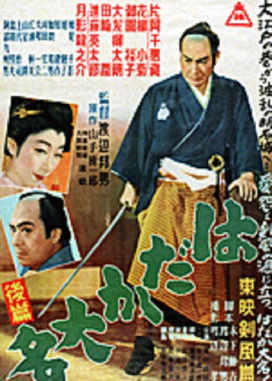 NR
NRNo synopsis available yet.
はだか大名 後篇
1952
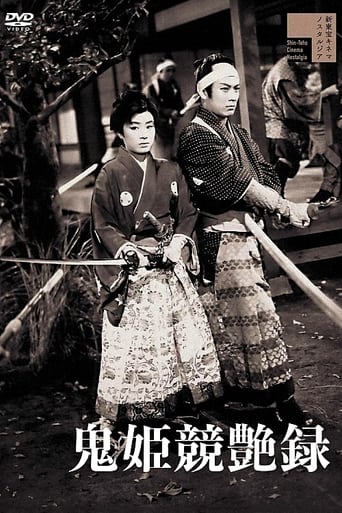 NR
NRAn exciting historical drama in which a beautiful woman secretly solves the family problems of the Owari clan. Hibari Misora plays two roles: a charming princess and a dashing youngster, performs songs and dances throughout the film until the big decisive battle.
Devil Princess’ Beauty Competition
1956
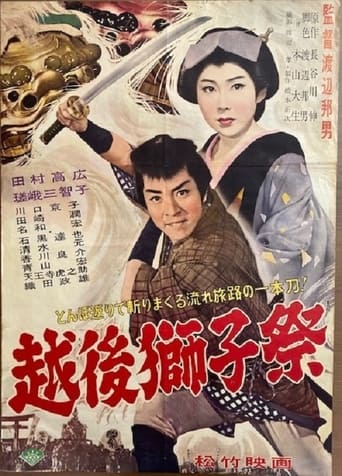 NR
NR1960 version of Lion Festival of Echigo
Echigo jishi-sai
1960
NR1960 version of Lion Festival of Echigo
Echigo jishi-sai
1960
Hibari Misora plays a singing guide, who is secretly in love, her fortunes turn for the worse when a gangster’s henchman hears her singing and takes a liking to her beautiful voice. The trouble starts when her family borrows money from the gangsters, setting off a series of incidents which lead to tragedy.
Hibari's Tale of Pathos
1962
Hibari Misora plays a singing guide, who is secretly in love, her fortunes turn for the worse when a gangster’s henchman hears her singing and takes a liking to her beautiful voice. The trouble starts when her family borrows money from the gangsters, setting off a series of incidents which lead to tragedy.
Hibari's Tale of Pathos
1962
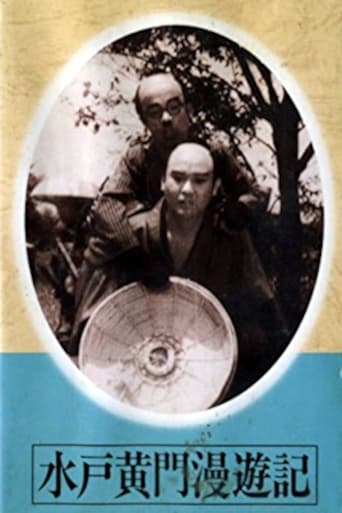 NR
NRThis is the only surviving "Mito Komon Manyu-ki" film. This release also known as Adrift Tour Memoir is an 80-minute compilation of the first and second parts (147 minutes), which were re-edited and screened at a time when presentable films were dried up immediately after the defeat of the war.
Mito Kōmon Manyu-ki
1938