
Directing
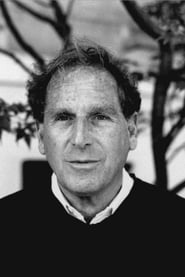
Nathaniel Dorsky
Born
1943-01-01 (83)
Place of birth
New York City, New York, USA
Known for
Directing
Credits
53 titles
Raised in New York on a steady diet of Westerns and Disney True-Life Adventures, Nathaniel Dorsky (born 1943) started shooting 8mm movies at the age of eleven. In 1963, when he had just turned 20, he made Ingreen, a boldly symbolic psychodrama about a young man’s sexual coming of age. At that film’s premiere, he met soon-to-be fellow filmmaker Jerome Hiler, who would become his partner in life and a major inspiration for his work. (“We were filming for one another,” Hiler recently said.) In 1971 the two moved to San Francisco, where they’ve lived ever since. Around the same time, Dorsky entered a decade-long creative silence. He returned in 1982 with Hours for Jerome, a 55-minute feature com…
Known for
 7.3
7.3Also known as Walden, Jonas Mekas’s first diary film is a six-reel chronicle of his life in 1960s New York, interweaving moments with family, friends, lovers, and artistic idols. Blending everyday encounters with portraits of the avant-garde art scene, it forms an epic, personal meditation on community, creativity, and the passage of time.
Diaries, Notes, and Sketches
1968
 4.6
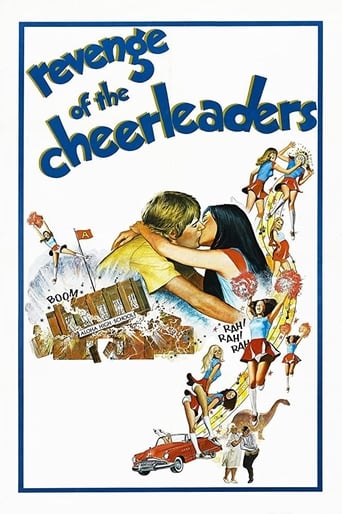
4.6The frisky cheerleading team at the anarchic Aloha High sets out to foil the plans of their local school board president, after he attempts to shut the school down in order to develop the land into a shopping mall.
Revenge of the Cheerleaders
1976
 5.0
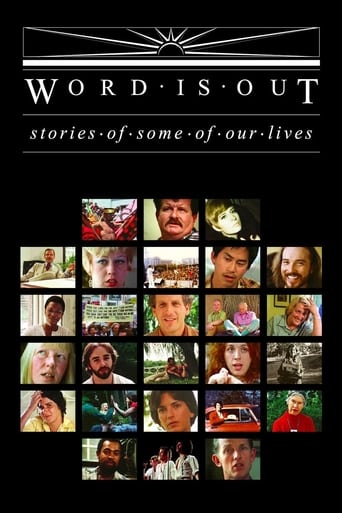
5.0More than two dozen men and women of various backgrounds, ages, and races talk to the camera about being gay or lesbian. Their stories are arranged in loose chronology: early years, fitting in (which for some meant marriage), coming out, establishing adult identities, and reflecting on how things have changed and how things should be.
Word Is Out: Stories of Some of Our Lives
1977
 7.0
7.0Compilation of footage shot from 1974-96, developing on Dorsky's theory of polyvalent editing.
Triste
1996
 7.8
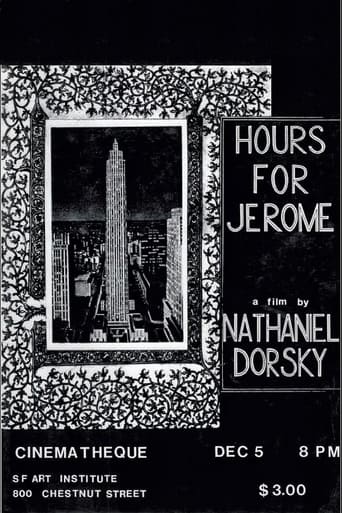
7.8The recording of the daily events of Dorsky and his partner, artist Jerome Hiler, around Lake Owassa in New Jersey and in Manhattan. The two parts of the films revolve around the four seasons with the first part revolving around spring through summer, while the second part revolves around fall through winter.
Hours for Jerome
1982
 10.0
10.0Warren Sonbert described Divided Loyalties as a film 'about art vs. industry and their various crossovers.' According to film critic Amy Taubin, "There is a clear analogy between the filmmaker and the dancers, acrobats and skilled workers who make up so much of his subject matter." -- Jon Gartenberg. Preserved by the Academy Film Archive in partnership with Estate Project for Artists with AIDS in 1998.
Divided Loyalties
1978
Film credits
2010s · 4 titles
 8.0
8.0NEW SHORES is a sister film to IN THE STONE HOUSE in many ways. Like the latter film, it consists of earlier footage edited in recent years. It could be seen as a sequel to IN THE STONE HOUSE especially since it begins with a cross-country journey to the West Coast, where I settled, and concludes with a visit, in 1987, to the “stone house” in rural New Jersey. Even though there is some sort of time line that can be imagined, the film stands on its own. It is simply a series of episodes that touch upon facets of living in a new area with new weather, new people, new identities and stubborn old fears. The Bolex camera goes to work across landscapes and living areas, workplaces and gatherings. A dance of images: can beauty partner with dread and death? It’s a film of the coexistences that percolate beneath the surface of ordinary events. A film of useless hopes and baseless fears.
New Shores
2012
 NR
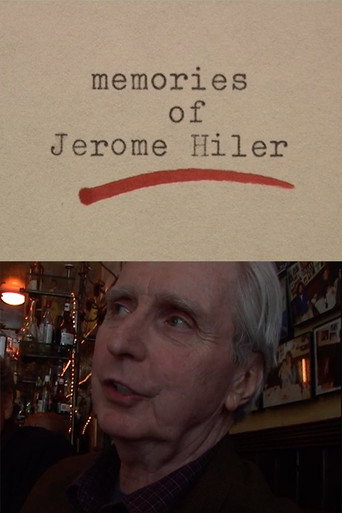
NRProjecting films at the Film-Makers' Cinematheque on Bruce Conner, Andy Warhol and Harry Smith
Memories of Jerome Hiler
2016
 NR
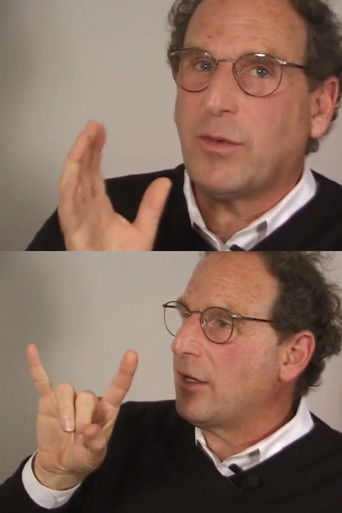
NRIn his contribution to the On Art and Artists interview series, Nathaniel Dorsky (b.1943) begins by discussing his childhood love of the John Ford film Stagecoach and its influence upon his decision to make films while attending Antioch College. Describing the affinity he developed for work operating at the intersection of film materiality and personal language, Dorsky explains how he developed his philosophy of the “devotional film” and the “microcosmic viewer.” Dorsky likens his practice to Buddhist sculpture, referring to himself as a “Japanese poet continuing aspects of the ethos of the Marxist revolution.” In the interview, the artist describes his use of the screen as an “altarpiece for the image” and emphasizes his use of editing to create works which “harmoniously coalesce.” Interview conducted by Jeffrey Skoller in May 2000, edited in 2014.
Nathaniel Dorsky: An Interview
2014
 NR
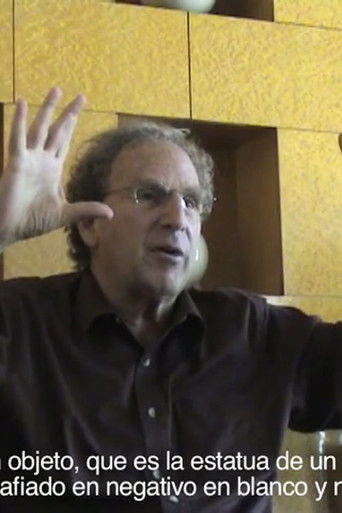
NRDuring a tour with my films in Spain last spring, I had the pleasure of being honoured with the attention of three young people who offered me the opportunity to participate in the following interview. I was touched by their seriousness, but also perceived something out of the ordinary in their project. They seemed to have no common thread and their knowledge and respect for the subject was surprising and inspiring. How could they know so much about the American avant-garde. We arranged to meet in the lobby of my hotel on Saturday a little after breakfast.
Interview with Nathaniel Dorsky
2011
1980s · 2 titles
7.8The recording of the daily events of Dorsky and his partner, artist Jerome Hiler, around Lake Owassa in New Jersey and in Manhattan. The two parts of the films revolve around the four seasons with the first part revolving around spring through summer, while the second part revolves around fall through winter.
Hours for Jerome
1982
 5.0
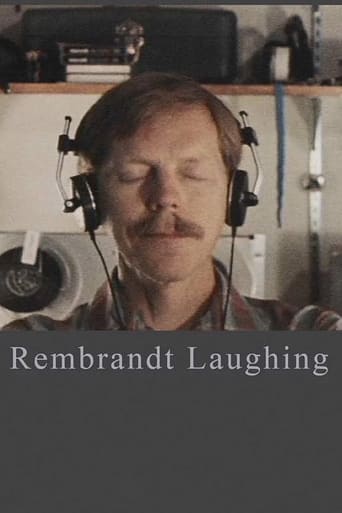
5.0This film is a portrait of the passage of one year in the lives of some San Francisco friends, circa 1988 (before the dot.coming of the city), a slow marijuana hazed story which drifts like the fabled fog, encompassing the quirks and habits of a generation that made the city theirs, if only for a while. Very obliquely Rembrandt Laughing sketches the time and place, encompassing the AIDS epidemic, the casual sexual revolution, the debris of '68 lingering in the air. A quiet, very San Francisco comedy of life among a small group of friends. Rembrandt Laughing was improvised over the period of about a month by Jost and his friends, mostly acting non-professionals.
Rembrandt Laughing
1989
1970s · 4 titles
5.0More than two dozen men and women of various backgrounds, ages, and races talk to the camera about being gay or lesbian. Their stories are arranged in loose chronology: early years, fitting in (which for some meant marriage), coming out, establishing adult identities, and reflecting on how things have changed and how things should be.
Word Is Out: Stories of Some of Our Lives
1977
10.0Warren Sonbert described Divided Loyalties as a film 'about art vs. industry and their various crossovers.' According to film critic Amy Taubin, "There is a clear analogy between the filmmaker and the dancers, acrobats and skilled workers who make up so much of his subject matter." -- Jon Gartenberg. Preserved by the Academy Film Archive in partnership with Estate Project for Artists with AIDS in 1998.
Divided Loyalties
1978
 NR
NRInitially titled "Books for all". A moving institutional commission in which the filmmakers lovingly portray New Jersey's public library system.
Library
1970
 7.4
7.4Carriage Trade was an evolving work-in-progress, and this 61-minute version is the definitive form in which Sonbert realized it, preserved intact from the camera original. With Carriage Trade, Sonbert began to challenge the theories espoused by the great Soviet filmmakers of the 1920’s; he particularly disliked the “knee-jerk’ reaction produced by Eisenstein’s montage. In both lectures and writings about his own style of editing, Sonbert described Carriage Trade as “a jig-saw puzzle of postcards to produce varied displaced effects.” This approach, according to Sonbert, ultimately affords the viewer multi-faceted readings of the connections between individual shots. Preserved by the Academy Film Archive in partnership with Estate Project for Artists with AIDS in 1998.
Carriage Trade
1972
1960s · 3 titles
7.3Also known as Walden, Jonas Mekas’s first diary film is a six-reel chronicle of his life in 1960s New York, interweaving moments with family, friends, lovers, and artistic idols. Blending everyday encounters with portraits of the avant-garde art scene, it forms an epic, personal meditation on community, creativity, and the passage of time.
Diaries, Notes, and Sketches
1968
 8.0
8.0Experimental short subject preserved by the Academy Film Archive, in partnership with Estate Project for Artists with AIDS, in 1998.
Holiday
1968
 5.0
5.0Stoned people, music, movement, fields.
Letter to D.H. in Paris
1967
Behind the camera
4.6The frisky cheerleading team at the anarchic Aloha High sets out to foil the plans of their local school board president, after he attempts to shut the school down in order to develop the land into a shopping mall.
Revenge of the Cheerleaders
1976
4.6The frisky cheerleading team at the anarchic Aloha High sets out to foil the plans of their local school board president, after he attempts to shut the school down in order to develop the land into a shopping mall.
Revenge of the Cheerleaders
1976
7.0Compilation of footage shot from 1974-96, developing on Dorsky's theory of polyvalent editing.
Triste
1996
7.0Compilation of footage shot from 1974-96, developing on Dorsky's theory of polyvalent editing.
Triste
1996
7.8The recording of the daily events of Dorsky and his partner, artist Jerome Hiler, around Lake Owassa in New Jersey and in Manhattan. The two parts of the films revolve around the four seasons with the first part revolving around spring through summer, while the second part revolves around fall through winter.
Hours for Jerome
1982
NRInitially titled "Books for all". A moving institutional commission in which the filmmakers lovingly portray New Jersey's public library system.
Library
1970
 6.0
6.0Dark and stately is the warm, graceful tenderness of the Sarabande.
Sarabande
2008
 7.3
7.3Variations is a 1998 American short silent avant-garde film directed by Nathaniel Dorsky. It is the second film in a set of "Four Cinematic Songs," which also includes Triste, Arbor Vitae, Love's Refrain.
Variations
1998
 6.0
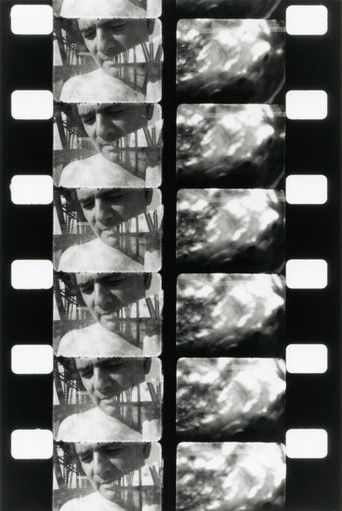
6.017 Reasons Why was photographed with a variety of semi-ancient regular 8 cameras and is projected unslit as 16mm. The four image format gives a look at the film frame itself.
17 Reasons Why
1987
 7.3
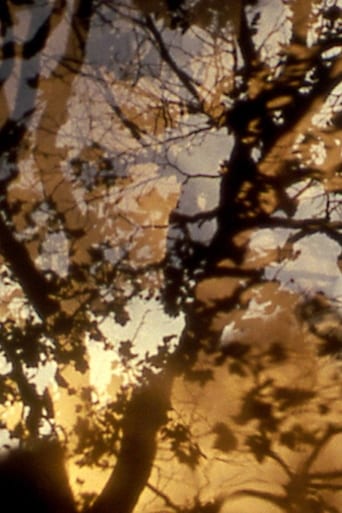
7.3Like a memory already gone, this place of life.
The Return
2011
 7.7
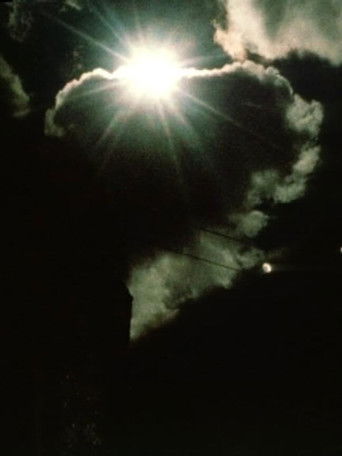
7.7The first of two devotional songs. Part One of a set of Two Devotional Songs. “The Visitation” is a gradual unfolding, an arrival so to speak. I felt the necessity to describe an occurrence, not one specifically of time and place, but one of revelation in one’s own psyche. The place of articulation is not so much in the realm of images as information, but in the response of the heart to the poignancy of the cuts.
The Visitation
2002
 7.0
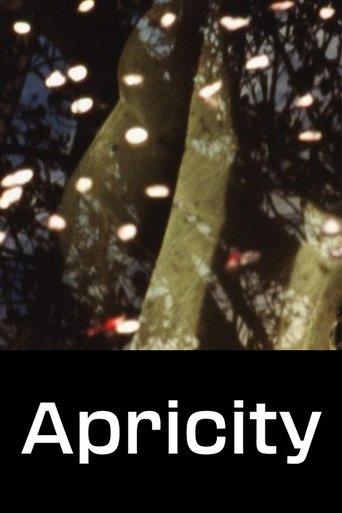
7.0A dedication to Jane Wodening and an ode to the winter sun.
Apricity
2019
 NR
NRA document from the weeks that Stan Brakhage was dying of bladder cancer. Dominic Angerame, then head of Canyon Cinema, and I went up to Victoria, Canada to visit Stan. Five weeks later while I was in Boulder, Colorado to screen my recent films, Stan passed away. There was a gathering at Stan’s daughter’s house with Jane (Brakhage) Wodening and her brother, poet, Jack Collom in Boulder. That night it began to snow and like a purification it did not stop for five days.
Death of a Poet
2016
 NR
NRPerhaps the most delicately tactile in the series of four cinematic songs, Love's Refrain rests moment to moment on its own surface. It is a coda in twilight, a soft-spoken conclusion to a set of cinematic songs.
Love's Refrain
2001
 NR
NRThe ever-presence of death.
Dialogues
2022
 NR
NRPrimordial spring is in the air, all is tentative.
Ember Days
2021
 NR
NR“Renga is a linked-verse form of Japanese poetry that, though still practiced today, reached its peak between the 13th and 16th centuries. It is characterized by being a group composition, typically in the presence of judges and an audience, with poets rapidly contributing stanzas such that each new stanza addresses only the previous stanza; there is no overarching plot development, and the overall structure is a chain, not a conventional, linear narrative… In 1989, I had the great privilege to be involved in a film renga that was produced in the graduate film seminar led by Nathaniel Dorsky at the San Francisco Art Institute.” —Eric Theise
Renga
1989
 NR
NRFollowing a period of trauma and grief, the world around me once again declared itself in the form of one of the loveliest springs I can ever remember in San Francisco. April is intended as a companion piece for August and After, and is partly funded by a gift from Carla Liss.
April
2012
 6.0
6.0"A pastourelle and an aubade are two different forms of courtship songs from the Troubadour tradition. In this case, the film Pastourelle, a sister film to Aubade, is in the more tumultuous key of spring." - Nathaniel Dorsky
Pastourelle
2010
 5.2
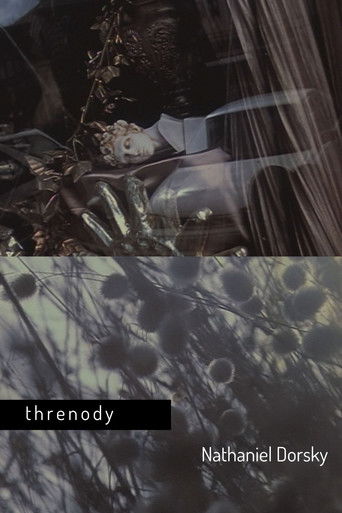
5.2Threnody is a somber but luminous progression through a delicate articulation of earthly phenomena… an offering to a friend who died. It is the second of two devotional songs, the first being The Visitation. These two films were preceeded by a series of Four Cinematic Songs: Triste, Variations, Arbor Vitae, and Love’s Refrain.
Threnody
2004
 NR
NRA short portrait of a dear friend and collaborator on Devotional Cinema, Nick Hoff.
Other Archer
2016
 6.0
6.0An exploration of the cycle of life and the inevitability of passing.
O Death
2023
 NR
NRThe fourth of the “cinematic songs,” followed by two new works “made by someone closer to passing on, by someone whose sense of life and sense of cinema have become inseparable in a very real way.”
Intimations
2015
 NR
NRAbaton, a sacred place, a sanctuary for dreaming and healing.
Abaton
2017
 NR
NR“A brief lost moment lies between.” — Nathaniel Dorsky
Interlude
2019
 NR
NR“For most of my life, my films have been the marriage of external circumstances as seen through the needs of my own psyche. There is no other plan as such. Occasionally these explorations result in a film that is not quite what I would call a public film, something, perhaps, to be shown as camera original in the privacy of one’s apartment. I would like to use the rare opportunity of this lecture format to show two of these intimate works as original Kodachrome, each quite different from the other. One is called LUX PERPETUA II (1999-2002/2016, 31 min, 16mm) and the other, OSSUARY (1995-2005/2016, 43 min, 16mm). They are made up of outtakes from decades of shooting 16mm Kodachrome.” – Nathaniel Dorsky
Lux Perpetua II
2016
 6.0
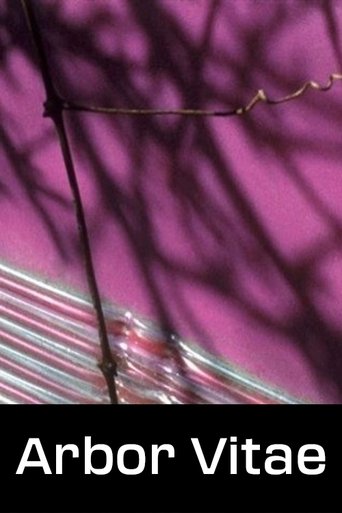
6.0Arbor Vitae is a gesture towards a cinema of pure being. Its atmosphere is haunted by the period in which it was shot, the year of 1999. Although the cuts are open and numerous in their intent, the underlying motivation is the delicate reveal of the transparency of presence, our tender mystery midst the elaborate unfolding of the tree of life.
Arbor Vitae
2000
Ariel is a highly energetic and colorful divertissement of abstract film achieved with improvised home color processing and a physical, almost sculptural manipulation of the film surface.
Ariel
1983
 8.0
8.0"Lamentations is a cinematic tumble through diverse dreamscapes in a man-made world." —N.D.
Lamentations
2020
 NR
NRAutumn, photographed during the last months of the drought year, 2015, is a stately, but intimate, seasonal tome, a celebration of the poignancy and mystery of our later years. – Nathaniel Dorsky
Autumn
2015
 NR
NRA strange autumnal in an empty world, a film of late autumn and ghostly presences.
Canticles
2019
 NR
NRSan Francisco's winter is a season unto itself. Fleeting, rain-soaked, verdant, a brief period of shadows and renewal.
Winter
2008
 4.0
4.0The images in this film come from an extensive collection of out-dated raw stock that has been processed without being exposed, and sometimes rephotographed in closer format. Each pattern of grain takes on its own emotional life, an evocation of different aspects of our own being.
Pneuma
1983
 7.0
7.0Colophon (for the Arboretum Cycle) has three sections. It is in the spirit of the early Chinese landscape colophons, a text added to the horizontal scroll at a later date from when the landscape itself was enacted. Colophon was not made to be shown along with the Arboretum Cycle, but a new thing, a spring later, a different maker, so to speak. N.D.
Colophon (for the Arboretum Cycle)
2018
 NR
NR"Temple Sleep was photographed and edited during the initial Virus lockdown. The fly casting pools in Golden Gate Park became a mind healing place for me, a calming space of sacredness, tempered by the fear of the on-coming unknown. A place of feminine power" - N.D.
Temple Sleep
2020
 NR
NRAll the Kodachrome footage chosen to be worked with to make the film Song and Solitude during years 2005 and 2006. During that period I still had the great privilege to be shooting Kodachrome. My method for editing was to first select the footage I wanted to use from the original camera rolls and then make an internegative and work print of that selected material to work with in the editing. (In an earlier period, I did not have to first make an internegative, but could more simply make a work print directly off the camera original, but Kodak cancelled the reversal work print film stock.)
Kodachrome Dailies from the Time of Song and Solitude (Reel 2)
2006
 5.5
5.5After a lifetime, two mutual friends, George Kuchar and Carla Liss, passed away during the same period of time.
August and After
2012
5.5After a lifetime, two mutual friends, George Kuchar and Carla Liss, passed away during the same period of time.
August and After
2012
 7.0
7.0A silent portrait of Dorsky's collaborator exploring her Aztec heritage.
Caracole (for Izcali)
2023
 NR
NRDorsky’s three earliest works (made when he “entered the realm of poetic filmmaking as an active maker”), all sound films, with dailies for two later works shot on precious Kodachrome stock.
A Fall Trip Home
1965