
Directing
Don Owen
Born — Died
1931-09-19 — 2016-02-21
Known for
Directing
Credits
24 titles
Don Owen (September 19, 1931 – February 21, 2016) was a Canadian film director, writer and producer who spent most of his career with the National Film Board of Canada (NFB). His films Nobody Waved Good-bye and The Ernie Game are regarded as two of the most significant English Canadian films of the 1960s. Owen was born and raised in Toronto and became interested in film at a young age, mainly, he said, because there was nothing to do on Sundays but go to the two films shown by the Toronto Film Society. He intended to become a poet but studied anthropology at the University of Toronto. To earn extra money while he was working on his graduate degree, he got a job as assistant director on the …
Known for
 4.8
4.8In a dystopic world where a plague is killing off pubescent human females, an esoteric researcher seeks his missing mentor while trying to retain morality in the sex-obsessed society he lives in.
Crimes of the Future
1984
 10.0
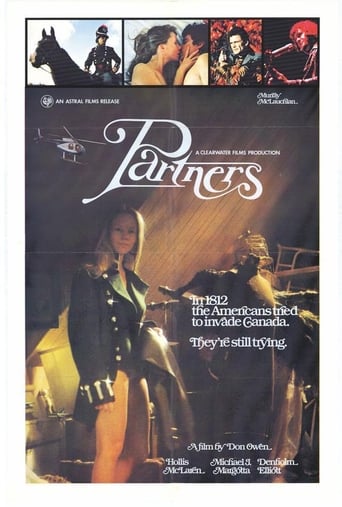
10.0When a business competitor assassinates her father when the father refuses to sell his firm, young woman takes over her father's paper company and with the help of her gangster boyfriend learns how to fight back against competitors.
Partners
1976
 6.2
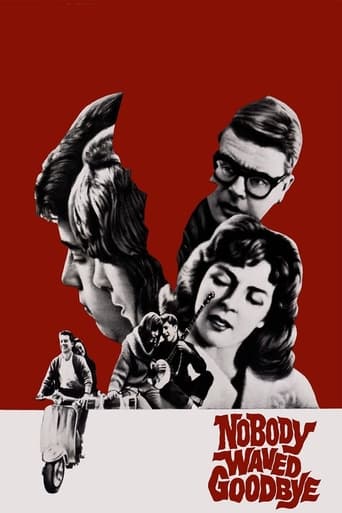
6.2A teenage boy rebels against parental authority and must face a harsh reality when he tries to live on his own.
Nobody Waved Goodbye
1964
 NR
NRCanadian poet Leonard Cohen, who now resides on the island of Hydra in Greece, is shown in his native city of Montreal. The program explores Cohen's childhood and his subsequent development as one of Canada's leading new writers. The film takes viewers to the house Cohen was brought up in as well as to the places of Montreal he enjoys frequenting—his favorite bistro, a three dollar-a-day hotel, the public park, the exclusive section called Westmount, and a Greek grocery store. Cohen himself is shown at a recording session, at public readings of his poetry, displaying home movies of his childhood, and commenting on university life. He also reflects on his visit to Cuba, his girlfriend in Greece, his obsession with danger and his friends and their personalities.
Creative Person: Leonard Cohen
1967
 6.5
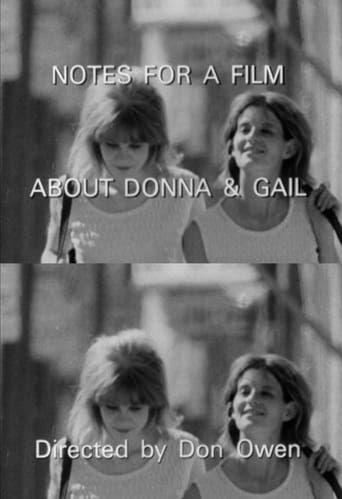
6.5The story of two young women who go to the city to work in a dress factory, and who share a room to ease their expenses and their loneliness. The film shows the currents that brought them together and the facets of their natures that first made them seem compatible but eventually drove them apart. Their story reflects, to a degree, the situation of anyone who has ever shared the life of another.
Notes for a Film About Donna & Gail
1966
 7.2
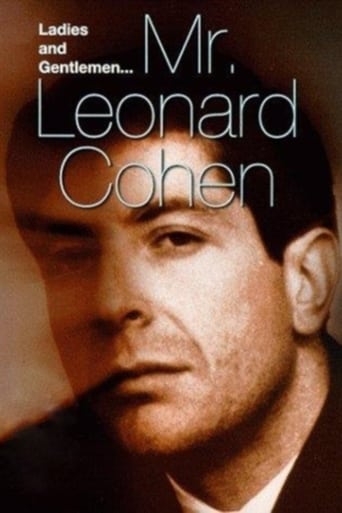
7.2A 1964 documentary portrait of Cohen in his pre-musician days as a poet and stand-up comedian.
Ladies and Gentlemen, Mr. Leonard Cohen
1966
Film credits
Behind the camera
10.0When a business competitor assassinates her father when the father refuses to sell his firm, young woman takes over her father's paper company and with the help of her gangster boyfriend learns how to fight back against competitors.
Partners
1976
10.0When a business competitor assassinates her father when the father refuses to sell his firm, young woman takes over her father's paper company and with the help of her gangster boyfriend learns how to fight back against competitors.
Partners
1976
10.0When a business competitor assassinates her father when the father refuses to sell his firm, young woman takes over her father's paper company and with the help of her gangster boyfriend learns how to fight back against competitors.
Partners
1976
6.2A teenage boy rebels against parental authority and must face a harsh reality when he tries to live on his own.
Nobody Waved Goodbye
1964
6.2A teenage boy rebels against parental authority and must face a harsh reality when he tries to live on his own.
Nobody Waved Goodbye
1964
6.2A teenage boy rebels against parental authority and must face a harsh reality when he tries to live on his own.
Nobody Waved Goodbye
1964
NRCanadian poet Leonard Cohen, who now resides on the island of Hydra in Greece, is shown in his native city of Montreal. The program explores Cohen's childhood and his subsequent development as one of Canada's leading new writers. The film takes viewers to the house Cohen was brought up in as well as to the places of Montreal he enjoys frequenting—his favorite bistro, a three dollar-a-day hotel, the public park, the exclusive section called Westmount, and a Greek grocery store. Cohen himself is shown at a recording session, at public readings of his poetry, displaying home movies of his childhood, and commenting on university life. He also reflects on his visit to Cuba, his girlfriend in Greece, his obsession with danger and his friends and their personalities.
Creative Person: Leonard Cohen
1967
6.5The story of two young women who go to the city to work in a dress factory, and who share a room to ease their expenses and their loneliness. The film shows the currents that brought them together and the facets of their natures that first made them seem compatible but eventually drove them apart. Their story reflects, to a degree, the situation of anyone who has ever shared the life of another.
Notes for a Film About Donna & Gail
1966
6.5The story of two young women who go to the city to work in a dress factory, and who share a room to ease their expenses and their loneliness. The film shows the currents that brought them together and the facets of their natures that first made them seem compatible but eventually drove them apart. Their story reflects, to a degree, the situation of anyone who has ever shared the life of another.
Notes for a Film About Donna & Gail
1966
7.2A 1964 documentary portrait of Cohen in his pre-musician days as a poet and stand-up comedian.
Ladies and Gentlemen, Mr. Leonard Cohen
1966
 5.4
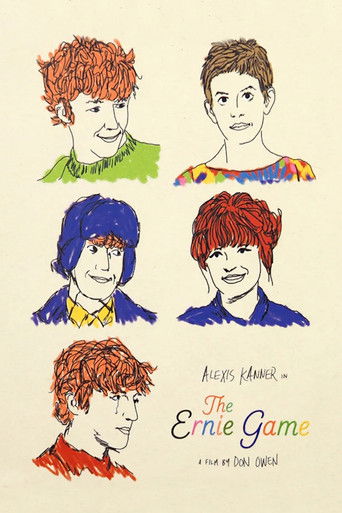
5.4This fictional feature follows a twenty-something man who is struggling to define his position in the world in early adulthood. He has left their parents' home but still has not made an home of his own. Our protagonist’s alienation is palpable; for him life is a game, not because he chooses to make it so, but because he is unable to make anything more of it. But for those who befriend him and eventually turn him loose again, his game is not enough.
The Ernie Game
1968
5.4This fictional feature follows a twenty-something man who is struggling to define his position in the world in early adulthood. He has left their parents' home but still has not made an home of his own. Our protagonist’s alienation is palpable; for him life is a game, not because he chooses to make it so, but because he is unable to make anything more of it. But for those who befriend him and eventually turn him loose again, his game is not enough.
The Ernie Game
1968
 7.5
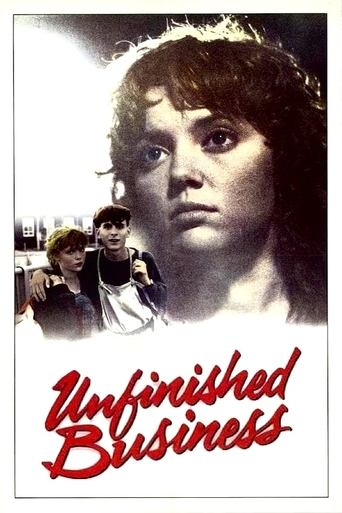
7.5Seventeen year old Izzy Marks lives in Toronto with her divorced mother and finds her life boring and directionless. Meant to be a sequel to Don Owen's acclaimed 1964 film "Nobody Waved Good-bye", "Unfinished Business" looks at life two decades later for Peter and Julie's (Peter Kastner and Julie Biggs) daughter Isabelle "Izzy" Marks (Isabelle Mejias). Curious, funny and intelligent, 17 year old Izzy feels the frustrations of her limiting environment and the pull of a more exciting, larger world. She meets passionate anarchist wannabe Jessie 'Fixit' (Peter Spence) and is quickly drawn into his free living alternative lifestyle. Much to the displeasure of her once free-thinking parents and friends.
Unfinished Business
1984
7.5Seventeen year old Izzy Marks lives in Toronto with her divorced mother and finds her life boring and directionless. Meant to be a sequel to Don Owen's acclaimed 1964 film "Nobody Waved Good-bye", "Unfinished Business" looks at life two decades later for Peter and Julie's (Peter Kastner and Julie Biggs) daughter Isabelle "Izzy" Marks (Isabelle Mejias). Curious, funny and intelligent, 17 year old Izzy feels the frustrations of her limiting environment and the pull of a more exciting, larger world. She meets passionate anarchist wannabe Jessie 'Fixit' (Peter Spence) and is quickly drawn into his free living alternative lifestyle. Much to the displeasure of her once free-thinking parents and friends.
Unfinished Business
1984
 7.0
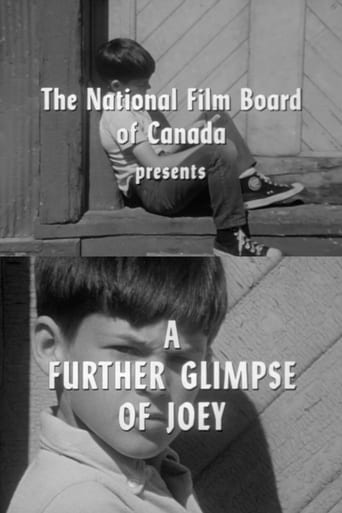
7.0Directed by Don Owen, this follow-up to Graham Parker’s 1964 film Joey revisits the life of the eponymous young boy, who at the age of seven had trouble finding adoptive parents, most of whom look for children who are still in their infant years. This film catches up with Joey after he has found a home, and reveals some of the problems he faces in adjusting to the routines of family life.
A Further Glimpse of Joey
1966
 8.0
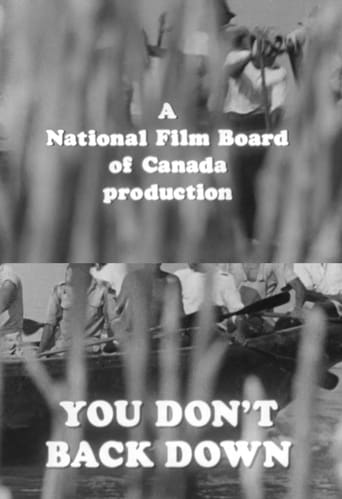
8.0In Nigeria, a young Canadian doctor serves in a local mission hospital and learns much from the experience. Stationed abroad under the Canadian University Service Overseas Plan, Dr. Alex McMahon and his schoolteacher wife find every day a fresh challenge. An interesting study of intercultural help.
You Don't Back Down
1965
 7.5
7.5Toronto is regarded as the third largest jazz centre in North America. This film features a cross-section of jazz bands of that city: the Lenny Breau Trio, the Don Thompson Quintet and the Alf Jones Quartet. Their styles show creative self-expression, hard work, and improvisation.
Toronto Jazz
1963
 7.2
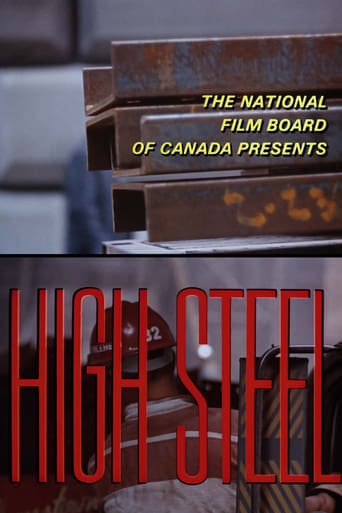
7.2A dizzying view of Manhattan in the 1960s, the tallest town in the world, and the men who work cloud-high to keep it growing. They are the Mohawk Indians from Kahnawake, near Montréal, famed for their skill in erecting the steel frames of skyscrapers. The film shows their nimble work, high above the pavement, but there are also glimpses of the quieter community life of the old Kahnawake Reserve.
High Steel
1965
7.2A dizzying view of Manhattan in the 1960s, the tallest town in the world, and the men who work cloud-high to keep it growing. They are the Mohawk Indians from Kahnawake, near Montréal, famed for their skill in erecting the steel frames of skyscrapers. The film shows their nimble work, high above the pavement, but there are also glimpses of the quieter community life of the old Kahnawake Reserve.
High Steel
1965
 7.0
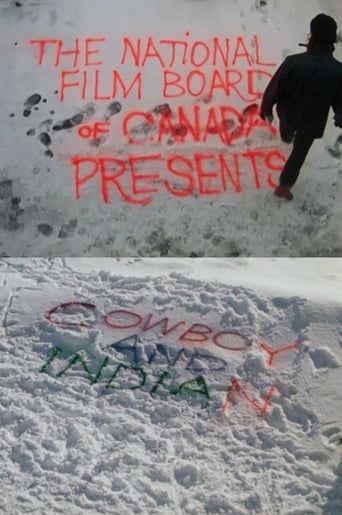
7.0This film goes no farther west than Toronto. The Indian is Robert Markle, from a family of Mohawk steel workers. The cowboy is his longtime art associate, Gordon Rayner. Both are Toronto artists and art teachers, sharing also an interest in jazz: Rayner plays the drums, Markle the electric piano. This film is a study of their lifestyle, their mutual interests and their friendship.
Cowboy and Indian
1972
Young long-distance runner Bruce Kidd practices and competes.
Runner
1962
Young long-distance runner Bruce Kidd practices and competes.
Runner
1962
 NR
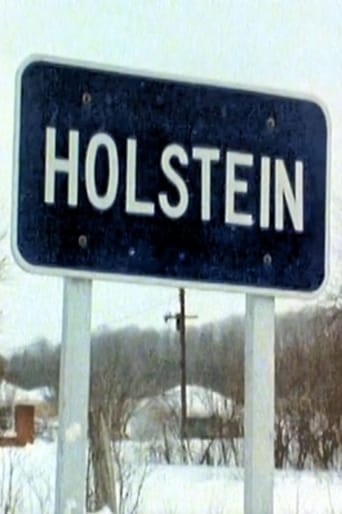
NRA portrait of a small Ontario town, this film introduces its audience to the people of Holstein by filming them in the old-fashioned general store, the blacksmith's shop and the town granary. Old-time residents reminisce, while old-fashioned sleighs travel down the main road bordered by beautiful old frame houses.
Holstein
1978