
Known for
 NR
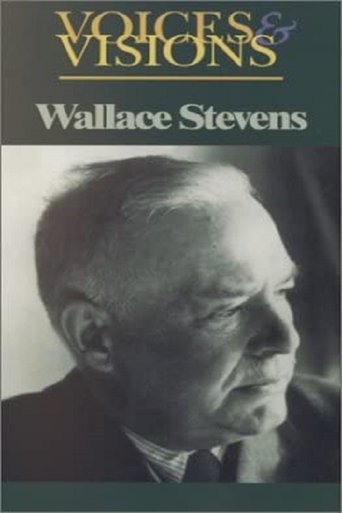
NRThe hero of Wallace Stevens’s poetry is the human imagination. Like Emily Dickinson’s, Stevens’s sedate and uneventful outer life concealed a lush and adventurous inner one. Such adventures were for Stevens not an escape from reality but a journey toward a new reality. Although Stevens was no philosopher–he was a bold and brilliant poet–he explored the workings of the human mind with a precision philosophers might envy.
Voices & Visions: Wallace Stevens
1988
 7.0
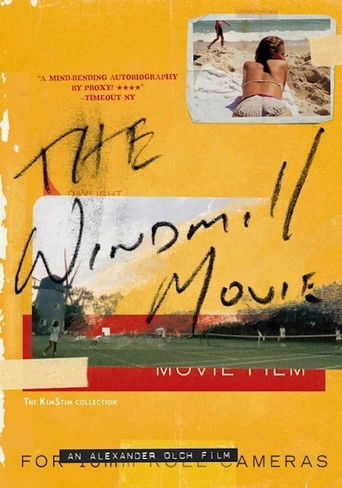
7.0Filmmaker Richard P. Rogers tried for twenty years to make a documentary about his own life. He died in 2001, leaving the project unfinished, until his widow, acclaimed photographer Susan Meiselas, commissioned his former student Alexander Olch to make a film out of the pieces. Starting in the Hamptons, in the town of Wainscott, the film weaves Rogers' footage into a journey through childhood memories, a less than encouraging mother, a family background of privilege, and Rogers' persistent, dogged attempts to document his own life. Rogers' friend, actor and writer Wallace Shawn, joins in the process, as the film investigates the differences between documentary and fiction, and tells the tragic story of Rogers' life.
The Windmill Movie
2009
 NR
NRThis portrait of an abandoned quarry in Quincy, Massachusetts, captures the striking natural beauty of the site as it explores the social rites of the young people who gather along its rugged shores to create leisure in what was once a place of toil. -Harvard Film Archive
Quarry
1970
 10.0
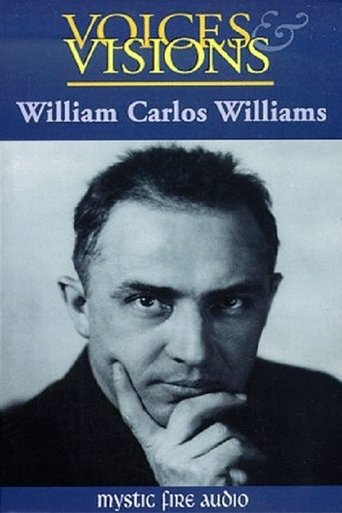
10.0This remarkable New Jersey poet-physician established an American kind of poem distinct from European forms. His work demonstrates an innovative use of common objects and experience as topics for poems as well as formal experiments with the cadences of actual American speech.
Voices & Visions: William Carlos Williams
1986
 8.2
8.2To understand eighteenth-century America through a woman's eyes, historian and author Laurel Thatcher Ulrich spent eight years working through Martha Ballard's massive but cryptic diary. "A Midwife's Tale" chronicles the interwoven stories of two remarkable women: an eighteenth-century midwife and healer and the twentieth-century historian who brought her words to light.
A Midwife's Tale
1998
 8.0
8.0Rogers created this "minimalist soap opera" out of messages left on his telephone answering machine over the course of an entire year. Together with the accompanying visuals of scenes shot from the windows of the filmmaker’s New York loft, the recordings provide an amusing account of life caught between the public and the private; we see weddings take place in the church across the street, passersby struggling through the snow on the sidewalk, and gradually become submerged in the meditative rhythms of Rogers’s interior world.
226-1690
1984
Film credits
Behind the camera
NRThe hero of Wallace Stevens’s poetry is the human imagination. Like Emily Dickinson’s, Stevens’s sedate and uneventful outer life concealed a lush and adventurous inner one. Such adventures were for Stevens not an escape from reality but a journey toward a new reality. Although Stevens was no philosopher–he was a bold and brilliant poet–he explored the workings of the human mind with a precision philosophers might envy.
Voices & Visions: Wallace Stevens
1988
NRThis portrait of an abandoned quarry in Quincy, Massachusetts, captures the striking natural beauty of the site as it explores the social rites of the young people who gather along its rugged shores to create leisure in what was once a place of toil. -Harvard Film Archive
Quarry
1970
10.0This remarkable New Jersey poet-physician established an American kind of poem distinct from European forms. His work demonstrates an innovative use of common objects and experience as topics for poems as well as formal experiments with the cadences of actual American speech.
Voices & Visions: William Carlos Williams
1986
8.2To understand eighteenth-century America through a woman's eyes, historian and author Laurel Thatcher Ulrich spent eight years working through Martha Ballard's massive but cryptic diary. "A Midwife's Tale" chronicles the interwoven stories of two remarkable women: an eighteenth-century midwife and healer and the twentieth-century historian who brought her words to light.
A Midwife's Tale
1998
8.0Rogers created this "minimalist soap opera" out of messages left on his telephone answering machine over the course of an entire year. Together with the accompanying visuals of scenes shot from the windows of the filmmaker’s New York loft, the recordings provide an amusing account of life caught between the public and the private; we see weddings take place in the church across the street, passersby struggling through the snow on the sidewalk, and gradually become submerged in the meditative rhythms of Rogers’s interior world.
226-1690
1984
In 1981, Susan Meiselas published "Nicaragua, June 1978 to July 1979," 70 photographs she took documenting the Sandanista revolution. Ten years later, Meiselas returns looking for the people who appear in the photographs: where are they now, what do they remember, what do they think of their country and of the revolution? She finds a woman who buried her husband when she was 14; she talks to those who fought the Guarda Nacional - some are disillusioned, some still have the fervor of revolution; she talks to mothers about their sons; she finds a Guarda member who became a Contra. And she offers her own reflections on time and history and on the moment and meaning of a photograph.
Pictures from a Revolution
1991
 NR
NRA self-portrait of the filmmaker at twenty-nine, this provocative collage of photographs, street scenes, and interviews with family and friends seeks to prove that "one’s consciousness is the result of one’s relationship to power and not, as many believe, vice-versa.”
Elephants: Fragments in an Argument
1973
 NR
NROriginally broadcast on PBS, the film features the Barrios, a middle-class family both activated and fractured by the conflict. Instead of fleeing their country, the siblings are guided by a religious and socialist desire to help those most vulnerable and destitute, mostly peasants in the rural areas.
Living At Risk
1985
 NR
NRThis film shows the Polish master animator Jan Lenica working on his film Landscape, and explores the relationship of the artist between the real world and his fantasy visions.
Moving Pictures: The Art of Jan Lenica
1975