

Directing
João Batista de Andrade
Born
1939-12-14 (86)
Place of birth
Ituiutaba, Minas Gerais, Brazil
Known for
Directing
Credits
44 titles
Known for
 9.0
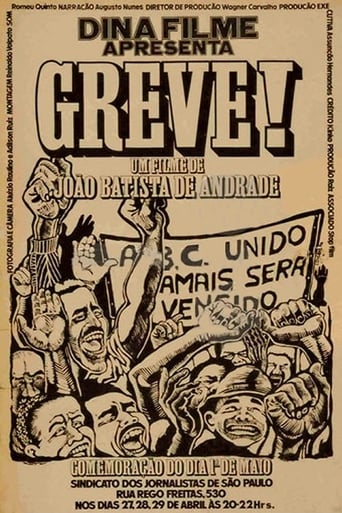
9.0A documentary about the 1979 workers strike.
Greve
1979
 7.2
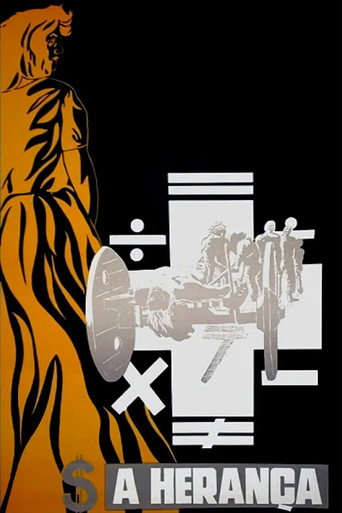
7.2An experimental adaptation of Hamlet to Brazil's rural areas. Farmer's son returns home after his father's death and can't stand the thought of his mother marrying his uncle.
The Inheritance
1970
No synopsis available yet.
Alice
1978
 NR
NRInspired by the testimony of an American technician who, examining the São Paulo dump, stated: "Sao Paulo rubbish is the richest in the world." The film shows the misery of those who live on this garbage and the police repression on the scavengers.
Remains
1975
 8.0
8.0Reconstruction of the life of Wilsinho, who was a dangerous criminal by the time he was 14. After getting arrested multiple times, he finally was killed by the police at the home of his girlfriend Geni.
Wilsinho Galiléia
1978
 7.0
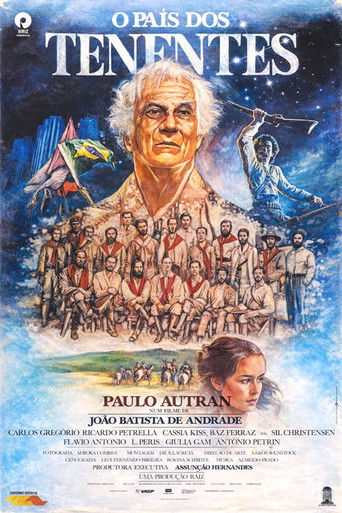
7.0With death getting near, a retired officer remembers the most important passages in his life and his participation in historical events in Brazil, such as the Lieutenants' Movement, and the 1964 coup.
O País dos Tenentes
1987
Film credits
2000s · 1 titles

1990s · 1 titles


Behind the camera
9.0A documentary about the 1979 workers strike.
Greve
1979
9.0A documentary about the 1979 workers strike.
Greve
1979
No synopsis available yet.
Alice
1978
No synopsis available yet.
Alice
1978
NRInspired by the testimony of an American technician who, examining the São Paulo dump, stated: "Sao Paulo rubbish is the richest in the world." The film shows the misery of those who live on this garbage and the police repression on the scavengers.
Remains
1975
8.0Reconstruction of the life of Wilsinho, who was a dangerous criminal by the time he was 14. After getting arrested multiple times, he finally was killed by the police at the home of his girlfriend Geni.
Wilsinho Galiléia
1978
7.0With death getting near, a retired officer remembers the most important passages in his life and his participation in historical events in Brazil, such as the Lieutenants' Movement, and the 1964 coup.
O País dos Tenentes
1987
7.0With death getting near, a retired officer remembers the most important passages in his life and his participation in historical events in Brazil, such as the Lieutenants' Movement, and the 1964 coup.
O País dos Tenentes
1987
7.0With death getting near, a retired officer remembers the most important passages in his life and his participation in historical events in Brazil, such as the Lieutenants' Movement, and the 1964 coup.
O País dos Tenentes
1987
Documentary wich tries to capture the iconoclastic spirit of the 1922 Week of Modern Art, to tell about the beginning of cinema made in the city of São Paulo.
Paulicéia Fantástica
1970
 7.0
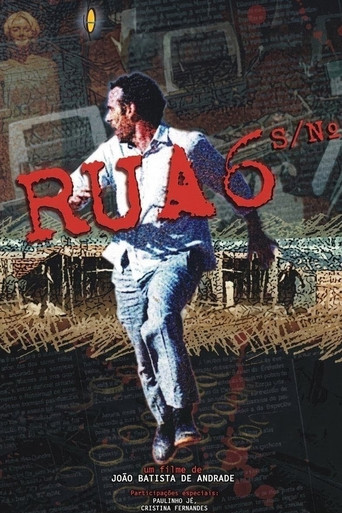
7.0Am unemployed man receives a package from a dying stranger to be delievered to a certain Maira at 6th Street but he never learns the number.
6th Street, No Number
2003
The crossing of generations under the influence of military dictatorship and political openness. Documentary highlights the role of the organizers of the March for the Family with God for Freedom in 1964. Based on stories of life under the military dictatorship, stories and reflections of people who had a significant participation in that period, whether for or against the coup.
Travessia
2009
The crossing of generations under the influence of military dictatorship and political openness. Documentary highlights the role of the organizers of the March for the Family with God for Freedom in 1964. Based on stories of life under the military dictatorship, stories and reflections of people who had a significant participation in that period, whether for or against the coup.
Travessia
2009
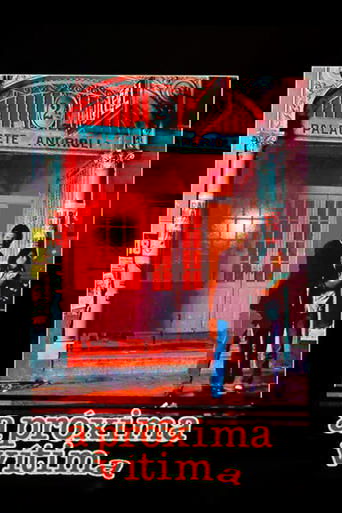 4.8
4.8A TV reporter tries to find out who is killing prostitutes in a São Paulo neighbourhood.
The Next Victim
1983
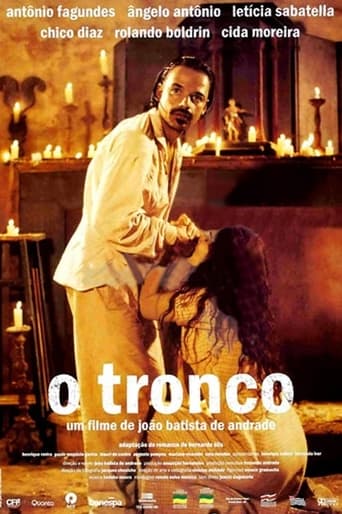 7.0
7.0Vicente, a tax collector, is sent to a distant region to defy the dominion of Melo, a powerful landowner. When Melo's henchmen burn down the collector's office building, the government retaliates by deploying soldiers, overseen by Carvalho, a hard-headed judge. Carvalho orders the soldiers to invade Melo's land, which prompts the start of a full-blown war.
O Tronco
1999
7.0Vicente, a tax collector, is sent to a distant region to defy the dominion of Melo, a powerful landowner. When Melo's henchmen burn down the collector's office building, the government retaliates by deploying soldiers, overseen by Carvalho, a hard-headed judge. Carvalho orders the soldiers to invade Melo's land, which prompts the start of a full-blown war.
O Tronco
1999
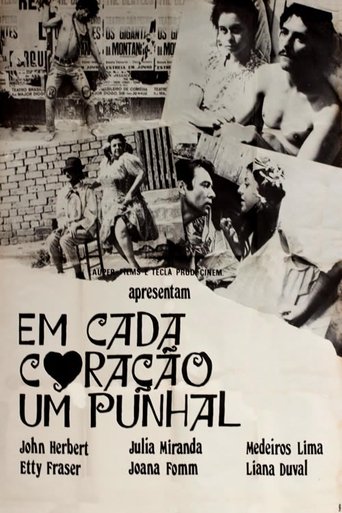 9.0
9.0A woman asks her boyfriend for his mother's heart as a proof of love. Another, a kleptomaniac, has an affair with a TV professional. And a young man becomes a sex symbol after an advertising campaign.
Em Cada Coração um Punhal
1970
9.0A woman asks her boyfriend for his mother's heart as a proof of love. Another, a kleptomaniac, has an affair with a TV professional. And a young man becomes a sex symbol after an advertising campaign.
Em Cada Coração um Punhal
1970
 7.2
7.2Deraldo, a popular poet from Northeast Brazil, arrives in the capital of São Paulo, making a living only from his poetry and pamphlets. All is well until he is mistaken for a multinational worker who killed the boss at a party where he received the title of symbolic worker.
The Wrung-Out Man
1980
7.2Deraldo, a popular poet from Northeast Brazil, arrives in the capital of São Paulo, making a living only from his poetry and pamphlets. All is well until he is mistaken for a multinational worker who killed the boss at a party where he received the title of symbolic worker.
The Wrung-Out Man
1980
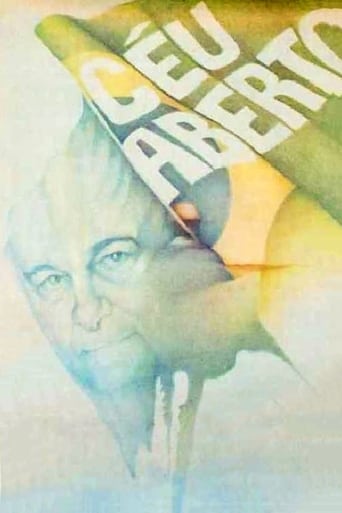 6.0
6.0When Brazil finally came out from its dictatorship period, Tancredo Neves, the first civilian president after 20 years of military rule, got ill with a strange infection and finally died on 21 April 1985 before taking office. Knowing political stability could get compromised, before dying, he tried to look healthy, and the press also helped with the farce. The documentary is about his slow public agony and death.
Open Skies
1985
No synopsis available yet.
Caso Norte
1978
 7.0
7.0Symbolic film from the Underground Movement of Brazilian Cinema (Cinema Marginal) about a woman, three men and some apes. In the director's own words: “a fable where realism and logic have no place, and in which sex is a translation of all the tortures, circumstances and violent actions.”
Gamal, O Delírio do Sexo
1970
7.0Symbolic film from the Underground Movement of Brazilian Cinema (Cinema Marginal) about a woman, three men and some apes. In the director's own words: “a fable where realism and logic have no place, and in which sex is a translation of all the tortures, circumstances and violent actions.”
Gamal, O Delírio do Sexo
1970
 6.5
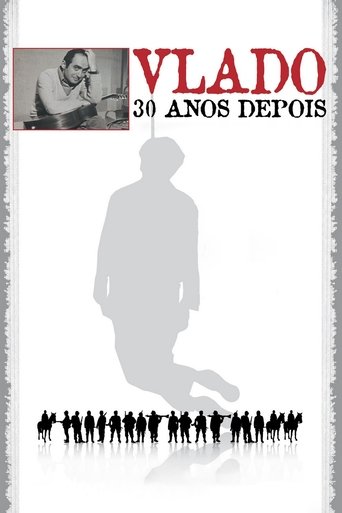
6.5The documentary tells the story of journalist Vladimir Herzog, nicknamed Vlado, who has been tortured and murdered during the repression years of Brazilian military dictatorship.
Vlado: Thirty Years Later
2005
6.5The documentary tells the story of journalist Vladimir Herzog, nicknamed Vlado, who has been tortured and murdered during the repression years of Brazilian military dictatorship.
Vlado: Thirty Years Later
2005
 7.0
7.0Director João Batista de Andrade was filming a documentary about migrants coming from Northeast Brazil to São Paulo in search of a better living. His intention was to give voice to these underprivileged and homeless people. While preparing to interview a man who lived under a bridge, a passer-by interfered, starting an argument about the role of people from other states in the development of São Paulo and the rural problem in the Northeast.
Migrantes
1973
 NR
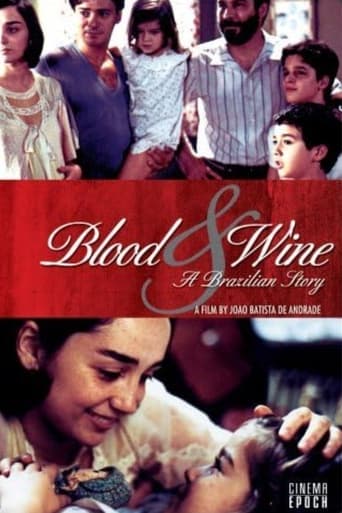
NRMateus, his wife Antônia, their three kids and his brother Pedro opened a grocery/bar in Goiânia, Brazil, in 1959, called "Armazém Brazil". But in the opening party, the Police, headed by a violent inspector nicknamed "Capitão", arrive to arrest, with extreme violence, an outlaw known as "Flexa". This violent scene scars the family permanently and becomes the prelude to a tragedy.
Blood and Wine: A Brazilian Story
2006
NRMateus, his wife Antônia, their three kids and his brother Pedro opened a grocery/bar in Goiânia, Brazil, in 1959, called "Armazém Brazil". But in the opening party, the Police, headed by a violent inspector nicknamed "Capitão", arrive to arrest, with extreme violence, an outlaw known as "Flexa". This violent scene scars the family permanently and becomes the prelude to a tragedy.
Blood and Wine: A Brazilian Story
2006
Starting from a starting point of a bus line, the film discusses the deficiencies of urban transport and the problems caused to workers. Interviews reveal a population on the periphery that was the hidden counterpoint to the economic miracle. In the big image of the film, the cameraman travels hanging on the bus, along with other passengers. This subjective image in the narrative places the viewer on the side of the population who daily risk themselves to go to work.
Ônibus
1973
Starting from a starting point of a bus line, the film discusses the deficiencies of urban transport and the problems caused to workers. Interviews reveal a population on the periphery that was the hidden counterpoint to the economic miracle. In the big image of the film, the cameraman travels hanging on the bus, along with other passengers. This subjective image in the narrative places the viewer on the side of the population who daily risk themselves to go to work.
Ônibus
1973
 5.0
5.0Report on the situation of bóias-frias in the interior of the State of São Paulo, as in the city of Itapetininga. These workers live in poor villages in urban areas and are taken by truck to work in the fields in the middle of the night. Men, women and children work hard in the countryside to earn a living for their family, but are unable to have land to plant. The system of bóias-frias is used by farmers, as there is no commitment to a monthly salary or portfolio registration; only hours worked are paid.
Trabalhadores Rurais
1972
5.0Report on the situation of bóias-frias in the interior of the State of São Paulo, as in the city of Itapetininga. These workers live in poor villages in urban areas and are taken by truck to work in the fields in the middle of the night. Men, women and children work hard in the countryside to earn a living for their family, but are unable to have land to plant. The system of bóias-frias is used by farmers, as there is no commitment to a monthly salary or portfolio registration; only hours worked are paid.
Trabalhadores Rurais
1972
5.0Report on the situation of bóias-frias in the interior of the State of São Paulo, as in the city of Itapetininga. These workers live in poor villages in urban areas and are taken by truck to work in the fields in the middle of the night. Men, women and children work hard in the countryside to earn a living for their family, but are unable to have land to plant. The system of bóias-frias is used by farmers, as there is no commitment to a monthly salary or portfolio registration; only hours worked are paid.
Trabalhadores Rurais
1972
 NR
NRNo synopsis available yet.
O fim da utopia
2011
No synopsis available yet.
Tribunal Bertha Lutz
1982
 5.5
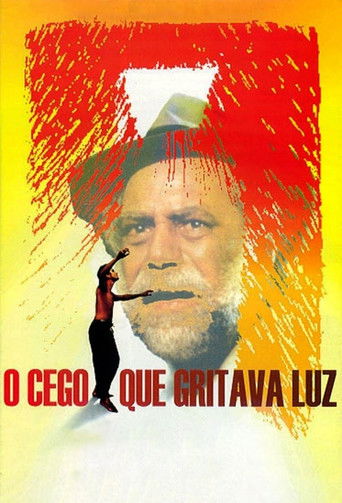
5.5A storyteller in Brasilia entertains the visitors of a bar with his narratives.
O Cego Que Gritava Luz
1997
5.5A storyteller in Brasilia entertains the visitors of a bar with his narratives.
O Cego Que Gritava Luz
1997
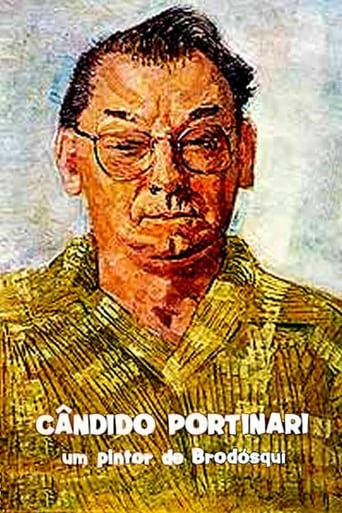 10.0
10.0A brief tribute to Brazilian painter Cândido Portinari relating to his humble beginnings as a citizen born in the town of Brodósqui, located on the countryside of São Paulo. Some of his paintings and poems are presented along with some archive images.
Cândido Portinari, um Pintor de Brodósqui
1968
No synopsis available yet.
A Cia Cinematográfica Vera Cruz
1972