

Directing
Jorge Bodanzky
Born
1942-12-22 (83)
Place of birth
São Paulo, São Paulo, Brazil
Known for
Directing
Credits
45 titles
Jorge Bodanzky (São Paulo, December 22, 1942) is a Brazilian filmmaker, screenwriter and photographer.
Known for
 NR
Filmmaker Jorge Bodanzky gives some classes to local communties at Alto Solimões in the Amazom and collect the results.
In the middle of the River, Between Trees
2009
No synopsis available yet.
Rito do Amor Selvagem
2019
 7.2
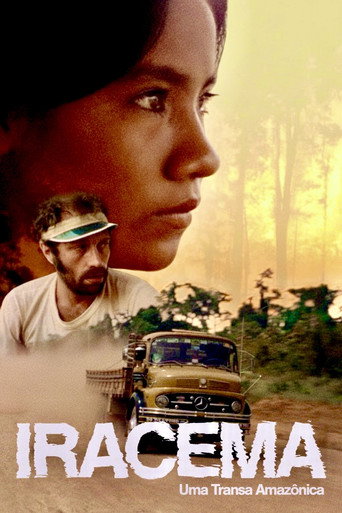
A girl from the countryside goes to the city of Belém to take part in the Círio de Nazaré celebrations. Led to prostitution, she wishes to move to the wealthiest Southeast region of Brazil. In a dance club, she meets a truck driver that transports wood. Dreaming with the big city, she asks for a ride, and the two begin a journey through the Trans-Amazon road. In tension with the Brazilian military authorities of the time, the film registers several aspects of the Amazon social tragedy – forest fires, slave work and child prostitution. Awarded in several international festivals, the film was forbidden by Brazilian censors. It was only released years later, winning the Brasília Film Festival in 1981.
Iracema
1976
 NR
Zuza Homem de Mello opens the doors of his home to share part of his history with music. Showcasing his vinyl and CD collection and exploring various musical genres and styles, Zuza recounts stories from his career as a music journalist.
Zuza Homem de Mello
2020
 5.0
No synopsis available yet.
Pandemonium
2010
 NR
A making-of directed by Bodanzky himself, the documentary discusses the language of the film Iracema - Uma Transa Amazônica 30 years after it was made, gathering interviews with the authors, actors, critics and the filmmakers themselves.
Once Upon a Time There Was Iracema
2005
Film credits
2020s · 8 titles
 NR
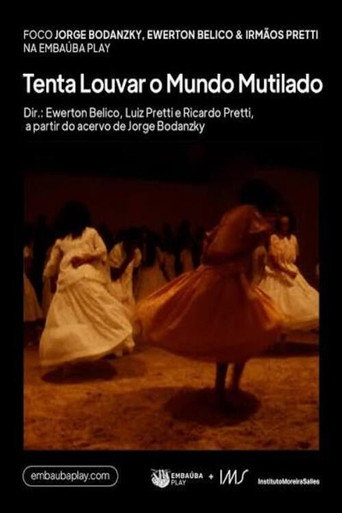
Jorge Bodanzky’s cinematic career is deeply shaped by his engagement with journalism and documentary reporting. "Tenta Louvar o Mundo Mutilado" revisits some of his most significant works in this realm, featuring footage that ranges from Latin American dictatorships to African-rooted religious expressions in Brazil.
Tenta Louvar o Mundo Mutilado
2024
 NR
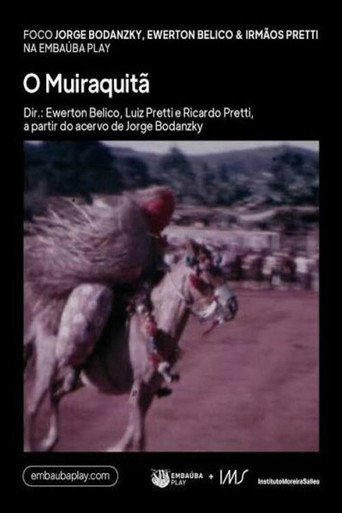
The journeys of a filmmaker-traveler through Brazilian social and cultural landscapes swept up in the hurricane of authoritarian modernization imposed by the military dictatorship: Indigenous peoples, "cavalhadas", and migrants. Through Jorge Bodanzky’s lens, we witness the many faces of the storm battering the ways of life and practices of traditional populations.
O Muiraquitã
2024
 NR
During the height of the military dictatorship, Jorge Bodanzky documented the construction of the Humboldt University [research station] in Mato Grosso. While flying over the surrounding area—amidst the dense, unbroken forest—he captured an intriguing image: a large maloca (communal indigenous dwelling) where the inhabitants were attempting to strike the plane with arrows. Half a century later, the filmmaker uses this moment as a starting point to revisit—without a script—his long-standing connection to the Amazon and the story behind that image, through an approach that is both spontaneous and intimate.
Um Olhar Inquieto: O Cinema de Jorge Bodanzky
2026
 NR
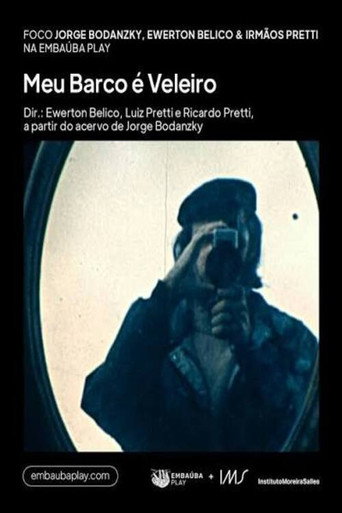
Jorge Bodanzky is, to a large extent, a filmmaker who travels. Constant movement is a hallmark of his creative process, encompassing both personal records and various projects that form the foundation of "Meu Barco É Veleiro". It involves observations and experiences across different continents—a sort of improvised coming-of-age story in which human landscapes reveal the shaping of a unique perspective.
Meu Barco É Veleiro
2024
 5.0
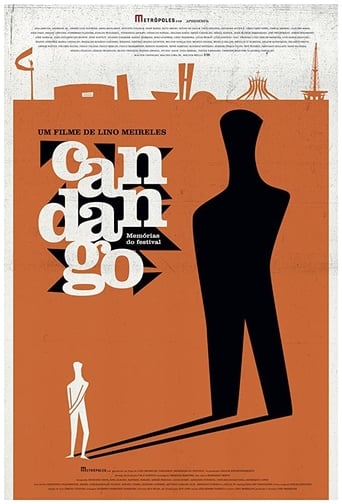
In 1965, a year after the military coup in Brazil, an oasis of freedom opened in the country's capital. The Brasília Film Festival: a landmark of cultural and political resistance. Its story is that of Brazilian cinema itself.
Candango: Memoirs from a Festival
2020
 NR
Jorge Bodanzy appeals to the emotional memories of the period he spent studying at the University of Brasilia to show us a tableau of youth in the 1960s, with their dreams and expectations, their hardships, and interrupted projects.
Utopia, Distopia
2020
 NR
Directed by Jorge Bodanzky, As Cores e Amores de Lore tells the story of German painter Eleonore Koch, Volpi's only disciple who, having settled in Brazil since World War II, lived freely and intensely, always dedicated to her art. Based on a series of meetings that the director had with the painter, the film portrays the last years of her life.
As Cores e Amores de Lore
2025
 NR
A compilation of some of the Super-8 materials shot by Jorge Bodanzky during the Brazilian military dictatorship, blending domestic footage, experiments with the cinematographic medium, and the traces, in an amateur format, of some of his thematic and stylistic obsessions.
Limites do Diáfano
2024
2010s · 2 titles
No synopsis available yet.
Rito do Amor Selvagem
2019
 6.0
The film warns us about the world's water crisis and the international greed for the Amazon Forest, the largest fresh water reservoir on the planet. In addition to concentrating 20% of the world's drinking water, the Amazon is the region with the greatest chance of maintaining its water sources in the next decades, thanks to the humidity of its forest.
The Age of Water
2018
Behind the camera
NRFilmmaker Jorge Bodanzky gives some classes to local communties at Alto Solimões in the Amazom and collect the results.
In the middle of the River, Between Trees
2009
NRFilmmaker Jorge Bodanzky gives some classes to local communties at Alto Solimões in the Amazom and collect the results.
In the middle of the River, Between Trees
2009
7.2A girl from the countryside goes to the city of Belém to take part in the Círio de Nazaré celebrations. Led to prostitution, she wishes to move to the wealthiest Southeast region of Brazil. In a dance club, she meets a truck driver that transports wood. Dreaming with the big city, she asks for a ride, and the two begin a journey through the Trans-Amazon road. In tension with the Brazilian military authorities of the time, the film registers several aspects of the Amazon social tragedy – forest fires, slave work and child prostitution. Awarded in several international festivals, the film was forbidden by Brazilian censors. It was only released years later, winning the Brasília Film Festival in 1981.
Iracema
1976
NRZuza Homem de Mello opens the doors of his home to share part of his history with music. Showcasing his vinyl and CD collection and exploring various musical genres and styles, Zuza recounts stories from his career as a music journalist.
Zuza Homem de Mello
2020
5.0No synopsis available yet.
Pandemonium
2010
NRA making-of directed by Bodanzky himself, the documentary discusses the language of the film Iracema - Uma Transa Amazônica 30 years after it was made, gathering interviews with the authors, actors, critics and the filmmakers themselves.
Once Upon a Time There Was Iracema
2005
A performance-driven documentary and panel discussion where diverse thinkers and communication experts debate the internet and the birth of cyberculture, using Gilberto Gil's song Pela Internet as its narrative anchor.
Transanarchy (2011)
—
 NR
The film evokes the stay in Brazil of Claude Levi-Strauss, an ethnologist, who stayed there from 1934 to 1938. His stay gave rise to the book "Tristes Tropiques". Based on images taken in 1935 and today, his statements reconstruct his intellectual journey in the field of ethnology. Searching for primitive worlds, he tried to understand the Indians whose decaying societies offered an "essence of social life." The work gives us an account of the importance of this scientific and philosophical expedition.
À propos de "Tristes Tropiques"
1991
NRDuring the height of the military dictatorship, Jorge Bodanzky documented the construction of the Humboldt University [research station] in Mato Grosso. While flying over the surrounding area—amidst the dense, unbroken forest—he captured an intriguing image: a large maloca (communal indigenous dwelling) where the inhabitants were attempting to strike the plane with arrows. Half a century later, the filmmaker uses this moment as a starting point to revisit—without a script—his long-standing connection to the Amazon and the story behind that image, through an approach that is both spontaneous and intimate.
Um Olhar Inquieto: O Cinema de Jorge Bodanzky
2026
 6.6
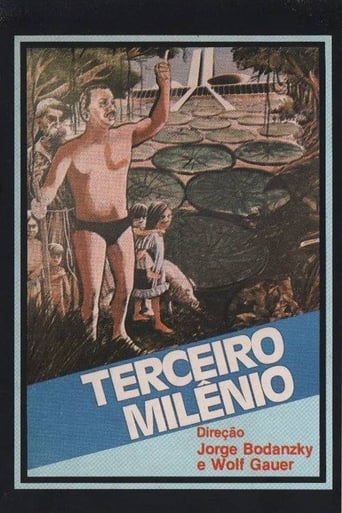
August, 1980. Evandro Carreira, a Brazilian senator leaves his party's office in Manaus to visit his constituents in the state of Amazonas. Interviews with farmhands, loggers, explorer Paulo Lucena, Brazilian and Peruvian Indians and a representative of the National Indian Foundation (Funai) were recorded from the city of Benjamin Constant to the village of Cavalo Cocho. A visit to the indigenous village of the Ticunas and the lands of the Maiuruna people culminate with an interview and the actions of José Francisco da Cruz, a member of the Order of the Holy Cross. Throughout the trip, the economic potential of the Amazon and its problems (corruption in the indigenous policies and the pollution produced by factories) are shown.
Terceiro Milênio
1981
6.6August, 1980. Evandro Carreira, a Brazilian senator leaves his party's office in Manaus to visit his constituents in the state of Amazonas. Interviews with farmhands, loggers, explorer Paulo Lucena, Brazilian and Peruvian Indians and a representative of the National Indian Foundation (Funai) were recorded from the city of Benjamin Constant to the village of Cavalo Cocho. A visit to the indigenous village of the Ticunas and the lands of the Maiuruna people culminate with an interview and the actions of José Francisco da Cruz, a member of the Order of the Holy Cross. Throughout the trip, the economic potential of the Amazon and its problems (corruption in the indigenous policies and the pollution produced by factories) are shown.
Terceiro Milênio
1981
 NR
Documentary about the Minas Gerais photographer Assis Horta, who immortalized the architectural heritage and society of Diamantina. The great impulse of his career came in 1943, with the Consolidation of Labor Laws, promulgated by Getúlio Vargas. By making mandatory a professional card with photo, Vargas gave the push that the working class needed to enter Horta's photographic studio. In the years that followed, the photographer portrayed hundreds of people. In 3x4 or full-length, many took their first portrait.
O Clique Único de Assis Horta
2015
 7.0
In 1873 in Rio Grande do Sul, a group of peasants come together to form a community of brothers, arousing the enmity of the rest of the population. They are immigrants from the German region and develop a communitary social model, having the Bible as a code of morals, faith and conduct. The group's economic independence ends up irritating the locals to the point of provoking successive aggressions that culminate in a bloody massacre.
Os Mucker
1979
 8.0
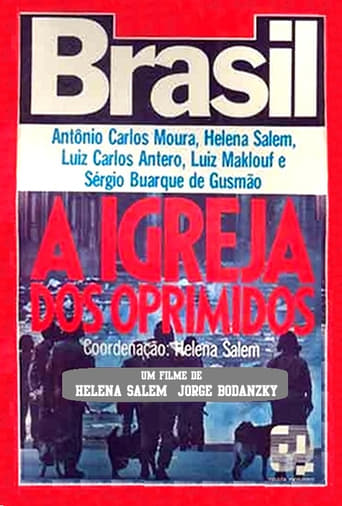
Documentary that tells several stories: of the struggle of rural workers in Conceição to recover their union; of Dona Mariquinha, widow of a murdered squatter and her miraculous effort to survive with her six children; de Rosa and community work in the Olaria neighborhood; the peasant Pé de Ouro and his family living in extreme poverty; de Oneide, the widow of Gringo, the rural leader killed by gunmen when he disputed in 1980 the presidency of the Sindicato de Conceição, etc.
A Igreja dos Oprimidos
1986
8.0Documentary that tells several stories: of the struggle of rural workers in Conceição to recover their union; of Dona Mariquinha, widow of a murdered squatter and her miraculous effort to survive with her six children; de Rosa and community work in the Olaria neighborhood; the peasant Pé de Ouro and his family living in extreme poverty; de Oneide, the widow of Gringo, the rural leader killed by gunmen when he disputed in 1980 the presidency of the Sindicato de Conceição, etc.
A Igreja dos Oprimidos
1986
 NR
No synopsis available yet.
Embu
1968
 7.0
Yesterday, the inhabitants of the Nordeste had to abandon their land for lack of water. Today, floods are driving them out... Deprived of their roots, the people continue to remain faithful to their traditions and beliefs, while progress is imposed by the power of money.
Gitirana
1975
7.0Yesterday, the inhabitants of the Nordeste had to abandon their land for lack of water. Today, floods are driving them out... Deprived of their roots, the people continue to remain faithful to their traditions and beliefs, while progress is imposed by the power of money.
Gitirana
1975
 NR
In March 2006, the team for the Navegar Amazônia project left the Jandiá Channel in Macapá, bound for Belém. On board a regional boat, adapted with a modern multimedia laboratory, were the project team and thirty persons, including musicians and filmmakers. The objective was, along the way, to offer workshops in music, cinema, photography, video and art to the population visited on the river's edge. The documentary is a record of the interaction between the guests and the local population. The Navegar Amazônia project captures and conveys contents of the Amazon in a unique way: from the heart of the forest and from the river to the world.
Navigating the Amazon: A Voyage with Jorge Mautner
2006
NRIn March 2006, the team for the Navegar Amazônia project left the Jandiá Channel in Macapá, bound for Belém. On board a regional boat, adapted with a modern multimedia laboratory, were the project team and thirty persons, including musicians and filmmakers. The objective was, along the way, to offer workshops in music, cinema, photography, video and art to the population visited on the river's edge. The documentary is a record of the interaction between the guests and the local population. The Navegar Amazônia project captures and conveys contents of the Amazon in a unique way: from the heart of the forest and from the river to the world.
Navigating the Amazon: A Voyage with Jorge Mautner
2006
 NR
The documentary questions the knowledge of sociology in the face of the crises of the contemporary world. Experts in the subject discuss and evaluate the usefulness of this discipline and propose new ways for its application.
Sociologia da Crise
2011
NRThe documentary questions the knowledge of sociology in the face of the crises of the contemporary world. Experts in the subject discuss and evaluate the usefulness of this discipline and propose new ways for its application.
Sociologia da Crise
2011
NRThe documentary questions the knowledge of sociology in the face of the crises of the contemporary world. Experts in the subject discuss and evaluate the usefulness of this discipline and propose new ways for its application.
Sociologia da Crise
2011
 NR
No synopsis available yet.
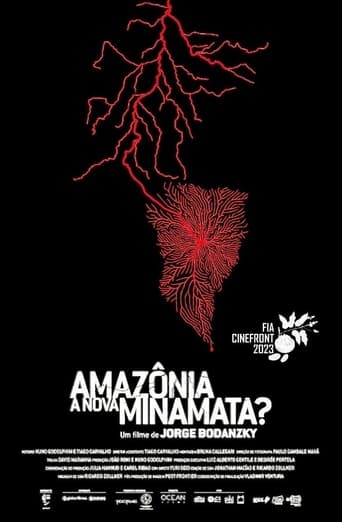
Amazônia, a Nova Minamata?
2022
 7.5
Documentary filmed in the Jari Project area – multinational enclave, located between Pará and the then Federal Territory of Amapá, on the occasion of the visit made to the Project by the Parliamentary Commission of Inquiry about the devastation of the Amazon. Jari is the largest known land occupation in the Amazon, and probably the largest in the world, to belong to a single owner, the American millionaire Daniel Keith Ludwig.
Jari
1979
 5.0
A parallel of the life and work of two Volkswagen workers, one in Brazil and the other in Germany, who perform identical functions in assembling the VW Beetle.
Industriearbeiter in Deutschland – Industriearbeiter in Brasilien
1974
 8.0
In Brazil, in the State of Mato Grosso do Sul, in the region of the Rio Taquari, the increasing and continuous silting of the rivers has led to the overflow of waters and the flooding of lands over the years, causing significant changes in the lives of its inhabitants. This has made it impossible to cultivate the soil and raise livestock, a form of livelihood for local families. Member of one of these families, Ruivaldo Nery Andrade, our guide character, struggles to save his farm, through the construction of a manual system of dikes to contain and alter the course of invading waters and, thus, resume his activities and guarantee the survival of the land.
Ruivaldo, O Homem que Salvou a Terra
2019
 NR
No synopsis available yet.
Brasília em Super 8
1970
NRJorge Bodanzy appeals to the emotional memories of the period he spent studying at the University of Brasilia to show us a tableau of youth in the 1960s, with their dreams and expectations, their hardships, and interrupted projects.
Utopia, Distopia
2020
NRJorge Bodanzy appeals to the emotional memories of the period he spent studying at the University of Brasilia to show us a tableau of youth in the 1960s, with their dreams and expectations, their hardships, and interrupted projects.
Utopia, Distopia
2020
NRDirected by Jorge Bodanzky, As Cores e Amores de Lore tells the story of German painter Eleonore Koch, Volpi's only disciple who, having settled in Brazil since World War II, lived freely and intensely, always dedicated to her art. Based on a series of meetings that the director had with the painter, the film portrays the last years of her life.
As Cores e Amores de Lore
2025
 NR
No synopsis available yet.
Caminhos de Valderez
1971