
Directing
William Friese-Greene
Born — Died
1855-09-07 — 1921-05-05
Place of birth
Bristol, England, UK
Known for
Directing
Credits
7 titles
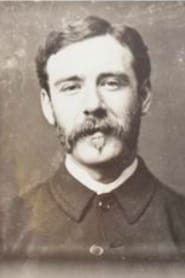
William Friese-Greene (born William Edward Green) was a British portrait photographer and prolific inventor. He is principally known as a pioneer in the field of motion pictures. On 21 June 1889, Friese-Greene and civil engineer Mortimer Evans patented a 'chronophotographic' sequence camera, which takes its name from a description of the content. However, there is no record of a successful film projection as the claimed demonstration at the Chester Photographic Convention in 1890 was a failure. Friese-Greene's experiments in the field of motion pictures were at the expense of his other business interests and in 1891 he was declared bankrupt. To cover his debts he sold the rights to the 'c…
Known for
 4.1
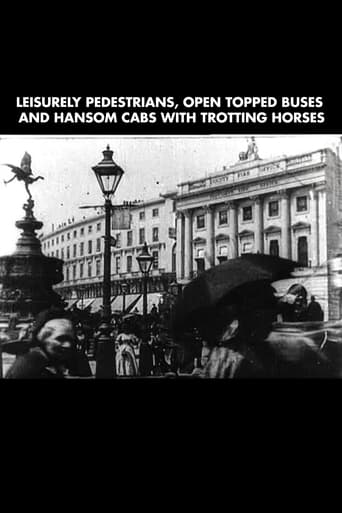
Alleged silent black-and-white short film shot at Apsley Gate, Hyde Park, London. It was claimed to be the first motion picture until pre-dating footage shot by Louis Le Prince was discovered. It was never publicly shown and is now considered a lost film with no known surviving prints or stills.
Leisurely Pedestrians, Open Topped Buses and Hansom Cabs with Trotting Horses
1889
 4.5
A demonstration of the Friese-Greene biocolour process.
Kino the Girl of Colour
1920
 3.9
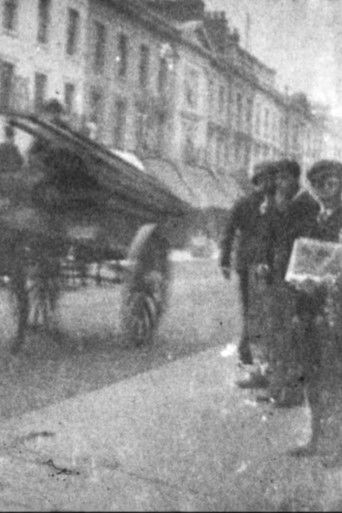
Formerly lost film rediscovered in 1996, directed by William Friese-Greene.
Traffic in King's Road, Chelsea
1890
 4.5
Promenaders by the Serpentine in Hyde Park is a surviving fragment of an early motion picture filmed by William Friese-Greene at the turn of 1889/1890. It depicts pedestrians strolling along the Serpentine in London's Hyde Park, capturing an ordinary moment of everyday life during the formative years of cinema. Only 26 frames of the original 68 mm celluloid camera negative survive today, later reconstructed by the French CNC. Despite its fragmentary nature, the film remains an important milestone in film history, demonstrating Friese-Greene's pioneering use of celluloid motion-picture film and his attempt to capture real life in motion years before the medium became commercially established.
Promenaders by the Serpentine in Hyde Park
1889
 4.3
Hyde Park Corner (also known as Leisurely Pedestrians, Open Topped Buses and Hansom Cabs with Trotting Horses) depicts life at Hyde Park Corner in London. It is claimed to be the first film set in London, as well as the first to be filmed on celluloid. It is currently considered a partially lost film, with only 6 possible film frames preserved as part of the Jonathan Silent Film Collection.
Hyde Park Corner
1889
 NR
No synopsis available yet.
Poster on Hoarding
1912
Behind the camera
4.1Alleged silent black-and-white short film shot at Apsley Gate, Hyde Park, London. It was claimed to be the first motion picture until pre-dating footage shot by Louis Le Prince was discovered. It was never publicly shown and is now considered a lost film with no known surviving prints or stills.
Leisurely Pedestrians, Open Topped Buses and Hansom Cabs with Trotting Horses
1889
4.5A demonstration of the Friese-Greene biocolour process.
Kino the Girl of Colour
1920
3.9Formerly lost film rediscovered in 1996, directed by William Friese-Greene.
Traffic in King's Road, Chelsea
1890
4.5Promenaders by the Serpentine in Hyde Park is a surviving fragment of an early motion picture filmed by William Friese-Greene at the turn of 1889/1890. It depicts pedestrians strolling along the Serpentine in London's Hyde Park, capturing an ordinary moment of everyday life during the formative years of cinema. Only 26 frames of the original 68 mm celluloid camera negative survive today, later reconstructed by the French CNC. Despite its fragmentary nature, the film remains an important milestone in film history, demonstrating Friese-Greene's pioneering use of celluloid motion-picture film and his attempt to capture real life in motion years before the medium became commercially established.
Promenaders by the Serpentine in Hyde Park
1889
4.3Hyde Park Corner (also known as Leisurely Pedestrians, Open Topped Buses and Hansom Cabs with Trotting Horses) depicts life at Hyde Park Corner in London. It is claimed to be the first film set in London, as well as the first to be filmed on celluloid. It is currently considered a partially lost film, with only 6 possible film frames preserved as part of the Jonathan Silent Film Collection.
Hyde Park Corner
1889
NRNo synopsis available yet.
Poster on Hoarding
1912
Lost film from 1888, directed by William Friese-Greene.
Brighton Street Scene
1888