

Directing
Elizaveta Svilova
Born — Died
1900-09-05 — 1975-11-11
Place of birth
Moscow, USSR
Known for
Directing
Credits
15 titles
Yelizaveta Ignatevna Svilova (Russian: Елизаве́та Игна́тьевна Сви́лова, rendered in Latin as Elizaveta Svilova) (5 September 1900, Moscow – 11 November 1975, Moscow) was a Russian filmmaker and film editor. She is perhaps best known for making films with her husband Dziga Vertov and her brother-in-law Mikhail Kaufman. She is also known for her documentaries about World War II and for appearing in and editing Man with a Movie Camera (1929).
Known for
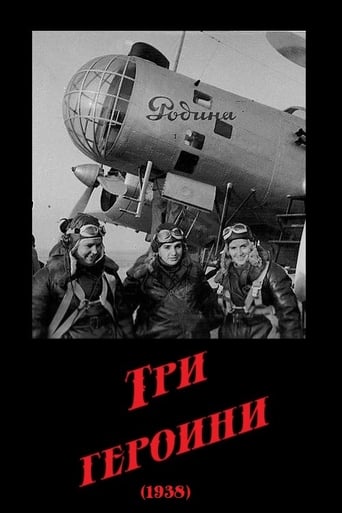 9.5
Follows the legendary female pilots Raskova, Osipenko, and Grisodubova in their failed but magnificent attempt to make the first nonstop trans-Siberian flight. Using documentary reenactments, Vertov depicts the flight, the crash, the rescue, and the women’s heroic return to Moscow, where crowds shower them with flowers, and leaders with speeches.
Three Heroines
1938
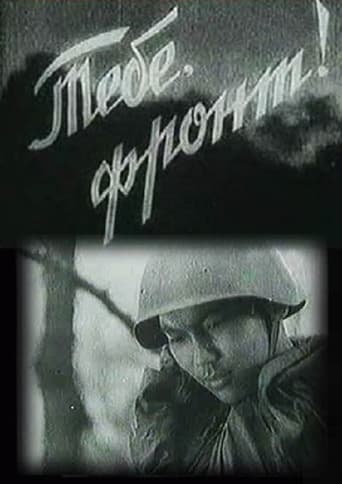 9.0
From the start, Vertov made himself known as an irreconcilable enemy of 'acted films', which he regarded as a violation of truth. At the peak of WWII, however, such lofty artistic principles proved impractical.
For You at the Front!
1942
Soviet travelouge
Bukhara
1927
 5.5
March 9th, 1953. A gray, sad day. Clouds float low over the Kremlin towers. A city that unrecognizably grew, prettier and matured - this Moscow froze in solemn grief. The country escorts its father and leader, Joseph Stalin.
Velikoye proshchaniye
1953
 NR
Soviet documentary shot right after liberation of Auschwitz. It was used as evidence by the Soviet prosecution at the Nuremberg trials. In 2014, footage shot by cameraman Aleksandr Vorontsov, as well as his interview given in 1986 for German television, were included in Andre Singer’s documentary “Night Will Fall”.
Auschwitz
1945
 5.7
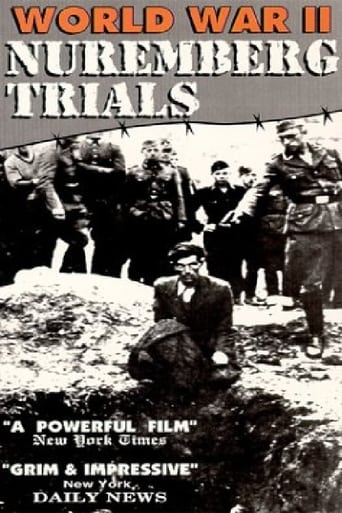
This riveting Russian documentary takes you inside the trials of the notorious German war criminals, brought to trial to account for their actions. The footage includes excerpts from the trials of many of the senior Nazis including Goebels and Goring.
Nuremberg Trials
1946
Film credits
1960s · 2 titles
 NR
“The Magic Beam” is a film essay woven together from newsreels and documentary material from different decades, fragments of hundreds of non-fiction and fiction Soviet films of the 1910s-1960s.
The Magic Beam
1963
 NR
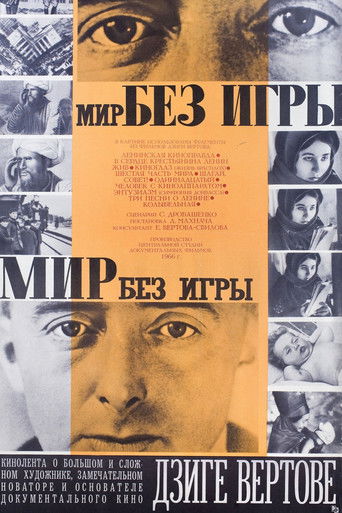
Documentary portrait of Dziga Vertov, father of documentary cinema.
World Without a Game
1966
Behind the camera
9.5Follows the legendary female pilots Raskova, Osipenko, and Grisodubova in their failed but magnificent attempt to make the first nonstop trans-Siberian flight. Using documentary reenactments, Vertov depicts the flight, the crash, the rescue, and the women’s heroic return to Moscow, where crowds shower them with flowers, and leaders with speeches.
Three Heroines
1938
9.0From the start, Vertov made himself known as an irreconcilable enemy of 'acted films', which he regarded as a violation of truth. At the peak of WWII, however, such lofty artistic principles proved impractical.
For You at the Front!
1942
Soviet travelouge
Bukhara
1927
5.5March 9th, 1953. A gray, sad day. Clouds float low over the Kremlin towers. A city that unrecognizably grew, prettier and matured - this Moscow froze in solemn grief. The country escorts its father and leader, Joseph Stalin.
Velikoye proshchaniye
1953
NRSoviet documentary shot right after liberation of Auschwitz. It was used as evidence by the Soviet prosecution at the Nuremberg trials. In 2014, footage shot by cameraman Aleksandr Vorontsov, as well as his interview given in 1986 for German television, were included in Andre Singer’s documentary “Night Will Fall”.
Auschwitz
1945
5.7This riveting Russian documentary takes you inside the trials of the notorious German war criminals, brought to trial to account for their actions. The footage includes excerpts from the trials of many of the senior Nazis including Goebels and Goring.
Nuremberg Trials
1946
 4.8
A Soviet documentary chronicling the final assault on Nazi Germany’s capital. More than forty frontline cameramen from the 1st Belorussian and 1st Ukrainian Fronts captured the battle and its aftermath, supplemented with seized German footage. The film records the destruction of Berlin and the symbolic collapse of Hitler’s regime, standing as both a historical chronicle and a work of Soviet wartime cinema.
The Fall of Berlin
1945
No synopsis available yet.
Milan Fair
1936
 NR
A look at the life of the Evenki people, formerly known as the Tungus, indigenous to North Asia.
The Tungus
1927
No synopsis available yet.
Parade of Youth
1946