
Directing
Hans Fritz Wilhelm
Born — Died
1905-12-08 — 1983-09-23
Place of birth
Reetz, Germany [now Recz, Poland]
Known for
Directing
Credits
6 titles
Known for
 NR
In the broadcasting center of a radio station, visitors are informed in a kind of educational course about how "electric waves" are generated and how they are converted into sounds that can then be heard on the radio.
Unsichtbare Brücken
1932
 6.0
No synopsis available yet.
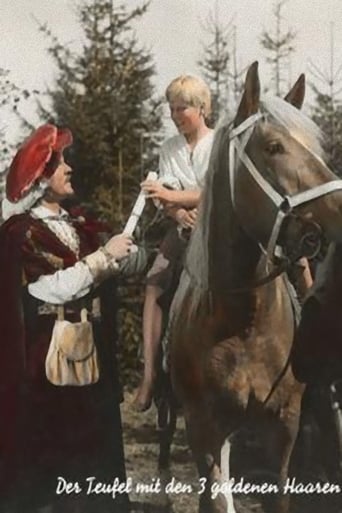
Der Teufel mit den drei goldenen Haaren
1955
Film by Hans Wilhelm.
Die Bande vom Hoheneck
1934
No synopsis available yet.
Parole Heimat
1955
A railway employee in conversation with another man. The former presents two instruments used to test locomotives (test bench, measuring car). When asked, he emphatically explains that despite modern machines, people are indispensable for the operation of the Reichsbahn. The film then shows various Reichsbahn employees at their workplaces, engaged in staged dialogues with each other and with railway customers. Locomotive drivers and stokers, conductors, shunters at a station, signal box employees, and track workers are shown. Finally, railway workers are seen in their free time and socializing at a colleague's birthday party.
Menschen hinter Maschinen
1937
Behind the camera
NRIn the broadcasting center of a radio station, visitors are informed in a kind of educational course about how "electric waves" are generated and how they are converted into sounds that can then be heard on the radio.
Unsichtbare Brücken
1932
6.0No synopsis available yet.
Der Teufel mit den drei goldenen Haaren
1955
Film by Hans Wilhelm.
Die Bande vom Hoheneck
1934
No synopsis available yet.
Parole Heimat
1955
A railway employee in conversation with another man. The former presents two instruments used to test locomotives (test bench, measuring car). When asked, he emphatically explains that despite modern machines, people are indispensable for the operation of the Reichsbahn. The film then shows various Reichsbahn employees at their workplaces, engaged in staged dialogues with each other and with railway customers. Locomotive drivers and stokers, conductors, shunters at a station, signal box employees, and track workers are shown. Finally, railway workers are seen in their free time and socializing at a colleague's birthday party.
Menschen hinter Maschinen
1937