
Acting
Ondine
Born — Died
1937-06-16 — 1989-01-01
Known for
Acting
Credits
29 titles
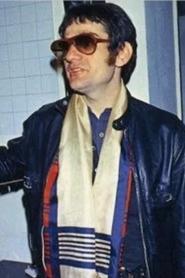
Robert Olivo (June 16, 1937 – August 28, 1989), better known by his stage name Ondine, was an American actor. He is best known for appearing in a series of films in the mid-1960s by Andy Warhol, whom he claimed to have met in 1961 at an orgy.
Known for
 5.0
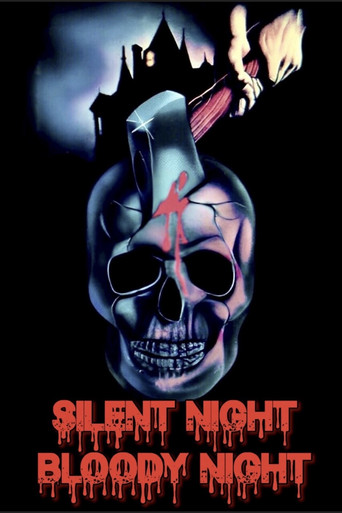
5.0A man investigates the grisly crimes that occurred in a former insane asylum, unsettling the locals who all seem to have something to hide.
Night of the Dark Full Moon
1972
A film structured in threes: three men, three reels of three minutes each, three acts with a different arrangement of bodies in the bathroom of the Factory, whose door has conveniently been left open for us to peek in.
Three
1964
 5.8
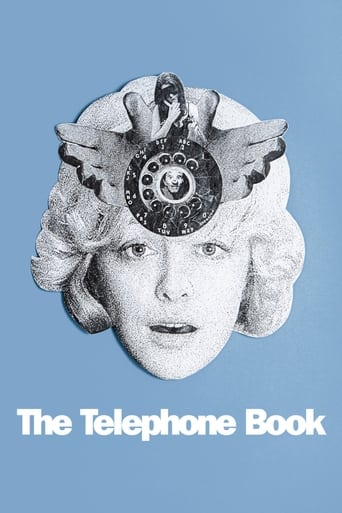
5.8A sexually voracious young woman receives a dirty phone call from a stranger; so satisfied by the experience, she sets out to find him somewhere in New York City.
The Telephone Book
1971
 5.5
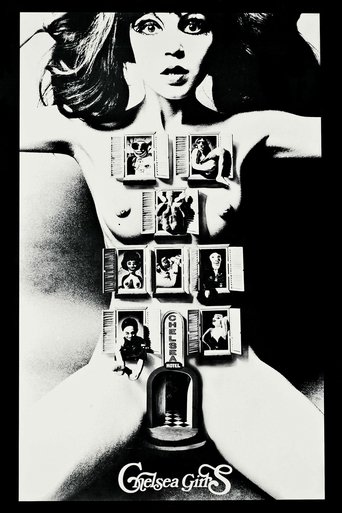
5.5Follows various residents of the Chelsea Hotel in 1966 New York City.
Chelsea Girls
1966
 4.6
4.6Batman Dracula is a 1964 black and white American film produced and directed by Andy Warhol, without the permission of DC Comics. The film was screened only at Warhol's art exhibits. A fan of the Batman series, Warhol made the movie as a homage. Batman Dracula is considered to be the first film featuring a blatantly campy Batman. The film was thought to have been lost until scenes from it were shown at some length in the documentary Jack Smith and the Destruction of Atlantis.
Batman Dracula
1964
 5.3
5.3A film producer murders his star actress during an erotic "game" and makes it look like suicide. The dead girl's lesbian lover discovers what happened, and plots her revenge.
Sugar Cookies
1973
Film credits
2010s · 1 titles
2000s · 2 titles
 2.9
2.9Takes an in-depth look at the lives and times of the people who hung out with Andy Warhol and "worked" at the Silver Factory during the Sixties, making it all click as a new counter-culture arose and began to exert its influence throughout the arts.
Andy Warhol's Factory People... Inside the Sixties Silver Factory
2008
Once a hot spot, the Bowery Follies Cabaret is now just another broken down New York City nightclub populated with the last vestiges of vaudeville entertainers, misfits and a headliner known as Heaven. She, like the club, has been there too long. In a drunken reverie, she wanders through the lives of the men who watch her sing night after night, looking for love ...trying to make sense of how she got there in the first place, hoping, for a ticket out.
Heaven Wants Out
2009
1980s · 2 titles
 8.0
8.0Documentary on Andy Warhol's cinema of the sixties, made for Channel 4 in association with The Factory, MOMA and the Whitney Museum of Art and in collaboration with Simon Field.
Warhol's Cinema 1963-1968: Mirror for the Sixties
1989
 6.8
6.8The first major profile of the American Pop Art cult leader after his death in 1987 covers the whole of his life and work through interviews, clips from his films, and conversations with his family and superstar friends. Andy Warhol, the son of poor Czech immigrants, grew up in the industrial slums of Pittsburgh while dreaming of Hollywood stars. He went on to become a star himself.
Andy Warhol
1987
1970s · 8 titles
5.0A man investigates the grisly crimes that occurred in a former insane asylum, unsettling the locals who all seem to have something to hide.
Night of the Dark Full Moon
1972
5.8A sexually voracious young woman receives a dirty phone call from a stranger; so satisfied by the experience, she sets out to find him somewhere in New York City.
The Telephone Book
1971
5.3A film producer murders his star actress during an erotic "game" and makes it look like suicide. The dead girl's lesbian lover discovers what happened, and plots her revenge.
Sugar Cookies
1973
 5.0
5.0Cleopatra situates itself in the same relationship to Hollywood as the Warhol/Morrisey films of the period. It corresponds to Joseph Mankiewicz's 1963 Cleopatra, starring Elizabeth Taylor and Richard Burton which Auder's cast watched and used as the starting point for scene by scene improvisation Auder drew his cast from Warhol's ensemble – including not only Viva and Louis Waldon, but also Taylor Mead, Ondine, Andrea Feldman, Gerard Melanga and others.
Cleopatra
1970
 9.0
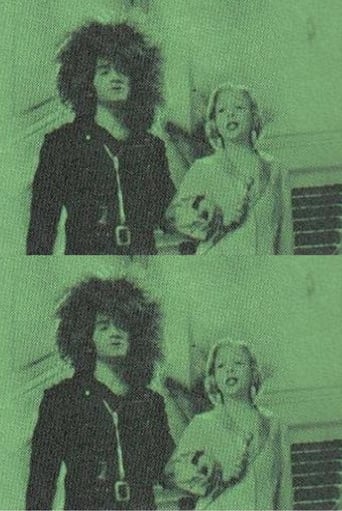
9.0In this movie, director Volker Koch wants to reveal "petty-bourgeois fixations of consciousness and late capitalist myths of happiness". The protagonists: an American hustler, a drama student, a Munich waitress and her boyfriend who hope for money, a career and luck from a trip to Rome together.
S.P.Q.R.
1972
 NR
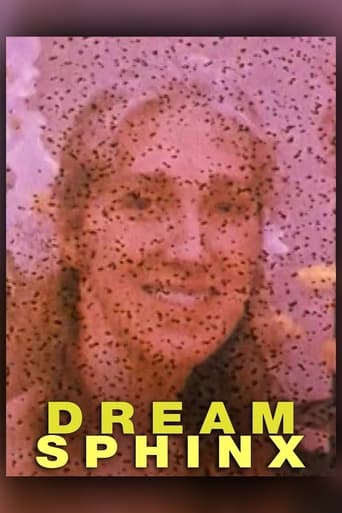
NROndine and Sally Dixon "star" as ecstatic 19th century lovers in Jacoby's first home-processed film.
Dream Sphinx
1974
Experimental filmmaker Roger Jacoby animates his muse, Ondine, as the villainous Scarpia in snippets from Giacomo Puccini's "Tosca." Freely mixing melodramatic gestures from his actors with a ruined soundtrack of static and full-on textural experiments that simulate decayed nitrate film bursting with color or fading to white, Jacoby finds emotional release in repeating Floria Tosca's leap to her death. A visual feast from the former painter who shows a creative command of celluloid, both figural and abstract. - Marilyn Ferdinand
Floria
1974
 NR
NRL'AMICO FRIED'S GLAMOROUS FRIENDS "...is built around a pas de deux by Ondine and Sally Dixon... with a quickness of breath and dryness of the throat one is apt to say, 'What is that!' as if peering into some exotic fog. The sometimes lovely and sometimes not beautiful but nearly always exquisite collisions of light and shadow upon the screen which seduces us... And may as likely cause one to squirm in one's seat..." - Carmen Vigil, former Program Director of San Francisco Cinematheque
L'Amico Fried's Glamorous Friends
1976
1960s · 16 titles
A film structured in threes: three men, three reels of three minutes each, three acts with a different arrangement of bodies in the bathroom of the Factory, whose door has conveniently been left open for us to peek in.
Three
1964
5.5Follows various residents of the Chelsea Hotel in 1966 New York City.
Chelsea Girls
1966
4.6Batman Dracula is a 1964 black and white American film produced and directed by Andy Warhol, without the permission of DC Comics. The film was screened only at Warhol's art exhibits. A fan of the Batman series, Warhol made the movie as a homage. Batman Dracula is considered to be the first film featuring a blatantly campy Batman. The film was thought to have been lost until scenes from it were shown at some length in the documentary Jack Smith and the Destruction of Atlantis.
Batman Dracula
1964
 8.7
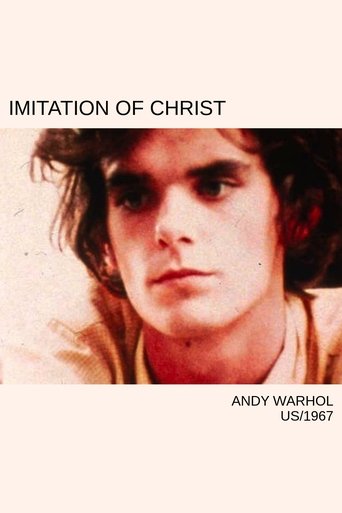
8.7Warhol's Factory visits Los Angeles.
Imitation of Christ
1967
 8.0
8.0The films were made between 1964 and 1966 at Warhol's Factory studio in New York City. Subjects were captured in stark relief by a strong key light, and filmed by Warhol with his stationary 16mm Bolex camera on silent, black and white, 100-foot rolls of film at 24 frames per second. The resulting two-and-a-half-minute film reels were then screened in 'slow motion' at 16 frames per second.
Andy Warhol Screen Tests
1965
 3.7
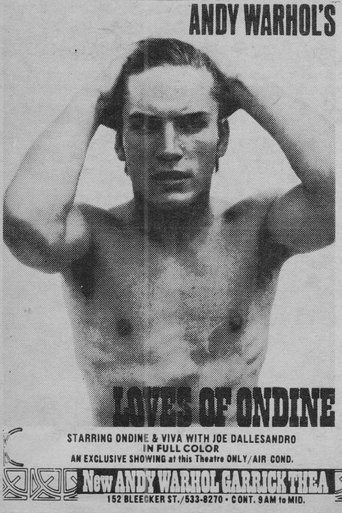
3.7Ondine is a gay man attempting to re-adjust his sexuality via various encounters with different women. After trying his luck with three women, Ondine becomes a background character in a sequence in which a group of Latin American men, calling themselves The Bananas, engage in a food fight. Ondine then engages in a wrestling match with Joe Dallesandro, who is married to Brigid Berlin.
The Loves of Ondine
1968
 6.4
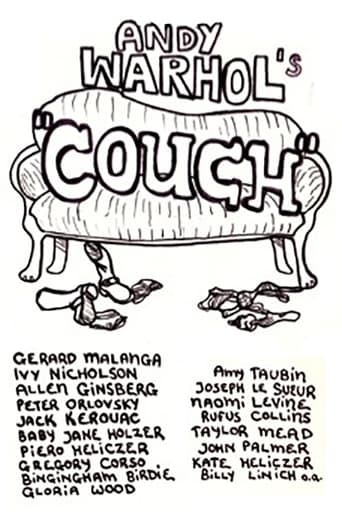
6.4The couch at Andy Warhol's Factory was as famous in its own right as any of his Superstars. In Couch, visitors to the Factory were invited to "perform" on camera, seated on the old couch. Their many acts-both lascivious and mundane-are documented in a film that has come to be regarded as one of the most notorious of Warhol's early works. Across the course of the film we encounter such figures as poets Allen Ginsberg and Gregory Corso, the writer Jack Kerouac, and perennial New York figure Taylor Mead.
Couch
1964
 4.6
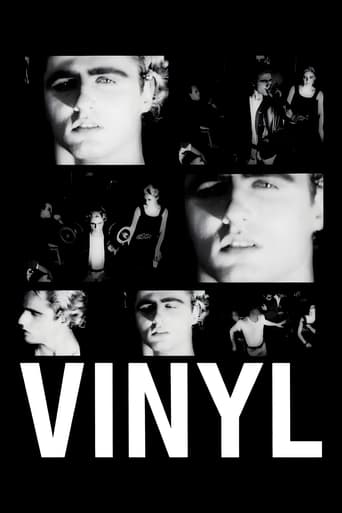
4.6Andy Warhol’s screen adaptation of Burgess's "A Clockwork Orange”.
Vinyl
1965
 4.7
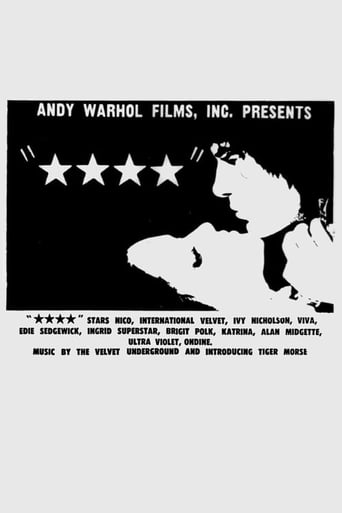
4.7Photographed entirely in color, Four Stars was projected in its complete length of nearly 25 hours (allowing for projection overlap of the 35-minute reels) only once, at the Film-Makers' Cinematheque in New York City. The imagery in the film is dense, wearying and beautiful, but ultimately hard to decipher, for, in contrast to his earlier, and more famous film Chelsea Girls, made in 1966, Warhol insisted that two reels be screened simultaneously on top of each other on a single screen, rather than side-by-side. The film's title is a pun on the rating system used by critics to rank films, with "four stars" being the highest rating. From Wikipedia.
Four Stars
1967
 7.2
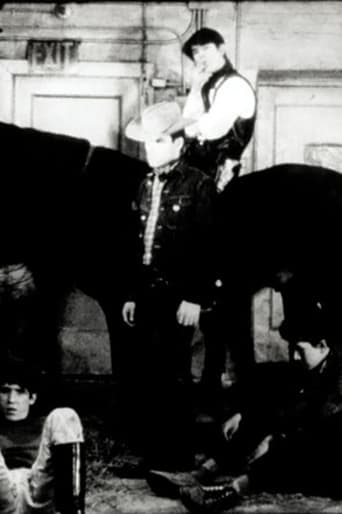
7.2Warhol plunked a horse named Mighty Byrd in the middle of the Factory for this dark, homoerotic take on the classic oater that later anticipates his later western epic Lonesome Cowboys.
Horse
1965
 NR
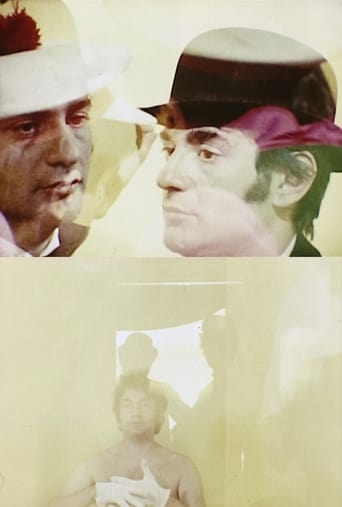
NRA few basic gestures, deliberately excluding indefinite states in between.
We’re Getting On (Part I)
1968
 8.0
8.0Documentarians Juan Drago and Bruce Torbet follow a surprisingly relaxed and open Andy Warhol, at the peak of his powers in 1965 and 1966, around his bustling original "Factory" in midtown Manhattan. Warhol experiments with an early videotape machine, recording a beautiful, laughing Edie Sedgwick - his "superstar" of the moment - for the video portion of "Outer and Inner Space," his filmed record of the "live" Sedgwick juxtaposed against her video image on an adjacent monitor. Also captured is a Warhol show at the Leo Castelli gallery, including the famous Mylar "Clouds," as various unnamed art dealers and critics muse in voiceover about the meaning and significance of Warhol's work.
Superartist
1967
 NR
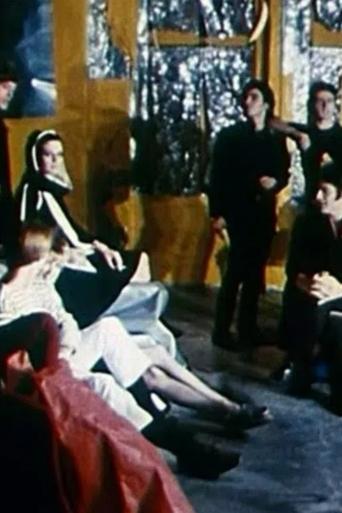
NRAndy Warhol's experimental reconstruction of the assassination of the President of the United States, John F. Kennedy, which serves as his critical commentary on the way the media presented the tragic event.
Since
1966
 NR
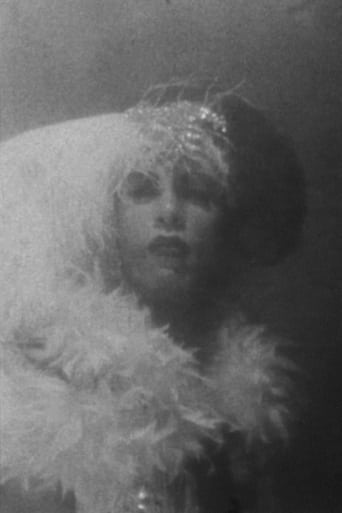
NRThis is one of several films and slide shows that feature Smith as a mock celebrity. It opens with the excerpt from No President originally called "Marsh Gas of Flatulandia" - several minutes of black and white footage of steam escaping from manholes segues to an interior scene of various creatures emerging from dry ice vapors - then shifts to show the filmmaker, clad in a leopard skin jump suit, attended by a nurse as he sits amidst the detritus of his duplex loft. A fan presents him with a black-and-white glamour shot to autograph as Ondine, dressed entirely in black leather, snaps his picture. Violence erupts as the nurse takes out a whip to discipline the star's fans. When a female creature pulls out the same dagger depicted in the glamour shot, Smith jumps up and shakes the weapon from her hand. The action is post-scripted with footage of a steam shovel patrolling the rubble where the Broadway Central Hotel once stood.
I Was a Male Yvonne De Carlo for the Lucky Landlord.....
1967
 NR
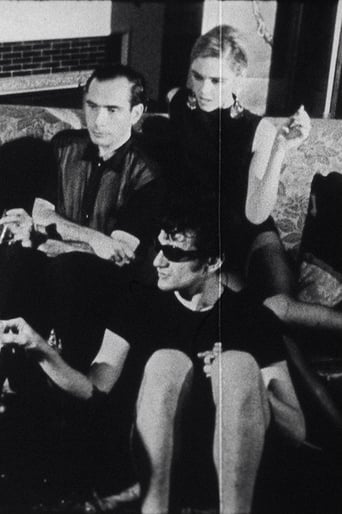
NREdie Sedgwick hanging out at her apartment with Ondine and others in an alcohol and amphetamine–fueled talkfest.
Afternoon
1965
![Screen Test [ST249]: Ondine poster](https://image.tmdb.org/t/p/w342/udHzT6LqYfAOqRyTRguT6KLeVdG.jpg) NR
NROndine wears dark glasses and occasionally raises his eyebrows, as if simulating alertness, ut seems to be drifting off to sleep during the film. There is an in-camera edit toward the end of the roll, where the camera seems to have mistakenly been turned off and then on again.
Screen Test [ST249]: Ondine
1966