
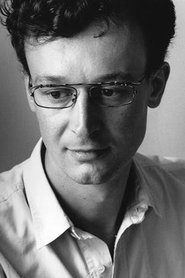
Directing
Peter Tscherkassky
Born
1958-10-03 (68)
Place of birth
Vienna, Austria
Known for
Directing
Credits
45 titles
Peter Tscherkassky is an Austrian avant-garde filmmaker who currently works exclusively with found footage. All of his work is done with film and heavily edited in the darkroom, rather than relying on technological modes. Tscherkassky not only presents beautiful and haunting images, but also forces the audience to rethink the traditional conception of film and film narrative.
Known for
 5.0
5.0A collection of short experimental horror films, some well-known, some not.
Experiments in Terror
2003
 6.3
6.3A film woven around the idea that between early cinema and avant-garde film exists a connection.
Coming Attractions
2010
 6.8
6.8A woman goes to bed, falls asleep, and begins to dream. This dream takes her to a landscape of light and shadow, evoked in a form only possible through classic cinematography. An homage to Man Ray, dedicated to the beginning of the European avant-garde film within the surrealist movement.
Dream Work
2001
 6.0
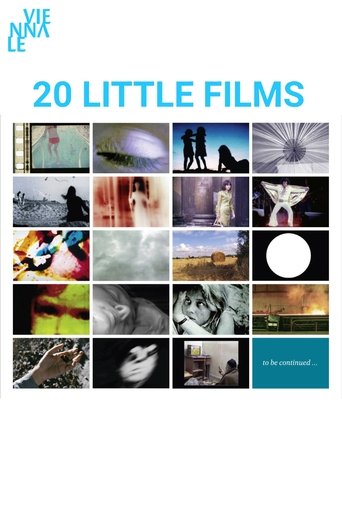
6.0Since 1995, the Viennale has invited renowned directors to create short, one-minute films as personal contributions to the festival. Ranging from home movies to political essays, musical sketches to abstract studies, these “little films” form a unique anthology of cinematic moments. 20 Little Films collects a selection of these works, premiering together for the Viennale’s 50th anniversary at the Locarno Film Festival.
20 Little Films
2012
 5.9
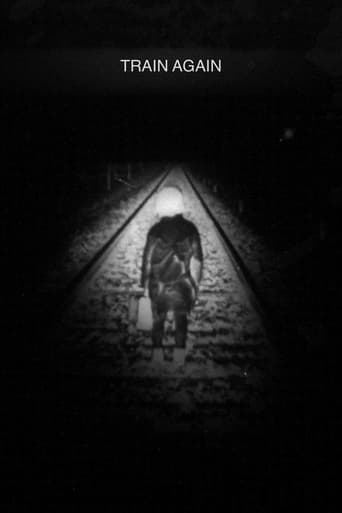
5.9Peter Tscherkassky condenses the long history of railways in the movies into a rousing blast for the senses in a heartfelt tribute to another legend of experimental cinema Kurt Kren.
Train Again
2021
 6.2
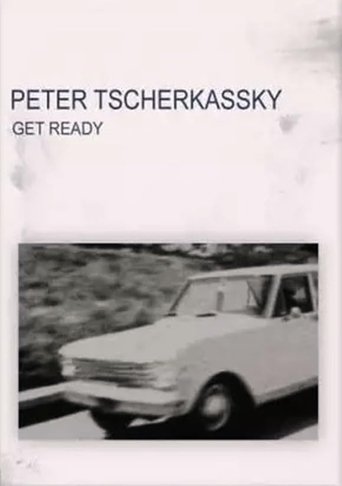
6.2A propulsively jittering journey through the cinematic imaginary using glitchy found footage and jacked-up cyber sounds, Get Ready hits the highway hard and takes us with it.
Get Ready
1999
Film credits

2010s · 2 titles
In this documentary, Peter Tscherkassky talks about his work, and he demonstrates in the darkroom how his movies are made.
Peter Tscherkassky – Kino aus der Dunkelkammer
2014
 NR
NRFounded in the second half of the 1990s, the experimental film association L'Etna witnessed the transition from film to digital cinema. Its premises, located in the heart of Paris, were unable to withstand gentrification.
Une certaine histoire du cinéma expérimental français
2019
1990s · 2 titles
 NR
NROn the 28th of October 1884 Daniel Paul Schreber, candidate of the National Liberal Party in Chemnitz, suffered a heavy defeat at the elections of the German Reichstag. He was taken up in the mental clinic of the Leipzig University soon afterwards. To his rehabilition he wrote an extensive piece of work, "Denkwürdigkeiten eines Nervenkranken" (Memoirs of My Nervous Illness), which was published in 1903 and led to his temporary dismissal. Hereby Schreber became the most quoted psychiatric patient in scientific literature. The third part was realized by Peter Tscherkassy based on a concept by Ernst Schmidt Jr.
Memoirs of My Nervous Illness, Part 3
1993
 7.4
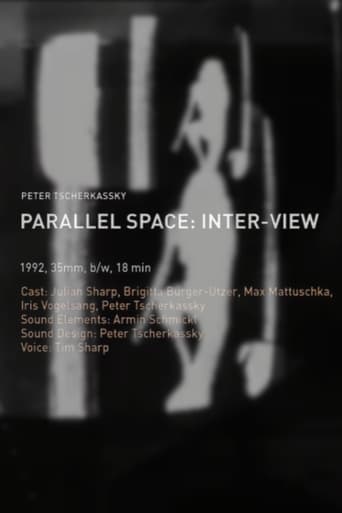
7.4Parallel Space: Inter-View is made with a photo camera. A miniature photo is exactly the size of two film frames. Optically it resembles a flickering double exposure; the former temporal and spatial unity disintegrates into pieces which have a correspondence with each other. (Peter Tscherkassky) Photographic processes - the material transformations involved in recording, developing, printing and projecting - functions as metaphors for psychological processes.
Parallel Space: Inter-View
1994
Behind the camera
5.0A collection of short experimental horror films, some well-known, some not.
Experiments in Terror
2003
6.3A film woven around the idea that between early cinema and avant-garde film exists a connection.
Coming Attractions
2010
6.3A film woven around the idea that between early cinema and avant-garde film exists a connection.
Coming Attractions
2010
6.8A woman goes to bed, falls asleep, and begins to dream. This dream takes her to a landscape of light and shadow, evoked in a form only possible through classic cinematography. An homage to Man Ray, dedicated to the beginning of the European avant-garde film within the surrealist movement.
Dream Work
2001
6.0Since 1995, the Viennale has invited renowned directors to create short, one-minute films as personal contributions to the festival. Ranging from home movies to political essays, musical sketches to abstract studies, these “little films” form a unique anthology of cinematic moments. 20 Little Films collects a selection of these works, premiering together for the Viennale’s 50th anniversary at the Locarno Film Festival.
20 Little Films
2012
5.9Peter Tscherkassky condenses the long history of railways in the movies into a rousing blast for the senses in a heartfelt tribute to another legend of experimental cinema Kurt Kren.
Train Again
2021
5.9Peter Tscherkassky condenses the long history of railways in the movies into a rousing blast for the senses in a heartfelt tribute to another legend of experimental cinema Kurt Kren.
Train Again
2021
5.9Peter Tscherkassky condenses the long history of railways in the movies into a rousing blast for the senses in a heartfelt tribute to another legend of experimental cinema Kurt Kren.
Train Again
2021
6.2A propulsively jittering journey through the cinematic imaginary using glitchy found footage and jacked-up cyber sounds, Get Ready hits the highway hard and takes us with it.
Get Ready
1999
 6.5
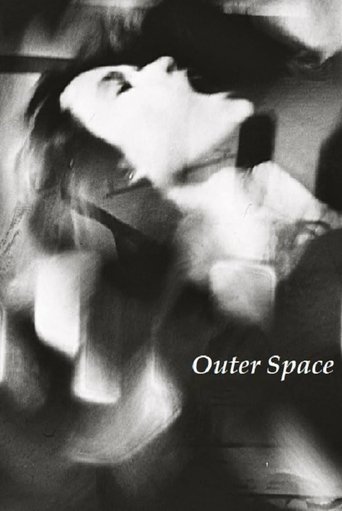
6.5A young woman move towards a house that holds a potentially dangerous spirit that has been tormenting her. The woman tries to fight against the film itself as it starts to cause the world to collapse.
Outer Space
1999
6.5A young woman move towards a house that holds a potentially dangerous spirit that has been tormenting her. The woman tries to fight against the film itself as it starts to cause the world to collapse.
Outer Space
1999
6.5A young woman move towards a house that holds a potentially dangerous spirit that has been tormenting her. The woman tries to fight against the film itself as it starts to cause the world to collapse.
Outer Space
1999
 5.2
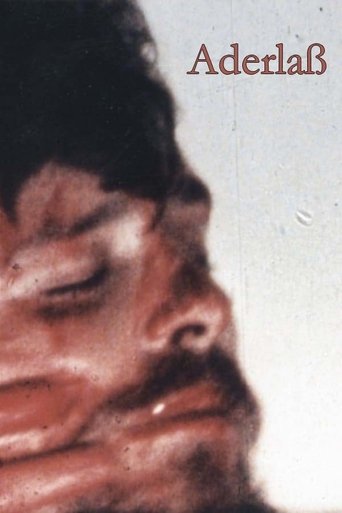
5.2Aderlaß is a youthful attempt to process the inheritance of the Vienna Actionists through the use of a super 8 camera. In front of the camera is a performance from Armin Schmickl Sebastiano (Peter Tcherkassky). A game with light and sound that explodes out of the calm into a delirium of movement and finally returns, after the "blood-letting", to rigidity. (Irene Judmayer)
Blood-Letting
1981
5.2Aderlaß is a youthful attempt to process the inheritance of the Vienna Actionists through the use of a super 8 camera. In front of the camera is a performance from Armin Schmickl Sebastiano (Peter Tcherkassky). A game with light and sound that explodes out of the calm into a delirium of movement and finally returns, after the "blood-letting", to rigidity. (Irene Judmayer)
Blood-Letting
1981
 6.5
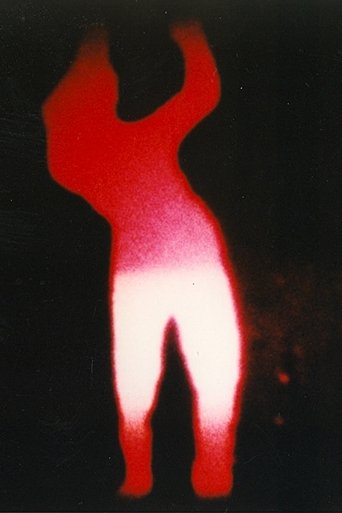
6.5Alternating between recognizable and abstract picture worlds, between theoretical reflection and lush sensuality is the main distinguishing characteristic of Peter Tscherkassky's work. That is particularly true when he concerns himself with filmic space. In Kelimba moving plastic objects are inserted, one after another, in a completely flat picture space. At the same time the processes of movement are subjected to a repetitive rhythm and thus transformed into a dance.
Kelimba
1986
NROn the 28th of October 1884 Daniel Paul Schreber, candidate of the National Liberal Party in Chemnitz, suffered a heavy defeat at the elections of the German Reichstag. He was taken up in the mental clinic of the Leipzig University soon afterwards. To his rehabilition he wrote an extensive piece of work, "Denkwürdigkeiten eines Nervenkranken" (Memoirs of My Nervous Illness), which was published in 1903 and led to his temporary dismissal. Hereby Schreber became the most quoted psychiatric patient in scientific literature. The third part was realized by Peter Tscherkassy based on a concept by Ernst Schmidt Jr.
Memoirs of My Nervous Illness, Part 3
1993
 5.2
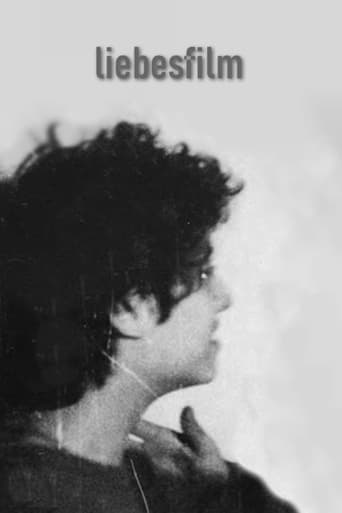
5.2Liebesfilm is an ironic attack on one of the durables of the Hollywood clichés - the film kiss. A short take of mouths approaching each other is shown 522 times. But the kiss never takes place, merely the speed of the movement is continually increased. This excessive repetition of the theme destroys the "happy clarity" that inhabits "the film kiss" myth.
Film of Love
1982
 5.7
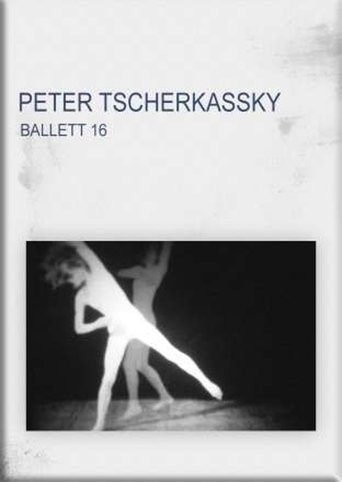
5.7256 frame enlargements of a continuous dance movement were dissected into 16 segments, each consisting of 16 frames. These segments were rearranged and rephotographed frame-by-frame. The resulting synthetic composition of movement was rephotographed off a screen running at twice its normal speed in order to accelerate the final film.
Ballett 16
1984
 5.3
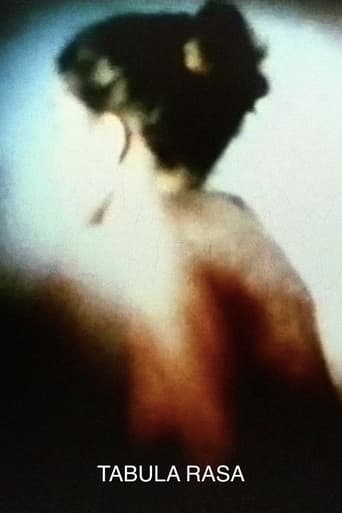
5.3The target of Tabula Rasa is the heart of cinema. Voyeuristic desire as the pre-condition for all cinema pleasure is at stake here. What Christian Metz and Jacques Lacan have established in theory is rendered as film in Tabula Rasa. At the beginning we can recognize only shadows from which the picture of a woman undressing herself hesitantly emerges. But exactly at the point when one believes one can make out what it is, the camera is located in front of the object. Tabula Rasa takes distance, the fundamental principle of voyeurism, in so far literally, as it shows us the object of desire but continually removes it from our gaze.
Tabula Rasa
1989
 5.8
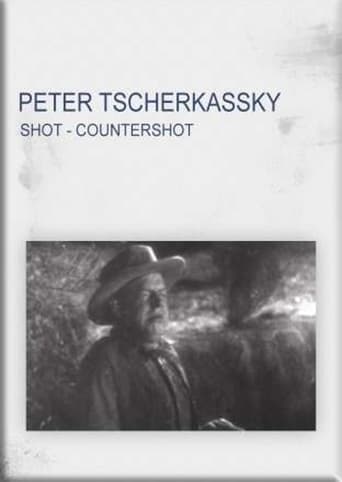
5.8Not a stage direction, but rather something very concrete is hidden behind the technical term. Something which betrays a little of the yearning for intelligent and playful dealings with the medium of short film…
Shot / Countershot
1987
 5.4
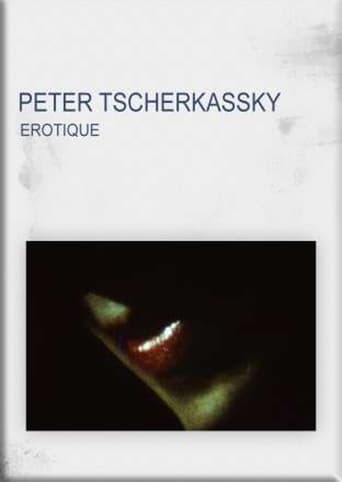
5.4One can determine a line in Tscherkassky’s oeuvre which turns around a game with filmic presentation, with degrees of recognisability — with the only-just and the not-any-more. Just to see desire. An example of this is Erotique. One sees swirling pictures, parts of a woman’s face, red lips, eyes in cyclical fragments of movement. Often it is difficult to tell which part of the body one actually sees (whoever wants to can see/imagine/think sexual organs and sexual acts.) The gaze gets hung up on partial objects, no integral, whole body to think about. No body, whose representation was always one of the problems in cinema.
Erotique
1982
 6.7
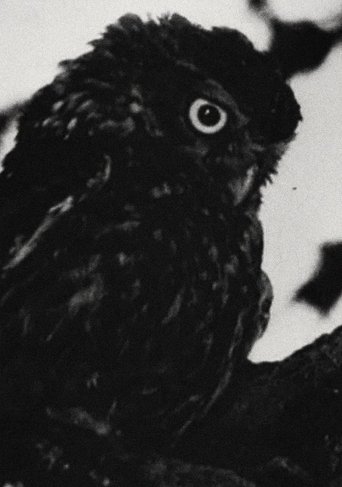
6.7Wolfgang Amadeus Mozart, according to his biographers (and his letters confirm this fact), was an extremely sensuous person, and Nachtstück (Nocturne) was intended to refer to this aspect of his personality: We glide into "Eine kleine Nachtmusik" a bit, then abandon standardized paths of conventional representational film and encounter a few seconds of passionate sensory filmæan example of something I would like to call "physical cinema." The thesis: Herr Mozart would have enjoyed it.
Nocturne
2006
 5.5
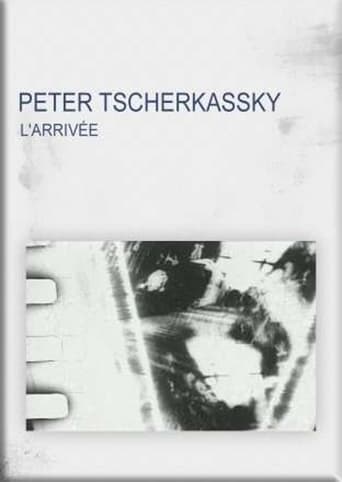
5.5The first of Peter Tscherkassky's Cinemascope trilogy of short films is a fragmented glimpse of images pulsating with chaotic rhythm as they fight white margins for room in his palette. Mirrored frames being split by white margin and trying to reassemble again like the poles of a magnet, a train approaching station and colliding with itself in white-hot blistering chaos.
The Arrival
1999
5.5The first of Peter Tscherkassky's Cinemascope trilogy of short films is a fragmented glimpse of images pulsating with chaotic rhythm as they fight white margins for room in his palette. Mirrored frames being split by white margin and trying to reassemble again like the poles of a magnet, a train approaching station and colliding with itself in white-hot blistering chaos.
The Arrival
1999
5.5The first of Peter Tscherkassky's Cinemascope trilogy of short films is a fragmented glimpse of images pulsating with chaotic rhythm as they fight white margins for room in his palette. Mirrored frames being split by white margin and trying to reassemble again like the poles of a magnet, a train approaching station and colliding with itself in white-hot blistering chaos.
The Arrival
1999
7.4Parallel Space: Inter-View is made with a photo camera. A miniature photo is exactly the size of two film frames. Optically it resembles a flickering double exposure; the former temporal and spatial unity disintegrates into pieces which have a correspondence with each other. (Peter Tscherkassky) Photographic processes - the material transformations involved in recording, developing, printing and projecting - functions as metaphors for psychological processes.
Parallel Space: Inter-View
1994
 6.0
6.0An attempt to transform a Roman Western into a Greek tragedy. The hero of Instructions for a Light and Sound Machine is easy to identify. Walking down the street unknowingly, he suddenly realizes that he is not only subject to the gruesome moods of several spectators but also at the mercy of the filmmaker.
Instructions for a Light and Sound Machine
2006
 5.9
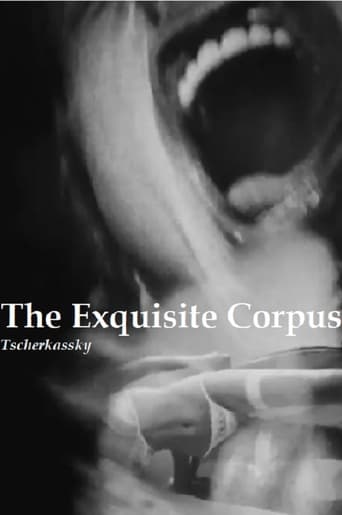
5.9The Exquisite Corpus is based on various erotic films and advertising rushes. Myriad fragments are melted into a single sensuous, humorous, gruesome, and ecstatic dream.
The Exquisite Corpus
2015
 6.5
6.5A woman on a meadow, strolling around, narcisstically involved, wandering. Now and again one can see her breasts through her half-opened shirt. The camera films with a powerful telephoto lens. This idyll is radically destroyed when the woman suddenly looks directly into the camera. There is an immediate cut (the voyeur has been discovered) and the whole sequence of events begins from the beginning again, but each time re-filmed from the last till finally, only a completely abstract, flickering picture remains.
Holiday Film
1983
 NR
NR(for Ernst Schmidt jrs. trilogy Memories of a Nervous Illness, part 1 & part 2) 1987/88, 16mm (S 8 blow up), á 4 min, colour & b/w
Daniel Paul Schrebers Stimmvisionen and Schizo-Schreber
1987
 5.4
5.4On a weekend in June 1983, in what was deemed a "country outing,“ an impressive number of artists from Berlin went to a small village in Schleswig-Holstein; their intention was to give the local residents a taste of Berlin’s avant-garde art. This event included presentations of dance, music, performance art, painting, land art and film. Back in Berlin the footage was manipulated in several ways to produce an “experimental examination.” —independent film and video database
Miniatures: Many Berlin Artists in Hoisdorf
1983
 6.3
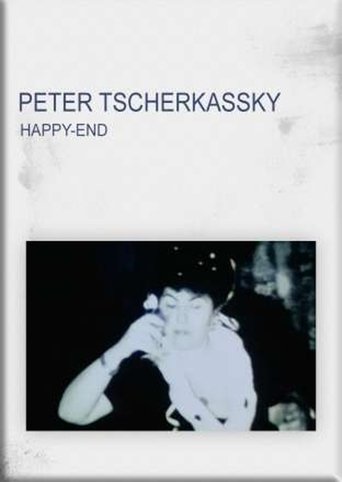
6.3A found footage film about rituals, festive occasions and a married couple in a seeming frenzy of cosy togetherness. We see the pair pouring drinks, cutting cakes, making toast. Finally the exuberant movement of the dancing woman freezes.
Happy-End
2012
 9.0
9.0Freeze Frame is an example of a filmic significator from which the transparency and invisibility has been removed. Material which has been repeatedly re-filmed (a construction site, a rubbish incinerating plant, industrial graveyards, an antenna and line-drawing like frame that continually falls over) are exposed on top of each other. The result is that an unambiguous reading of the picture, to say nothing of their positioning in a fictive room cannot even be attempted. This type of calculated picture removal is carried to the point where the film strip is stopped in the projector (and hence the title) and burns.
Freeze Frame
1983
 NR
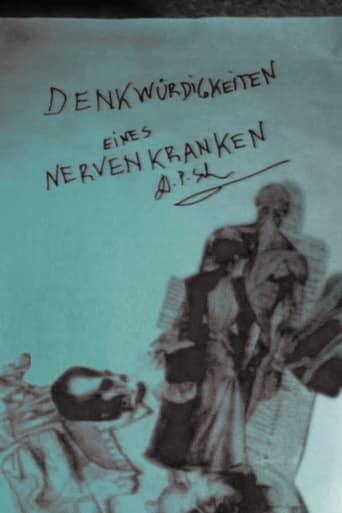
NROn the 28th of October 1884 Daniel Paul Schreber, candidate of the National Liberal Party in Chemnitz, suffered a heavy defeat at the elections of the German Reichstag. He was taken up in the mental clinic of the Leipzig University soon afterwards. To his rehabilition he wrote an extensive piece of work, "Denkwürdigkeiten eines Nervenkranken" (Memoirs of My Nervous Illness), which was published in 1903 and led to his temporary dismissal. Hereby Schreber became the most quoted psychiatric patient in scientific literature.
Memoirs of My Nervous Illness
1993
 4.0
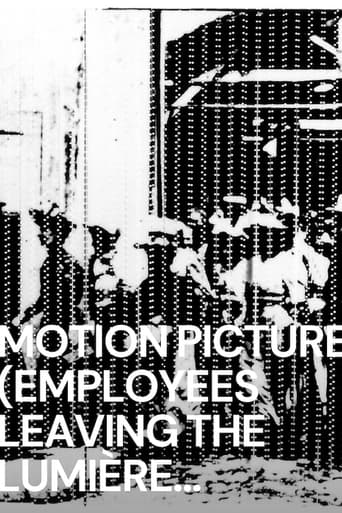
4.0In the darkroom, 50 unexposed film strips were laid across a surface, upon which a frame of "La sortie des ouvrier de l'usine Lumière" was projected. The stringing together of the individual developed sections make up the new film, which reads the original frame like a page from a musical score: within the strips from top to bottom and sequentially from left to right.
Motion Picture (Employees Leaving the Lumière Factory)
1984
4.0In the darkroom, 50 unexposed film strips were laid across a surface, upon which a frame of "La sortie des ouvrier de l'usine Lumière" was projected. The stringing together of the individual developed sections make up the new film, which reads the original frame like a page from a musical score: within the strips from top to bottom and sequentially from left to right.
Motion Picture (Employees Leaving the Lumière Factory)
1984
 5.0
5.0Twenty-eight well-known filmmakers living and working in Austria were invited by WIENER MOZARTJAHR 2006, to produce associative miniatures on Mozart. Requirement: they had to be one-minute artistic short films. The directors come from a whole range of different backgrounds, ranging from animated, experimental and short film to documentaries and feature films. The result is a multi-facetted sampler of diverse formal and contextual positions with regard to Mozart’s person and his influence on today’s society, art and culture. The contributions run the gamut from experimental-conceptual statements through socio-critical and documentary observations to pithy short feature films.
The Mozart Minute
2006
 5.6
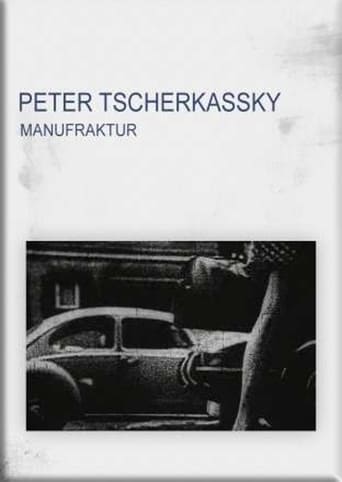
5.6A tangled network woven with tiny particles of movements broken out of found footage and compiled anew: the elements of the "to the left, to the right, back and forth" grammar of narrative space, discharged from all semantic burden. What remains is a self-sufficient swarm of splinters, fleeting vectors of lost direction, furrowed with the traces of the manual process of production.
Manufractur
1985
5.6A tangled network woven with tiny particles of movements broken out of found footage and compiled anew: the elements of the "to the left, to the right, back and forth" grammar of narrative space, discharged from all semantic burden. What remains is a self-sufficient swarm of splinters, fleeting vectors of lost direction, furrowed with the traces of the manual process of production.
Manufractur
1985