
Directing
Eliot Elisofon
Born — Died
1911-04-17 — 1973-04-07
Place of birth
New York City, New York, USA
Known for
Directing
Credits
2 titles
Eliot Elisofon (April 17, 1911 – April 7, 1973) was an American documentary photographer and photojournalist. From the Lower East Side in New York City, Elisofon graduated from DeWitt Clinton High School in 1929 and Fordham University in 1933. He was married twice, in 1940 to Mavis Lyons, whom he divorced in 1946; and in 1950 to Joan Baker Spear, with whom he had two daughters, Elin and Jill. He is a founding member of the Photo League in 1936. He was one of the most active and productive members: he gave guest lectures (1938–43); co-organized the Men at Work project with Lewis Hine (1940); served periodically as president between 1939 and 1941; taught courses on photojournalism and flash …
Known for
 6.4
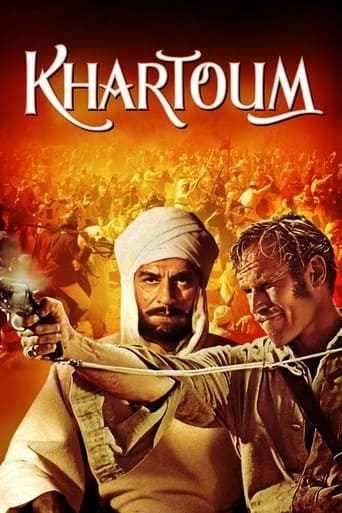
English General Charles George Gordon is appointed military governor of Anglo-Egyptian Sudan by the Prime Minister. Ordered to evacuate Egyptians from the Sudan, Gordon stays on to protect the people of Khartoum, who are under threat of being conquered by a Muslim army.
Khartoum
1966
 NR
The Kanaga mask is used in deeply sacred rituals by the Dogon people of Mali. Carving this mask is as important a ritual as the ceremonies in which the mask is used. The carver, a blacksmith, finds the proper tree and, in a secret cave outside the village, he shapes the mask with gestures which repeat the movement of the dancers who will wear it. When a dancer wears the Kanaga mask he becomes the Creator symbolically. He touches the ground with his mask and directs a soul to Heaven. Although these dances are now frequently performed for the public, the meaning of Kanaga is retained by the Dogon who fear, respect and depend on the power of the mask.
African Carving: A Dogon Kanaga Mask
1974
Behind the camera
6.4English General Charles George Gordon is appointed military governor of Anglo-Egyptian Sudan by the Prime Minister. Ordered to evacuate Egyptians from the Sudan, Gordon stays on to protect the people of Khartoum, who are under threat of being conquered by a Muslim army.
Khartoum
1966
NRThe Kanaga mask is used in deeply sacred rituals by the Dogon people of Mali. Carving this mask is as important a ritual as the ceremonies in which the mask is used. The carver, a blacksmith, finds the proper tree and, in a secret cave outside the village, he shapes the mask with gestures which repeat the movement of the dancers who will wear it. When a dancer wears the Kanaga mask he becomes the Creator symbolically. He touches the ground with his mask and directs a soul to Heaven. Although these dances are now frequently performed for the public, the meaning of Kanaga is retained by the Dogon who fear, respect and depend on the power of the mask.
African Carving: A Dogon Kanaga Mask
1974