
Directing
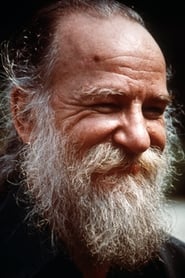
Ed Emshwiller
Born — Died
1925-02-16 — 1990-07-27
Place of birth
Lansing, Michigan
Known for
Directing
Credits
50 titles
Born in 1925, Ed Emshwiller studied graphic design at the University of Michigan and L'Ecole des Beaux Arts in Paris. By the late '60s Emshwiller was working as a science fiction illustrator, and had established his place in the American avant-garde cinema with such works as Relativity (1966) and Image, Flesh and Voice (1969). His early films featured collaborations with dancers and choreographers—a theme he carried over into his videoworks. As both an artist and a teacher, Emshwiller’s pioneering efforts to develop an alternative technological language in video were enormously influential. His early experiments with synthesizers and computers included the electronic rendering of three-dime…
Known for
 5.5
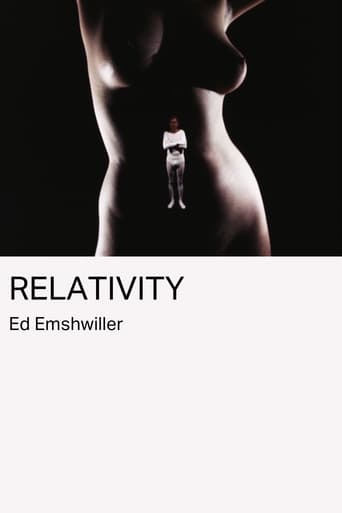
5.5Emshwiller made this film on a Ford Foundation grant, and in his original proposal to the Ford Foundation, he outlined the film as "something that deals with subjective reality, the emotional sense of what one's perception of the total environment is -- sexual, physical, social, time, space, life, death."
Relativity
1966
 7.0
7.0Painters Painting: The New York Art Scene 1940-1970 is a 1972 documentary directed by Emile de Antonio. It covers American art movements from abstract expressionism to pop art through conversations with artists in their studios. Artists appearing in the film include Willem de Kooning, Jasper Johns, Andy Warhol, Robert Rauschenberg, Helen Frankenthaler, Frank Stella, Barnett Newman, Hans Hofmann, Jules Olitski, Philip Pavia, Larry Poons, Robert Motherwell, and Kenneth Noland.
Painters Painting
1973
 7.3
7.3Also known as Walden, Jonas Mekas’s first diary film is a six-reel chronicle of his life in 1960s New York, interweaving moments with family, friends, lovers, and artistic idols. Blending everyday encounters with portraits of the avant-garde art scene, it forms an epic, personal meditation on community, creativity, and the passage of time.
Diaries, Notes, and Sketches
1968
 7.0
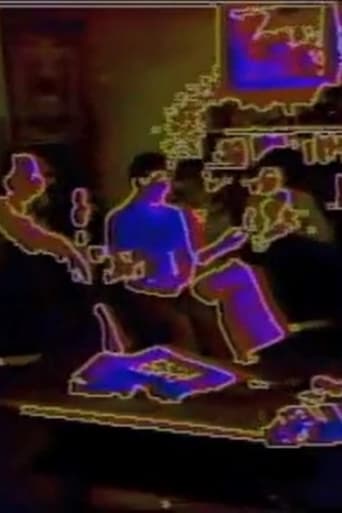
7.0Emshwiller terms Family Focus a "family self-portrait, a stylized autobiography," which takes the form of an intimate collage of home movies, black-and-white videotape and photographs that have been colorized, synthesized or otherwise visually transformed in an electronic mediation by the artist. The viewer is witness to the spontaneous activities and conversations of the family's quotidian home life, which is accompanied by Carol Emshwiller's ironic, often poetic commentary. In one sequence of home movies, the children are seen "growing" over a span of twenty years. Using the video camera as a kind of psychological mirror, Emshwiller integrates video's intimacy, reflexivity and realism with its "unreal" technological manipulations to form what the artist describes as a "documentary/video art transformation of self-revealing images."
Family Focus
1976
 7.0
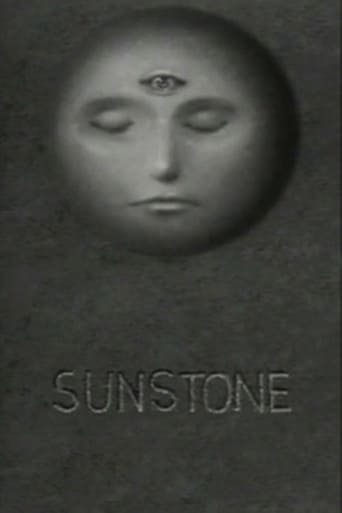
7.0Experimental computer animation from pioneering artist Ed Emshwiller.
Sunstone
1979
 NR
NRHome movies shot on Super 8mm by W+B Hein over 10 years.
Home Movies 1971-81
1985
Film credits

1970s · 5 titles
7.0Painters Painting: The New York Art Scene 1940-1970 is a 1972 documentary directed by Emile de Antonio. It covers American art movements from abstract expressionism to pop art through conversations with artists in their studios. Artists appearing in the film include Willem de Kooning, Jasper Johns, Andy Warhol, Robert Rauschenberg, Helen Frankenthaler, Frank Stella, Barnett Newman, Hans Hofmann, Jules Olitski, Philip Pavia, Larry Poons, Robert Motherwell, and Kenneth Noland.
Painters Painting
1973
7.0Emshwiller terms Family Focus a "family self-portrait, a stylized autobiography," which takes the form of an intimate collage of home movies, black-and-white videotape and photographs that have been colorized, synthesized or otherwise visually transformed in an electronic mediation by the artist. The viewer is witness to the spontaneous activities and conversations of the family's quotidian home life, which is accompanied by Carol Emshwiller's ironic, often poetic commentary. In one sequence of home movies, the children are seen "growing" over a span of twenty years. Using the video camera as a kind of psychological mirror, Emshwiller integrates video's intimacy, reflexivity and realism with its "unreal" technological manipulations to form what the artist describes as a "documentary/video art transformation of self-revealing images."
Family Focus
1976
 NR
NRDuring the 1970s I shot, helped to make, or commissioned about ten document films, mainly about film-makers. This film is one of them. It was made with Dan Ochiva, who acted as cameraman on about half of the footage. I shot the rest, and then edited the film. It is a record of a conference held at the State University of New York at Buffalo on March 22-25, 1973. Among the participants filmed were Gerald O'Grady (who organized the conference), Will Hindle, Stan Brakhage, Jonas Mekas, Robert Creeley, Bruce Baillie, Scott Bartlett, Hollis Frampton, Ken Jacobs, Ed Pincus, Stan Vanderbeek, Ed Emshwiller, Sally Dixon, James Cox. This footage will eventually become part of my film PEOPLE, PLACES, THE 1970S. –R. H.
Notes on the Buffalo Conference: “Autobiography in American Independent Cinema”
1973
 7.1
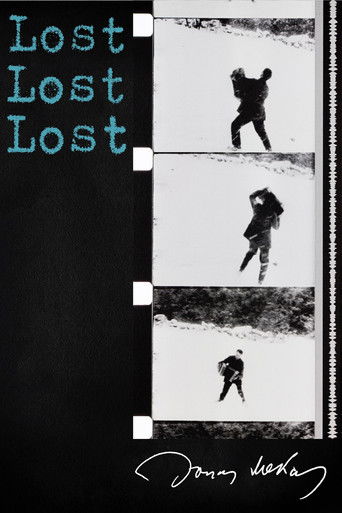
7.1Drawn from footage shot between 1949 and 1963, Jonas Mekas’s autobiographical diary film chronicles his early years in exile, capturing the struggle to build a new life in New York and his gradual discovery of a vibrant artistic community.
Lost, Lost, Lost
1976
 NR
NRSuper 8 film. Observations of the Institute on Film, Video & Photography, Amherst, MA, summer 1975. Among the cast of characters, in order of appearance, are Robert Breer, John Terry, Steve Ascher, Richard Leacock, Jon Rubin, Frank Daniel, Ed Emshwiller, Ann McIntosh, Terry Lockhart, Standish Lawder, Jerome Liebling.
Solstice and Solyanka
1975
1960s · 3 titles
7.3Also known as Walden, Jonas Mekas’s first diary film is a six-reel chronicle of his life in 1960s New York, interweaving moments with family, friends, lovers, and artistic idols. Blending everyday encounters with portraits of the avant-garde art scene, it forms an epic, personal meditation on community, creativity, and the passage of time.
Diaries, Notes, and Sketches
1968
 6.2
6.2Jack and Leo vie for the affections of Vera – who appears a little differently to each man – over the course of a series of energetic sketches, flashbacks and homages.
Hallelujah the Hills
1963
 10.0
10.0In March and April of 1966, Markopoulos created this filmic portrait of writers and artists from his New York circle, including Parker Tyler, W. H. Auden, Jasper Johns, Susan Sontag, Storm De Hirsch, Jonas Mekas, Allen Ginsberg, and George and Mike Kuchar, most observed in their homes or studios. Filmed in vibrant color, Galaxie pulses with life. It is a masterpiece of in-camera composition and editing, and stands as a vibrant response to Andy Warhol's contemporary Screen Tests. Preserved by the Academy Film Archive in 2001.
Galaxie
1966
Behind the camera
5.5Emshwiller made this film on a Ford Foundation grant, and in his original proposal to the Ford Foundation, he outlined the film as "something that deals with subjective reality, the emotional sense of what one's perception of the total environment is -- sexual, physical, social, time, space, life, death."
Relativity
1966
7.0Emshwiller terms Family Focus a "family self-portrait, a stylized autobiography," which takes the form of an intimate collage of home movies, black-and-white videotape and photographs that have been colorized, synthesized or otherwise visually transformed in an electronic mediation by the artist. The viewer is witness to the spontaneous activities and conversations of the family's quotidian home life, which is accompanied by Carol Emshwiller's ironic, often poetic commentary. In one sequence of home movies, the children are seen "growing" over a span of twenty years. Using the video camera as a kind of psychological mirror, Emshwiller integrates video's intimacy, reflexivity and realism with its "unreal" technological manipulations to form what the artist describes as a "documentary/video art transformation of self-revealing images."
Family Focus
1976
7.0Experimental computer animation from pioneering artist Ed Emshwiller.
Sunstone
1979
7.0Experimental computer animation from pioneering artist Ed Emshwiller.
Sunstone
1979
 6.0
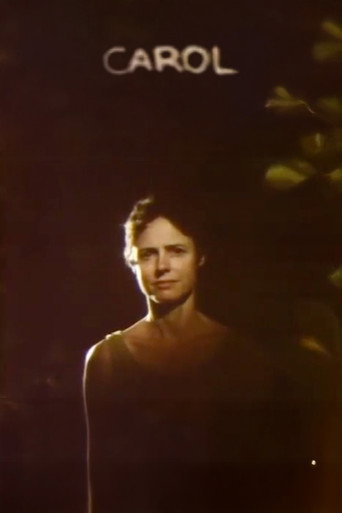
6.0Ed Emshwiller’s tender portrait of his wife, avant-garde science fiction writer Carol Emshwiller.
Carol
1970
 7.0
7.0Made for Roger Reynolds's Voicescapes performance, containing elements from Emshwiller's previous film "Sunstone."
Eclipse
1979
 6.3
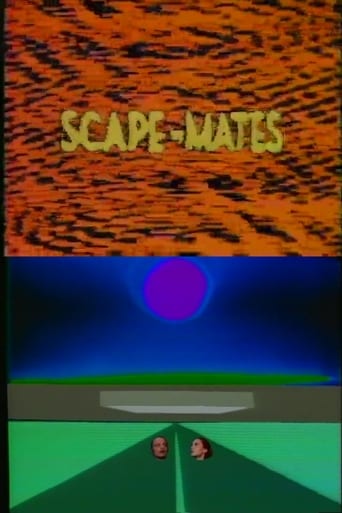
6.3In one of his first experiments in video, Emshwiller creates an electronic landscape of both abstract and figurative elements, where colorized dancers are chroma-keyed into a mutable, computer-animated environment. Working with the "Scan-i-mate," an early analog video synthesizer, Emshwiller choreographs an architectural, illusory video space, in which frames proliferate within frames, disembodied heads and hands move within a collage of animated forms, and the dancers and their environment are subjected to constant transformations through image processing. With its witty interplay of the "real" and the "unreal" in an electronically rendered videospace, and the skillful manipulation and articulation of a sculptural illusion of three-dimensionality, Scape-mates introduced a new vocabulary of video image-making.
Scape-Mates
1972
6.3In one of his first experiments in video, Emshwiller creates an electronic landscape of both abstract and figurative elements, where colorized dancers are chroma-keyed into a mutable, computer-animated environment. Working with the "Scan-i-mate," an early analog video synthesizer, Emshwiller choreographs an architectural, illusory video space, in which frames proliferate within frames, disembodied heads and hands move within a collage of animated forms, and the dancers and their environment are subjected to constant transformations through image processing. With its witty interplay of the "real" and the "unreal" in an electronically rendered videospace, and the skillful manipulation and articulation of a sculptural illusion of three-dimensionality, Scape-mates introduced a new vocabulary of video image-making.
Scape-Mates
1972
 6.4
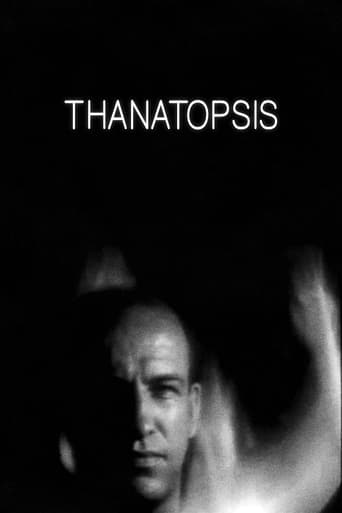
6.4Power saws and a heartbeat score this experimental light-and-color shot by Ed Emshwiller.
Thanatopsis
1963
 5.5
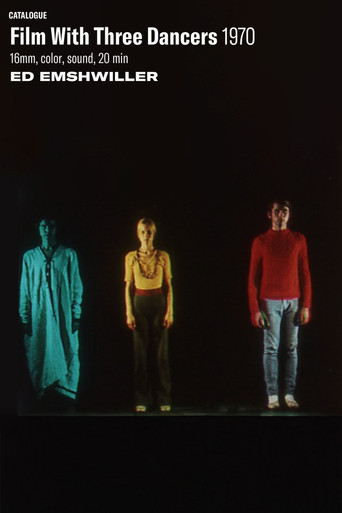
5.5In this spin-off from his original plan for Relativity (1966), Emshwiller continued with his desire to penetrate “space in a kind of flying camera, a dream of flying, a kind of sensual, sexual imagery where you were constantly going into an unknown space.” A trio of dancers (Carolyn Carlson, Emery Hermans, Bob Beswick) appear "first in leotards, then in bluejeans, then naked, as they “pass through rituals of movement.”
Film with Three Dancers
1971
 6.1
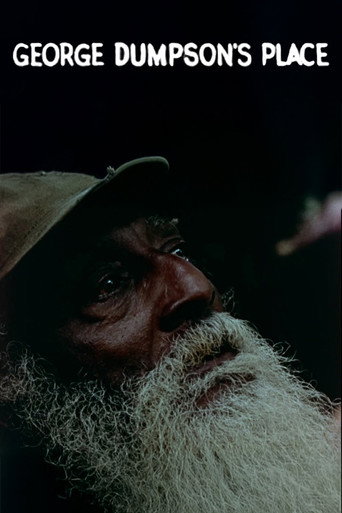
6.1Employing experimental techniques, Emshwiller magically moved through a collection of objects and artifacts in order to capture the spirit of George Dumpson and his backyard museum.
George Dumpson's Place
1965
 10.0
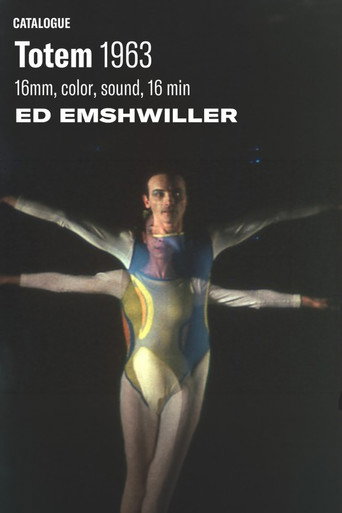
10.0A filmic interpretation of a modern dance ballet by Alvin Nikolais. Earth, fire, water and primordial mysteries in a cine-dance.
Totem
1963
 5.8
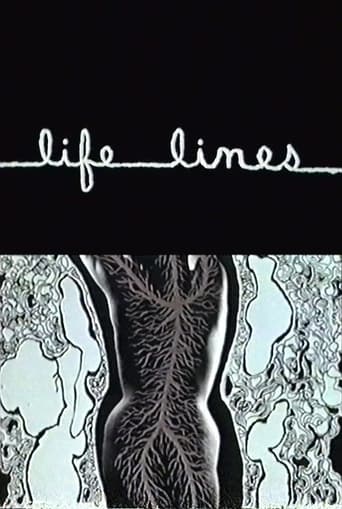
5.8A combination of animated line drawings with live photography of a nude model. A play on the title (living lines, life model, procreation and hand life line).
Lifelines
1960
 NR
NREmshwiller writes that the visually complex and densely textured Skin Matrix is a "video tapestry... a layering of different manifestations of energy: electronic (light, video, computer), inorganic (dunes, rocks, mud), organic (wood, plants), human (skin, hair), individual (faces, eyes), imagination (sculpture, robot)." His intricate electronic transformations of tactile surfaces, landscapes and human faces signify a metaphysical process that simultaneously masks and reveals; he achieves an uncanny spatial illusion of depth through layering and movement. Creating sophisticated image patterns and structures with the simple Bally Arcade computer (used for playing video games), Emshwiller weaves together the lush textures and kinetic energy of the organic and the technological.
Skin Matrix
1984
A collaboration between Ed Emshwiller and Anthony Bannon funded by a New York State Council on the Arts grant.
Positive Negative Electronic Faces
1973
 NR
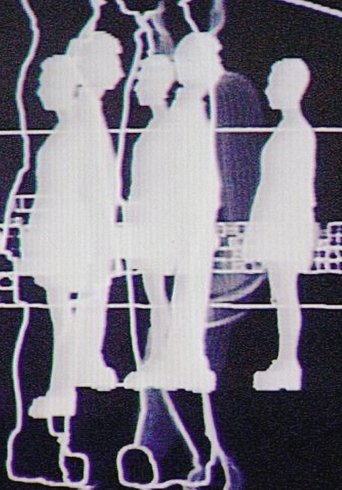
NRA lone man walking across the video screen is the starting point for this dynamic formal exercise. This image and its accompanying sound are subjected to increasingly complex and proliferating configurations to arrive at what Emshwiller calls a "visual fugue" in time and space, structured like musical or mathematical sequences. The walking figure and its de-synchronized footsteps are multiplied, slowed down, accelerated, reversed, syncopated, overlapped and otherwise altered in multifarious variations on a theme, building in a kinetic, almost narrative progression of compositional relationships. The screen is finally transformed into a dance of motion by male and female figures in an abstracted, colorized space. Rather than an analysis of movement a la Muybridge, Crossings and Meetings is a celebration of the potential for representing movement in time and space through video.
Crossings and Meetings
1974
A collaboration between Ed Emshwiller and William Irwin Thompson
New England Visions Past and Future
1976
The third film by Ed Emshwiller
Big Vacation
1958
 10.0
10.0Dubs is a somewhat abstract, experimental video without a clearly defined plot. It focusses mostly on the relationships between men and women and the lies they tell each other.
Dubs
1978
 NR
NRMade in collaboration with Alvin Nikolais, featuring the Nikolais dance company. CHRYSALIS is the result of structuring a series of cinematic and dance ideas Nikolais and I had. The film involves the dancers in improvised choreography, varied costumes, and cinema techniques from slow motion (400FPS) to pixilation. I did the sound score, using the voices of the dancers.-E.E.
Chrysalis
1973
 NR
NRChoreographic dance video created in 1976 by Ed Emshwiller.
Self-Trio
1976
 6.5
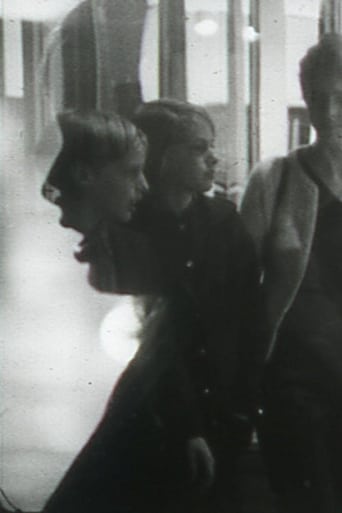
6.5This independent underground feature films two dancers (Carolyn Carlson and Emery Hermans) in silhouettes and shadows. Other couples discuss their relationships and lives in a candid display of self revelation. Street dances and conversations combine in a collage of people and places in this black and white film.
Image, Flesh and Voice
1969
A film by Ed Emshwiller made with writers from the Original Milford Science Fiction Writers Conference. Silent film. Mid 1950s.
The Thing from Back Issues
1956
 8.0
8.0Emshwiller introduces this work as a "tapestry of images and sounds suggestive of the hungers that human beings all share for food, love, sex, power, security and so forth." With collaborator Morton Subotnick, the noted electronic composer, and performer Joan La Barbara, Emshwiller weaves together sophisticated electronic and digital technology in conjunction with live performance and music, bringing his distinctive sensibility to a work of contemporary electronic theater.
Hungers
1987
A short documentary by Ed Emshwiller of the March on Washington.
Freedom March
1963
 8.0
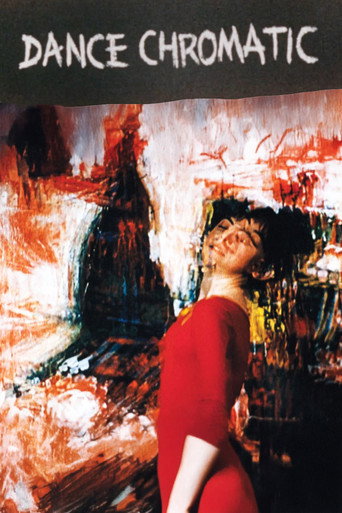
8.0Integrating film and painting, "Dance Chromatic" reveals that the contradiction between the desire to convey the organic growth of form and painting's lack of temporal extension led Emshwiller into filmmaking.
Dance Chromatic
1959
A video film by Ed Emshwiller
Woe Oh Ho No
1972
 7.0
7.0A film by Ed Emshwiller that surveys, without narration, the vast human and material resources committed to the U.S. space program. Uses recurring images and sounds to depict the past dreams and doubts, the planning and engineering, the hardware, the construction and transport, the teams and the astronauts, the definition of the moon voyage, the launch of the rocket, and visions for the future.
Project Apollo
1968
 7.0
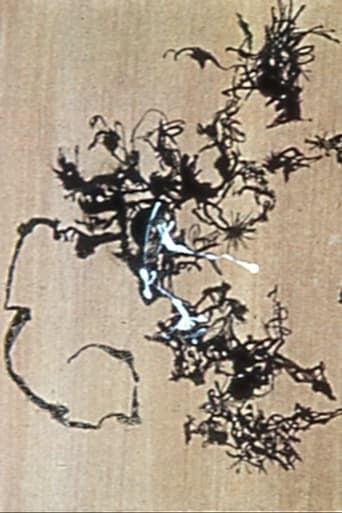
7.0The pointillist score accompanies changing line, form, and color to create an animated film painting, achieved through the exploration of spontaneous abstractions. Utilizes evolving changes style, technique and rhythm.
Transformation
1959
 NR
NRA kaleidoscopic collage of colours and dehumanised modern dancers, making subtle use of double exposure and electronic music. Shapes move and grow to form designs which are reflected. turned. twisted and finally fragmented. to reveal an understanding for the infinitude of design.
Fusion
1967
A film based on play by Wilford Leach
In Three Zones
1966
 10.0
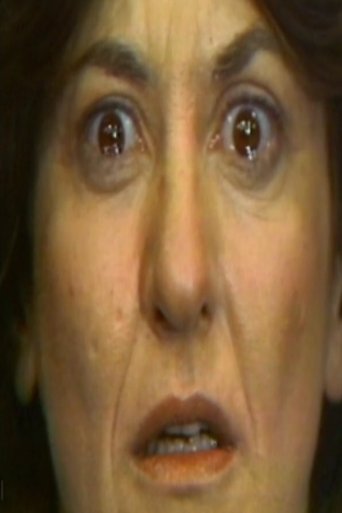
10.0Emshwiller writes that Sur Faces is a "stylized collaborative videotape in which actors working with (the artist) explore sexual politics as expressed in styles of drama from Shakespeare to 19th-century social theater, early 20th-century Freudian work, and contemporary fictional autobiographical improvisation. A video collage juxtaposing different ways of using video to express psychological states and conflict." In a synthesis of densely processed, textural images with documentations of dramatic role-playing from sources as varied as Richard III, Strindberg, and the Open Theater, Emshwiller undertakes an inventive inquiry into the transformation and representation of male/female relationships, via video and theater.
Sur Faces
1977
A film made by Ed Emshwiller and Wantagh, New York high school students.
Identities
1973
The Second film by Ed Emshwiller
Monsters
1958
A video work by Ed Emshwiller
Inside Edges
1975
 NR
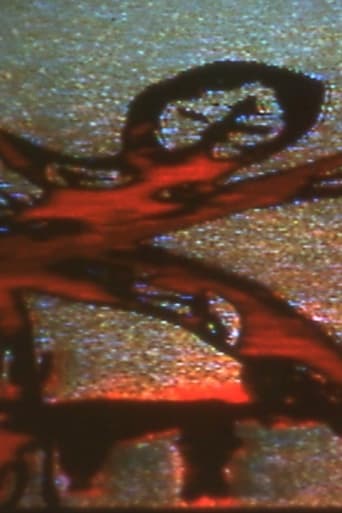
NR"A film version of a videotape. In it my drawings are animated and colorized by using computers. Walter Wright and Richard Froeman were on the computers. John Godfrey helped with the video editing. I did the sound score. The original tape was done on 2" high-band color videotape, two computers, a Paik-Abe video-synthesizer, with studio chroma-keying and multi-generation video editing." A version of Computer Graphics #1, one of Emshwiller's very first video works.
Thermogenesis
1972
 NR
NRA subjective film song of awareness; woman alone, woman with child, woman as scientist, woman as artist, woman with woman, woman with man. Paradox and dilemma, the human state as seen through today's suburban woman. The filmmaker explored with several women their conditions and sought ways of relating and structuring those states in a film.
Choice Chance Woman Dance
1971
 8.0
8.0The first film by Ed Emswhiller
Paintings by Ed Emshwiller
1958
 NR
NRPilobolus and Joan is a dance/narrative journey of transformation, a theatrical search for self and love based on Carol Emshwiller's story Metamorphosed. In this inversion of Kafka's Metamorphosis, a cockroach awakens as a man — actually a four-man being, as enacted here by members of the Pilobolus Dance Theatre. Within this serio-comic narrative format, the sculptural configurations of the antic Pilobolus dancers find their video correlative in Emshwiller's inventive imaging juxtapositions and surrealistic manipulations of time and scale. Emshwiller achieves a video theater of the imagination, applying the transformative properties of the electronic medium as a visual counterpoint to the literary text, the gymnastic choreography of Pilobolus, and the musical performances of Joan McDermott.
Pilobolus and Joan
1973
 7.0
7.0This biker documentary was selected for screening at the 1964 Flaherty Film Seminar. Emshwiller described it as "a roaring picture of motorcyclists in action. Modern Lancelots and their ladies-in-waiting go wide open for a day at the races. An impressionistic film of guys and gals who get their kicks in direct physical action."
Scrambles
1964