
Acting
Ljuba Tadić
Born — Died
1929-05-31 — 2005-10-28
Place of birth
Uroševac, Serbia, Yugoslavia
Known for
Acting
Credits
64 titles
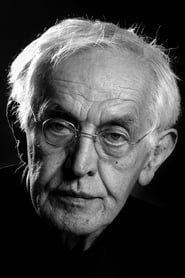
Ljubivoje "Ljuba" Tadić (Serbian Cyrillic: Љубивоје Тадић Љуба) (31 May 1929 — 28 October 2005) was a Serbian actor who enjoyed a reputation as one of the greatest names in the history of former Yugoslav cinema. He made his screen debut in 1953, but his first truly memorable role was in the 1957 film Nije bilo uzalud. In this film, like in many others, he played the villain, but he turned out to be the most memorable character. Later he built on this reputation and continued to play important historical and larger-than-life characters. He also made history by uttering an obscenity in one of the final scenes of 1964 World War I epic Marš na Drinu, which was the first such instance in the hi…
Known for
 7.5
7.5An exiled filmmaker finally returns to his home country where former mysteries and afflictions of his early life come back to haunt him once more.
Ulysses' Gaze
1995
 7.0
7.0Vuk Karadžić, is а Yugoslavian historical drama television series which depicts the life and work of Vuk Stefanović Karadžić, a Serbian linguist and major reformer of the Serbo-Croatian language.
Vuk Karadžić
1987
 10.0
10.0Impure Blood (Serbian: Нечиста крв, Nečista krv) is a 1996 film adaptation of the Impure Blood novel written by Borisav Stanković. It is concerned with themes of Serbian south, in the reforming in late 19th century.
Impure Blood
1996
 8.9
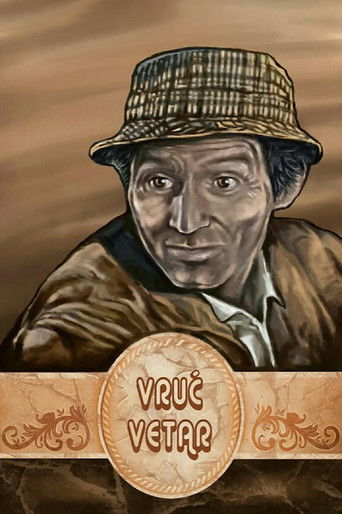
8.9Vruć vetar is one of the most popular Yugoslav TV miniseries that aired in 1980. The show and movie cut from scenes of the show were popular in neighboring countries-also very popular in Czechoslovakia. Its main theme became very popular and enjoying a bit of a cult status. The story follows Shurda, a man in his 30s, who comes from a small town to Belgrade to get rich. However, as no job is good enough for him, he tries his luck in Germany, but this venture proves to be the same, so he returns to his native Yugoslavia.
Hot Wind
1980
 5.7
5.7In the first year of freedom after WW2, a poor family from rocky Herzegovina moves to fertile province of Vojvodina hoping for a better life. However, there they face different type of troubles following the Tito's break-up with Stalin in 1948. Destinies of individual members of this family are about to have a tragic epilogue.
Golden Apple
1986
 NR
NRJovča is a respected and rich man in the 19th-century Vranje. He loves his daughter Vaska a little bit too much, so he does not let any of the suitors, even the best ones, approach her. Over time, she starts a relationship with a servant she grew up with.
Jovča
1976
Film credits
2000s · 2 titles
 6.8
6.8Jovana and Aleksa are young people, linked by fate since childhood. Forced to move from the area where their ancestors lived for centuries, trying to find and secure the place to live in their new environment. Faced with the loneliness, and separation, because Alex works abroad in order to pay for the house, and they collide with the unsolvable problem for them - a fraud!
Heart's Affair
2006
 6.0
6.0Old writer Mihailo tells his dying wife a story about lovers and romances set in different seasons. In order to keep her alive, he talks about other people's romaces, but these are supposed to revive their own love story. The heroes of his stories are couples of different age who let go into frivolty of kisses and delicate game of seduction. Mihailo's wife does not like the stories at all because there is no true moral in it - they keep running around in circles. Mihailo decides to tell a new story that should please her. The heroes of the story are young Milos and Mila. Purified by previous experience the two of them move through idealized city scenes, freed from foul play and cheating-it looks like true love can still be found.
Kisses
2004
1990s · 7 titles
7.5An exiled filmmaker finally returns to his home country where former mysteries and afflictions of his early life come back to haunt him once more.
Ulysses' Gaze
1995
10.0Impure Blood (Serbian: Нечиста крв, Nečista krv) is a 1996 film adaptation of the Impure Blood novel written by Borisav Stanković. It is concerned with themes of Serbian south, in the reforming in late 19th century.
Impure Blood
1996
 7.4
7.420 peoples paths crisscross one night in violent mid-'90s Belgrade.
Cabaret Balkan
1998
 7.0
7.0Milutin, a former powerful man in a small town, is terminally ill. Members of his family gather around his bed on the day of his baptism. It is also an opportunity to once again recall the events from the past that changed everyone's lives. At the same time, this meeting is the last chance to cross paths with that past and start a new life.
Clay Pigeons
1991
Two retired, aging British officers meet in the club of special forces' veterans where they stress their conflicted views about WW2 in the former Yugoslavia. One of them was delegate with the Chetniks, while the other one was with partisans.
British Gambit
1998
 7.0
7.0A 1990 Serbo-Croatian language drama film directed by Aleksandar Fotez, starring Nebojsa Bakocevic, Ljuba Tadić and Branislav Jerinić.
The Clef
1991
 4.2
4.2A famous fashion designer returns to his birthplace in a tiny Serb town, in the wake of the recent war. Although the inhabitants still love to dance the tango and live life's pleasures to the full, the Mafia have gained a foothold.
Tango Is a Sad Thought to Be Danced
1997
1980s · 11 titles
5.7In the first year of freedom after WW2, a poor family from rocky Herzegovina moves to fertile province of Vojvodina hoping for a better life. However, there they face different type of troubles following the Tito's break-up with Stalin in 1948. Destinies of individual members of this family are about to have a tragic epilogue.
Golden Apple
1986
 NR
NRA tale of dirty filmmakers' job, constructed in the form of collage consisting of authentic events, movie document, while also being an experiment. In the movie, real writer Radoslav Pavlovic and film director Dusan Sabo play themselves as other people, and others as themselves. They're trying to make a film about Kosovo... Cinema observed as parallel life. At the same time, it is homage to French New Wave classic "Breathless" by Jean-Luc Godard.
Dirty Movie
1989
 8.0
8.0In Skopje in 1939 a family of a disabled bricklayer clashes over tradition, patriarchal morality and modern world views as fascism and World War II loom on the horizon.
Wild Flesh
1982
 NR
NRA 1988 Serbo-Croatian language drama film directed by Milan Bilbija, starring Senad Bašić, Snježana Martinović and Stojan ‘Stole’ Aranđelović.
Byzantine Empire '88
1988
 6.3
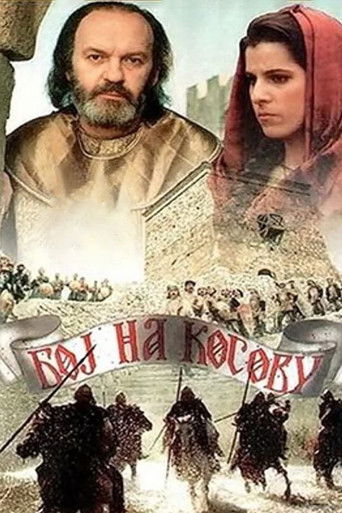
6.3In 1389, the Serbian prince Lazar Hrebeljanović refused to submit to the Turkish Sultan Murat, who was invading Serbia with a large army, in order to continue conquering Europe through it.
Battle of Kosovo
1989
 5.2
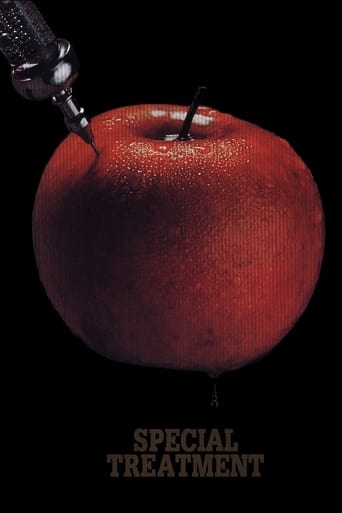
5.2Dr. Ilic works in the hospital for compulsory treatment of alcoholics. By conducting his own "special treatment" through physical exercises, apple eating, the healing effects of listening to Wagner's music and psychodrama, a group of six patients have been taken to visit the brewery where there is a problem of alcoholism in the workplace.
Special Treatment
1980
 4.6
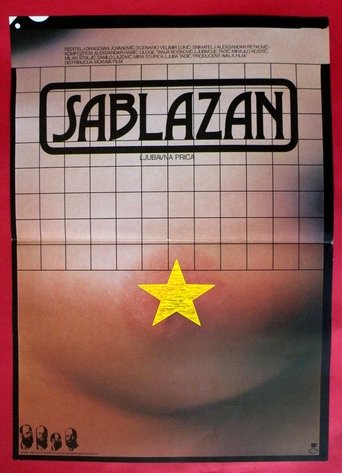
4.6After the end of World War II, a young partisan falls in love with a German secretary who is captured and imprisoned by partisans. He decides to free her and escape with her.
Outrage
1982
 8.0
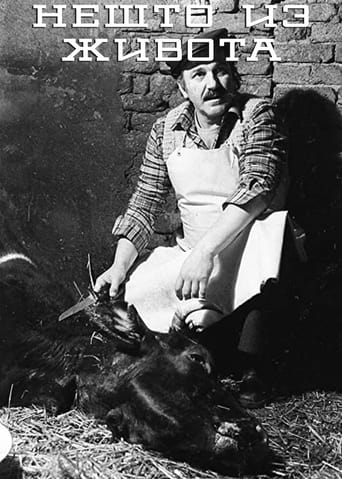
8.0Rade is in love with Milica, but her father Marko, a village butcher, does not approve. He wants his son to finish school and leave the village. Marko buys a sick cow from Milica's father, puts a false stamp on it, and sells the meat as if it were healthy. Rade finds out that his father has been doing this for a long time, and so he comes into conflict with him.
Scenes from a Life
1980
 4.9
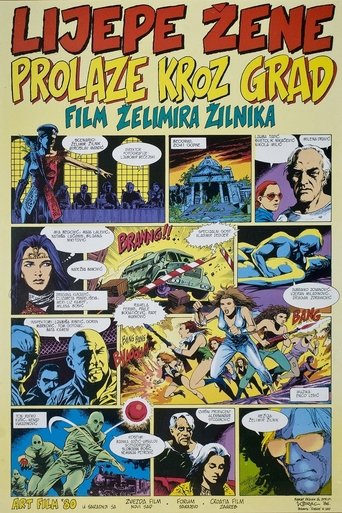
4.9Belgrade in 2041 is a deserted city that looks like a dump yard. A few old men try to bring up a group of young girls in the old, traditional way of their Yugoslav ancestors.
Pretty Women Walking Through the City
1986
 8.0
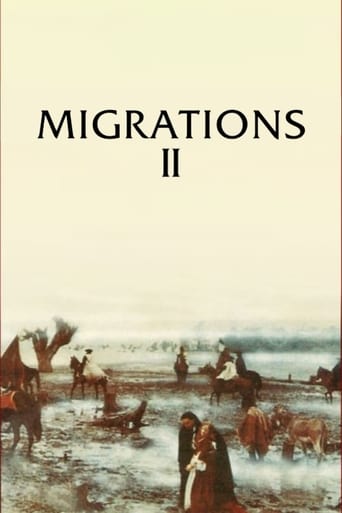
8.0Screening of the synonymous Milos Crnjanski's poetic novel about the tragedy of Serbian people who scattered their energy and bones from Dnepr to Lotaringia during XVII and XIX century. The great Serbian migration topic is given through the military campaign of major Vuk Isakovic (Avtandil Makharadze) at the head of Slavonian-Danube regiment, from spring of 1744. to spring of the next year. The second topic follows tragic but passionate relationship between Vuk's younger brother and his wife, which ends with her long-lasting disease and death.
Migrations II
1989
 5.9
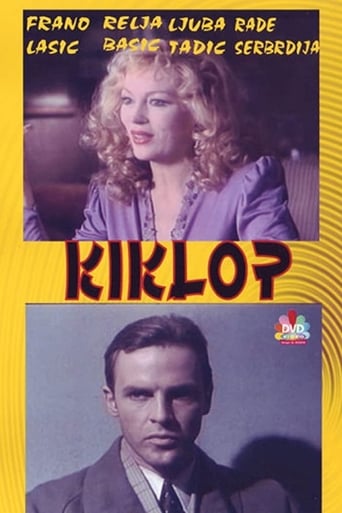
5.9Melkior Tresic is one of many intellectuals in 1941 Zagreb who is helplessly waiting for the encroaching war.
Cyclops
1982
1970s · 20 titles
NRJovča is a respected and rich man in the 19th-century Vranje. He loves his daughter Vaska a little bit too much, so he does not let any of the suitors, even the best ones, approach her. Over time, she starts a relationship with a servant she grew up with.
Jovča
1976
 7.0
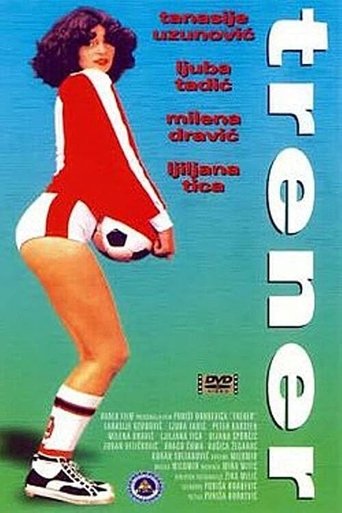
7.0A man from a small place has become a coach of the biggest club in the country. He's coming back to his home town to buy a talented striker from a local club. A new striker immediately becomes a star in the big club. But a conflict between coach on one side and striker and manager of the club on the other occurs and results in coach leaving the club. He then becomes a coach of a big German club and in international competition has a match against his former club. In first game in Munich his former club wins which puts him in danger of losing position of coach in new club. But in the second game his team wins in Belgrade and goes trough. He once again goes to his home town and in the graveyard, at the tomb of his father, who died in war fighting Germans, asks himself what happened so he's now fighting for the Germans against a club from his own country.
The Coach
1978
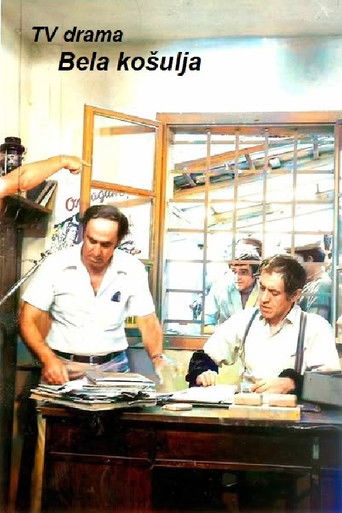 8.0
8.0A TV drama set in a brick factory.
White Shirt
1973
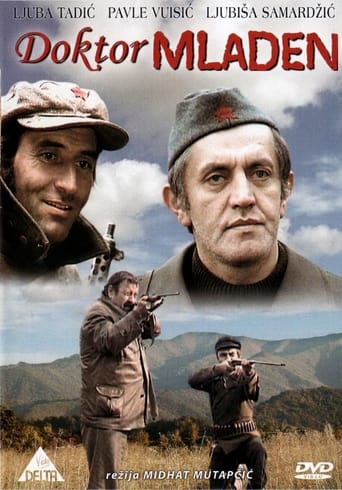 6.4
6.4The story begins in 1941 and shows one of the people who which were actually, very brave and proudly fought against the Ustasha, Germans and other butchers, not related to that ideology was tied. The film is about Dr. Mladen Stojanovic legend of Kozara and Krajina, great man, humanist, friend, and finally the commander one of a the proud partisan detachment, which is that area brought for a moment bring much desired freedom.
Doctor Mladen
1975
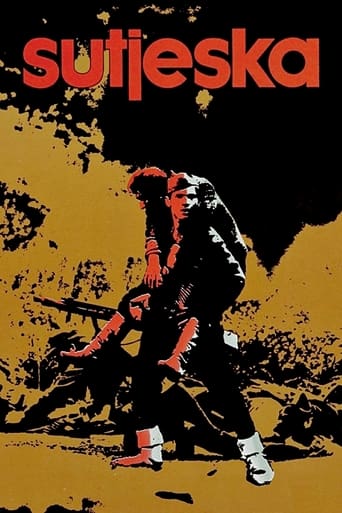 6.6
6.6The headquarters of the Marshal Tito's Liberation Army are surrounded by Axis forces. The Partisans have no choice but to fight their way out of the encirclement and face the enemy on the plains of Sutjeska.
The Battle of Sutjeska
1973
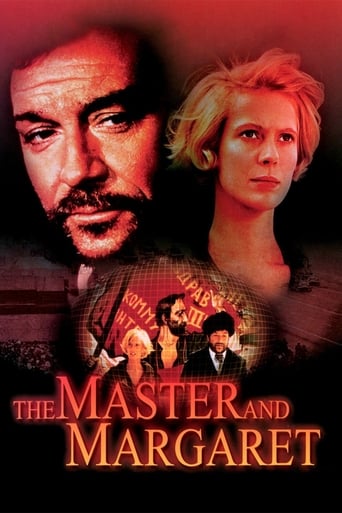 5.4
5.4Maestro Nikolai Masoudov, a talented writer, and his assistant Margaret, are working on a biblical story of Pontius Pilate. The Satan — Woland, and his lieutenants, are harassing Master by surveillance, by killing his friend, and sending another friend to Gulag prison in Siberia. Victimized by their harassment, Master becomes paranoid, and is locked up in a mental institution. Margaret is trying to save him regardless of the danger.
The Master and Margarita
1972
 7.0
7.0An architect in a construction company gets close to a young girl who has just graduated, whom he met while she was a student doing an internship at that company. Their relationship becomes more and more serious, and despite a few small frictions, they stay together. He is going on a business trip by plane to Libya. The plane crashes on landing. He survives, but remains immobile. Despite such an accident, she stays by his side.
An Accident
1973
The manager of a whorehouse is in love with a young woman who works as a maid, there. He believes that his feelings are reciprocated, but the woman chooses instead to marry a rich man who has also been courting her. Punctuating the story of this romance are a magician's show, and an earthquake.
Fear
1974
 9.0
9.0Between the two World Wars, Yugoslavia was ruled by a monarchy. This movie explores the difficulties faced by a Communist Party organizer under that regime when an order goes out to kill anyone threatening the current regime. At first he is willing to leave the country, but his experience of the situation of workers moves him to stay. Despite efforts of captors to help him escape, he refuses, and dies a martyr's death.
Four Days to Death
1976
 6.4
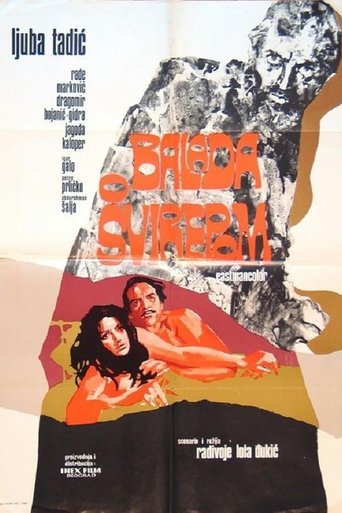
6.4Deeply hurt by his wife's adultery, a man leaves her and his son to live high up alone in the mountains of Montenegro. Many years later, the war breaks out and the two enemy factions must cross the very mountain. One of them seeks the man's help to find a path through the snow. Later that day, he finds out that one of the other side's members is no other than his son.
The Ballad of the Ferocious...
1971
 5.7
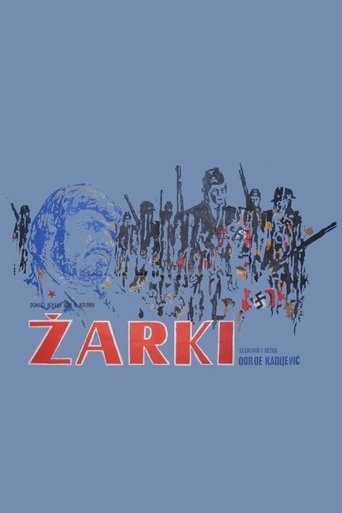
5.7In Vojvodina during the war, a partisan commander Zarki fell into the hands of the local Germans. They bound him in chains and take him from one village to another, torturing him in public so he could tell the names from his movement. Bewildered by his resisting power, the Germans tend to break him down and destroy the pride which is his answer to their torture. Frenzied of powerlessness, they ultimately choose the most horrifying death - they buried him alive in the sand that will cover the last trait of him, but he died victorious: He died for his thing.
Zarki
1970
 8.0
8.0A story about an old man who fights against physical and spiritual weakness that is overcoming him more and more.
The Last Cheers
1976
 6.3
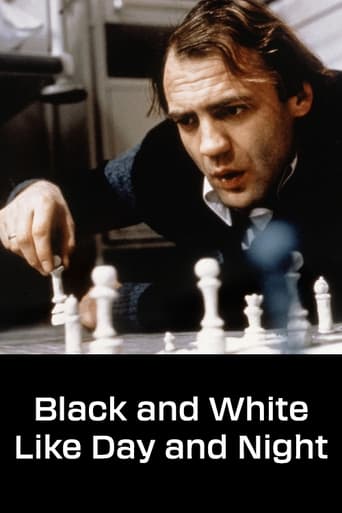
6.3A scientist who swore off playing chess after a nervous breakdown as a boy wunderkind, creates an undefeated chess program. But the Russian world champ beats Tommy Rosemund's masterwork in a televised match. So the West German mathematician becomes a top chess pro himself, which the West German media boast will prove the superiority of Germany and democracy. The jowly, white-faced Rosemund believes that the entire Red Communist bloc is out to stop him from vanquishing their atheist pretty boy, Stefan Koruga, to become the next Bobby Fischer and a symbol that capitalism is preferable to socialism.
Black and White Like Day and Night
1978
TV adaptation of the Bora Stankovic drama, the most staged play in the history of Serbian theatre. Set in the southern Serbian town of Vranje, it is a tragedy about a Gypsy singing girl destined to marry but not for love. The old man Mitke loves her beauty and singing, but doesn't love her as a woman. Her talent and free spirit reminds him of his youth, young age and all he had to sacrifice for loveless marriage and unhappiness in order to fit into conventions.
Koshtana
1976
 5.3
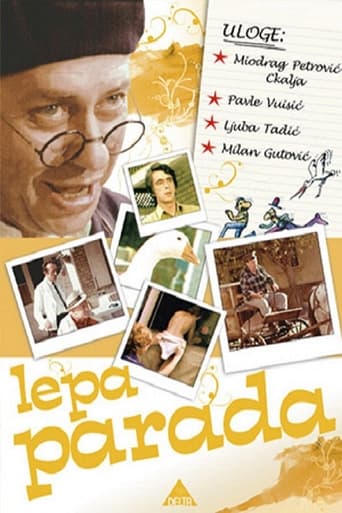
5.3Life in a small town, sunk in boredom and lack of excitement where dogcatcher is very important person.
A Lovely Parade
1970
 9.0
9.0As a young woman, Klara left her hometown in disgrace. Now she is old and unimaginably rich, as for the first time she returns. The town is nearly bankrupt and in urgent need of money. Everybody hopes Clara will come to the rescue. And she will. However, there is a condition: somebody must kill the man who was her lover all those years ago.
The Visit of the Old Lady
1976
 6.5
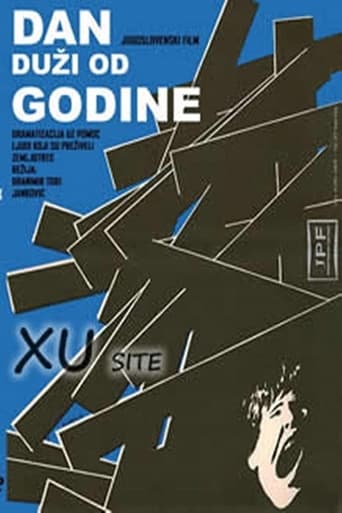
6.5The film tells of devastating earthquake in Banja Luka in 1969 and follows a group of prisoners in prison during devastating earthquake and people and residents of Banja Luka. Fate of prisoners,the fate of the city and residents of Banja Luka, are light motive of this movie.
A Day Longer Than a Year
1971
 7.7
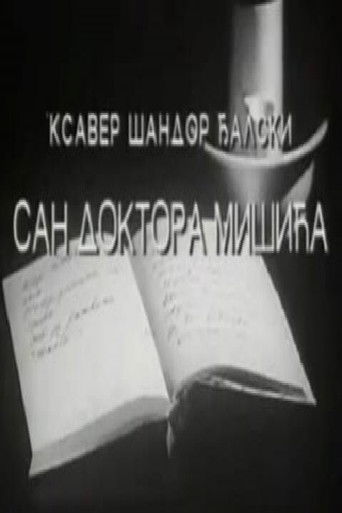
7.7Doctor Mišić comes to the Jabučevački cacstle, a place known as haunted by ghosts and wraiths. He's stubborn supporter of common sense and logic, taking all assumptions about transcendent world and fourth dimension to be silly. However...
The Dream of Dr. Mišić
1973
 5.2
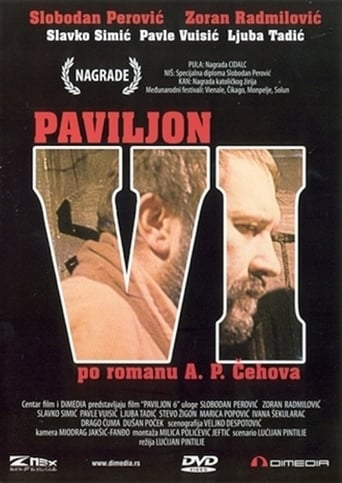
5.2A doctor from provincial town in Tsardom of Russia meets his former student in Ward 6, where the story takes place. Impressed by his rebellious spirit and clever remarks, he tends to spend more time with him while also indulging in meditation, only to be ridiculed by his fellow colleagues. Based on a Chekhov's work of the same title.
Ward Six
1978
The action is set in the Paris Commune, established in 1871 after the Franco-Prussian War, and the play follows the historical events surrounding this revolutionary uprising. The main character is the pacifist teacher Gabrielle Langevin, but historical figures such as Gustave Courbet also appear.
The Defeat
1972
1960s · 19 titles
 6.2
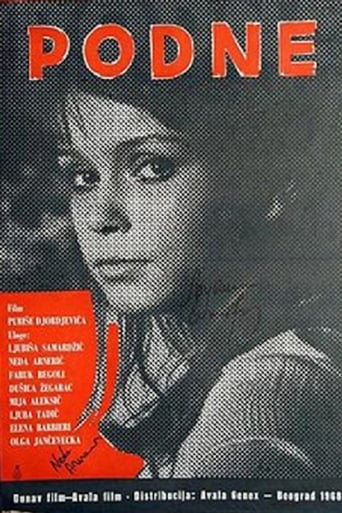
6.2The lives of many people in one Serbian town are changed after Tito's breakup with Stalin.
Noon
1968
 7.5
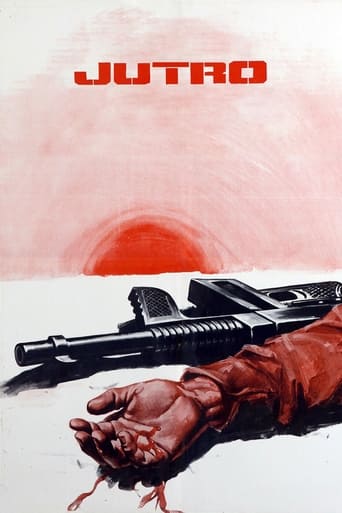
7.5In the first days after the Second World War, as collaborators are being taken care of, a former partisan finds out that war never truly ends — not even in time of peace.
The Morning
1967
 6.0
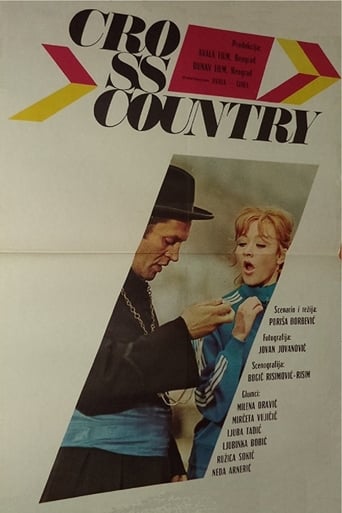
6.0A priest’s daughter from a small town falls in love with cross country running over TV. She starts to train. She runs, meets a local boy and falls in love. She runs again, meets a black man and starts flirting. The local boy kills a black man out of jealousy and the police kills him.
Cross Country
1969
 10.0
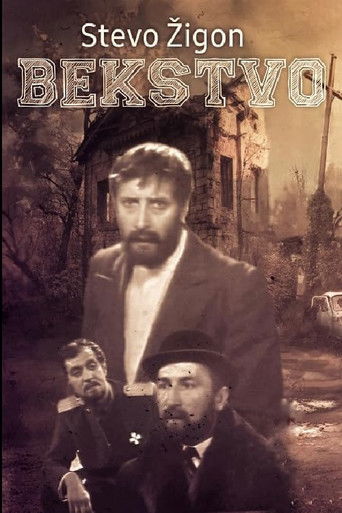
10.0The TV movie "Escape" shows the agony of "white" officers, soldiers and citizens who fled before the October Revolution, pursued by the power of the Red Army, but also by the blood of their own crimes. Composed in several "pictures", it is a kind of ballad about madness and despair, the battle for bare life, but also an elegy about exile, crime and punishment.
The Flight
1968
 5.6
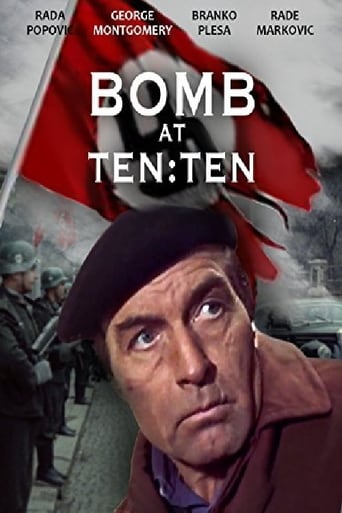
5.6An American pilot escapes from a POW camp and links up with Yugoslav partisans. He’s about to head back to Allied lines when he learns that the Partisans are plotting to assassinate the camp commander. He joins in the plot, aiming for revenge.
Bomb at 10:10
1967
 6.8
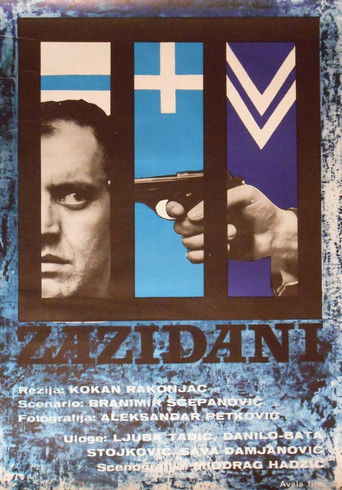
6.8A guard prevents the inmate's escape from the prison. During his second attempt, the inmate decides to save guard's life who have been fallen into the river while trying to catch him. Since the guard's job is now to keep an eye on him in the cell, they spend a lot time together and their hatred turns into a sincere friendship. The guard wants to help inmate to escape again.
The Walled In
1969
 5.4
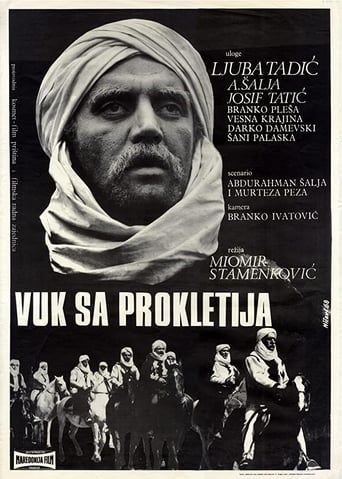
5.4Uka is an old Albanian who lives in the mountains on the border of Kosovo and Albania. As an honorable man, he must deal with his son who befriended Italian fascists during WW2.
Wolf of Prokletije
1968
 5.8
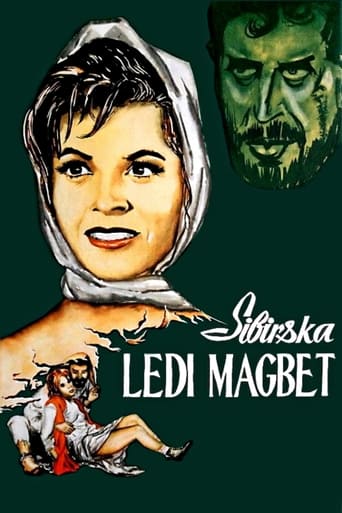
5.8A ruthless woman's adulterous affair with a drifter sets in motion a chain-reaction of murder and deception in a remote village in 19th Century Mtsensk.
Siberian Lady Macbeth
1962
 9.0
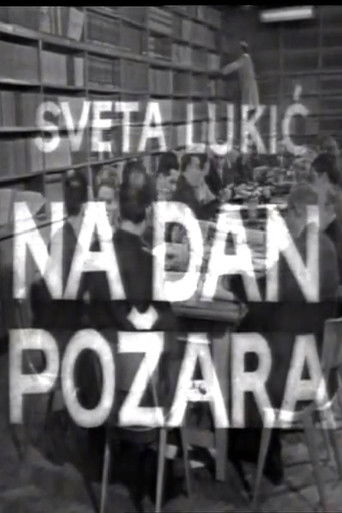
9.0The protagonist, interpreted by Ljuba Tadic, is a scientist in an institute who becomes a victim of the intrigues of his co-workers who took advantage of his once problematic participation in the Chetnik movement during the Second World War.
On the Day of Fire
1969
 5.8
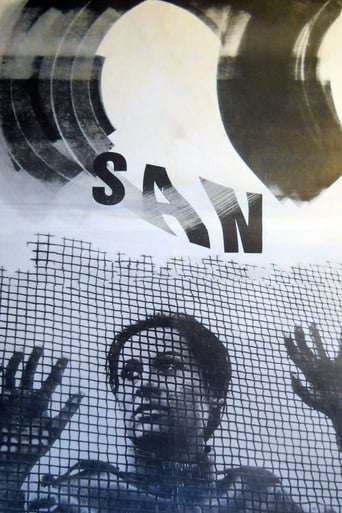
5.8In the whirlpool of WW2, two peaceful towns that have already tasted peace are once again attacked by the Germans. Casualties are high, but the dream of a boy and a girl about their liberated towns cannot be destroyed.
The Dream
1966
 NR
NRThe story of famous painter Dominico Theotocapuli, better known as El Greco.
A Burlesque about the Greek
1969
 5.3
5.3The story of the birth of a love between two young people, about its duration, with all the difficulties and beauty that it brings, the closing of that love because of conflicts with exaggerated dynamics and false values of contemporary life.
The Girl in the Park
1968
 7.4
7.4This film predominantly deals with the problems of a young man whom his delusions led into conflict with society. These issues will throw him into an adventure that would be tragic for him, but still helpful for him to see the truth. The story takes place in Kosovo in 1945, in an atmosphere of uncured wounds, wandering, betrayal, burned homes, typhoid and other postwar misery. An authentic story from those days was taken as the film's basis.
Doctor Homer's Brother
1968
 6.4
6.4Two men, who have been fighting on the enemy sides in WWII, meet in the jazz club twenty years after. Mladen, who was a partisan at the time, recognizes a familiar face of a man whom he was supposed to shoot, but missed on purpose.
Before the Truth
1968
 7.2
7.2A Serbian artillery battery of the Combined Division makes a forced march to the Cer Mountain in western Serbia to meet Austro-Hungarian troops, who have invaded the country by crossing over the Drina River. A chronicle of the Battle of Cer; a landmark battle of World War I and the first Allied victory over the Central Powers.
March on the River Drina
1964
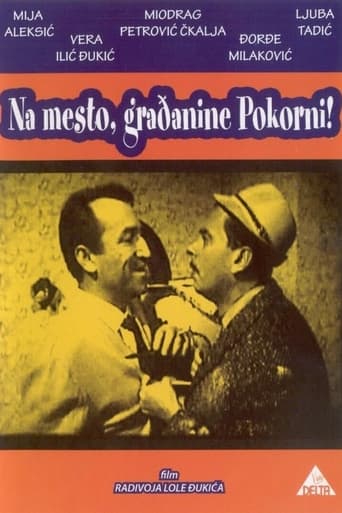 6.3
6.3A story of Cule Pokorni, an intimidated and obedient economist devoted to idea of making society a better place to live.
Citizen Pokorni
1964
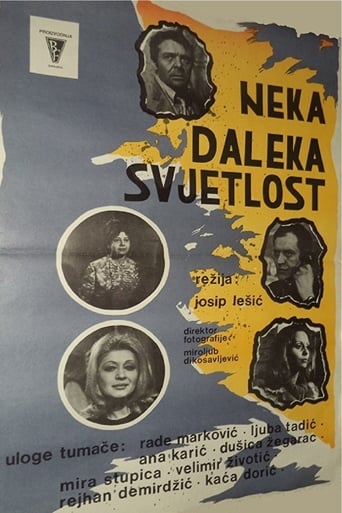 6.0
6.0An ex-prosecutor comes to provincial hotel to commit suicide there. Prior to this act, he first calls persons who made him bring up such decision. Conversations over telephone reveal the causes and circumstances that led to tragedy.
Some Far-Away Light
1969
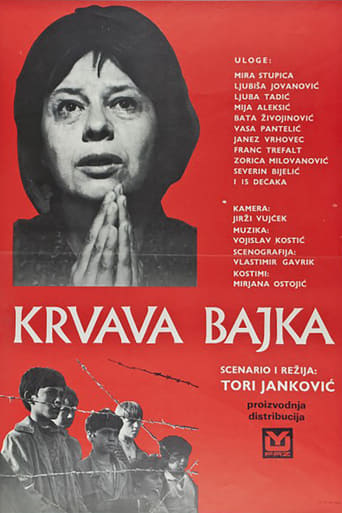 6.4
6.4Memory of the victims of the Kragujevac massacre is described through the events that are related to a group of boys, shoe shiners. At that time, thousands of workers refused to work for the invaders, and the whole city was exposed to harsh repression and persecution of innocent citizens and the abolition of the regular rations of food.
A Bloody Tale
1969
A Serbian adaptation of a 1932 detective novel by the Belgian writer Georges Simenon featuring his character Jules Maigret. Maigret is called back to his home village to try to prevent a crime being committed.
The Saint-Fiacre Affair
1963
Undated · 1 titles
Series credits
7.0Vuk Karadžić, is а Yugoslavian historical drama television series which depicts the life and work of Vuk Stefanović Karadžić, a Serbian linguist and major reformer of the Serbo-Croatian language.
Vuk Karadžić
1987
8.9Vruć vetar is one of the most popular Yugoslav TV miniseries that aired in 1980. The show and movie cut from scenes of the show were popular in neighboring countries-also very popular in Czechoslovakia. Its main theme became very popular and enjoying a bit of a cult status. The story follows Shurda, a man in his 30s, who comes from a small town to Belgrade to get rich. However, as no job is good enough for him, he tries his luck in Germany, but this venture proves to be the same, so he returns to his native Yugoslavia.
Hot Wind
1980
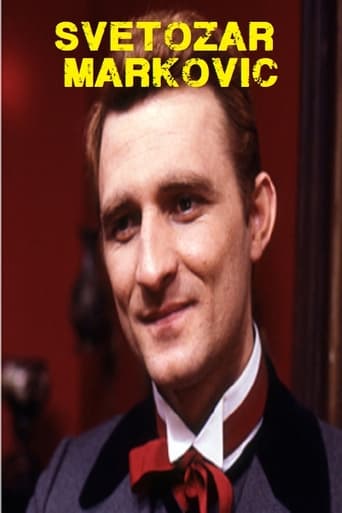 10.0
10.0A biopic of an influential Serbian political activist, literary critic and philosopher. Svetozar Markovic developed an activist anthropological philosophy with a definite program of social change, which set foundations for socialist ideals in his homeland.
Svetozar Markovic
—
 8.0
8.0This series follows Tesla's life from his childhood in Simljan (near Gospic) in nowadays Croatia (then Kingdom of Croatia-Slavonia, part of Austria-Hungary) to his death in New York, USA.
Nikola Tesla
1977