
Directing
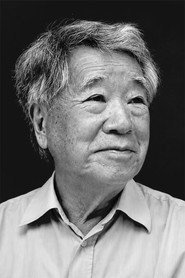
Susumu Hani
Born
1928-10-10 (97)
Place of birth
Tokyo Prefecture, Japan
Known for
Directing
Credits
41 titles
“I am interested only in the inside of people.” Susumu Hani is a Japanese film director, and one of the most prominent representatives of the 1960s Japanese New Wave. Born in Tokyo, he has directed both documentaries and feature films. He won the Directors Guild of Japan New Directors Award for his first fiction film, Bad Boys, in 1961.
Known for
 10.0
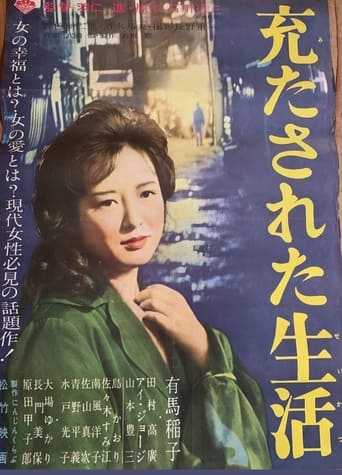
10.0A woman becomes dissatisfied with her marriage and joins a political theater troupe to protest the U.S. Security Pact.
A Full Life
1962
 7.2
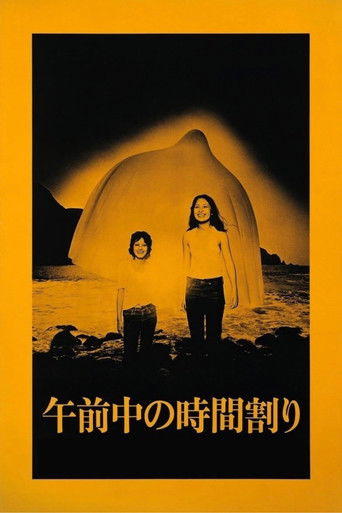
7.2Two college buddies try to understand a young woman's suicide through her Super-8 films and clips from their summer trips together.
The Morning Schedule
1972
 NR
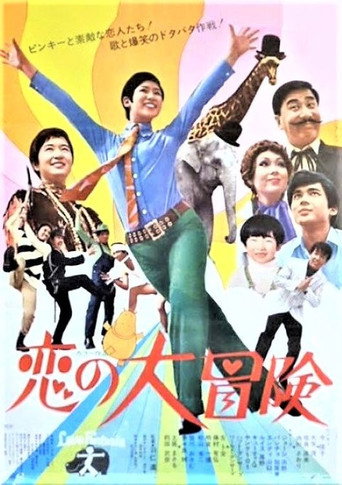
NRA musical comedy.
Love Fantasia
1970
This rare documentary is one of the very last efforts from preeminent documentarist/activist Susumu Hani best known for his feature films. This one is a short documentary about the 1945 atomic bombing and its devastating consequences. The film came out of the "10 Foot Movement". A movement organized by the Japan Peace Museum, which mobilized Japanese citizen activists to buy back small segments of film footage of the effects of the atomic bomb from the U.S. National Archives. The film combines recent footage of survivors of the atomic bomb with American archival footage, portraying the sorrow of atomic bomb survivors in the Cold War period.
Prophecy
1982
 7.0
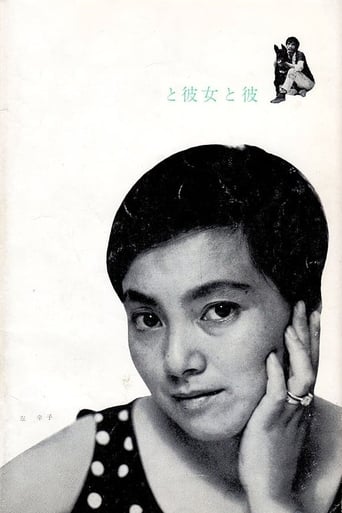
7.0As her husband Eiichi becomes more entangled in his life as businessman, Naoko looks for ways to expand her own life even as her husband's life shrinks in scope and intimacy. She finds new interests, new love, and a greater sense of her place in the world.
She and He
1963
 8.4
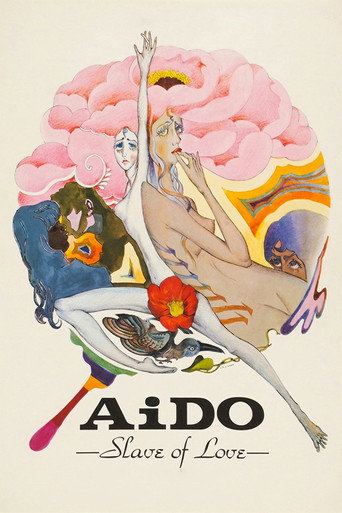
8.4After wandering into a cemetery, a young man named Shusei is led by the mysterious Madame Enjoji to a secluded mansion. There, he is introduced to Aido, an ethereal woman who seems to be the living embodiment of his most surreal erotic fantasies. Caught between the real world and a haunting dreamscape, Shusei becomes obsessed with Aido.
Aido: Slave of Love
1969
Film credits
Behind the camera
10.0A woman becomes dissatisfied with her marriage and joins a political theater troupe to protest the U.S. Security Pact.
A Full Life
1962
10.0A woman becomes dissatisfied with her marriage and joins a political theater troupe to protest the U.S. Security Pact.
A Full Life
1962
7.2Two college buddies try to understand a young woman's suicide through her Super-8 films and clips from their summer trips together.
The Morning Schedule
1972
7.2Two college buddies try to understand a young woman's suicide through her Super-8 films and clips from their summer trips together.
The Morning Schedule
1972
NRA musical comedy.
Love Fantasia
1970
NRA musical comedy.
Love Fantasia
1970
This rare documentary is one of the very last efforts from preeminent documentarist/activist Susumu Hani best known for his feature films. This one is a short documentary about the 1945 atomic bombing and its devastating consequences. The film came out of the "10 Foot Movement". A movement organized by the Japan Peace Museum, which mobilized Japanese citizen activists to buy back small segments of film footage of the effects of the atomic bomb from the U.S. National Archives. The film combines recent footage of survivors of the atomic bomb with American archival footage, portraying the sorrow of atomic bomb survivors in the Cold War period.
Prophecy
1982
7.0As her husband Eiichi becomes more entangled in his life as businessman, Naoko looks for ways to expand her own life even as her husband's life shrinks in scope and intimacy. She finds new interests, new love, and a greater sense of her place in the world.
She and He
1963
7.0As her husband Eiichi becomes more entangled in his life as businessman, Naoko looks for ways to expand her own life even as her husband's life shrinks in scope and intimacy. She finds new interests, new love, and a greater sense of her place in the world.
She and He
1963
8.4After wandering into a cemetery, a young man named Shusei is led by the mysterious Madame Enjoji to a secluded mansion. There, he is introduced to Aido, an ethereal woman who seems to be the living embodiment of his most surreal erotic fantasies. Caught between the real world and a haunting dreamscape, Shusei becomes obsessed with Aido.
Aido: Slave of Love
1969
8.4After wandering into a cemetery, a young man named Shusei is led by the mysterious Madame Enjoji to a secluded mansion. There, he is introduced to Aido, an ethereal woman who seems to be the living embodiment of his most surreal erotic fantasies. Caught between the real world and a haunting dreamscape, Shusei becomes obsessed with Aido.
Aido: Slave of Love
1969
 10.0
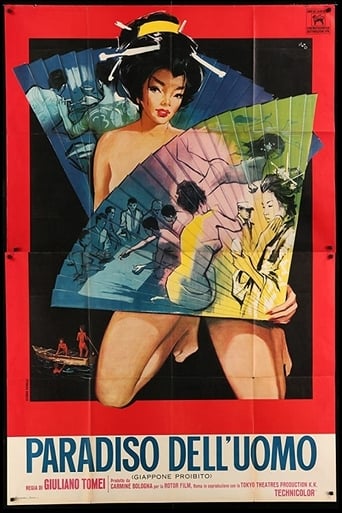
10.0The story of the Japanese woman who with a sense of pagan fatalism has been able to sacrifice herself to mechanize her spirit in a sort of absurd voluntary human planning: of the woman who knows how to pose the folds of her kimono in the precious depictions of traditional dances and who knows turn on the eyes of the spectators with morbid attention in the studied movements of a strip-tease: of the woman who burns all her perceptive powers in the factories of the microscopic transistors in two years, of the "loves" who, with a centuries-old technique, dive for fishing corals and pearls; of the Japanese woman, essential actress of a drama of transformation taking place in a country of very ancient civilization that only for a century has opened the doors of her fantastic world in the eyes of the foreigner.
Il paradiso dell'uomo
1963
 7.0
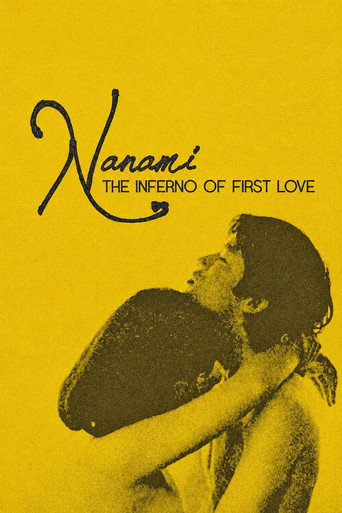
7.0A teenage goldsmith with a dark past tragically falls in love with a young nude model.
Nanami: The Inferno of First Love
1968
7.0A teenage goldsmith with a dark past tragically falls in love with a young nude model.
Nanami: The Inferno of First Love
1968
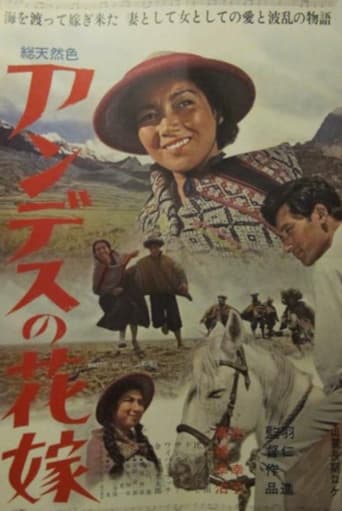 7.0
7.0A young Japanese woman comes to Peru to marry a man she has never seen in this somber drama highlighted by cultural differences. Her husband is a first-generation Japanese and both are bound to the time-honored tradition of arranged marriages. Bringing her child from a previous marriage, she finds her new husband living with Andes Mountain Indians and working for an archaeological expedition. The man and her boy take to each other, and the woman begins to study and understand the lives of the Indians. When her husband is killed mining for Incan treasure, she uses the money sent by the state to stay and help the villagers whom she has come to love.
Bride of the Andes
1966
7.0A young Japanese woman comes to Peru to marry a man she has never seen in this somber drama highlighted by cultural differences. Her husband is a first-generation Japanese and both are bound to the time-honored tradition of arranged marriages. Bringing her child from a previous marriage, she finds her new husband living with Andes Mountain Indians and working for an archaeological expedition. The man and her boy take to each other, and the woman begins to study and understand the lives of the Indians. When her husband is killed mining for Incan treasure, she uses the money sent by the state to stay and help the villagers whom she has come to love.
Bride of the Andes
1966
Tokyo in the 1950s. A jazz-loving younger sister attends piano lessons, while her older brother is obsessed with drumming. The two discover the joy of music. Hani, Teshigahara and Kawazu make a promotional jazz film for an instrument maker during the vibrant 50s.
Drumu To Shonen
1959
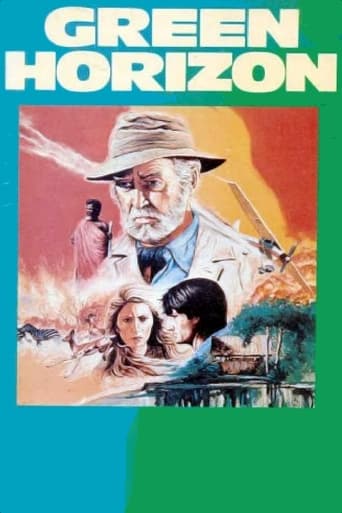 6.0
6.0A pilot crash-lands in the African wilds, and loses his memory. He finds an old man living in the jungle with his grand-daughter. He falls in love with the young girl and settles down happily with them; their idyllic life broken only by a visit from his long forgotten fiancee.
A Tale of Africa
1980
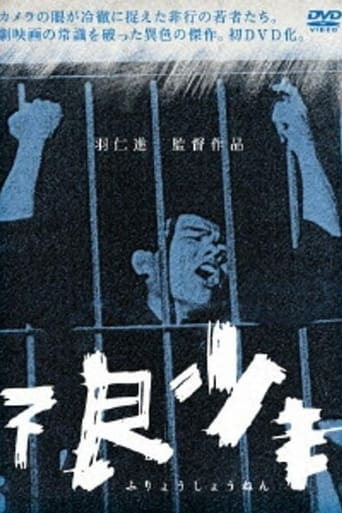 6.7
6.7A young delinquent takes part in a robbery and is sentenced to a juvenile detention center, where he clashes with other youths and reflects on his life experiences.
Bad Boys
1961
6.7A young delinquent takes part in a robbery and is sentenced to a juvenile detention center, where he clashes with other youths and reflects on his life experiences.
Bad Boys
1961
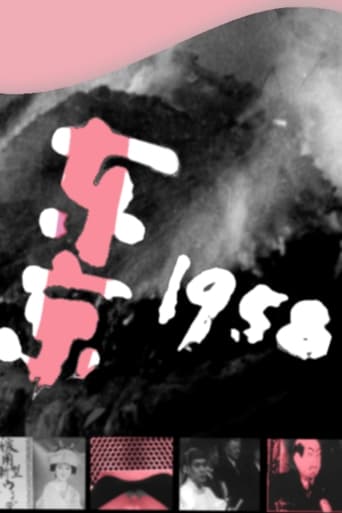 6.2
6.2A collaborative, newsreel-style portrait of Tokyo in 1957–58, blending photography, animation, and historical imagery to capture the city’s labor, rituals, and nightlife at the moment it became the world’s largest metropolis.
Tokyo 1958
1958
6.2A collaborative, newsreel-style portrait of Tokyo in 1957–58, blending photography, animation, and historical imagery to capture the city’s labor, rituals, and nightlife at the moment it became the world’s largest metropolis.
Tokyo 1958
1958
6.2A collaborative, newsreel-style portrait of Tokyo in 1957–58, blending photography, animation, and historical imagery to capture the city’s labor, rituals, and nightlife at the moment it became the world’s largest metropolis.
Tokyo 1958
1958
 NR
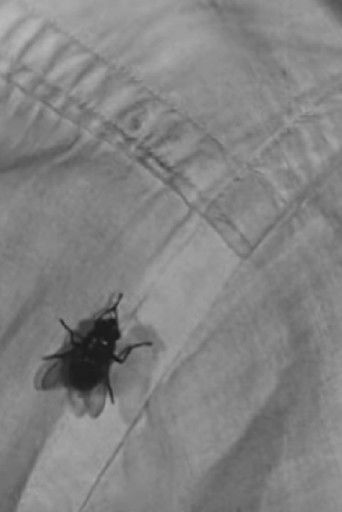
NRA teaching film for social studies, which was developed as a new educational subject in 1947. At an elementary school in Hokkaido, children have started a fly extermination campaign to improve school hygiene. In order to eliminate the causes of flies, the entire town is working to improve the sanitary environment. The short was filmed with the cooperation of Mizukaido Elementary School in Joso City and is the first film in the "Social Studies Teaching Film System" by Iwanami Film Productions.
A Town Without Flies
1950
 6.0
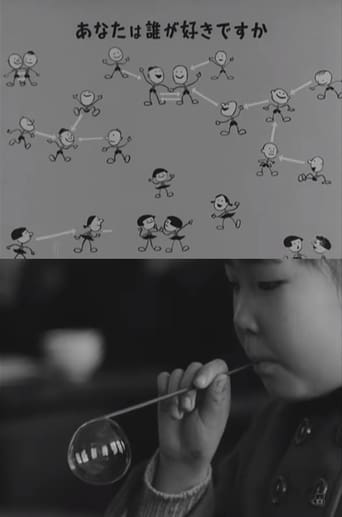
6.0A short documentary about the behaviour of Japanese primary school students.
Children in the Classroom
1954
6.0A short documentary about the behaviour of Japanese primary school students.
Children in the Classroom
1954
 10.0
10.0The film centres around a group of schoolchildren navigating the complexities of friendship, trust, and honesty. At its heart is a thoughtful and suppressed boy with a learning disability whose interactions with his classmates oscillate between evoking tenderness and triggering aggression.
Children Hand in Hand
1964
10.0The film centres around a group of schoolchildren navigating the complexities of friendship, trust, and honesty. At its heart is a thoughtful and suppressed boy with a learning disability whose interactions with his classmates oscillate between evoking tenderness and triggering aggression.
Children Hand in Hand
1964
 7.0
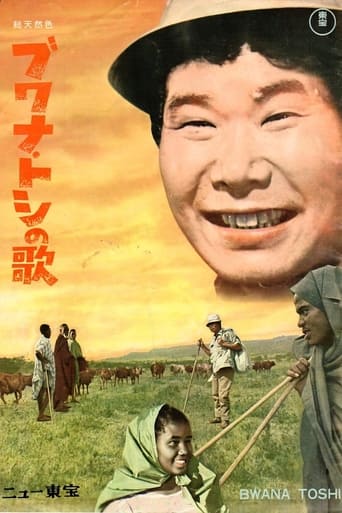
7.0Traveling to Africa in a cultural exchange program, a young Japanese engineer discovers a world completely unlike the one he knows. His interaction with the Africans he meets reveals to him that he has been living a lie, and that he is not the man he thought he was.
The Song of the Bwana Toshi
1966
7.0Traveling to Africa in a cultural exchange program, a young Japanese engineer discovers a world completely unlike the one he knows. His interaction with the Africans he meets reveals to him that he has been living a lie, and that he is not the man he thought he was.
The Song of the Bwana Toshi
1966
 NR
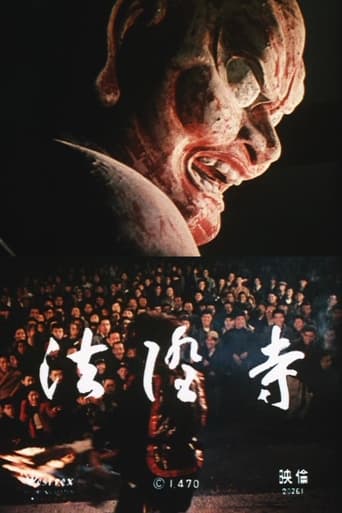
NRThis celebrated documentary, filmed in colour, depicts one of the most famous of all Japanese temples. Horyu-ji, in the small town of Ikaruga outside Japan’s ancient capital of Nara, was one of the first Buddhist places of worship established in Japan, and contains the oldest surviving wooden buildings in the world, dating from the seventh century.
Hōryū-ji
1958
 6.5
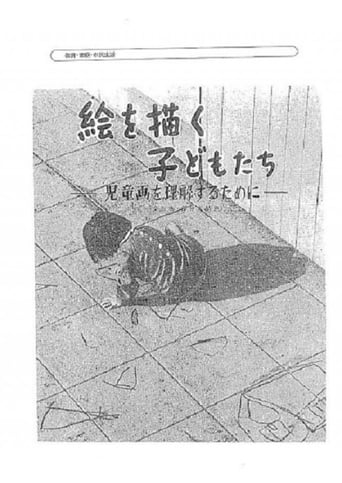
6.5Children Who Draw explores the delicate chemistry of school children interacting in an art class through a constant juxtaposition of observational black-and-white portraits of the young children with lyrical passages shot in vivid color exploring their imaginative and expressive paintings. Experimenting with color as an intimate expression of the children’s inner worlds, a tool for deeper psychological investigation, Hani allows his camera to roam freely across the drawings, “de-framing’” and enagaging the artwork in a manner reminiscent of Alain Resnais.
Children Who Draw
1956
6.5Children Who Draw explores the delicate chemistry of school children interacting in an art class through a constant juxtaposition of observational black-and-white portraits of the young children with lyrical passages shot in vivid color exploring their imaginative and expressive paintings. Experimenting with color as an intimate expression of the children’s inner worlds, a tool for deeper psychological investigation, Hani allows his camera to roam freely across the drawings, “de-framing’” and enagaging the artwork in a manner reminiscent of Alain Resnais.
Children Who Draw
1956
 NR
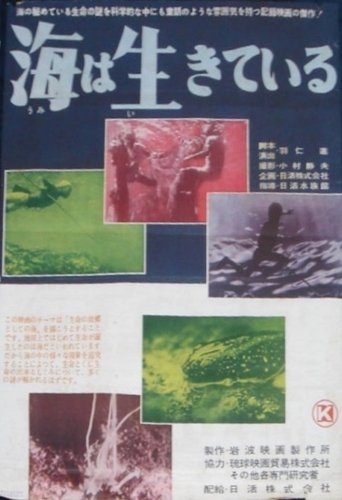
NRMarine biological documentary
The Living Sea
1958
NRMarine biological documentary
The Living Sea
1958
 NR
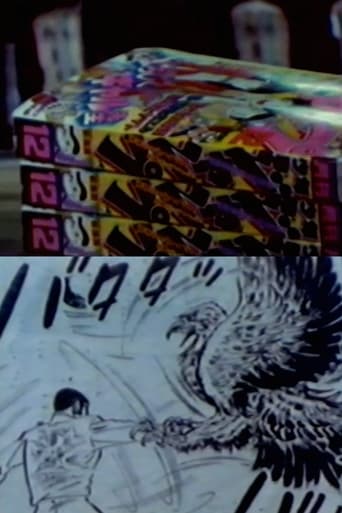
NROne of the most popular forms of entertainment in contemporary japan is the "manga". The work is usually translated as "comics" in English, but mangas are not limited to the publishing industry alone. In fact, this art form has extended its popularity into almost every communication media such as movies, records, television, ect.
Manga, the cartoon in contemporary Japanese Life
1982
 NR
NRAn educative film about the water supply and watersystems in small towns and villages in Japan. It captures the unsanitary and inconvenient lifestyles without water supply through examples from various places, and shows how life can be brighter if a small but managed water supply is installed. The first film directed by Susumu Hani, produced under the auspices of the Ministry of Health.
Our Life and Water
1952
NRAn educative film about the water supply and watersystems in small towns and villages in Japan. It captures the unsanitary and inconvenient lifestyles without water supply through examples from various places, and shows how life can be brighter if a small but managed water supply is installed. The first film directed by Susumu Hani, produced under the auspices of the Ministry of Health.
Our Life and Water
1952
A little Japanese girl of six is transferred to a school in Sardinia where she slowly finds friends and a place before going off again.
Mio
1971
Based on 50 years of footage shot in Africa, director Susumu Hani's latest work vividly shows the wisdom of the animals and the circle of life that they weave together. The director himself stands in the same line as the animals and questions life, death, freedom, and what it means to be human.
Faraway Paradise
2025