
Writing
Alexandr Rzheshevsky
Born — Died
1903-09-12 — 1967-01-19
Place of birth
Saint Petersburg, Russian Empire [now Russia]
Known for
Writing
Credits
5 titles
Known for
 6.0
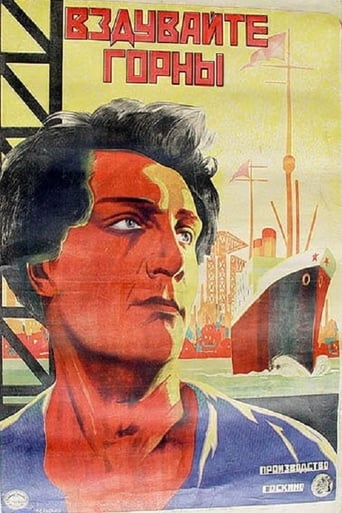
6.0Engineer Dukalsky arrives from Moscow on the instructions of an underground anti-Soviet center to the Baltic Shipyard in order to take possession of the blueprints of a powerful ship engine. The pest meets the author of the project - a young and incorruptible self-taught master Ivanov. After a series of unsuccessful attempts to buy out or steal the drawings from the author, Dukalsky decides to take Ivanov with him. Criminal Investigation Officers will attack the trail of criminals.
Blow the Horns
1925
 6.0
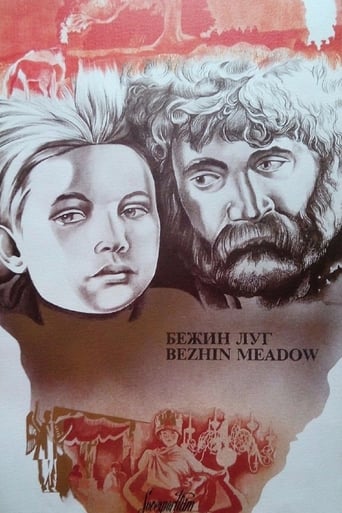
6.0Bezhin Lug (Bezhin Meadow) was to be a Soviet film about a young farm boy whose father attempts to betray the government for political reasons by sabotaging the year's harvest, and the son's efforts to stop his own father to protect the Soviet state, culminating in the boy's murder and a social uprising. Assigned to Soviet film-maker Sergei Eisenstein, the filming followed the same path as with his previous effort, "Que Viva Mexico", into cost overrun and over-shooting of footage. Furthermore, Eisenstein's usage of forbidden experimental film techniques outraged his government superiors, who ordered the film destroyed before it was even completed. All that survives are the first and last frames of each shot, preserved by Sergei Eisenstein’s wife, Pera Atasheva. The 1967 reconstruction, by Naum Kleiman of the Eisenstein Museum and Sergei Yutkevich of Gosfilmofond, places these frames in order, approximating the original film.
Bezhin Meadow: Sequences from an Unfinished Film
1968
 8.5
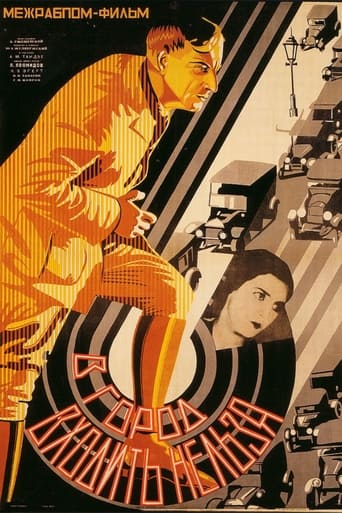
8.5Directed by Yuri Zhelyabuzhsky.
No Entry to the City
1929
 8.0
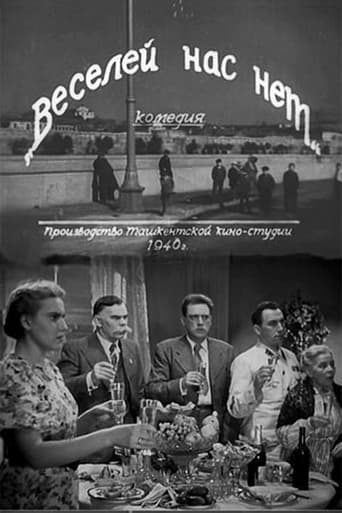
8.0A young man, Russian by nationality, goes to a Turkmen bride in a remote border village, not knowing that his large family decides to surprise him and also goes to Turkmenistan to meet the bride and her parents. The chain of comic misunderstandings ends with an episode of a skirmish on the border with saboteurs.
No One is Funnier than Us
1940
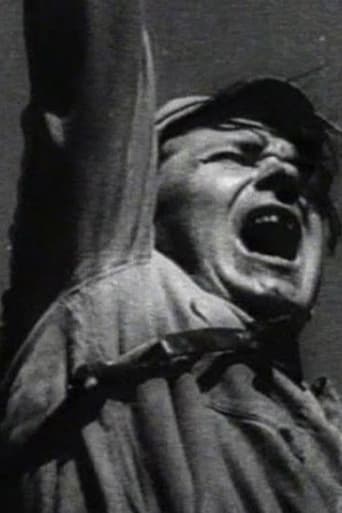 5.3
5.3Following the end of the Russian Civil War, three close friends and former Red Army commanders—Langovoy, Zhyoltikov, and their elder comrade Uncle Sasha—return to their hometown to serve in the military headquarters. While Sasha and Zhyoltikov remain bachelors and share a room, Langovoy lives with his wife, Mashenka, whom he married during the war.
A Simple Case
1930
Film credits
Behind the camera
6.0Bezhin Lug (Bezhin Meadow) was to be a Soviet film about a young farm boy whose father attempts to betray the government for political reasons by sabotaging the year's harvest, and the son's efforts to stop his own father to protect the Soviet state, culminating in the boy's murder and a social uprising. Assigned to Soviet film-maker Sergei Eisenstein, the filming followed the same path as with his previous effort, "Que Viva Mexico", into cost overrun and over-shooting of footage. Furthermore, Eisenstein's usage of forbidden experimental film techniques outraged his government superiors, who ordered the film destroyed before it was even completed. All that survives are the first and last frames of each shot, preserved by Sergei Eisenstein’s wife, Pera Atasheva. The 1967 reconstruction, by Naum Kleiman of the Eisenstein Museum and Sergei Yutkevich of Gosfilmofond, places these frames in order, approximating the original film.
Bezhin Meadow: Sequences from an Unfinished Film
1968
8.5Directed by Yuri Zhelyabuzhsky.
No Entry to the City
1929
8.0A young man, Russian by nationality, goes to a Turkmen bride in a remote border village, not knowing that his large family decides to surprise him and also goes to Turkmenistan to meet the bride and her parents. The chain of comic misunderstandings ends with an episode of a skirmish on the border with saboteurs.
No One is Funnier than Us
1940
5.3Following the end of the Russian Civil War, three close friends and former Red Army commanders—Langovoy, Zhyoltikov, and their elder comrade Uncle Sasha—return to their hometown to serve in the military headquarters. While Sasha and Zhyoltikov remain bachelors and share a room, Langovoy lives with his wife, Mashenka, whom he married during the war.
A Simple Case
1930