
Directing
Dore O.
Born — Died
1946-08-09 — 2022-03-07
Place of birth
Mülheim an der Ruhr, Germany
Known for
Directing
Credits
33 titles
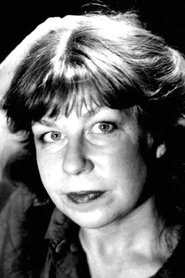
Trained as a painter, O. was cofounder of the Hamburger Filmschau, alongside with her husband and collaborator Werner Nekes. For all the psychedelia of her early work, subsequent films are rigorous in refractory experimentation: rear-projections, double-impositions, repeated frames and breathtaking lunges of the handheld camera, which seems bolstered as much by raw impulse as it does by any guiding principle of onscreen organization. O.’s work establishes its own space-time linearities, then argues them against each other–sometimes content with a mild flicker, a closing or opening aperture or a flurry of blunt smears. This is a playful and often freefalling visual poetics, best left to wash …
Known for
 5.8
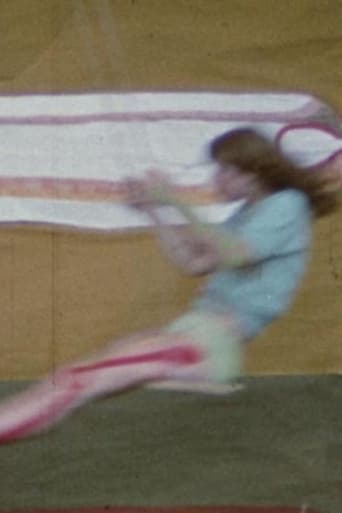
5.8A montage experiment in which Dore O., her body painted in different colours, swings back and forth in front of a movie screen, on which is painted a phallus (slightly abstract and fairly large). The perspective is such that the girl appears to be swinging into and out of the phallus. It is one who is content to see through the specific event. The work exhausts itself in a trivial aspect, the literary. This is most comfortable for the critic: the literary content of a work is easiest to reproduce in a literary form of criticism.
Jüm-Jüm
1967
 NR
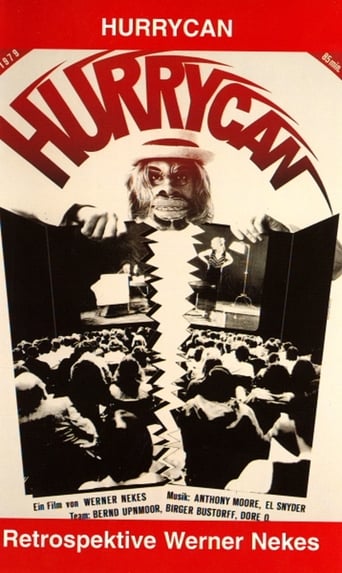
NRHurrycan has nothing to do with whirlwinds, although in this Nekes film the pictures journey across the screen, excitedly, spasmodically and flickering. The title weds the element of haste with the notion of a film can, which in this case turns out to be something of a Pandora's Box and contains expectations for a new way of seeing. A computerized shutter system that Nekes had built.
Hurrycan
1979
 NR
NRHome movies shot on Super 8mm by W+B Hein over 10 years.
Home Movies 1971-81
1985
 8.0
8.0Alaska is a wordless experimental film with a simple, droning soundtrack that sounds as if it is a piece for violin and refrigerator hum.
Alaska
1968
 6.0
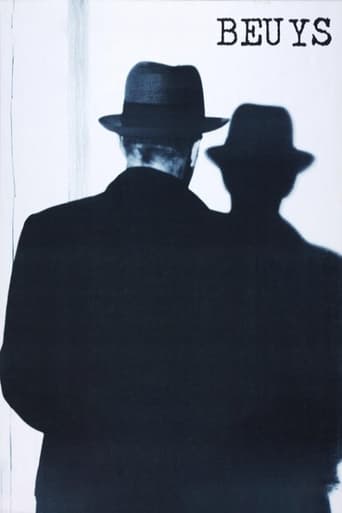
6.0The German artist Joseph Beuys is reflecting on his theory of art, being filmed as a kinetic sculpture. In 1981, the film has won the German film critic's award for “Best short film in Germany”.
Beuys
1981
"...Nekes retreats behind his film. What is left is a double portrait, in which neither Dore 0. nor the grand landscape remain unchanged. The cold of the icy coastline - long shots of stones, snow and the sea - dwindles away before the image of Dore 0. Solitude is superflous, when the grandiose mountain meadow invites somersaults. ... In this case Nekes handles what he shows considerately. He releases the objects he portrays. He allows them to unfold. And so model and patterns actually serve another purpose: to let poetry grow, and energy and beauty and confidence nell'abbandono."
Abbandono
1970
Film credits
1990s · 2 titles
 7.0
7.0Jonas Mekas assembles 160 portraits, appearances, and fleeting sketches of underground and independent filmmakers captured between 1955 and 1996. Fast-paced and archival in spirit, the film celebrates the avant-garde as its own “nation of cinema,” a vital community existing outside the dominance of commercial film.
Birth of a Nation
1997
A documentary about the 'critical mass', the Film Coop, a group of young filmmakers in Hamburg during the 1960s - a small group far from the Mainstream or the New German Cinema.
The Critical Mass
1999
1980s · 2 titles
NRHome movies shot on Super 8mm by W+B Hein over 10 years.
Home Movies 1971-81
1985
 4.3
4.3Director Werner Nekes has created this experimental film in the mode of James Joyce's Ulysses to the extent that human interactions are represented by poetic, symbolic images and language, with a certain amount of nudity added in.
Uliisses
1982
1970s · 5 titles
NRHurrycan has nothing to do with whirlwinds, although in this Nekes film the pictures journey across the screen, excitedly, spasmodically and flickering. The title weds the element of haste with the notion of a film can, which in this case turns out to be something of a Pandora's Box and contains expectations for a new way of seeing. A computerized shutter system that Nekes had built.
Hurrycan
1979
"...Nekes retreats behind his film. What is left is a double portrait, in which neither Dore 0. nor the grand landscape remain unchanged. The cold of the icy coastline - long shots of stones, snow and the sea - dwindles away before the image of Dore 0. Solitude is superflous, when the grandiose mountain meadow invites somersaults. ... In this case Nekes handles what he shows considerately. He releases the objects he portrays. He allows them to unfold. And so model and patterns actually serve another purpose: to let poetry grow, and energy and beauty and confidence nell'abbandono."
Abbandono
1970
 7.9
7.9Attracted to Nordic landscapes, [Dore O.] filmed KALDALON (1970/71) in Iceland where images of water, rocks, steam and smoke were technically enhanced to appear blue-tinged.
Kaldalon
1971
 7.3
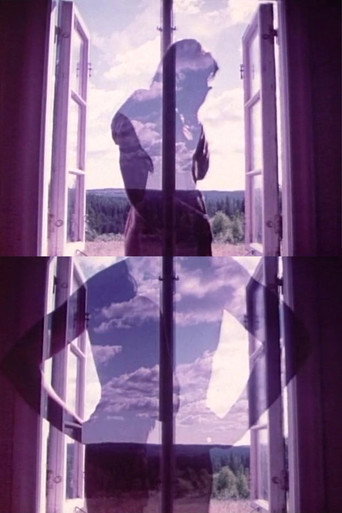
7.3Diwan, a lyric anthology, an outdoor movie with people. With people living in the surrounding precious and very beautifully photographed nature, are neither more nor less than one part of it. What Nekes manages there with landscape, as a cunning and quote many fine artist in a medium that runs in time, as he defeated the time changed, by themselves for change of scenery uses, as it interferes with the laws of chronology through the rewind ability of the camera or destroyed, which is a compelling and highly aesthetic experimental company.
Diwan
1974
 4.8
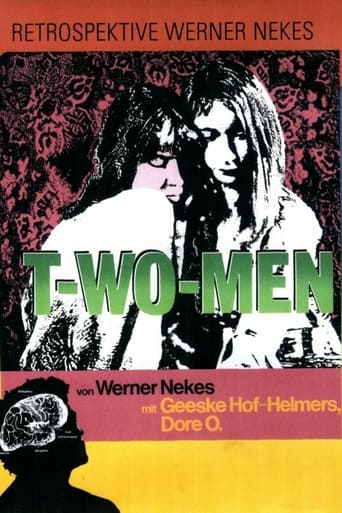
4.8The film is divided into five parts differing in pictorial and musical structure. The plot, two women and their love for one another, is of secondary importance. An ingenious combination of stereoscopic images and montage of individual pictures make new qualities of perception accessible to the viewer. In the final part of the love scenes pictorial sequences and music build up to a delirious rhythm.
T-Wo-Men
1972
1960s · 4 titles
5.8A montage experiment in which Dore O., her body painted in different colours, swings back and forth in front of a movie screen, on which is painted a phallus (slightly abstract and fairly large). The perspective is such that the girl appears to be swinging into and out of the phallus. It is one who is content to see through the specific event. The work exhausts itself in a trivial aspect, the literary. This is most comfortable for the critic: the literary content of a work is easiest to reproduce in a literary form of criticism.
Jüm-Jüm
1967
 10.0
10.0A strange succession of tableaux of four women and a man which gives the sense of a sort of dream family locked in an antiseptic world of endless afternoon teas, dinners and waiting. Often her images seem to be stills either before or after something has been said.
Lawale
1969
 NR
NRDore O. and later Nekes speak to each other and into the camera, slowly and deliberately like a speech exercise, quickly like a tongue twister or in competition with each other, accentuated rhythmically or rubato, until the silent noise becomes piercing and rings in the ears. As in a mirror joke, Zerroptik also involves the viewer in the erotic duet, which persistently elicits all the comedy and latent horrors of a sudden discovery from the field of associations of the strange sentence.
Mama, da steht ein Mann
1968
 9.5
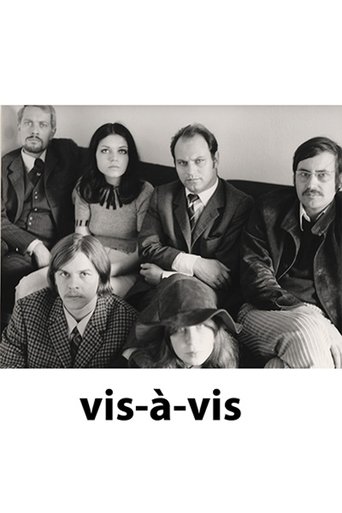
9.5A fixed shot showing six persons, looking into the camera inertly. Gradually tiny, minimal movements can be registered.
Vis-à-vis
1968
Behind the camera
5.8A montage experiment in which Dore O., her body painted in different colours, swings back and forth in front of a movie screen, on which is painted a phallus (slightly abstract and fairly large). The perspective is such that the girl appears to be swinging into and out of the phallus. It is one who is content to see through the specific event. The work exhausts itself in a trivial aspect, the literary. This is most comfortable for the critic: the literary content of a work is easiest to reproduce in a literary form of criticism.
Jüm-Jüm
1967
8.0Alaska is a wordless experimental film with a simple, droning soundtrack that sounds as if it is a piece for violin and refrigerator hum.
Alaska
1968
8.0Alaska is a wordless experimental film with a simple, droning soundtrack that sounds as if it is a piece for violin and refrigerator hum.
Alaska
1968
6.0The German artist Joseph Beuys is reflecting on his theory of art, being filmed as a kinetic sculpture. In 1981, the film has won the German film critic's award for “Best short film in Germany”.
Beuys
1981
 7.0
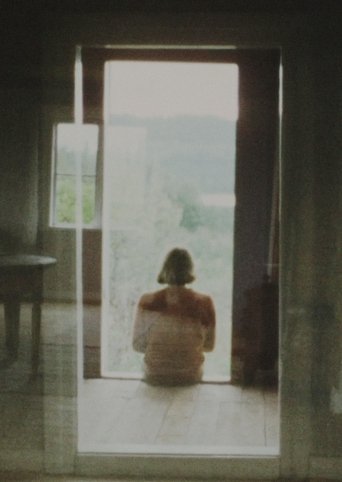
7.0An experimental film where a particular space is constantly "present" : there is a complex usage of superim- position, and of split-screen effects. The place shown is a part of a house in the country. Doors and windows are continually shown, emphasizing the film's concern with framing. Other images are present: city-scapes of a particularly sinister nature, implying a sense of ruin, and shots of a chorus on a stage. These shots begin and end the film which is accompanied by a vocal chant on the soundtrack.
Kaskara
1974
7.9Attracted to Nordic landscapes, [Dore O.] filmed KALDALON (1970/71) in Iceland where images of water, rocks, steam and smoke were technically enhanced to appear blue-tinged.
Kaldalon
1971
 NR
NRTraces a series of forever-winding staircases like liminal excerpts from an endless memory-spool, asking the viewer which spaces their eyes may have taken for granted along the ambling path.
Eye-Step
2000
 10.0
10.0For "Thermoment" Dore O. filmed the clarinetist Eckard Koltermann with a heat recording camera and thus translated the heat regions of the body's interior into images while making music.
Thermoment
1998
10.0For "Thermoment" Dore O. filmed the clarinetist Eckard Koltermann with a heat recording camera and thus translated the heat regions of the body's interior into images while making music.
Thermoment
1998
10.0A strange succession of tableaux of four women and a man which gives the sense of a sort of dream family locked in an antiseptic world of endless afternoon teas, dinners and waiting. Often her images seem to be stills either before or after something has been said.
Lawale
1969
 7.0
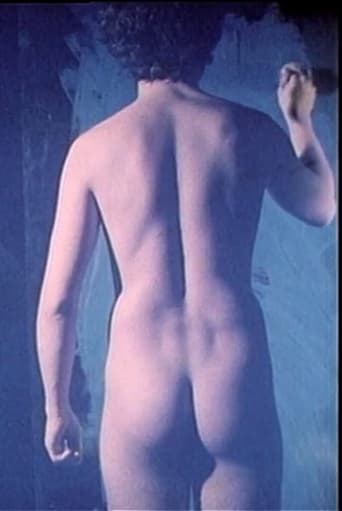
7.0In 1920 Frans Masereel published in Paris his woodcut series "The idea". Dore O. has draw inspiration from this work on her first feature film, a poetic fable about the human longing for a free and just society. Following Masereel "idea" Dore O's "CANDIDA" accesses old, anchored in the ancient Christian tradition and ideas, according to which such ideas and aspirations in the image of the naked woman find their embodiment.
Candida
1991
 8.0
8.0A series of still photographs, is various states of photographic exposure.
Frozen Flashes
1976
 7.0
7.0The reality of the film is the fantast of the viewer. My north pole in the Ruhr valley. Dedicated to Georges Méliès.
Stern des Melies
1983
7.0The reality of the film is the fantast of the viewer. My north pole in the Ruhr valley. Dedicated to Georges Méliès.
Stern des Melies
1983
 NR
NREnzyklop is a rediscovery and reconstruction of the cyclopean gaze that Odysseus erased to free himself. The search for the lost view leads to intermediate distances, into the realm of association, the multiplicity of dimensions. An anthology, a variety of image/image ideas is created.
Enzyklop
1985
 9.0
9.0A painter surrounded by images - his own and those of the reality that surrounds him - is the protagonist of the latest film by Dore O., moves exactly in the border area between the two, only apparently separate worlds.
Xoanon
1994
 8.0
8.0A female figure wanders inside a warehouse interior and through various motifs, including a fan and a birdcage, set to a medieval chant.
Blonde Barbarei
1973
8.0A female figure wanders inside a warehouse interior and through various motifs, including a fan and a birdcage, set to a medieval chant.
Blonde Barbarei
1973
8.0A female figure wanders inside a warehouse interior and through various motifs, including a fan and a birdcage, set to a medieval chant.
Blonde Barbarei
1973
 NR
NRA painterly, poetic experimental film with narrative elements. A woman is looking after an obviously blind man. She undresses, bandages and dresses him again. Since the action takes place on two temporal planes running in opposite directions, the couple's relationship appears to be in a state of stagnation. In-between, we are shown the images in the protagonists' minds: nightmares, an optical machine, but also erotic dreams from perhaps better days. Tango motifs and an aria (composed by Anthony Moore) reinforce the impression of a romantic chamber piece. The man's blindness refers to the Belgian physicist Joseph Plateau, who destroyed his sight through keeping his naked eye fixed too long on the sun while researching into the persistence of luminous impressions on the retina. The pictorial technique, with layer after layer dissolving into one another, is reminiscent of the overpainting technique deployed by the director in her work for the canvas.
Blindman's Ball
1988