
Directing
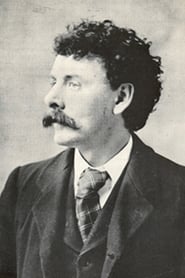
George Albert Smith
Born 1864-01-04 · Brighton, East Sussex, England, UK
Along with his better-known French counterpart Georges Méliès, George Albert Smith, usually credited as G.A. Smith, was one of the first filmmakers to explore fictional and fantastic themes, often using surprisingly sophisticated special effects. His background was ideal – an established portrait photographer, he also had a long-standing interest in show business, running a tourist attraction in his native Brighton featuring a fortune teller. His films were among the first to feature such innovations as superimposition (Smith patented a double-exposure system in 1897), close-ups and scene transitions involving wipes and focus pulls. He also patented Kinemacolor – the world's first commercial cinema color system--in 1906, which was extremely successful for a time, despite the special equipment required to project it
Acting credits
Behind the camera
 5.0
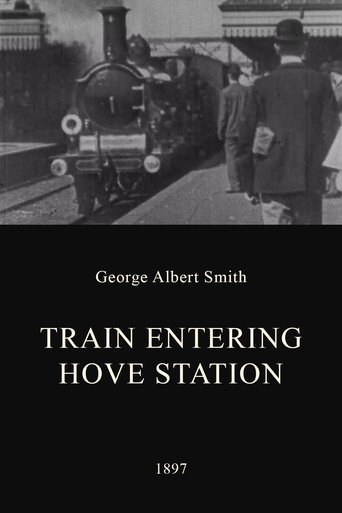
5.0Most movie fans know that the first filmmakers liked to shoot trains entering stations. This example by Sussex film pioneer George Albert Smith illustrates why. The train's rush towards the audience brings movement and visual drama. The flurry of human activity offers plenty for the audience to engage with - who are these people and where are they going? And the time pressure exerted by the fact that the train must soon depart adds narrative tension - will everyone get on and off in time?
Train Entering Hove Station
1897
5.0Most movie fans know that the first filmmakers liked to shoot trains entering stations. This example by Sussex film pioneer George Albert Smith illustrates why. The train's rush towards the audience brings movement and visual drama. The flurry of human activity offers plenty for the audience to engage with - who are these people and where are they going? And the time pressure exerted by the fact that the train must soon depart adds narrative tension - will everyone get on and off in time?
Train Entering Hove Station
1897
 5.6
5.6An adaptation of the folk tale.
Cinderella
1898
 6.2
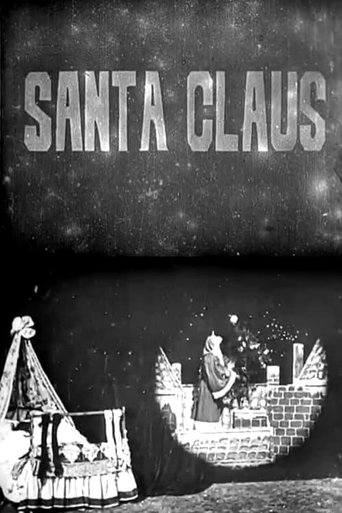
6.2Santa arrives at a house on Christmas Eve to deliver his presents for the children.
Santa Claus
1898
 6.2
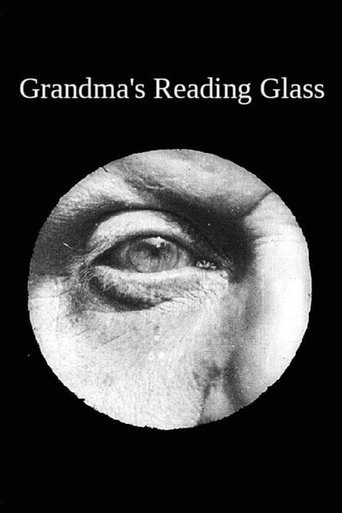
6.2A child borrows his grandmother's magnifying glass to look at a newspaper ad for Bovril, at a watch, and then at a bird. The child shows grandma what he is doing. The child looks next at grandma's eye, then at a kitten.
Grandma's Reading Glass
1900
6.2A child borrows his grandmother's magnifying glass to look at a newspaper ad for Bovril, at a watch, and then at a bird. The child shows grandma what he is doing. The child looks next at grandma's eye, then at a kitten.
Grandma's Reading Glass
1900
 5.7
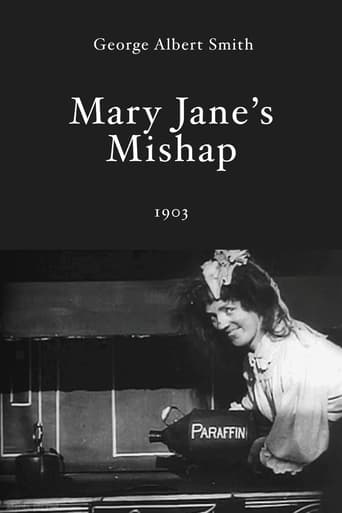
5.7Mary Jane tries to light the oven. When she's unsuccessful, she plays around, getting black boot polish on her face. She mugs before a mirror. Then, it's back to work. When the stove still won't light, she pours in paraffin, winks at the camera, and lights a match. Kaboom! Is there any rest for the foolish, even in the grave?
Mary Jane's Mishap
1903
5.7Mary Jane tries to light the oven. When she's unsuccessful, she plays around, getting black boot polish on her face. She mugs before a mirror. Then, it's back to work. When the stove still won't light, she pours in paraffin, winks at the camera, and lights a match. Kaboom! Is there any rest for the foolish, even in the grave?
Mary Jane's Mishap
1903
 5.8
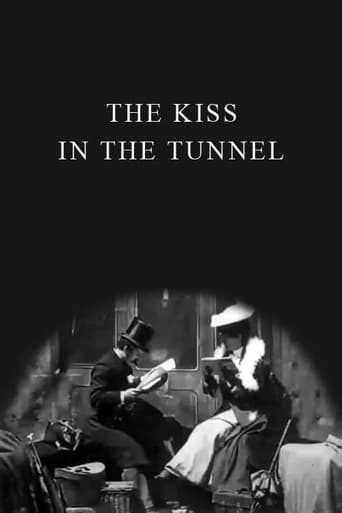
5.8Produced and directed by George Albert Smith, the film shows a couple sharing a brief kiss as their train passes through a tunnel. The Kiss in the Tunnel is said to mark the beginnings of narrative editing. It is in fact, two films in one, hence the 2 min length. Firstly, the G.A. Smith film here for the central cheeky scene in the carriage. The train view footage however is Cecil Hepworth's work, entitled 'View From An Engine Front - Shilla Mill Tunnel', edited into two halves in order to provide a visual narrative of the train entering the tunnel before the kiss and then leaving afterwards. More information about the filming of the phantom train ride can be found searching for the Hepworth film separately.
The Kiss in the Tunnel
1899
5.8Produced and directed by George Albert Smith, the film shows a couple sharing a brief kiss as their train passes through a tunnel. The Kiss in the Tunnel is said to mark the beginnings of narrative editing. It is in fact, two films in one, hence the 2 min length. Firstly, the G.A. Smith film here for the central cheeky scene in the carriage. The train view footage however is Cecil Hepworth's work, entitled 'View From An Engine Front - Shilla Mill Tunnel', edited into two halves in order to provide a visual narrative of the train entering the tunnel before the kiss and then leaving afterwards. More information about the filming of the phantom train ride can be found searching for the Hepworth film separately.
The Kiss in the Tunnel
1899
The first successful motion picture in natural color, filmed with Kinemacolor. It is an 8 minute short film directed by George Albert Smith of Brighton, showing people doing everyday activities. It is ranked of high historical importance. Kinemacolor later influenced and replaced by Technicolor, which was used from 1916 to 1952.
A Visit to the Seaside
1908
The first successful motion picture in natural color, filmed with Kinemacolor. It is an 8 minute short film directed by George Albert Smith of Brighton, showing people doing everyday activities. It is ranked of high historical importance. Kinemacolor later influenced and replaced by Technicolor, which was used from 1916 to 1952.
A Visit to the Seaside
1908
Consisting of a single shot, Spiders on a Web is one of the earliest British examples of close-up natural history photography. Made by one of the pioneers of the British film industry, G.A. Smith, this short film details spiders trapped in an enclosure, and despite the title, does not actually feature a web.
Spiders on a Web
1900
 4.2
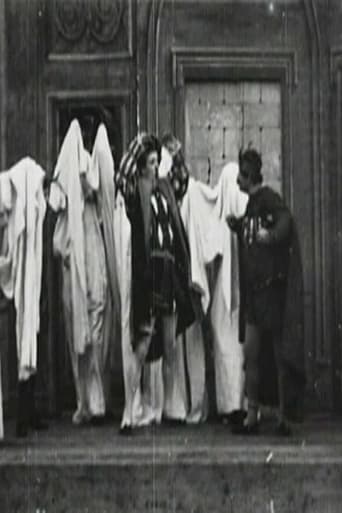
4.2Satan conjures a vision of a girl, for whom an old man signs a pact and is made young. This is a lost film from George Albert Smith
Faust and Mephistopheles
1898
 5.5
5.5A view taken from Brighton beach on the Channel coast of the transit of Magnus Volk’s amazing seagoing electric railway, long celebrated as one of the world’s more bizarre railway experiments. All aboard for “A Sea Voyage on Wheels!"
Brighton Seagoing Electric Car
1897
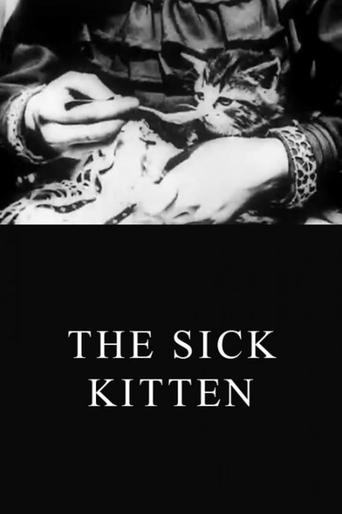 5.6
5.6A simple scene of two rather flamboyantly-dressed Edwardian children attempting to feed a spoonful of medicine to a sick kitten. The film is important for being one of the earliest films to cut to a close-up, then back again to the same medium shot as before.
The Sick Kitten
1903
 NR
NRA collection of early British Films from the Filmoteca de Catalunya. Films include: Brighton Seagoing Electric Car (1897), The Inexhaustible Cab (1899), From Dalmeny to Dunfermline, Scotland via the Firth of Forth Bridge (series) (1899), Review of Lord George Sanger's Circus by the Queen (series) (1899), Sanger Circus Passing Through Inverness (1900), The “Poly” Paper Chase (1900), The Wintry Alps (series) (1903), An Affair of Honor (1904), Perzina's Troupe of Educated Monkeys (1904), Elephants Bathing in Ceylon River (1904), [Drill of the Reedham Orphans] (c.1904–1912), Venice and the Grand Canal (1901?/1904?), Edge's Motor Boat. The Napier Minor (1904), Fixing the Swing (1904), Eccentric Burglary (1905), Her Morning Dip (1906), Automobile Fête Before King Alfonso and Princess Ena (1906), The Royal Spanish Wedding (series) (1906), Lace Making (1908), The Robber's Ruse, or Foiled by Fido (1909).
Early British Films from the Filmoteca de Catalunya 1897-1909
2023
 3.7
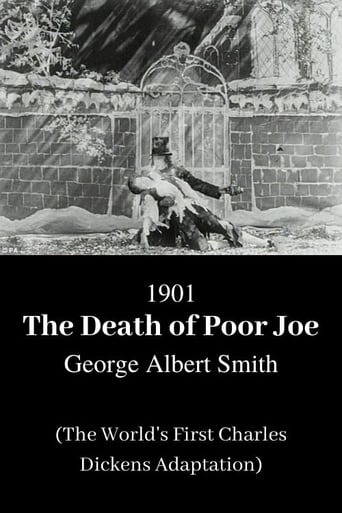
3.7A scene from Charles Dickens' Bleak House. Despite the common belief, this is NOT the world's first Dickens' adaptation in cinema.
The Death of Poor Joe
1901
 5.5
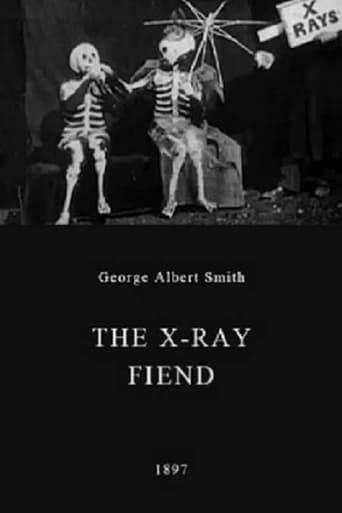
5.5A romantic couple are transformed into skeletons via X-Rays. The film combines two very recent innovations: Wilhelm Roentgen's discovery of X-rays in 1895, and Georges Méliès' accidental realisation of the special-effects potential of the jump-cut in 1896.
The X-Ray Fiend
1897
5.5A romantic couple are transformed into skeletons via X-Rays. The film combines two very recent innovations: Wilhelm Roentgen's discovery of X-rays in 1895, and Georges Méliès' accidental realisation of the special-effects potential of the jump-cut in 1896.
The X-Ray Fiend
1897
5.5A romantic couple are transformed into skeletons via X-Rays. The film combines two very recent innovations: Wilhelm Roentgen's discovery of X-rays in 1895, and Georges Méliès' accidental realisation of the special-effects potential of the jump-cut in 1896.
The X-Ray Fiend
1897
Girl dreams of Dick Whittington, Robinson Crusoe, Forty Thieves, Aladdin, Cinderella, Bluebeard, and Red Riding Hood.
Dorothy's Dream
1903
A man shaves, back to the camera, face reflected in a mirror.
The Dull Razor
1900
 5.4
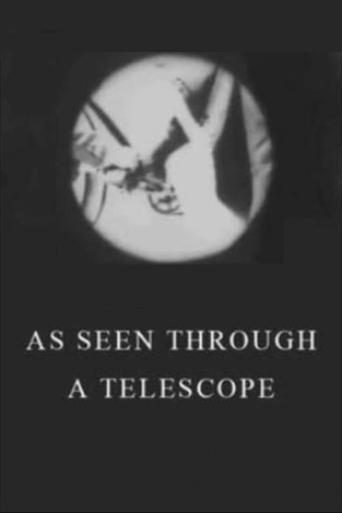
5.4An elderly gentleman in a silk hat sits on a stool in front of a store on the main street of town. He has a telescope that focuses on the ankle of a young woman who is a short distance away. Her husband catches the gent looking. What will the two men do now?
As Seen Through a Telescope
1900