
Directing
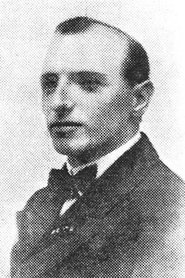
James H. White
Born — Died
1872-03-01 — 1944-01-01
Place of birth
Nova Scotia, Canada
Known for
Directing
Credits
42 titles
James Henry White was a Canadian film pioneer, who worked as a director, producer, and cinematographer. He also appeared as an actor in several films. He was employed by the Edison Manufacturing Company, and directed over 500 short films, both fictional and documentary.
Known for
 4.5
“The watchful father disturbs a dream of bliss, and the bucolic lover is taught a lesson. He made a great hit.” (Edison film catalog)
Interrupted Lovers
1896
 6.0
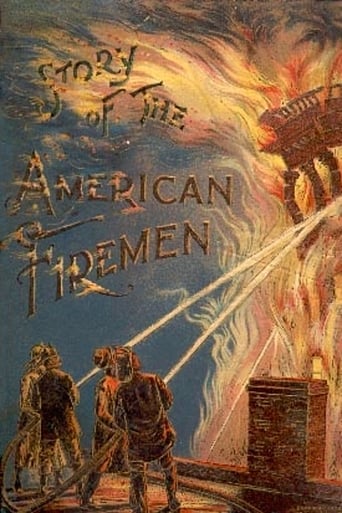
Porter's sequential continuity editing links several shots to form a narrative of firemen responding to a house fire. They leave the station with their horse drawn pumper, arrive on the scene, and effect the safe rescue of a woman from the burning house. But wait, she tells them of her child yet asleep in the burning bedroom...
Life of an American Fireman
1903
 4.2
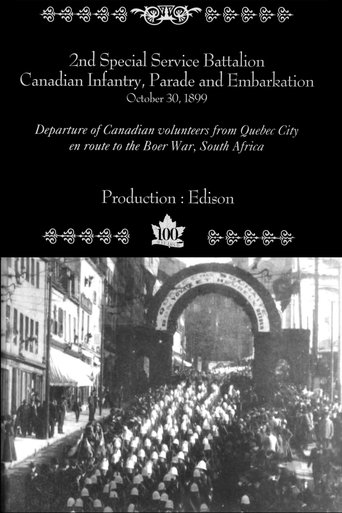
This film captures the departure of the 2nd Special Service Battalion, Canadian Infantry, from Quebec for the war in South Africa. Soldiers in campaign uniform march under a triumphal arch to the cheers of flag-waving crowds before proceeding to the wharf and embarking on the transport Sardinian, bound for the Transvaal.
2nd Special Service Battalion, Canadian Infantry, Parade and Embarkation
1899
 4.6
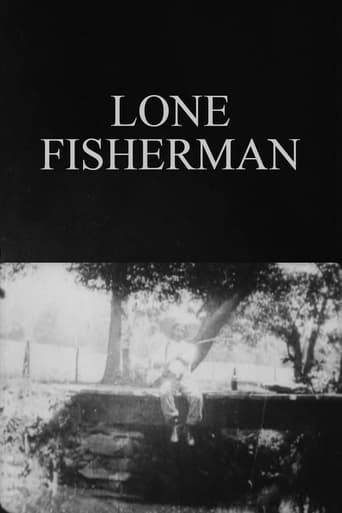
A fellow in a wide-brimmed hat, with a willowy stick for a rod and a baited hook, sits down on a plank hanging over a bridge above a stream. He sticks the rod under his seat and picks up his bottle to take a swig. Behind him creeps a joker who removes the large flagstone that's holding the fisherman's plank in place.
Lone Fisherman
1896
 4.5
This holiday-themed melodrama released by Edison Studios in 1910 concerns Robert, a young man who leaves his mother’s home in New England to forge a career in the big city. When he achieves “fame and fortune” six years later, his proud mother can’t wait to welcome him home for Thanksgiving. Robert, however, intends to stay in the city to enjoy a holiday feast with his society friends and beautiful fiancée. When Mom decides to pay a surprise visit on Thanksgiving Day, she is saddened to find that her son is so ashamed of her that he relegates her to an upstairs room, out of sight and out of mind.
His Mother's Thanksgiving
1910
 4.6
The camera shows a view of the American Falls and Goat Island.
American Falls from Above, American Side
1896
Film credits
1900s · 2 titles
6.0Porter's sequential continuity editing links several shots to form a narrative of firemen responding to a house fire. They leave the station with their horse drawn pumper, arrive on the scene, and effect the safe rescue of a woman from the burning house. But wait, she tells them of her child yet asleep in the burning bedroom...
Life of an American Fireman
1903
 6.0
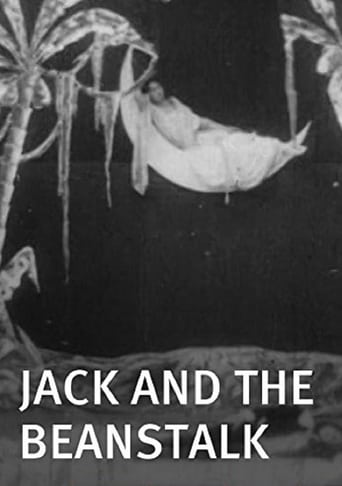
Porter's sequential continuity editing links several shots to form a narrative of the famous fairy tale story of Jack and his magic beanstalk. Borrowing on cinematographic methods reminiscent of 'Georges Melies' , Porter uses animation, double exposure, and trick photography to illustrate the fairy's apparitions, Jack's dream, and the fast growing beanstalk.
Jack and the Beanstalk
1902
Behind the camera
4.5“The watchful father disturbs a dream of bliss, and the bucolic lover is taught a lesson. He made a great hit.” (Edison film catalog)
Interrupted Lovers
1896
4.5“The watchful father disturbs a dream of bliss, and the bucolic lover is taught a lesson. He made a great hit.” (Edison film catalog)
Interrupted Lovers
1896
4.2This film captures the departure of the 2nd Special Service Battalion, Canadian Infantry, from Quebec for the war in South Africa. Soldiers in campaign uniform march under a triumphal arch to the cheers of flag-waving crowds before proceeding to the wharf and embarking on the transport Sardinian, bound for the Transvaal.
2nd Special Service Battalion, Canadian Infantry, Parade and Embarkation
1899
4.6A fellow in a wide-brimmed hat, with a willowy stick for a rod and a baited hook, sits down on a plank hanging over a bridge above a stream. He sticks the rod under his seat and picks up his bottle to take a swig. Behind him creeps a joker who removes the large flagstone that's holding the fisherman's plank in place.
Lone Fisherman
1896
4.5This holiday-themed melodrama released by Edison Studios in 1910 concerns Robert, a young man who leaves his mother’s home in New England to forge a career in the big city. When he achieves “fame and fortune” six years later, his proud mother can’t wait to welcome him home for Thanksgiving. Robert, however, intends to stay in the city to enjoy a holiday feast with his society friends and beautiful fiancée. When Mom decides to pay a surprise visit on Thanksgiving Day, she is saddened to find that her son is so ashamed of her that he relegates her to an upstairs room, out of sight and out of mind.
His Mother's Thanksgiving
1910
4.6The camera shows a view of the American Falls and Goat Island.
American Falls from Above, American Side
1896
The film opens showing the native daughters mounted on horses.
Native Daughters
1898
A look at the waterfalls of the Passaic River in the northern New Jersey city of Passaic.
Passaic Falls
1896
Two men have a contest to see which one can be the first to eat a large slice of watermelon.
Watermelon Contest
1896
Branding calves in 1898.
Calf Branding
1898
“A marvelously clear picture taken from the top of the elevator of the Eiffel Tower during going up and coming down of the car. This wonderful tower is 1,000 feet in height, and the picture produces a most sensational effect. As the camera leaves the ground and rises to the top of the tower, the enormous white city opens out to the view of the astonished spectator. Arriving at the top of the tower, a bird's eye view of the Exposition looking toward the Trocadero, and also toward the Palace of Electricity, is made, and the camera begins its descent. The entire trip is shown on a 200-foot film. 30.00. We furnish the ascent in 125 foot film.” (Edison film catalog)
Scene from the Elevator Ascending Eiffel Tower
1900
 5.0
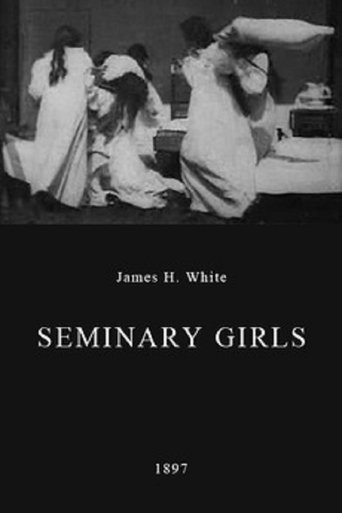
Young girls engage in a pillow fight until it is broken up by the headmistress. A number of young ladies, in their night robes, are having a frolic, and are interrupted by a teacher. One girl makes herself very conspicuous by crawling under a bed.
Seminary Girls
1897
 4.0
From Edison films catalog: A long line of horses, mules and ponies are led, driven and ridden into the yards, where they are sold and distributed.
Buffalo Stockyards
1897
 5.2
Members of the New York state militia enjoy some relaxing time during a meal break.
Mess Call
1896
 5.0
The Buffoons are artists in their line. They tumble in and out of trick doors, disappear and reappear in unexpected places in most unexpected ways. Sure to amuse the children.
Three Acrobats
1899
 4.2
Another Edison film shot in San Francisco at the Fisherman's Wharf. Once again the camera is looking down on a group of men doing their jobs.
Fishing Smacks
1897
 4.0
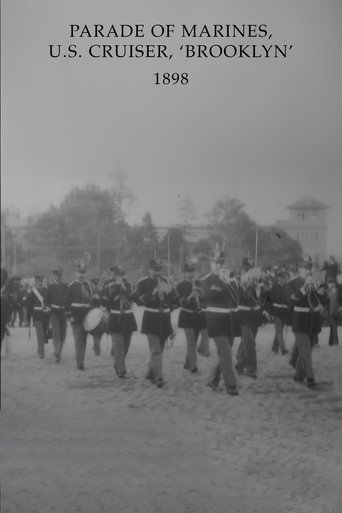
A short documentary capturing the officers and crew of the USS Brooklyn during a naval parade in Brooklyn, New York, on October 1, 1898, following the Spanish-American War. The film features the ship’s 300 Marines and the Marine Band, reflecting public celebrations of the U.S. Navy’s role in the conflict.
Parade of Marines, U.S. Cruiser, 'Brooklyn'
1898
 4.1
"The main feature is the toboggan slide. Some sit down while others lie down, either head or feet first."
Lurline Baths
1897
 4.6
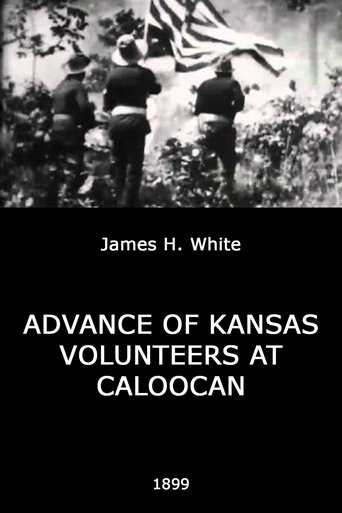
Recreation of military maneuvers in the Philippines in the Spanish-American War.
Advance of Kansas Volunteers at Caloocan
1899
 4.3
A young, dark-haired woman performs a dance inspired by George du Maurier's character Trilby, in an early modern dance style reminiscent of Isadora Duncan. She dances barefoot without stockings and is dressed in a long, flowing gown bound across the bosom in Grecian style, with inside fringe and a draped cape hooked to her wrist. She also wears what appears to be a garland headpiece. Holding her gown with one hand throughout, the dancer performs a series of kicks and turns with leg kicks front and back, rocking, and round de jambe.
Ella Lola, a la Trilby
1898
 4.7
Four men each hold a large slice of watermelon, and have a race to see who can finish eating first. All four move quickly, but one man seems to be pulling ahead of the others. Soon the contestants begin to hinder one another's efforts.
Watermelon Contest
1900
 4.0
George Dewey was an admiral in the U.S. Navy who is best remembered for his victory at Manila Bay during the Spanish-American War, which he won without the death of a single person in the battle. Needless to say since he was a big hero in this country Edison decided to film him at various stages and release them to make some money.
Admiral Dewey Leading Land Parade
1899
Selection of hand-painted films made from serpentine dance performances between 1895 and 1907, with original music by Carol Robinson. Produced for ARTE / Lobster Films.
Butterfly Dances
2007
 3.9
“A clever characteristic dance called the 'Yellow Kid.' Very unique. Stage is in the Sutro Baths, San Francisco, Cal., and the audience is composed largely of bathers.” (Edison Catalog)
Leander Sisters
1897
From the upper windows of a ruined mill Cubans are firing at a scouting party of Spaniards, who return the volley. Fine smoke effects.
Cuban Ambush
1898
East Side Drive, No. 1 (1896) is a brief, silent actual-city documentary directed by James H. White for Edison. Filmed on New York City’s East Side during high society’s “driving hour,” it captures elegant, horse-drawn carriages gliding through the streets in a stylish display of urban leisure.
East Side Drive, No. 1
1896
A line is shot to the man clinging to the overturned boat. He fastens it to his body using all his fast failing strength. The crew pull him through the surf to the shore, where he is rolled and patted and worked over until resuscitated.
Rescue - Resuscitation
1897
 5.0
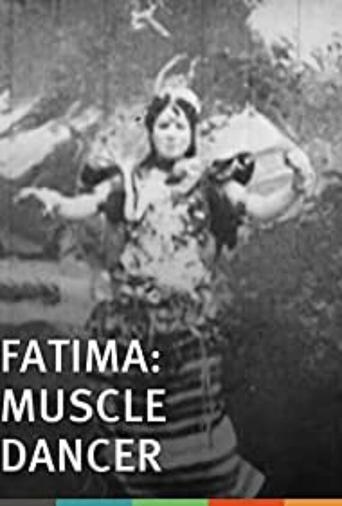
The dancer Fatima, well-known for her dancing shows at the World's Exhibition in 1893, performs for the camera. She opens her act by twirling around a few times, and then she does the 'muscle dance' for which she had attracted considerable notoriety.
Fatima's Coochee-Coochee Dance
1896
 4.7
Shows a party of young people in front of a barn door, searching for the red ear, which is discovered, and the penalty exacted from one of the group who resists payment of the forfeit, thereby creating confusion and merriment. The group is animated, and is made up of real farmer boys and girls. During the progress of husking, the farmer arrives wheeling his little daughter to the sport on a barrow.
Husking Bee
1897
 5.1
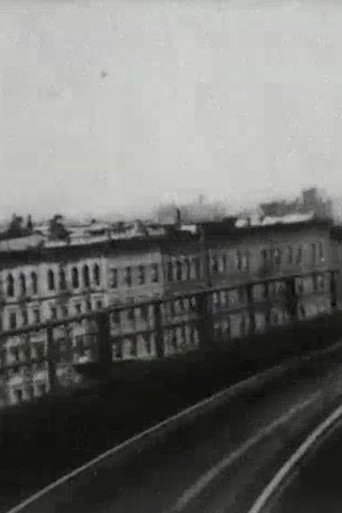
Taken from the front platform of a special train run backward over this celebrated S curve. Not only are the passing trains and crowded platforms of great interest, but the view of uptown New York is an excellent one, showing acre upon acre of roofs, towers, steeples and towering apartment houses. As the 'special' slows up at 92nd street, a Harlem express dashes by, the engineer leaning out of his cab, and waving a good-bye.
104th Street Curve, New York, Elevated Railway
1899
In this movie, dancer Ella Lola performs a Turkish variation of a "Danse Du Ventre", the oriental belly dance. In her dance she shakes, twists and turns around in a very energetic dance. The elements of Turkish folklore can be felt despite the lack of sound as the differences from this and other belly dances are very notorious when her traditional Turkish dress swings in a marvellous way as she dances. Unlike other films about exotic dances, Lola's movies (the other was "Ella Lola, a la Trilby") were of a less erotic nature and more focused on the realistic representation of the dance. A professional dancer since a very young age, Lola's dancing is very graceful and showcases an enormous control over her body.
Turkish Dance, Ella Lola
1898
 5.8
“Showing the entire height of this wonderful structure from the base of the dome and return, with the great Paris Exposition in the background, looking down Champs de Mars. A most realistic picture.” According to Edison film historian Charles Musser, this film features the first camera tilt among the company's surviving oeuvre.
Panorama of Eiffel Tower
1900
 4.6
The single camera position is from the top of a building identified as the Trocadero Palace; The camera is pointed toward the Eiffel Tower. The film shows only up to the first arch of the Eiffel Tower.
Eiffel Tower from Trocadero Palace
1900
“A comic subject, clear, bright and characteristic. Shows four girls in their night dresses, engaged in an animated pillow fight. During the action the pillows become torn, and the feathers fly over their heads and about the room in great numbers, producing with the white dresses and the black background a novel effect. Sharp, full of action, and popular in character.” (Edison Catalog)
Pillow Fight
1897
 4.3
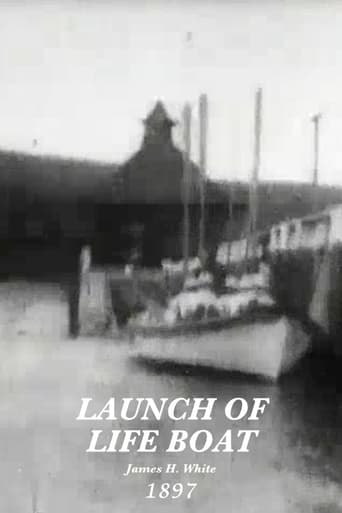
This Edison short delivers everything the title says. In 24-seconds we see a boat being lowered into the water led by Capt. Joseph Hodgson. The boat is put into the water and it quickly disappears out of frame on a drill helping them prepare for a real sinking.
Launch of Life Boat
1897
 4.2
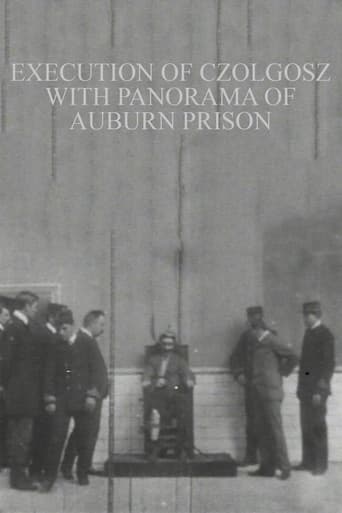
This early docudrama shows Auburn Prison and recreates the electrocution of Leon Czolgosz, the assassin of President McKinley of the United States.
Execution of Czolgosz with Panorama of Auburn Prison
1901
The title tells us where we are; the vignette is in two parts, spliced together. On a busy sidewalk, a police officer holds the left arm and a suited man holds the other of a Chinese wearing a loose white shirt and hat - marching the man up the slight incline past the camera.
Arrest in Chinatown, San Francisco, Cal.
1897
 6.5
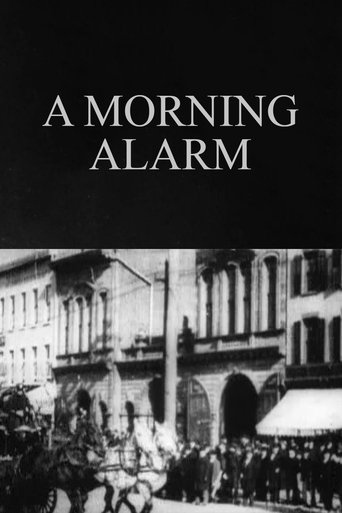
"This scene shows almost the entire Fire Department led by the Chief, responding to an alarm. The horses, said to be the finest of their kind in the country, present a thrilling spectacle as they dash rapidly by, flecked with foam, and panting from the exertion of their long gallop"--Maguire & Baucus catalogue. 50 ft. strip, filmed November 14, 1896, in Newark, New Jersey.
A Morning Alarm
1896
 4.0
“This subject taken just after the recent first fall of snow, shows two enthusiastic horsemen indulging in a "brush" with their respective horses and cutters.” (Maguire & Baucus)
The First Sleigh-Ride
1897