
Directing
Emiko Omori
Known for
Directing
Credits
15 titles
Emiko Omori has traveled the globe for more than 30 years as a cinematographer for many award-winning documentaries. Omori taught filmmaking in California and Hawai‘i and was the San Francisco Bay Area's first Asian American female news cameraperson. Omori has produced several nationally acclaimed documentaries including: Tattoo City, a documentary about the art of Japanese-style full body tattooing by artist D.E. Hardy; Hot Summer Winds, a drama based on two short stories by Nisei writer Hisaye Yamamoto that was showcased on American Playhouse; Rabbit in the Moon, a feature-length documentary that combines the internees' powerful stories with evocative images resulting in a film that is par…
Known for
Reveals the courageous lives of pioneer camerawomen from Hollywood to Bollywood, from war zones to children’s laughter, in a way that has never been seen before. Based on a book by Alexis Krasilovsky, the film tells the stories of camerawomen surviving the odds in Afghanistan, Australia, Canada, China, France, Germany, India, Iran, Mexico, the U.S. and other countries, as well as exploring their individual visions.
Women Behind the Camera
2007
 NR
A collection of film clips of what would become Curtis Choy’s seminal documentary The Fall of the I-Hotel. This work-in-progress documentary includes In-depth interviews with Manongs – an Illocano term of respect for elders – and community leaders as they fought to stop the mass eviction of Asian American elders from the International Hotel and the destruction of San Francisco’s Manilatown.
Manongs Film Project
1979
 NR
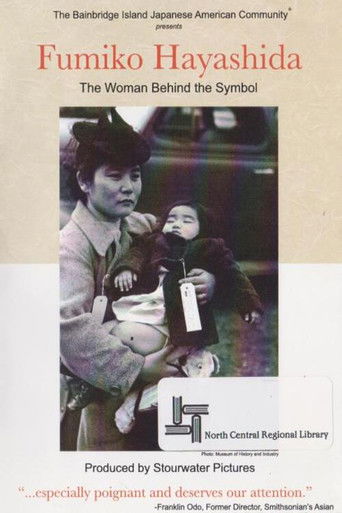
Fumiko Hayashida: The Woman Behind the Symbol is both a historical portrait of Fumiko, her family and the Bainbridge Island Japanese American community in the decades before World War II as well as a contemporary story which follows 97-year old Fumi and her daughter Natalie as they return to the site of the former Minidoka internment camp, their first trip back together in 63 years. The film reveals how the iconic photograph became the impetus for Fumiko to publicly lobby against the injustices of the past.
Fumiko Hayashida: The Woman Behind the Symbol
2009
Like many Japanese Americans released from WWII internment camps, the young Omori sisters did their best to erase the memories and scars of life under confinement. Fifty years later acclaimed filmmaker Emiko Omori asks her older sister and other detainees to reflect on the personal and political consequences of internment. From the exuberant recollections of a typical teenager, to the simmering rage of citizens forced to sign loyalty oaths, Omori renders a poetic and illuminating picture of a deeply troubling chapter in American history.
Rabbit in the Moon
1999
 5.3
Ed Hardy is emblazoned on clothing worn by Madonna, Bruce Springsteen and Mick Jagger, on wine and dozens of other products. Now you'll meet the real Ed Hardy, the godfather of modern tattooing and artist extraordinaire who gave up a promising career in the fine arts to pursue his childhood obsession: tattoos.
Ed Hardy: Tattoo the World
2010
 6.0
A collective, cinematic love letter to the elusive French filmmaker, Chris Marker; Emiko Omori's film captures the persona of the legendary and enigmatic filmmaker.
To Chris Marker, an Unsent Letter
2012
Film credits
2000s · 2 titles
Reveals the courageous lives of pioneer camerawomen from Hollywood to Bollywood, from war zones to children’s laughter, in a way that has never been seen before. Based on a book by Alexis Krasilovsky, the film tells the stories of camerawomen surviving the odds in Afghanistan, Australia, Canada, China, France, Germany, India, Iran, Mexico, the U.S. and other countries, as well as exploring their individual visions.
Women Behind the Camera
2007
NRFumiko Hayashida: The Woman Behind the Symbol is both a historical portrait of Fumiko, her family and the Bainbridge Island Japanese American community in the decades before World War II as well as a contemporary story which follows 97-year old Fumi and her daughter Natalie as they return to the site of the former Minidoka internment camp, their first trip back together in 63 years. The film reveals how the iconic photograph became the impetus for Fumiko to publicly lobby against the injustices of the past.
Fumiko Hayashida: The Woman Behind the Symbol
2009
Behind the camera
NRA collection of film clips of what would become Curtis Choy’s seminal documentary The Fall of the I-Hotel. This work-in-progress documentary includes In-depth interviews with Manongs – an Illocano term of respect for elders – and community leaders as they fought to stop the mass eviction of Asian American elders from the International Hotel and the destruction of San Francisco’s Manilatown.
Manongs Film Project
1979
Like many Japanese Americans released from WWII internment camps, the young Omori sisters did their best to erase the memories and scars of life under confinement. Fifty years later acclaimed filmmaker Emiko Omori asks her older sister and other detainees to reflect on the personal and political consequences of internment. From the exuberant recollections of a typical teenager, to the simmering rage of citizens forced to sign loyalty oaths, Omori renders a poetic and illuminating picture of a deeply troubling chapter in American history.
Rabbit in the Moon
1999
5.3Ed Hardy is emblazoned on clothing worn by Madonna, Bruce Springsteen and Mick Jagger, on wine and dozens of other products. Now you'll meet the real Ed Hardy, the godfather of modern tattooing and artist extraordinaire who gave up a promising career in the fine arts to pursue his childhood obsession: tattoos.
Ed Hardy: Tattoo the World
2010
6.0A collective, cinematic love letter to the elusive French filmmaker, Chris Marker; Emiko Omori's film captures the persona of the legendary and enigmatic filmmaker.
To Chris Marker, an Unsent Letter
2012
6.0A collective, cinematic love letter to the elusive French filmmaker, Chris Marker; Emiko Omori's film captures the persona of the legendary and enigmatic filmmaker.
To Chris Marker, an Unsent Letter
2012
Though it wasn’t initially intended to be silly, this cheeky short captures absurdity and playfulness on a street corner in San Francisco’s Chinatown, encouraging us to laugh a little more.
WTF?
2018
 NR
The May’s Photo Studio brings families together: in the past by splicing together family portraits in spite of the Chinese Exclusion Act, and in the present by reconnecting May’s granddaughter with her family’s legacy. These stunning photographs show San Francisco’s Chinatown in the early to mid-20th century, a vanishing “old Chinatown” vibrant with culture; an immigrant community becoming Americanized.
Vanishing Chinatown: The World of the May’s Photo Studio
2020
This is the story of one simple invention, the vibrator, and its relationship to one complex human behavior, the female orgasm.
Passion & Power: The Technology of Orgasm
2007
 NR
The Surrealist, "Exquisite Corpse" was a French Café parlor game. "Exquisite Moving Corpse" is more of an artist chain letter. 60 artists participated over a two-year period, beginning in March 2020. Each invited artist made a one minute video in response to the last frame of the previous minute.
Exquisite Moving Corpse
2022
Created from footage and outtakes from Rabbit in the Moon. An elegy to her parents’ generation—the Issei (immigrants)—and the legacy of suffering that haunts the community to this day
When Rabbit Left the Moon
2017
James Wakasa was shot and killed by a Topaz guard in 1943. Some 78 years later, a monument built by Issei in camp was found and removed from the site where it had been protected, buried in the cracked earth of Topaz where over 8,000 Japanese Americans were incarcerated. No Japanese Americans were present when the monument was dug up in July 2021. Four months later, 12 Japanese Americans were finally able to have a ceremony honoring Wakasa at the site of his murder.
Murder in the High Desert
2024