

Directing
Robert Cannon
Born — Died
1909-07-16 — 1964-06-09
Place of birth
Ohio, USA
Known for
Directing
Credits
25 titles
Robert Cannon (July 16, 1909 - June 9, 1964) was an American animator. Robert 'Bobo' Cannon was born in Ohio. Not much is known about his early life, including the city he was born in. He began his animation career at Leon Schlesinger Productions in 1934, assisting ace animators Robert Clampett and Chuck Jones. After a two-year apprenticeship, he graduated to full animator. Cannon became an integral part of that anarchic Warner Brothers in-house cartoon outfit, known as 'Termite Terrace' (due to its cramped and austere quarters). In the process, he labored on such iconic Looney Tunes and Merrie Melodies characters as Porky Pig, Daffy Duck, Bugs Bunny, and Elmer Fudd. He animated for Tex Av…
Known for
 7.0
Gerald McBoing Boing, a little boy who can't talk but can imitate any sound, is working as a one-man sound effects department for a radio station. When a scheduled symphony orchestra does not show up, Gerald replaces them. He is doing fine until he mixes up the score with the sound effects script, and creates an original symphony. He is fired, but the critics hail his work as that of a genius.
Gerald McBoing-Boing's Symphony
1953
 5.9
While meeting a new friend, Gerald is abducted by aliens and whisked to the planet Moo. The king of Moo mistakenly thinks that all Earthlings - like Gerald - speak only in sound effects, and he attempts to converse with Gerald. Hoping to lure Earth tourism to his planet, the king brings the boy back to Earth in the hope of establishing good relations, but Earth diplomats are puzzled by the king's unusual language
Gerald McBoing! Boing! on Planet Moo
1956
 6.8
Through drawings, an illustrator tells his dog the story of a boy named Christopher Crumpet. Christopher can at will change himself from a little boy into a chicken. He threatens to do so if his father, Marvin, won't buy him a rocket ship.
Christopher Crumpet
1953
 4.7
Dance teacher Miss Placement is dismayed to learn that the head of the School of Ballet where she teaches has entered her beginners class in a contest just three weeks away. But she manages to get them ready and they are a huge success. The school owner is so pleased that he enters all of the school's 1400 students in a contest where they have to learn "Swan Lake" in just two weeks.
Ballet-Oop
1954
 6.5
Christopher Crumpet has an imaginary elephant for a playmate. Christopher's father begins to see the elephant. Mr. Crumpet reveals this to his co-worker, Mr. Bilgewater, who quickly plays office politics by telling their boss that Mr. Crumpet is crazy. The boss has recently awarded Crumpet a junior partnership, which Bilgewater thought he had deserved. The boss visits the Crumpet home, and finds that Crumper does indeed see his son's imaginary playmate. But instead of taking the junior partnership away from Crumpet, he makes him a full partner. The boss himself has an imaginary hyena.
Christopher Crumpet's Playmate
1955
 6.6
The story of a little boy who would only talk in sound effects. With story by Dr. Seuss (and Bill Scott of Rocky and Bullwinkle fame) this cartoon won the Oscar for best short subject (animated) for 1950.
Gerald McBoing-Boing
1950
Behind the camera
7.0Gerald McBoing Boing, a little boy who can't talk but can imitate any sound, is working as a one-man sound effects department for a radio station. When a scheduled symphony orchestra does not show up, Gerald replaces them. He is doing fine until he mixes up the score with the sound effects script, and creates an original symphony. He is fired, but the critics hail his work as that of a genius.
Gerald McBoing-Boing's Symphony
1953
5.9While meeting a new friend, Gerald is abducted by aliens and whisked to the planet Moo. The king of Moo mistakenly thinks that all Earthlings - like Gerald - speak only in sound effects, and he attempts to converse with Gerald. Hoping to lure Earth tourism to his planet, the king brings the boy back to Earth in the hope of establishing good relations, but Earth diplomats are puzzled by the king's unusual language
Gerald McBoing! Boing! on Planet Moo
1956
6.8Through drawings, an illustrator tells his dog the story of a boy named Christopher Crumpet. Christopher can at will change himself from a little boy into a chicken. He threatens to do so if his father, Marvin, won't buy him a rocket ship.
Christopher Crumpet
1953
4.7Dance teacher Miss Placement is dismayed to learn that the head of the School of Ballet where she teaches has entered her beginners class in a contest just three weeks away. But she manages to get them ready and they are a huge success. The school owner is so pleased that he enters all of the school's 1400 students in a contest where they have to learn "Swan Lake" in just two weeks.
Ballet-Oop
1954
6.5Christopher Crumpet has an imaginary elephant for a playmate. Christopher's father begins to see the elephant. Mr. Crumpet reveals this to his co-worker, Mr. Bilgewater, who quickly plays office politics by telling their boss that Mr. Crumpet is crazy. The boss has recently awarded Crumpet a junior partnership, which Bilgewater thought he had deserved. The boss visits the Crumpet home, and finds that Crumper does indeed see his son's imaginary playmate. But instead of taking the junior partnership away from Crumpet, he makes him a full partner. The boss himself has an imaginary hyena.
Christopher Crumpet's Playmate
1955
6.6The story of a little boy who would only talk in sound effects. With story by Dr. Seuss (and Bill Scott of Rocky and Bullwinkle fame) this cartoon won the Oscar for best short subject (animated) for 1950.
Gerald McBoing-Boing
1950
 5.9
This short little cartoon is based on the popular song by Jack Rollins and Steve Nelson, first recorded in 1950 by Gene Autry as his followup to Rudolph the Red Nosed Reindeer.
Frosty the Snowman
1951
 6.3
Gerald's parents, frustrated at his inability to talk, call in various experts (including the world's greatest voice professor) to teach their boy to speak in words instead of sound effects. They all fail until, by chance, Gerald tries to phone home.
How Now Boing Boing
1954
 8.5
Uncle George is showing Little Johnny, his nephew, the pair of boxing gloves he claims enabled him, when he was the janitor at a training-gym, to beat up the bullying prizefighting champion. Little Johnny scoffs at the tale until the 'wonder gloves' gives him a spanking.
The Wonder Gloves
1951
 6.5
Ollie loves to play the tuba but his playing upsets all the people in town. He goes to the country and disrupts the milking habits of the cows. He finally takes a boat and practices at sea in order not to disturb anyone. His tuba-playing saves a ship from going on the rocks and he becomes a town hero.
Little Boy with a Big Horn
1953
 5.5
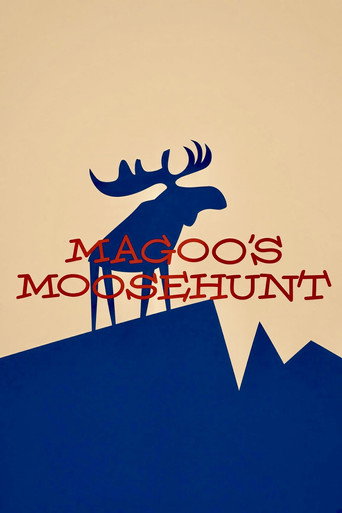
Mr. Maggo tries to hunt a moose
Magoo's Moose Hunt
1957
5.5Mr. Maggo tries to hunt a moose
Magoo's Moose Hunt
1957
 NR
Part of the FLIGHT SAFETY series, instructing U.S. Navy pilots in the history of parachutes and the correct use of parachutes.
Bailing Out
1949
 10.0
Little Willie's large imagination turns his family-home in the suburbs into the old Wild WEst when he puts on his cowboy suit, guns, holsters and hat, and goes out to play with his friend Archie.(No, this is not Archie Andrews.) The two boys have some desperate adventures, until Willie's mom calls him in to take his afternoon nap.
Willie the Kid
1952
 6.5
This short from the UPA studio was nominated for the 1952 Oscars. Based on the Madeline series of children's books.
Madeline
1952
 8.3
A Harvard grad tries to start a gold claim, but is immediately beset by the amorous daughter of a rival miner.
The Miner's Daughter
1950
 8.0
A family of musical instruments, the Oompahs. Conflict strikes when the son wants to hang out with his rebellious friends, going against his traditionally-based family structure. A heavy allegory for the jazz backlash.
The Oompahs
1952
 7.5
Georgie, a young Scottish lad, befriends a baby dragon and takes it home as a pet and companion.
Georgie and the Dragon
1951
 6.3
Made from a pamphlet and financed by a union, the message that the similarities between people are greater than any racial differences, was part of a post WW2 optimism which was soon to be seen as leftist propaganda and now reads like simple multiculturalism.
Brotherhood of Man
1945
 8.0
Magoo mistakes three bear cubs for three scouts.
Scoutmaster Magoo
1958
 NR
The jazzy cartoon short about that "cool little bunny" giving baskets full of Easter joy. Stylish 1950s UPA production design in this Easter musical short features some very loose and exhilarating animation, largely by Grim Natwick - plus a great vocal track of the seasonal pop standard.
Peter Cottontail
1951
 6.8
1956 Oscar nominated cartoon. The idea here is simple: the main character has taken up jaywalkng as a hobby and it quickly becomes manic, almost obsessive, behavior.
The Jaywalker
1956
 NR
Part of the "Flight Safety" series of animated shorts commissioned by the U.S. Air Force at the end of World War II. This one,completed by United Productions of America, describes the dangers of mid-air collisions during join-up maneuvers.
Grampaw Pettibone's Gripes: Join-Up Collisions
1945
 6.8
UPA cartoon about a nuclear family trying to live within a family budget.
Fudget's Budget
1954
 NR
A carnival setting illustrates the superiority of the radio medium for American business, with an eye on a future of economic prosperity.
Tune in Tomorrow
1954