

Acting
Bill Scott
Born — Died
1920-08-02 — 1985-11-29
Place of birth
Philadelphia, Pennsylvania, USA
Known for
Acting
Credits
27 titles
Known for
 7.1
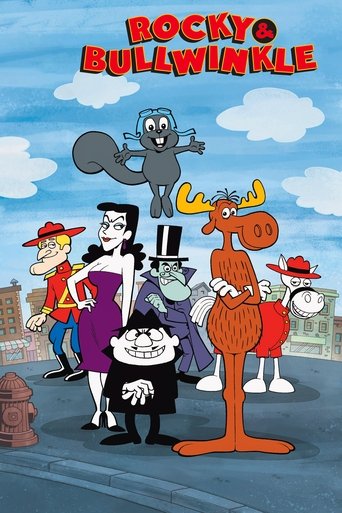
A variety show, with the main feature being the serialized adventures of the two title characters, the anthropomorphic moose Bullwinkle and flying squirrel Rocky. The main adversaries in most of their adventures are the Russian-like spies Boris Badenov and Natasha Fatale. Supporting segments include Dudley Do-Right, Peabody's Improbable History, and Fractured Fairy Tales, among others.
The Bullwinkle Show
1959
 7.5
Join the world’s sweetest heroes for high adventure in a mystical land of giants and wizards, ogres and dragons, and wondrous creatures both good and evil. Meet Gruffi, Zummi, Cubbi, Grammi, Tummi, Sunni, and all the legendary Gummis as they laugh, play, foil dastardly plots, and fight for what's right.
Disney's Adventures of the Gummi Bears
1985
 6.8
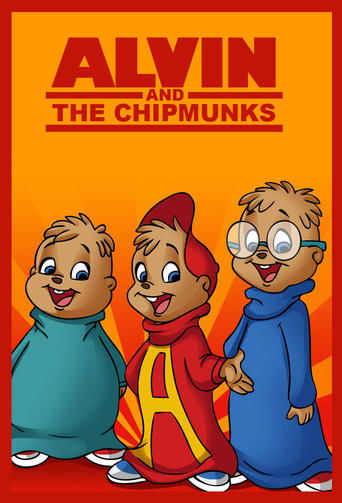
Three chipmunk brothers, Alvin, Simon, and Theodore are adopted by human, Dave.
Alvin and the Chipmunks
1983
 8.0
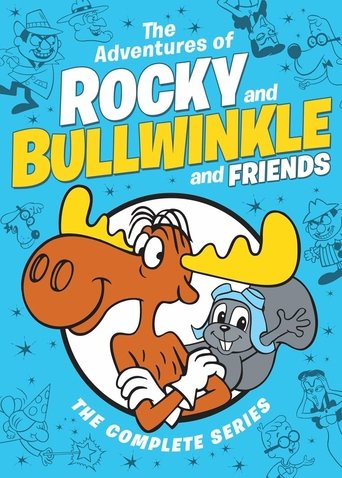
Rocky, a plucky flying squirrel and Bullwinkle, a bumbling but lovable moose, have a series of ongoing adventures.
The Adventures of Rocky and Bullwinkle and Friends
1959
 7.5
No synopsis available yet.
The Dudley Do-Right Show
1969
 6.1
The Duck Factory is a 1984 NBC television series produced by MTM Enterprises that is perhaps most notable for being Jim Carrey's first lead role in a Hollywood production. The show was co-created by Allan Burns. The premiere episode introduces Skip Tarkenton, a somewhat naive and optimistic young man who has come to Hollywood looking for a job as a cartoonist. When he arrives at a low-budget animation company called Buddy Winkler Productions, he finds out Buddy Winkler has just died, and the company desperately needs new blood. So Skip gets an animation job at the firm, which is nicknamed "The Duck Factory" as their main cartoon is "The Dippy Duck Show". Other Duck Factory employees seen regularly on the show were man-of-a-thousand-cartoon voices Wally Wooster; comedy writer Marty Fenneman; artists Brooks Carmichael and Roland Culp, editor Andrea Lewin, and business manager Aggie Aylesworth. Buddy Winkler Productions was now owned by his young, ditzy widow, Mrs Sheree Winkler, who had been married to Buddy for all of three weeks before his death. The Duck Factory lasted thirteen episodes; it premiered April 12, 1984. The show initially aired at 9:30 on Thursday nights, directly after Cheers, and replaced Buffalo Bill on NBC's schedule. Jay Tarses, an actor on The Duck Factory, had been the co-creator and executive producer of Buffalo Bill, which had its final network telecast on Thursday, April 5, 1984.
The Duck Factory
1984
Film credits
1980s · 6 titles
 6.0
As Duke Igthorn plans an attack on King Gregor's castle, Cavin (a page in the castle) is left in the woods after some of Igthorn's ogres run off the Humans. The Gummi Bears find Cavin passed out in the woods with a Great Gummi Medallion, that was left to him by his grandfather. When he proves he is a friend, the Gummi Bears and Cavin team up to stop Igthorn's plans.
Gummi Bears: A New Beginning
1986
 7.0
Third-grader Molly Conway finds out that her parents are getting divorced. She tries everything she can to get them back together, but most of her attempts backfire. Eventually, she accepts her new situation with the help of her friends.
Happily Ever After
1985
 6.0
The first episode of the television series THE WUZZLES as released theatrically in Europe.
Wuzzles: Bulls of a Feather
1986
 9.0
A goofy crew of extraterrestrial wall-walkers journey to Earth in a quest to learn the meaning of Christmas.
Deck the Halls with Wacky Walls
1983
 NR
UCLA Student Film, Preserved by the UCLA Film and Television Archive. A parody of 16mm educational and social engineering films, "Teen Tips," tells a morality tale about a young man coming into puberty and attempting to find a suitable girl to date.
Teen Tips
1980
 NR
Animation of a poem from Edith Sitwell's "Façade".
Mariner Man
1983
1960s · 2 titles


Series credits
7.1A variety show, with the main feature being the serialized adventures of the two title characters, the anthropomorphic moose Bullwinkle and flying squirrel Rocky. The main adversaries in most of their adventures are the Russian-like spies Boris Badenov and Natasha Fatale. Supporting segments include Dudley Do-Right, Peabody's Improbable History, and Fractured Fairy Tales, among others.
The Bullwinkle Show
1959
7.5Join the world’s sweetest heroes for high adventure in a mystical land of giants and wizards, ogres and dragons, and wondrous creatures both good and evil. Meet Gruffi, Zummi, Cubbi, Grammi, Tummi, Sunni, and all the legendary Gummis as they laugh, play, foil dastardly plots, and fight for what's right.
Disney's Adventures of the Gummi Bears
1985
6.8Three chipmunk brothers, Alvin, Simon, and Theodore are adopted by human, Dave.
Alvin and the Chipmunks
1983
8.0Rocky, a plucky flying squirrel and Bullwinkle, a bumbling but lovable moose, have a series of ongoing adventures.
The Adventures of Rocky and Bullwinkle and Friends
1959
7.5No synopsis available yet.
The Dudley Do-Right Show
1969
6.1The Duck Factory is a 1984 NBC television series produced by MTM Enterprises that is perhaps most notable for being Jim Carrey's first lead role in a Hollywood production. The show was co-created by Allan Burns. The premiere episode introduces Skip Tarkenton, a somewhat naive and optimistic young man who has come to Hollywood looking for a job as a cartoonist. When he arrives at a low-budget animation company called Buddy Winkler Productions, he finds out Buddy Winkler has just died, and the company desperately needs new blood. So Skip gets an animation job at the firm, which is nicknamed "The Duck Factory" as their main cartoon is "The Dippy Duck Show". Other Duck Factory employees seen regularly on the show were man-of-a-thousand-cartoon voices Wally Wooster; comedy writer Marty Fenneman; artists Brooks Carmichael and Roland Culp, editor Andrea Lewin, and business manager Aggie Aylesworth. Buddy Winkler Productions was now owned by his young, ditzy widow, Mrs Sheree Winkler, who had been married to Buddy for all of three weeks before his death. The Duck Factory lasted thirteen episodes; it premiered April 12, 1984. The show initially aired at 9:30 on Thursday nights, directly after Cheers, and replaced Buffalo Bill on NBC's schedule. Jay Tarses, an actor on The Duck Factory, had been the co-creator and executive producer of Buffalo Bill, which had its final network telecast on Thursday, April 5, 1984.
The Duck Factory
1984
 5.5
George of the Jungle is an American animated series produced by Jay Ward and Bill Scott, who created The Rocky and Bullwinkle Show. The character George was inspired by the legend of Tarzan. It ran for 17 episodes on Saturday mornings from September 9 to December 30, 1967, on the American TV network ABC. The half-hour program was distributed for many years by Worldvision Enterprises, currently part of CBS Television Distribution. Each Full Episode was a compilation of 3 mini episodes from 3 different shows: George of the Jungle; Tom Slick; Super Chicken -Each voiced by the same actors.
George of the Jungle
1967
 5.6
Hoppity Hooper is a American animated television series produced by Jay Ward, and sponsored by General Mills, originally broadcast on ABC on September 12, 1962 and premiered in full on January 1. The series was produced in Hollywood by Jay Ward and Bill Scott, with animation done in Mexico City by Gamma Productions.
Hoppity Hooper
1962
 10.0
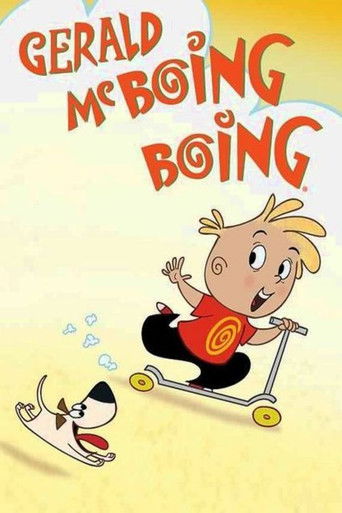
No synopsis available yet.
The Gerald McBoing-Boing Show
1956
 6.3
An idea of Michael Eisner for his new Disney television animation studio. The premise is that the main characters are hybrids of two different animals. The original thirteen episodes ran on CBS for their first run.
Wuzzles
1985
 NR
No synopsis available yet.
Tom Slick
1967
 6.5
Fractured Flickers is a live-action syndicated half-hour television comedy show that was produced by Jay Ward, who is otherwise known for animated cartoons. The pilot film was produced in 1961, but the series wasn't completed until 1963. Twenty-six episodes were produced; they were syndicated by Desilu Productions and played for several years on local stations.
Fractured Flickers
1963
 8.0
Aesop and Son was a segment on "The Adventures of Rocky and Bullwinkle". It is similar to "Fractured Fairy Tales," except it deals with fables instead of fairy tales.
Aesop and Son
1960
 8.0
Super Chicken is a segment that ran on the animated television series George of the Jungle. It was produced by Jay Ward and Bill Scott, who earlier had created the Rocky and Bullwinkle cartoons. It debuted September 9, 1967 on ABC.
Super Chicken
1967
Behind the camera
 6.6
In a town called Pudding on the Ritz, a sly fox attempts to trick a nitwit into opening a cursed treasure chest. However, the fox's trick comes back to bite him in the end. Based on the Fractured Fairy Tales segment from Jay Ward's "The Rocky and Bullwinkle Show", this short premiered before the live-action feature "Dudley Do-Right".
The Phox, the Box, & the Lox
1999
 7.2
A man's sanity is a point of contention as he confesses to murdering an elderly man, driven by the victim's pale blue 'vulture eye', culminating in guilt-induced auditory hallucinations of the victim's beating heart.
The Tell-Tale Heart
1953
 7.0
A compilation of clips from various Laurel and Hardy films
The Crazy World of Laurel and Hardy
1967
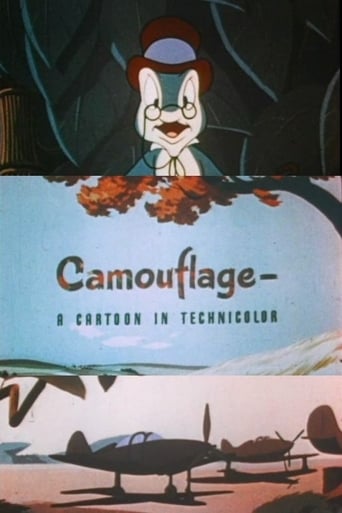 NR
This film is a treasure. It's one of the best examples of the theory and practice of the art of camouflaging military targets from air observation & attack that you'll find anywhere, presented in a highly entertaining Disney style full color animation supplemented by live action film. Hosted by “Yehudi the Chameleon,” the action is centered around a P-39 Airacobra base in the Pacific and is chocked full of useful information & “how-tos.” Some of the many things you'll learn: how camouflage works in Nature, analyzing the specific camouflage needs of your location, theories and application of different camouflages, hiding in shadow, using camouflage netting, creating dummy targets, breaking up distinctive shadow lines that outline structures, concealment by “blending,” making “trees,” hiding routes & paths or creating fake ones, hiding targets in plain sight by adding minimal camouflage and more.
Camouflage
1944