
Directing
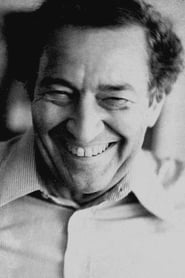
John Hubley
Born — Died
1914-05-21 — 1977-02-21
Place of birth
Marinette, Wisconsin, USA
Known for
Directing
Credits
43 titles
John Hubley (May 21, 1914 – February 21, 1977) was an American animation director, art director, producer and writer of traditional animation films known for both his formal experimentation and for his emotional realism which stemmed from his tendency to cast his own children as voice actors in his films.
Known for
 7.2
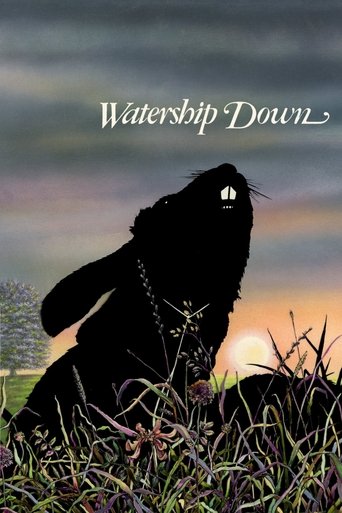
When the warren belonging to a community of rabbits is threatened, a brave group led by Fiver, Bigwig, Blackberry and Hazel leave their homeland in a search of a safe new haven.
Watership Down
1978
 NR
Independent filmmakers are given a chance to show and discuss their work on a commercial (ABC-TV) affiliate station.
Screening Room
1972
 6.2
An insurance salesman enters Magoo's house hoping to make a sale. Magoo refuses but the salesman is eventually able to sell Magoo some by posing as one of Magoo's old college chums. Magoo is now worth a hefty sum and is ready to collect after being bitten by a dog (actually a tiger rug) but, instead of going to the insurance building, enters a building under construction next door to it. The salesman and his boss notice Magoo walking around the steel skeleton of the building and realizing, "If he falls, the company falls", they rush over making several attempts to save Magoo's life and keep him from endangering himself.
Trouble Indemnity
1950
 10.0
Mr. Magoo's house is towed-away by thieves.
Bungled Bungalow
1951
 7.0
Mr. Magoo interprets his nephew's request for $100 as evidence of an unfolding mystery.
Barefaced Flatfoot
1951
 NR
A deep dive into the origin and legacy of United Productions of America, the innovative and iconoclastic studio that produced characters including Mr. Magoo and Gerald McBoing Boing.
Animation Mavericks: The Forgotten Story of UPA
—
Film credits
Series credits
Behind the camera
7.2When the warren belonging to a community of rabbits is threatened, a brave group led by Fiver, Bigwig, Blackberry and Hazel leave their homeland in a search of a safe new haven.
Watership Down
1978
6.2An insurance salesman enters Magoo's house hoping to make a sale. Magoo refuses but the salesman is eventually able to sell Magoo some by posing as one of Magoo's old college chums. Magoo is now worth a hefty sum and is ready to collect after being bitten by a dog (actually a tiger rug) but, instead of going to the insurance building, enters a building under construction next door to it. The salesman and his boss notice Magoo walking around the steel skeleton of the building and realizing, "If he falls, the company falls", they rush over making several attempts to save Magoo's life and keep him from endangering himself.
Trouble Indemnity
1950
10.0Mr. Magoo's house is towed-away by thieves.
Bungled Bungalow
1951
7.0Mr. Magoo interprets his nephew's request for $100 as evidence of an unfolding mystery.
Barefaced Flatfoot
1951
 5.9
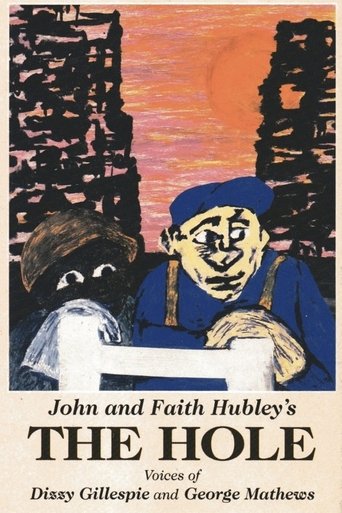
Two men discuss the nature of accidents and the possibility of nuclear war.
The Hole
1962
5.9Two men discuss the nature of accidents and the possibility of nuclear war.
The Hole
1962
 5.6
Fox is Robin Hoodlum and the Crow is the Sheriff pursuing R. Hoodlum and his merry band. He escapes one trap after another until he is lured into an archery contest at the Palace---everybody plays the Palace sooner or later---and gets caught.
Robin Hoodlum
1948
Small and Tall break a mirror on a train trip and their seven years of bad luck start immediately. Stranded by an accident, they have trouble in a ghost town and finally are lost in the desert. The mirror saves them when they piece it back together, and everything is okay until they break the mirror again and their troubles start anew.
Professor Small and Mr. Tall
1943
 6.4
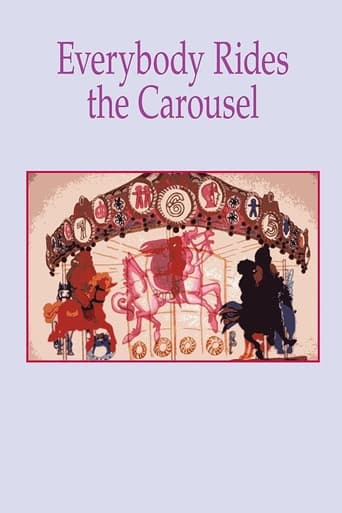
"Everybody Rides the Carousel" invites the viewer along on eight "rides" through the different stages of life. Based on the work by Erik Erikson, one of the most influential psychoanalytic theorists of this century, the film explores the inner feelings and conflicted emotions experienced during each stage of personality development. With distinctive and poetic animation, John and Faith Hubley visualize the conflicts, joys, problems and delights we all experience on the carousel of life.
Everybody Rides the Carousel
1976
6.4"Everybody Rides the Carousel" invites the viewer along on eight "rides" through the different stages of life. Based on the work by Erik Erikson, one of the most influential psychoanalytic theorists of this century, the film explores the inner feelings and conflicted emotions experienced during each stage of personality development. With distinctive and poetic animation, John and Faith Hubley visualize the conflicts, joys, problems and delights we all experience on the carousel of life.
Everybody Rides the Carousel
1976
 6.6
The story of a little boy who would only talk in sound effects. With story by Dr. Seuss (and Bill Scott of Rocky and Bullwinkle fame) this cartoon won the Oscar for best short subject (animated) for 1950.
Gerald McBoing-Boing
1950
 NR
Hapless B-17 waist gunner "Trigger Joe" learns how to adjust his aim, to take into account the relative motion of his aircraft, his bullets, and the attacking enemy fighter.
Position Firing
1944
 10.0
"Flat Hatting", at the time, was the practice of buzzing civilians in military aircraft. Flat Hatters were looked at as heroes in the WWII air corps: Hubley's job was to make them look like fools.
Flat Hatting
1944
An anti-Hitler cartoon. While the soundtrack survives in full, the animation is partly lost.
He Can't Make It Stick
1943
 9.0
Mr. Magoo invites a friend to his lakeside cabin, unaware that a bloodhound has pursued an escaped convict to that isolated location.
Spellbound Hound
1950
The Sailor and the Seagull was released by the U.S. Navy in 1949 with a simple goal: encouraging servicemen to re-enlist. In the film, a disgruntled sailor named McGinty complains about the raw deal he believes he is receiving by serving in the Navy. As luck would have it, a seagull comes to release him from service so that he can experience the freedom of civilian life. McGinty soon learns, however, that civilian life means less freedom and less money than he had imagined and quickly jumps at the chance to re-enlist. (cont. http://blogs.archives.gov/unwritten-record/2013/09/26/sailor-and-the-seagull/)
The Sailor and the Seagull
1949
Two soldiers patrolling opposite sides of the border between two countries speculate on what the world would be like if there were more cooperation between individuals and nations.
The Hat
1964
Two soldiers patrolling opposite sides of the border between two countries speculate on what the world would be like if there were more cooperation between individuals and nations.
The Hat
1964
Two soldiers patrolling opposite sides of the border between two countries speculate on what the world would be like if there were more cooperation between individuals and nations.
The Hat
1964
 8.0
A boy and his dog take a wondrous trip under the earth's crust and through the geological eras of time, introducing children to geology in the form of a musical fantasy.
Dig: A Journey Into Earth
1972
8.0A boy and his dog take a wondrous trip under the earth's crust and through the geological eras of time, introducing children to geology in the form of a musical fantasy.
Dig: A Journey Into Earth
1972
 6.7
The spirits of life and death go for a drive in this darkly humorous fantasia featuring an original score by Quincy Jones.
Eggs
1971
6.7The spirits of life and death go for a drive in this darkly humorous fantasia featuring an original score by Quincy Jones.
Eggs
1971
The dance floor of a cruise ship. As each passenger is chosen, they choose a song on the jukebox and dance to it. But one passenger, playing a joke on another, selects a different song first. He keeps choosing that song, and eventually fills the jukebox with coins. It plays the same song over and over, and everyone is compelled to dance with the ship itself getting sick, while the man who was the brunt of the joke escapes in a rowboat.
The Cruise
1966
 7.2
At the Hodge Podge Lodge, a crotchety, near-sighted Mister Magoo takes a banjo-playing bear to be his nephew, Waldo.
Ragtime Bear
1949
 5.2
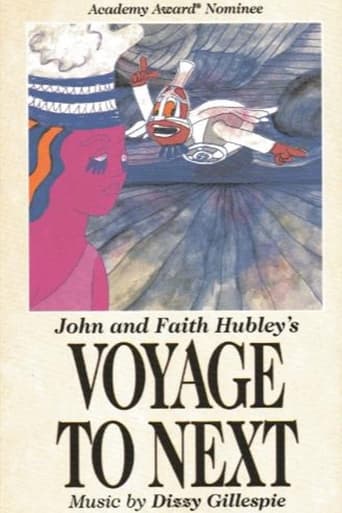
Mother Earth and Father Time converse about the choices humans make. Preserved by the Academy Film Archive in 2010.
Voyage to Next
1974
5.2Mother Earth and Father Time converse about the choices humans make. Preserved by the Academy Film Archive in 2010.
Voyage to Next
1974
 6.2
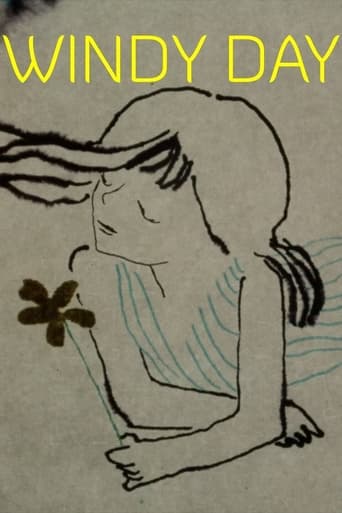
Two little girls muse on marriage and babies, love and death as they create and act out plays in their backyard. Preserved by the Academy Film Archive in partnership with New York Women in Film & Television in 2006.
Windy Day
1968
6.2Two little girls muse on marriage and babies, love and death as they create and act out plays in their backyard. Preserved by the Academy Film Archive in partnership with New York Women in Film & Television in 2006.
Windy Day
1968
 4.8
A Hubley stand-in instructs iconic trumpeter Dizzy Gillespie on scoring a short commercial for an instant rope ladder.
Date with Dizzy
1956
 9.0
On the one hand, a healthy child who has enough to eat. On the other hand, a poor, undernourished kid. On the one hand, a quarter of the blue planet's children. On the other hand, the remaining three quarters.
Children of the Sun
1960
Film aimed at middle/high school students about the power of embracing diversity.
Heritage
—
 8.3
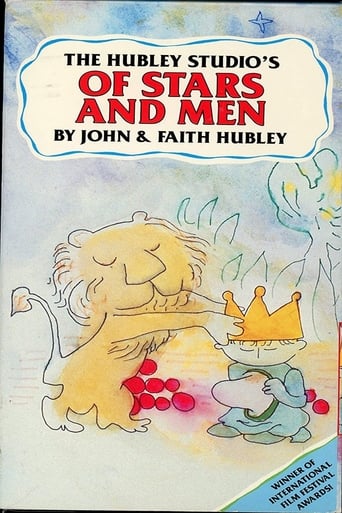
Of Stars and Men is a 1964 animated film from the Hubley family of animators, based on the 1959 book of the same name by astronomer Harlow Shapley, who also narrates. Made in the style of a documentary, it tells of humankind's quest (in the form of a child) to find its place in the universe, through themes such as outer space, physical matter, the meaning of life and the periodic table. There are no character voices; instead, they "talk" through their actions. It has been cited as an example of an "animated documentary".
Of Stars and Men
1961
8.3Of Stars and Men is a 1964 animated film from the Hubley family of animators, based on the 1959 book of the same name by astronomer Harlow Shapley, who also narrates. Made in the style of a documentary, it tells of humankind's quest (in the form of a child) to find its place in the universe, through themes such as outer space, physical matter, the meaning of life and the periodic table. There are no character voices; instead, they "talk" through their actions. It has been cited as an example of an "animated documentary".
Of Stars and Men
1961
Midas Junior inherits the Golden Rubber touch on his birthday and is unhappy because everything he touches turns to rubber. But when he learns there is a great shortage and need for rubber, he happily goes around turning everything to rubber.
King Midas, Junior
1942
A detective in training is about to take his final exam. He is sent to room 13, where his professor befuddles him with a tricky doorknob. Next, he goes to a tea party with his professor loosely disguised as an old lady; the butler serves a pot of "T.N.Tea" even though his back is full of knives. The professor keeps disappearing; the student tracks him by his footprints, even though the footprint powder at one point becomes train tracks and the doors he opens have a skeleton and some card-playing ghosts. Finally, the budding detective phones for the police; when they arrive (driving on the phone lines) and pile into the phone booth, he passes, and is given the first, second and (under bright lights) third degree.
The Vitamin G-Man
1943
 7.5
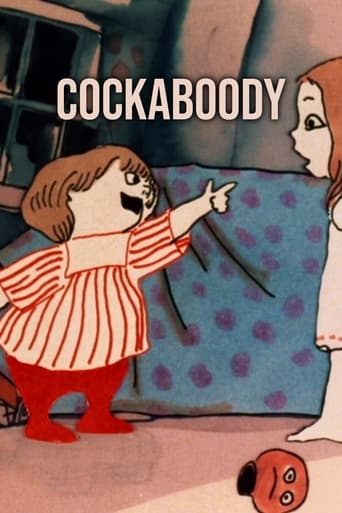
John and Faith Hubley combined animation with the voices of their preschool daughters Georgia and Emily to make this award-winning short (New York Animation Festival), similar in concept to their earlier work "Moonbird".
Cockaboody
1974