
Production
Kent Martin
Known for
Production
Credits
40 titles
Kent Martin is a Canadian documentary film producer and director. Not to be confused with the African American stage and film actor.
Known for
This feature doc profiles acclaimed writer Alistair MacLeod. Hailed internationally as a master of the short story, MacLeod also wrote a novel, No Great Mischief, which was celebrated around the world. Depicting men and women living out their lives against the haunting landscape that surrounds them, most of MacLeod's work is firmly based in Cape Breton even if his characters stray elsewhere. Focusing on the complexities and abiding mysteries at the heart of human relationships, MacLeod maps the close bonds and impassable chasms that lie between people and invokes memory and myth to celebrate the continuity of the generations. This film portrait explores the life and work of this giant of literature.
Reading Alistair MacLeod
2005
 10.0
A tribute to Canadian comedy icon Tommy Sexton (1957-1993). A founding member of the Newfoundland comedy troupe CODCO Tommy died of complications from AIDS on December 13, 1993.
Tommy... A Family Portrait
2001
 NR
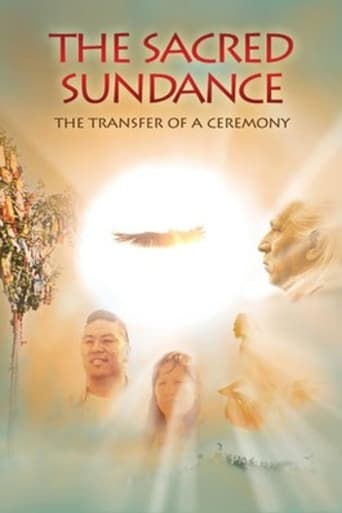
This feature-length documentary chronicles the Sundance ceremony brought to Eastern Canada by William Nevin of the Elsipogtog First Nation of the Mi'kmaq. Nevin learned from Elder Keith Chiefmoon of the Blackfoot Confederacy in Alberta. Under the July sky, participants in the Sundance ceremony go four days without food or water. Then they will pierce the flesh of their chests in an offering to the Creator. This event marks a transmission of culture and a link to the warrior traditions of the past.
The Sacred Sundance: The Transfer of a Ceremony
2008
 7.0
This documentary looks at the microchip, an American invention exploited by the Japanese that caused a second industrial revolution. The devastating effect on millions of human lives is related through interviews with some of the newly jobless in Hamilton, Ontario. Using the example of Japan for contrast, host James Laxer demonstrates that the cost of technological advances need not be so high if their effects are foreseen and planned for. Part 2 of the series Reckoning: The Political Economy of Canada.
Shift Change
1986
 NR
When an elder in the community offers him a small piece of pipestone, Maq carves a little person out of it. Proud of his work, the boy wants to impress his grandfather and journeys through the woods to find him. Along the path Maq meets a curious traveller named Mi’gmwesu. Together they share stories, medicine, laughter and song. Maq begins to care less about making a good impression and more about sharing the knowledge and spirit he's found through his creation. It is only when Maq joins his grandfather that he understands who Mi’gmwesu really is.
Maq and the Spirit of the Woods
2006
 9.0
St. John's, Newfoundland and Labrador, is North America's most easterly landfall. For half a millennium, its perfect harbour has provided a safe refuge in the middle of the treacherous North Atlantic. For 300 years of its history it was an actual crime to try and settle--Newfoundland was the private preserve of British fishing merchants. But people stayed, despite the colonial masters, despite the lack of law and order, despite hellish weather and raging seas. And the city grew--lurching through centuries of crisis, disaster, privation. For filmmaker Rosemary House, "This is still a hard rock land, a dirty old town at the back of beyond. And yet the St. John's townie is so proud, you'd swear we lived in Paris." In this documentary, she explores her city with the help of six locals, Mary Walsh, Andy Jones, Anita Best, Brian Hennessey, Ed Riche, Des Walsh, writers and performers all. (Source: National Film Board)
Rain, Drizzle, and Fog
1998
Behind the camera
This feature doc profiles acclaimed writer Alistair MacLeod. Hailed internationally as a master of the short story, MacLeod also wrote a novel, No Great Mischief, which was celebrated around the world. Depicting men and women living out their lives against the haunting landscape that surrounds them, most of MacLeod's work is firmly based in Cape Breton even if his characters stray elsewhere. Focusing on the complexities and abiding mysteries at the heart of human relationships, MacLeod maps the close bonds and impassable chasms that lie between people and invokes memory and myth to celebrate the continuity of the generations. This film portrait explores the life and work of this giant of literature.
Reading Alistair MacLeod
2005
10.0A tribute to Canadian comedy icon Tommy Sexton (1957-1993). A founding member of the Newfoundland comedy troupe CODCO Tommy died of complications from AIDS on December 13, 1993.
Tommy... A Family Portrait
2001
NRThis feature-length documentary chronicles the Sundance ceremony brought to Eastern Canada by William Nevin of the Elsipogtog First Nation of the Mi'kmaq. Nevin learned from Elder Keith Chiefmoon of the Blackfoot Confederacy in Alberta. Under the July sky, participants in the Sundance ceremony go four days without food or water. Then they will pierce the flesh of their chests in an offering to the Creator. This event marks a transmission of culture and a link to the warrior traditions of the past.
The Sacred Sundance: The Transfer of a Ceremony
2008
7.0This documentary looks at the microchip, an American invention exploited by the Japanese that caused a second industrial revolution. The devastating effect on millions of human lives is related through interviews with some of the newly jobless in Hamilton, Ontario. Using the example of Japan for contrast, host James Laxer demonstrates that the cost of technological advances need not be so high if their effects are foreseen and planned for. Part 2 of the series Reckoning: The Political Economy of Canada.
Shift Change
1986
NRWhen an elder in the community offers him a small piece of pipestone, Maq carves a little person out of it. Proud of his work, the boy wants to impress his grandfather and journeys through the woods to find him. Along the path Maq meets a curious traveller named Mi’gmwesu. Together they share stories, medicine, laughter and song. Maq begins to care less about making a good impression and more about sharing the knowledge and spirit he's found through his creation. It is only when Maq joins his grandfather that he understands who Mi’gmwesu really is.
Maq and the Spirit of the Woods
2006
9.0St. John's, Newfoundland and Labrador, is North America's most easterly landfall. For half a millennium, its perfect harbour has provided a safe refuge in the middle of the treacherous North Atlantic. For 300 years of its history it was an actual crime to try and settle--Newfoundland was the private preserve of British fishing merchants. But people stayed, despite the colonial masters, despite the lack of law and order, despite hellish weather and raging seas. And the city grew--lurching through centuries of crisis, disaster, privation. For filmmaker Rosemary House, "This is still a hard rock land, a dirty old town at the back of beyond. And yet the St. John's townie is so proud, you'd swear we lived in Paris." In this documentary, she explores her city with the help of six locals, Mary Walsh, Andy Jones, Anita Best, Brian Hennessey, Ed Riche, Des Walsh, writers and performers all. (Source: National Film Board)
Rain, Drizzle, and Fog
1998
 7.0
This documentary shares the stories of seven women from Newfoundland who married American soldiers. From the beginning of World War II to the end of the Cold War, Newfoundland housed some of the largest military bases outside of the U.S. As a result, as many as 40,000 Newfoundland women married American soldiers. Using a combination of interviews and old war footage, Seven Brides for Uncle Sam shows how some of the most important events in world history can serve as the backdrop to the timeless tales of romance, heartbreak and joy.
Seven Brides for Uncle Sam
1997
 7.0
This feature documentary provides a gripping retrospective of United States-Canada relationships through a study of successive presidents and prime ministers. Using archival film footage, it demonstrates that Canadian prime ministers, from John A. Macdonald down, all began their tenures by making overtures to their American counterparts. Attitudes and outcomes have varied widely. The almost comic antipathy between Kennedy and Diefenbaker, for instance, is as palpable here as is the folksy camaraderie of Reagan and Mulroney. Part four of Reckoning: The Political Economy of Canada series.
In Bed with an Elephant
1987
7.0This feature documentary provides a gripping retrospective of United States-Canada relationships through a study of successive presidents and prime ministers. Using archival film footage, it demonstrates that Canadian prime ministers, from John A. Macdonald down, all began their tenures by making overtures to their American counterparts. Attitudes and outcomes have varied widely. The almost comic antipathy between Kennedy and Diefenbaker, for instance, is as palpable here as is the folksy camaraderie of Reagan and Mulroney. Part four of Reckoning: The Political Economy of Canada series.
In Bed with an Elephant
1987
 8.0
In 1920 a group of young Montreal women artists formed the nucleus of what would later become known as the Beaver Hall Hill Group. Members recount how they created an artistic environment of mutual support that lasted for more than three decades.
By Woman's Hand
1994
 8.0
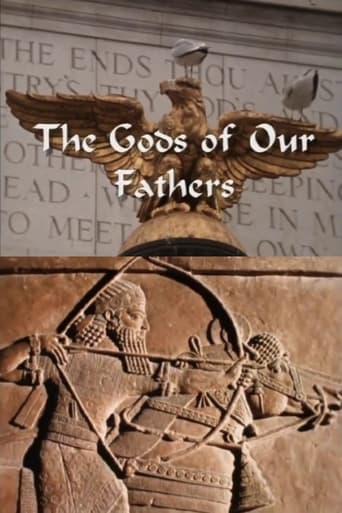
Explores the evolution of patriarchy as one effective way of organizing mass societies, from evidence in ancient Egyptian villages along the Nile.
The Gods of Our Fathers
1994
This short documentary introduces us to Alden Nowlan, winner of Canada’s 1967 Governor General’s Award for poetry. His empathy for ordinary people was evident in his work as a poet, journalist, short-story writer, novelist and playwright. Nowlan’s writing is admired far beyond his native Maritimes, but he never forgot his roots, which he drew on for inspiration. This film, shot just before his death in 1983, records him reminiscing and reading from his work.
Alden Nowlan: An Introduction
1984
 9.0
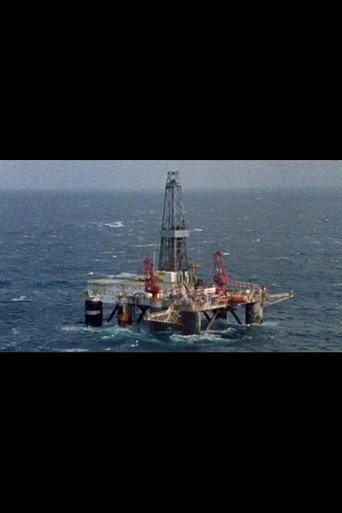
This documentary focuses on boom-and-bust economic cycles, most notably that of Alberta oil during the '70s and early '80s. When the bust hit after a drop in world oil prices, those business people who knew how to "ride a tornado" cut their losses and moved on, while others were left devastated. When Newfoundland was faced with a possible oil boom of its own in the mid-'80s, it took the lessons of Alberta to heart. Part 3 of the series, Reckoning: The Political Economy of Canada.
Riding the Tornado
1986
 NR
Elliott Leyton, the subject of this riveting documentary by filmmaker Barbara Doran, can't help but be fascinating; that's because Leyton, who teaches at the Memorial University in Newfoundland, is also a valuable ally for law enforcement officials who need his expertise in psychology and criminal behavior to catch some of the most heinous criminals: serial killers.
The Man Who Studies Murder
2003
 NR
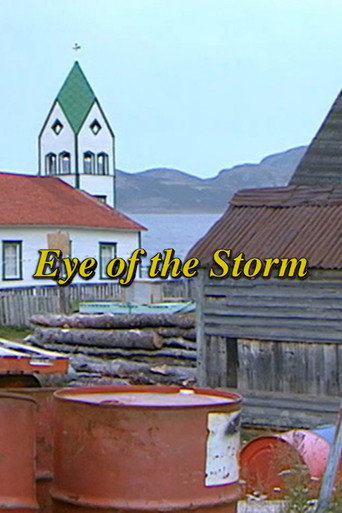
A documentary about Nain, a Labrador Inuit community located near the world's largest nickel and copper deposits. As commercial mining interests prepare to exploit the resources, local residents consider the potential environmental and cultural impact. Meanwhile longstanding Aboriginal land claims are unsettled.
Eye of the Storm
1997
 10.0
This documentary profiles economist and writer Marilyn Waring. In extensive interviews, Waring details her feminist approach to finances and challenges commonly accepted truths about the global economy. The filmmakers detail Waring's early rise to political prominence and her successful protests against nuclear arms. Waring also speaks candidly about wartime economies, suggesting that government policies tend to marginalize the fiscal contributions of women.
Who’s Counting? Marilyn Waring on Sex, Lies and Global Economics
1995
 NR
An exploration of the unique culture of Newfoundland's outports, the film revisits the PR coup that launched the animal rights movement onto the international stage: the 1977 Newfoundland visit, orchestrated by the International Fund for Animal Welfare, of French actress turned animal rights activist Brigitte Bardot to protest the area's ancestral sealing activities. Soon, inhabitants of the island's northern outports we're being introduced to the world as the epitome of brutality.
My Ancestors Were Rogues and Murderers
2005
A Sigh and a Wish tells the story of pioneer folklorist Helen Creighton and of the enduring appeal of her remarkable collections of song and story. Creighton helped define Maritime culture as we know it. Thanks to her, folk songs moved out of the kitchens and the fishing boats and into the mainstream. Top contemporary Maritime musicians - talents like Mary Jane Lamond and Lennie Gallant - describe how deeply they have been influenced by Creighton. For 60 years, Creighton sought out ghost stories, superstitions and tales of buried treasure, as well as songs handed down from generation to generation: fishing songs, work songs, love songs. Timeless songs. A Sigh and a Wish is a moving tribute to the genius of a self-taught folklorist and to the continuing strength of the deep oral traditions she helped preserve. But it also raises important questions. Does Creighton's collection truly reflect Maritime culture, or is it tinged by her own upper-middle-class assumptions?
A Sigh and a Wish: Helen Creighton's Maritimes
2001
 5.6
Long before Timothy Leary urged a generation to "tune in, turn on and drop out," lysergic acid diethylamide, or LSD, was being used by researchers trying to understand the human mind. This documentary is a fascinating look at the story of "acid" before it hit the streets. Featuring interviews with many LSD pioneers, Hofmann's Potion is much more than a simple chronicle of the drug's early days. With thoughtful interviews, beautiful music and stunning cinematography, it is an invitation to look at LSD, and our world, with a more open, compassionate mind.
Hofmann's Potion: The Pioneers of LSD
2002
A couple from North Preston, Nova Scotia plan an elaborate wedding with dozens of bridesmaids.
I Made a Vow
2003
 10.0
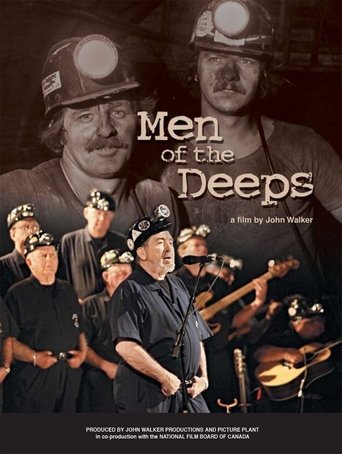
Acclaimed documentarian John Walker catches the legendary Cape Breton Miner’s singing group The Men of the Deeps just as the last mines on the island are shut down. Featuring ravishing cinematography of Cape Breton, and plenty of music, Men of the Deeps is a deeply touching portrait of a culture that still survives despite the ultimate end of an industry, and a tribute to the men and the songs that kept things moving on the Island for almost two hundred years.
Men of the Deeps
2003
 7.0
Two very different men are brought together by New Brunswick's decision to hand the management of millions of acres of Crown land to six multinationals. One man is an Acadian woodlot owner retired after nearly 40 years in a pulp mill; the other is a painter and winemaker with homes in France and New Brunswick. They travel to Finland to urge officials at one of the largest licence holders of New Brunswick Crown lands to practise responsible forestry, then go head-to-head with the provincial government to secure a new community-based forestry policy that is environmentally sustainable and produces more jobs than the highly mechanized techniques used today.
Forbidden Forest
2004
The fur trade is Canada's oldest industry, but today some people challenge the morality of killing animals for their fur. This film examines the public relations war raging between the industry and its opponents and takes an objective look at the ethical, environmental and economic issues raised by the debate. The struggle to win over public opinion has been joined by Indigenous peoples in Canada who fear that their way of life will be jeopardized if the fur industry is destroyed. The cycle of the industry is followed from the trapper's bush camp and the fur ranch to the final sale of a coat in the furrier's salon. Throughout the film, the conflicting opinions of fur industry representatives, animal rights activists and Indigenous people challenge the viewer to consider all aspects of this complex debate. —NFB
Pelts: Politics of the Fur Trade
1989
 9.0
This short documentary tells the story the once-thriving town of Okak, an Inuit settlement on the northern Labrador coast. Moravian missionaries evangelized the coast and encouraged the growth of Inuit settlements, but it was also a Moravian ship that brought the deadly Spanish influenza during the world epidemic of 1919. The Inuit of the area were decimated, and Okak was abandoned. Through diaries, old photos and interviews with survivors, this film relates the story of the epidemic and examines the relations between natives and missionaries.
The Last Days of Okak
1985
 7.0
The film explores how the three British colonies of New Brunswick, Nova Scotia and Prince Edward Island became provinces of Canada and charts the subsequent decline of their economies after Confederation. Photographs, archival drawings, cartoons and interviews with Maritime historians are used to document the case.
Empty Harbours, Empty Dreams
1976
 8.0
The Strangest Dream tells the story of Joseph Rotblat, the history of nuclear weapons, and the efforts of the Pugwash Conferences on Science and World Affairs - an international movement Rotblat co-founded - to halt nuclear proliferation.
The Strangest Dream
2009
 7.0
The James Bay and Northern Quebec Agreement of 1975, hailed by governments as a model for future land claims and self-government settlements - is considered Canada's first "modern Treaty." 15 years later, Robert Bourassa's dream of northern hydro-electric power has become a nightmare for the James Bay Cree. In FLOODING JOB'S GARDEN, Boyce Richardson revisits communities he first filmed in the 1970s, before Hydro Quebec began its work, documenting 20 years of massive change in Cree country. As Bourassa and Hydro Quebec prepare for Phase 2, the Crees are mounting an international campaign to protect the environment and ensure responsible development.
Flooding Job's Garden
1991
 NR
At Caledonia Junior High - like at so many schools - students and teachers live in an environment of disrespect and potential danger.
Waging Peace: A Year in the Life of Caledonia Junior High
2001
 9.0
In 1975, Annie Mae Pictou Aquash, a 30-year-old Nova Scotia born-Mi'kmaq, was shot dead, execution style, on a desolate road in South Dakota. Nearly three decades later the crime remains a mystery. Aquash was highly placed in the American Indian Movement (AIM), a radical First Nations organization that took up arms in the 1970s to fight for the rights of their people. The Spirit of Annie Mae is the story of Aquash's remarkable life and her brutal murder. It is a moving tribute from the women who were closest to her: the two daughters who fled with their mother when she hid from the FBI; the young women she inspired to embrace Native culture; and the other activists, including Buffy Sainte-Marie and investigative journalist Minnie Two Shoes, who stood in solidarity with her. All are still trying to understand why she met such a violent death. Follow them on their journey as they celebrate the life of a woman who inspired a generation of Indigenous people.
The Spirit of Annie Mae
2002
 NR
This documentary portrays the front-line street workers who serve the needy under the umbrella of the Salvation Army. Shot in Toronto at Christmastime, the film chronicles the small hopes and tiny victories of life lived below the poverty line and the daily rewards for those who work to serve others.
Salvation
2001
 7.0
A vignette using animation and live action to depict mussel farmers digging in the mud through the ice on bays and estuaries in Prince Edward Island.
Canada Vignettes: Mussel Mud
1985
Folk music icon Buffy Sainte-Marie became internationally renowned with her protest song "Universal Soldier." In this short documentary, she candidly discusses her hopes, creative vision and songwriting skills, as well as her role as an Aboriginal activist. Still a vibrant artist fifty years into her career, she keeps her eyes set on the future.
Buffy
2010
 7.0
A retrospective of documentary films by Donald Brittain offering a glimpse of the man and the restless energy that informed his work. Dedicated and hard-working Brittain left nothing to chance, driving himself and his colleagues at the NFB and the CBC until perfection was achieved, or until airtime -- whichever came first.
Donald Brittain: Filmmaker
1992
7.0A retrospective of documentary films by Donald Brittain offering a glimpse of the man and the restless energy that informed his work. Dedicated and hard-working Brittain left nothing to chance, driving himself and his colleagues at the NFB and the CBC until perfection was achieved, or until airtime -- whichever came first.
Donald Brittain: Filmmaker
1992
 9.0
This documentary offers a glimpse into the 1997 federal election in the Halifax electoral district. Two strong female politicians, Liberal candidate Mary Clancy and NDP party leader Alexa McDonough, are caught in a tight competition in one of the most contested races in the country. Director Meredith Ralston follows the two women around the campaign trail for weeks, getting inside an election that was often described as “nasty.” Both larger than life and hungry to win, in quieter moments Clancy and McDonough reveal the strains and contradictions of their chosen careers. Why Women Run highlights the accomplishments of women in politics and the problems many women face participating in the political process.
Why Women Run
1999
 7.3
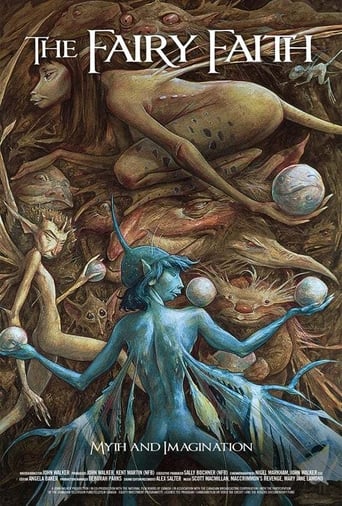
Walker takes us on a personal journey into a world of myth and imagination that he learned from his grandmother. He travels from the Moors of Devon and the Highlands of Scotland to the brooding Celtic landscapes of Ireland and the intimate hills of Cape Breton, in his search of this potent “otherworld” of the imagination.
The Fairy Faith
2000
 NR
As debate in Canada and the world rages over health care, Hospital City offers a moving, human portrait of the people whom the issues touch most closely.
Hospital City
2004
When the 2004 tsunami hit the coast of Sri Lanka, 65-year-old Anton Ambrose's wife and daughter were killed. "In five minutes," he says, "I lost everything." A year later, Anton returns to Sri Lanka. With him is his nephew, award-winning filmmaker Rohan Fernando. A Tamil, Anton moved to California in the 1970s and became a very successful gynecologist. His daughter, Orlantha, made the opposite journey, returning to Sri Lanka where she ran a non-profit group that gave underprivileged children free violin lessons. Blood and Water is the story of one man's search for meaning in the face of overwhelming loss, but it is also filled with improbable characters, unintentional comedy and situational ironies.
Blood and Water
2007
 8.0
A riveting account of the tragic adventure of filmmaker Varick Frissell and his filming of "The Viking" (1931) and the tragic events that befell that adventure into early film-making.
White Thunder
2002