
Known for
 NR
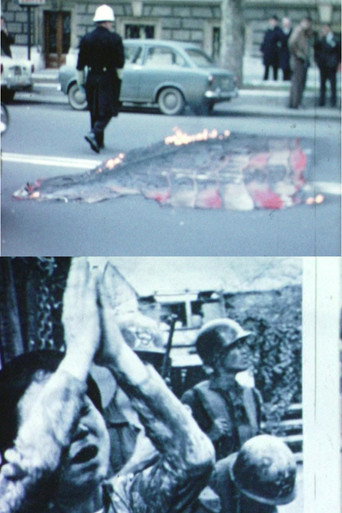
With rapid editing that alternates a wide range of sources through an extensive variety of shooting and editing techniques, A Corpo is a drift through the consumer imagery of the day, in which the body of the single individual corresponds to political struggle, militancy and anti-imperialist engagement against the war in Vietnam. —Tate Modern
A corpo
1968
 NR
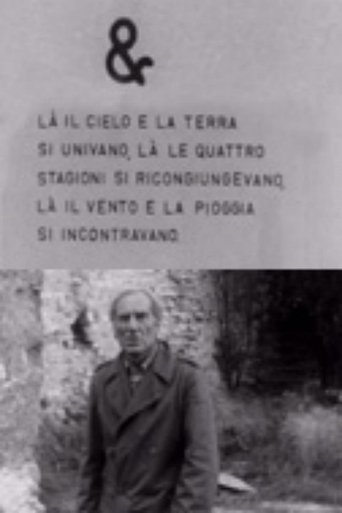
It is a film about real people who have had and continue to have adversarial relationships with society. These individuals recount dramatic, traumatic personal experiences of flight, emigration, and segregation.
& - Là il cielo e la terra si univano, là le stagioni si ricongiungevano, là il vento e la pioggia si univano
1972
 5.3
Two segments. The first one arranges six stories from Cesare Pavese’s «Dialoghi con Leucò», taken from classical mythology. The second segment is taken from Pavese’s novel «La luna e i falò»: after World War II the emigrant «The Bastard» comes back to his village in the Langhe (northern Italy) to find out that everyone he knew has died, and that the war has deeply changed relationships between people.
From the Clouds to the Resistance
1979
 7.5
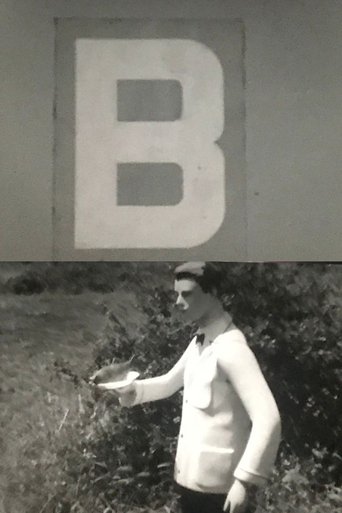
Some persons bring chickens and fishes as presents to some actors who are playing, while the Warrior tries the mirror's suicide, but fails in seeing the Death. Outside, chewing-gums are distributed away and the Spring passes by, turning into a little girl. –G. L.
B
1969
 NR
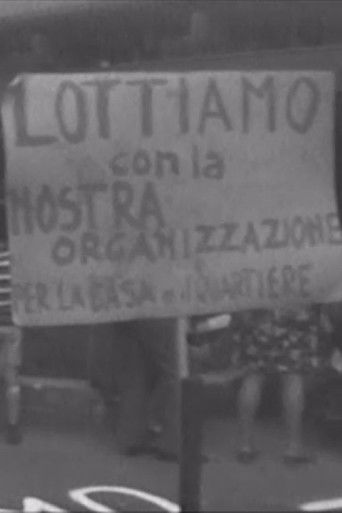
The struggle for housing in Rome, in the area of Magliana. Self-organization is opposed to the mediation of political parties, especially the Communist Party, and emerges as the only way for the emancipation and re-appropriation by the exploited.
La nostra lotta è l'autoriduzione, la nostra forza è l'organizzazione
1972
 NR
Video images shot on the ferry with which filmmakers Anna Lajolo and Guido Lombardi travelled to the island of Tristan da Cuhna, the subject of a documentary shot in 1992 for the Italian public television channel RAI.
South Atlantic
2013
Film credits
Behind the camera
NRWith rapid editing that alternates a wide range of sources through an extensive variety of shooting and editing techniques, A Corpo is a drift through the consumer imagery of the day, in which the body of the single individual corresponds to political struggle, militancy and anti-imperialist engagement against the war in Vietnam. —Tate Modern
A corpo
1968
NRIt is a film about real people who have had and continue to have adversarial relationships with society. These individuals recount dramatic, traumatic personal experiences of flight, emigration, and segregation.
& - Là il cielo e la terra si univano, là le stagioni si ricongiungevano, là il vento e la pioggia si univano
1972
7.5Some persons bring chickens and fishes as presents to some actors who are playing, while the Warrior tries the mirror's suicide, but fails in seeing the Death. Outside, chewing-gums are distributed away and the Spring passes by, turning into a little girl. –G. L.
B
1969
NRThe struggle for housing in Rome, in the area of Magliana. Self-organization is opposed to the mediation of political parties, especially the Communist Party, and emerges as the only way for the emancipation and re-appropriation by the exploited.
La nostra lotta è l'autoriduzione, la nostra forza è l'organizzazione
1972
NRVideo images shot on the ferry with which filmmakers Anna Lajolo and Guido Lombardi travelled to the island of Tristan da Cuhna, the subject of a documentary shot in 1992 for the Italian public television channel RAI.
South Atlantic
2013
The search for the present within presence.
Luxor Garden
1968
 NR
Experimental short.
C - The House of Fire
1970
NRExperimental short.
C - The House of Fire
1970
 NR
Collective manifesto by the members of C.C.I. It is a collective film, the result of an operation devoid of any aesthetic purpose: to verify the existence of any harmony between a fairly large group (twelve people) of members of the independent Cooperative. Someone, who had the idea, turned 60 meters of Ektachrome according to the moods –or discontent – of the moment and gave them to others to see. The others reacted, each with their own piece. It was then thought to call the film “circular letter”. It was not so simple and so quick: the operation, which started in June of ’68, ended in March of ’69.
Tutto, tutto nello stesso istante
1969
On the occasion of the regional elections of 1970, the Italian Communist Party seizes a new model of propaganda and counter-information developed in France during May 68: the cine-tract.
Cine-Volantini
1970
 NR
The struggles of the workers at Montedison in Porto Marghera, following an accident that resulted in the deaths of three people.
Porto Marghera, il lavoro contro la vita
1979
 NR
The documentary deals with the struggle s to obtain decent housing in a metropolis such the capital city of Italy in which the right for all to an acceptable dwelling is met with by all kids of serius obstacles-the chaotic increase of urbanization, the building speculation, the degradayion of suburbs, the magnitudine of slums with their unfortunatle inhabitants whose living condition have been dramatic for years. Starting from the Roman situation, the documentary faces the general housing problem in the country as whole and therefore the problrm of the struggles which people support - also through new structures such as People's Councils and Commitees - on the entire national territory in oder to attain one the primary goals of a decent society: a home whorty of its name for all its citizens.
La casa è un diritto non un privilegio
1970
 NR
A television experiment, filmed with the first portable video recorders, in the Ligurian community of Carloforte, on the island of San Pietro: for two months, the small crew lived in close contact with the people and their daily lives. They created a collective portrait, featuring former ore carriers, seafarers, salt workers, fishermen, tuna fishermen, industrial workers in the Sulcis area, young men and women from the nautical and teaching sectors, and the women, "white widows," wives of sailors, entrusted with raising their children. Three years later, in light of the changes, that first portrait—comprising life, work, feelings, and hopes, past and present—was shown to the islanders in the streets, squares, workplaces, and schools. Reactions and comments were filmed and incorporated into the final edit, which showcases the process and working method. Video is used as a means of recognition, identity, participation, and horizontal dialogue, a pioneering "street television."
L'isola dell'isola
1977
 NR
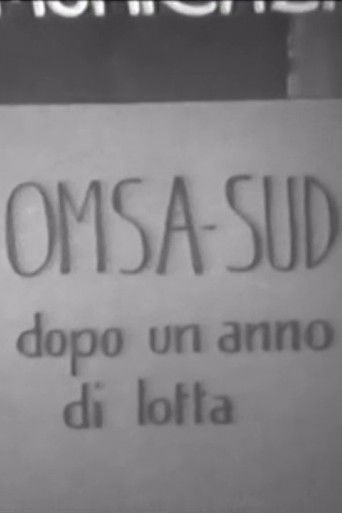
Omsa Sud workers’ struggle to keep the factory occupied. The documentary was partially realized within a project financed by the city of Fermo, which initially included the idea of teaching video shooting techniques as part of a laboratory. Omsa Sud was shot only in one week, an unusual occurence for the Videobase group, and features as part of their methodology the "video within the video" approach.
Omsa Sud. Dopo un anno di lotta
1974
A video made for RAI by Videobase in 1972
Sotto le stelle, sotto il tendone
1972
 NR
In a construction site near Rome, a Calabrian construction worker dies. The emigrant's hard life is reconstructed through the words of his fellow workers and family, interviewd between Rome and Calabria. One of the first experiments of collective directing that will later turn into the group Videobase.
E nua ca simu a forza du mundu
1971
No synopsis available yet.
Concerto per la terra, l'albero, il torrente
1981
 NR
Documentary on the fight for housing in the 70s in Magliana, a popular neighborhood of Rome.
Il fitto dei padroni non lo paghiamo più
1972
 NR
Images, abstract forms of light, created manually, leading to the macro world of plants, trees and earth. The real African drums and John Coltrane's Ascension make up the accompaniment along with the words of an old farmer, a fruit grower, about the grandeur of nature, about its small or showy demonstrations. The old tired man also complains bitterly that man has little regard for nature. The Blues are a sort of poetical-political glossary of the present time (Italy in the 70s); they start from the "vegetal", to get to the human (or what's left of it), to its political dissolution. This is a key movie for understanding the transition of the cinema of Lajolo-Lombardi, from the militant films of the early '70s , to the following isolation.
I blues: Cronache del sentimento politico
1975
 NR
Documentary shot for RAI Italian television on Tristan da Cunha, an active volcanic island with rare wildlife and home to British Citizens living in the world's most isolated settlement.
Tristan da Cunha. L'isola in capo al mondo
1992
No synopsis available yet.
Pitcairn - L'isola degli ammutinati del Bounty
1996
 NR
Experimental short film by Anna Lajolo and Guido Lombardi.
Si prende una ragazza, una qualunque, lì a caso...
1969
 NR
Rome is home to the most beautiful and famous fountains in the world. Monumental and spectacular works by celebrated artists and architects adorn equally famous squares, but there are also smaller fountains and secluded fountains in certain corners of the city that enchant with their uniqueness. Large and small, they are all part of Rome's artistic heritage and history. The film features one hundred and twenty public fountains, representing the daily spectacle of Rome's water, a theater of human and mythological figures, bestiaries, and symbols, with the music of water that has spanned the centuries. And in the film, it is a fountain, the Mascherone on Via Giulia, that tells the story of Rome's water, its millennia-old aqueducts, and its countless fountains. The constant gushing of the fountains, sometimes abundant and spectacular, sometimes subdued, is the deep breath of the Eternal City.
Sussurrate con me fontane romane
2005
 NR
Video short for RAI Italian television, and part of the bigger project of duo Lajolo-Lombardi on insular communities, which became their main cinematic focus with a group of documentaries shot in the '90s after the experience of Videobase with Alfredo Leonardi.
L'isola di Robinson Crusoe
1996
 NR
The focus of this documentary is the nurses and porters working at the Policlinico universitario Umberto I in Rome, which demand equal treatment within a militan action that follows the steps of the operaist labor struggles in factories.
Policlinico in lotta
1973
 5.7
Experimental short by Anna Lajolo and Guido Lombardi.
A
1969
 NR
Filmed for Rai 3 and aired on two evenings on 29 March and 5 April 1986, A train in the heart of the south is a journey that follows the "marginal" railways of the south and the marginalized who are found along them. Filmmakers and travelers Anna Lajolo and Guido Lombardi reveal the confined and marginalized Italy that has nothing in common with the glossy images of the 1980s. As always with the couple of filmmakers born on the wave of underground cinema, the filmed space is a conflictual space, which "fists with reality".
Delta: un treno nel cuore del Sud
1985
Through a series of interviews and sparse contributions filmed for the occasion, it tells the story of the contribution made by women to the Resistance movement in Liguria, from the first hours of 8 September 1943.
Memoria popolare - Donne della Resistenza
1980
 NR
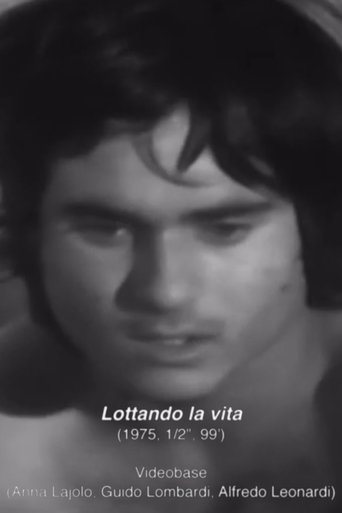
Stories of Italian emigrants in Berlin declined without an ethic of sacrifice and goodism but through a sense of the ferocity necessary to wrest survival from the miserable life that capitalism has offered and continues to impose on us.
Lottando la vita - Lavoratori italiani a Berlino
1975
 NR
"D" originates from and proceeds through the interpenetration of unreality and reality. The places subject to a long and silent violence are the small towns of eastern Liguria [...] The film is a poem about Liguria, where the critical description of the present contrasts with that of a balanced world like Virgil's.
D - Non diversi giorni si pensa splendessero alle prime origini del nascente mondo o che avessero temperatura diversa
1970
 NR
Prison as the repressed side of an entire society. As such, it flows in the long monologue of an ex-con recorded by the analogue videotape which, still at his dawn, captures it in its integrity.
Carcere in Italia
1973
 NR
Documentary about life in Italian working class neighborhoods.
Quartieri popolari di Roma
1972
An incessant quest for vision.
Sviluppo n. 2
1968
No synopsis available yet.
Silenzio... si sogna
1986
A kinetic composition and metamorphosis of shapes and colors.
Sviluppo n. 3
1968