

Directing
Kiko Goifman
Born
1968-01-01 (58)
Place of birth
Belo Horizonte, Minas Gerais, Brazil
Known for
Directing
Credits
24 titles
José Henrique Goifman (Belo Horizonte, 1968), known as Kiko Goifman, is a Brazilian director, screenwriter, multimedia artist, web artist, cultural producer and actor.
Known for
Élvio and Eric live alone in a small apartment without talking to anyone else. The relationship between the two deteriorates until one day, mysteriously, a periscope appears in the room.
Periscópio
2015
 NR
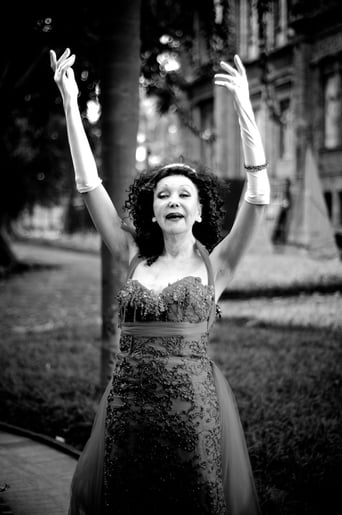
NRA documentary about actress Phedra D Córdoba, Cuban and transsexual who lives in downtown São Paulo.
Phedra
2008
 7.0
7.0Through a life story the film deals with issues related to human rights, such as the right to difference. The character's life is presented from others, otherness as a logic. The spectators complete the senses and gradually realize that this is a homosexual who, still in his adolescence, became a transvestite; "Amapoa" is a term that comes from Yoruba and has become transvestite slang for women. The film has a brutal ending, revealing that the character suffered a strong violence. Homophobia. The approach leads to identification with the character and allows reflections on the intolerance of today's society.
Amapô
2008
 7.0
7.0A portrait of transgender musician and artist Linn da Quebrada, who uses her body and performances as weapons to fight sexism, homophobia, and racism.
Bixa Travesty
2019
 NR
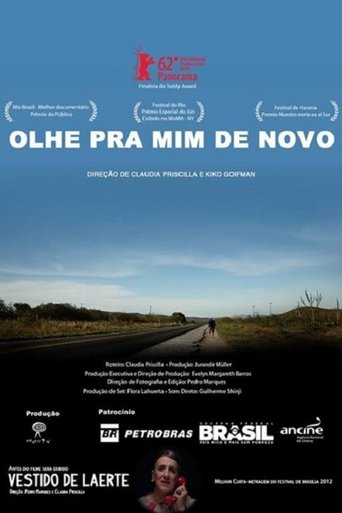
NRSyllvio Luccio is a transsexual male being transformed in the middle of the Brazilian dry lands, a region of high temperatures, poverty and where male’s virility is extreme.
Look at Me Again
2012
 5.0
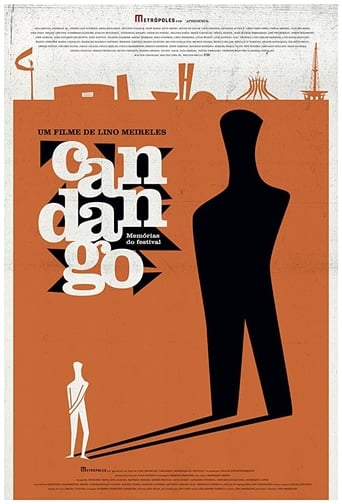
5.0In 1965, a year after the military coup in Brazil, an oasis of freedom opened in the country's capital. The Brasília Film Festival: a landmark of cultural and political resistance. Its story is that of Brazilian cinema itself.
Candango: Memoirs from a Festival
2020
Film credits
2010s · 2 titles
 NR
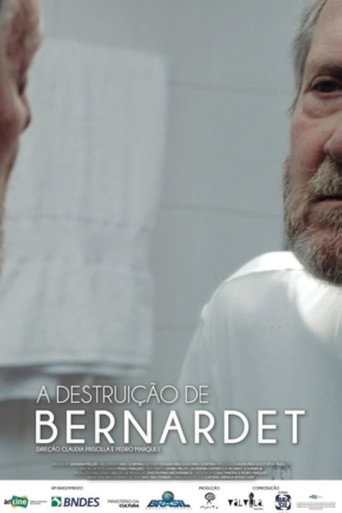
NRJean-Claude Bernardet, Brazil’s most important living film critic, is old and sick, but tries to reinvent himself through his long disintegration. Shifting between fiction and documentary, A Destruição de Bernardet uses unusual tools to trigger his memory and to make him tell his story.
The Destruction of Bernardet
2016
 NR
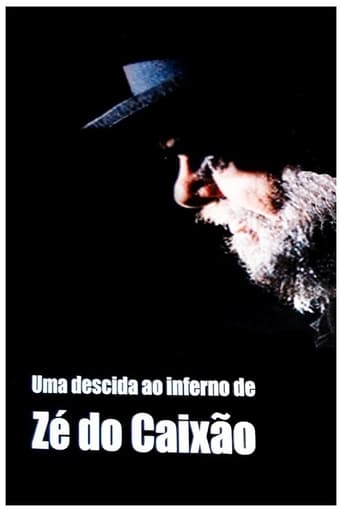
NRDocumentary about José Mojica Marins made by film students.
A Descent Into Coffin Joe's Hell
2010
Behind the camera
Élvio and Eric live alone in a small apartment without talking to anyone else. The relationship between the two deteriorates until one day, mysteriously, a periscope appears in the room.
Periscópio
2015
Élvio and Eric live alone in a small apartment without talking to anyone else. The relationship between the two deteriorates until one day, mysteriously, a periscope appears in the room.
Periscópio
2015
NRA documentary about actress Phedra D Córdoba, Cuban and transsexual who lives in downtown São Paulo.
Phedra
2008
7.0Through a life story the film deals with issues related to human rights, such as the right to difference. The character's life is presented from others, otherness as a logic. The spectators complete the senses and gradually realize that this is a homosexual who, still in his adolescence, became a transvestite; "Amapoa" is a term that comes from Yoruba and has become transvestite slang for women. The film has a brutal ending, revealing that the character suffered a strong violence. Homophobia. The approach leads to identification with the character and allows reflections on the intolerance of today's society.
Amapô
2008
7.0Through a life story the film deals with issues related to human rights, such as the right to difference. The character's life is presented from others, otherness as a logic. The spectators complete the senses and gradually realize that this is a homosexual who, still in his adolescence, became a transvestite; "Amapoa" is a term that comes from Yoruba and has become transvestite slang for women. The film has a brutal ending, revealing that the character suffered a strong violence. Homophobia. The approach leads to identification with the character and allows reflections on the intolerance of today's society.
Amapô
2008
7.0A portrait of transgender musician and artist Linn da Quebrada, who uses her body and performances as weapons to fight sexism, homophobia, and racism.
Bixa Travesty
2019
7.0A portrait of transgender musician and artist Linn da Quebrada, who uses her body and performances as weapons to fight sexism, homophobia, and racism.
Bixa Travesty
2019
7.0A portrait of transgender musician and artist Linn da Quebrada, who uses her body and performances as weapons to fight sexism, homophobia, and racism.
Bixa Travesty
2019
NRSyllvio Luccio is a transsexual male being transformed in the middle of the Brazilian dry lands, a region of high temperatures, poverty and where male’s virility is extreme.
Look at Me Again
2012
 3.8
3.8The making of an unfinished film about phobias. Says the director. Behind the screens, he discusses at length (with e.g. Coffin Joe) about the aesthetic boundaries of the project: volunteers under controlled circumstances become immersed in their phobias in order to film the fear on their faces.
FilmeFobia
2008
3.8The making of an unfinished film about phobias. Says the director. Behind the screens, he discusses at length (with e.g. Coffin Joe) about the aesthetic boundaries of the project: volunteers under controlled circumstances become immersed in their phobias in order to film the fear on their faces.
FilmeFobia
2008
NRJean-Claude Bernardet, Brazil’s most important living film critic, is old and sick, but tries to reinvent himself through his long disintegration. Shifting between fiction and documentary, A Destruição de Bernardet uses unusual tools to trigger his memory and to make him tell his story.
The Destruction of Bernardet
2016
The cartoonist Laerte goes a long way through São Paulo searching for a certificate.
Legs Out
2012
 5.0
5.0ACTS OF MEN should have been a film about the daily lives of massacre survivors in Brazil. Everything was planned for us to start shooting in April 2005. But reality did not wait. On the last day of March, exactly one month before principal photography, things changed: A terrible massacre took place in Baixada Fluminense, near Rio de Janeiro. Twenty-nine people were killed by a death squad, the largest massacre in the history of Rio de Janeiro. The killers are extermination groups made up of policemen who work in the area, and are involved in extortions, kidnapping, drug dealing and homicide. This has been going on since the 1950s, but it has never been as extreme as it is now.
Acts of Men
2006
5.0ACTS OF MEN should have been a film about the daily lives of massacre survivors in Brazil. Everything was planned for us to start shooting in April 2005. But reality did not wait. On the last day of March, exactly one month before principal photography, things changed: A terrible massacre took place in Baixada Fluminense, near Rio de Janeiro. Twenty-nine people were killed by a death squad, the largest massacre in the history of Rio de Janeiro. The killers are extermination groups made up of policemen who work in the area, and are involved in extortions, kidnapping, drug dealing and homicide. This has been going on since the 1950s, but it has never been as extreme as it is now.
Acts of Men
2006
 NR
NRThis video, directed at children, merges clay animation and real images to show the various dimensions involving urban waste: trash and sweeping the streets, and household waste, composting and recycling of materials. The gang formed by Vassourinha, Dr. Basket and Mr. Truck, stimulate correct habits for children and the responsibility of these issues.
A Turma da Limpeza
1999
NRThis video, directed at children, merges clay animation and real images to show the various dimensions involving urban waste: trash and sweeping the streets, and household waste, composting and recycling of materials. The gang formed by Vassourinha, Dr. Basket and Mr. Truck, stimulate correct habits for children and the responsibility of these issues.
A Turma da Limpeza
1999
 7.0
7.0Kiko Goifman always knew he was adopted. At age 33 he finally decides to undertake a journey to find his biological mother, and film it as a documentary. He starts off with the few facts he knows, aided by two private detectives, his adoptive mother, and his wife. He also writes an online diary detailing his activities and findings, which gives him additional tips. The title 33 not only refers to Kiko's age, but also to the famous film noir ".33", the age of Christ - "like Kiko - a Jew" , and other coincidences involving the number 33.
33
2002
 1.0
1.0A documentary made in Mexico City about a singular character and her feelings about sex and religion.
Sex and Cloister
2005
No synopsis available yet.
Clones, bárbaros, replicantes
1994