
Directing
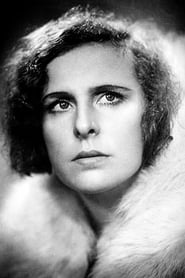
Leni Riefenstahl
Born — Died
1902-08-22 — 2003-09-08
Place of birth
Berlin, Germany
Known for
Directing
Credits
64 titles
Helene Bertha Amalie "Leni" Riefenstahl (22 August 1902 – 8 September 2003) was a German film director, actress and dancer widely noted for her aesthetics and innovations as a filmmaker. Her most famous film was Triumph des Willens (Triumph of the Will), made at the 1934 Nuremberg congress of the Nazi Party. Riefenstahl's prominence in the Third Reich along with her personal friendship with Adolf Hitler thwarted her film career following Germany's defeat in World War II, after which she was arrested but released without any charges. Triumph of the Will gave Riefenstahl instant and lasting international fame, as well as infamy. Although she directed only eight films, just two of which receiv…
Known for
A 30-minute weekly cultural magazine program. The head of aspekte, Wolgang Herles, describes the program as follows: "For 40 years, "aspekte" has repeatedly set out to enrich television with cultural contrasts. "aspekte" understands culture not as the sum of facts and events, but as the taste, the sound, the rhythms of the times. It has proven itself as a journal of true luxury and fashions as well as an instrument of public education and information."
aspekte
1965
No synopsis available yet.
Je später der Abend
1973
 6.9
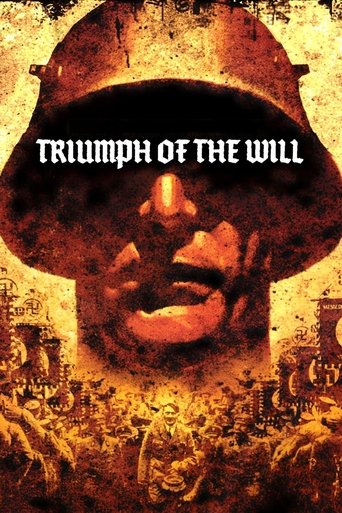
6.9A showcase of German chancellor and Nazi Party leader Adolf Hitler at the 1934 Nuremberg Rally.
Triumph of the Will
1935
No synopsis available yet.
Das ist Ihr Leben
1976
 6.9
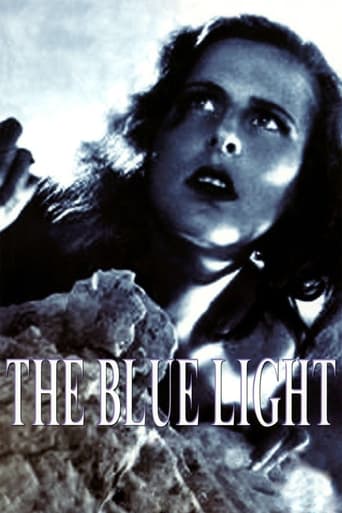
6.9Junta is hated by the people in the village where she lives, especially by the women, who suspect her of being a witch. Only she can climb the nearby mountains to a cave high up, whence a mysterious blue light glows when the moon is full. Many young men of the village have died trying to follow her. She is driven out of town, and takes to living in the mountains. Eventually she shares the secret of the blue light with one man, and he betrays it.
The Blue Light
1932
 6.9
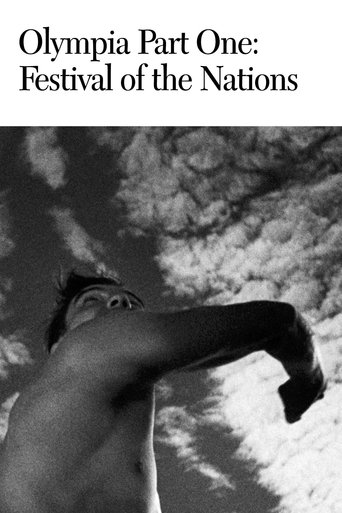
6.9Starting with a long and lyrical overture, evoking the origins of the Olympic Games in ancient Greece, Riefenstahl covers twenty-one athletic events in the first half of this two-part love letter to the human body and spirit, culminating with the marathon, where Jesse Owens became the first track and field athlete to win four gold medals in a single Olympics.
Olympia Part One: Festival of the Nations
1938
Film credits
2020s · 4 titles
 7.2
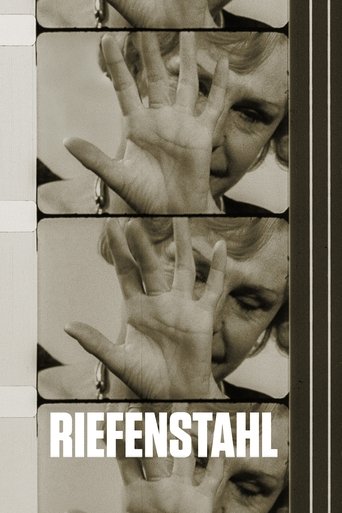
7.2Explores Leni Riefenstahl's artistic legacy and her complex ties to the Nazi regime, juxtaposing her self-portrayal with evidence suggesting awareness of the regime's atrocities.
Riefenstahl
2024
 7.2
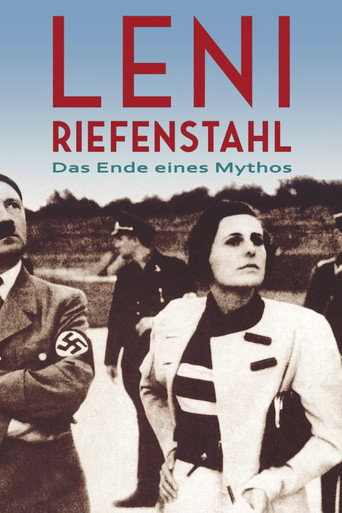
7.2Countless people around the world know the pictures from Leni Riefenstahl's films, even if they have not seen them in their entirety. The work of the German director has burned itself into the collective memory. Even decades after the end of the Nazi era, she showed no remorse and presented herself as an apolitical, naive follower of the Nazi criminal regime. Her artistic service for the cinema was always recognized. But book author Nina Gladitz shows after decades of research that Hitler's favorite filmmaker was not only a follower, but also a perpetrator during the Third Reich, who instrumentalized other filmmakers such as the brilliant cinematographer Willy Zielke in order to gain fame for herself.
Leni Riefenstahl - The End of a Myth
2020
 NR
NRSix sequences about Fascism and its segments throughout history.
FASCISM(s): A Film in Six Parts
2025
 NR
NRCity of Toys (2024, 39mins) combines Alan Marcus’ 2001 interview with legendary filmmaker Leni Riefenstahl with an exploration of centuries of antisemitism. As she recalls of her iconic 1935 documentary, Triumph of the Will, on the annual Nuremberg Nazi Party Rally almost seventy years later: “I had no ideals. I only did my duty. It was a commission I carried out.” Beyond its notoriety in 20th century history, Nuremberg was also known as one of the toymaking capitals of the world and until the Nazi era many of its major toymakers were Jewish. Nuremberg still hosts the world’s largest trade toy fair. The film subtly intertwines narratives on Adolf Hitler and Riefenstahl’s representation of the Nazi movement with Nuremberg’s historical bedrock of antisemitism and the role of its Jewish toymakers. As film historian Robert Rosenstone has written of Marcus’ work, “I would call it a kind of poetic history that may in fact deny the possibility of history at all.”
City of Toys
2024
2010s · 6 titles
 7.3
7.3Winston Churchill understood the power of films, but the true extent of his use of cinema as a propaganda tool is rarely explored. In 1934, one of Britain's most celebrated film producers, Alexander Korda, signed Churchill up as a screenwriter and historical advisor. It was the start of a unique collaboration. Churchill provided script notes for Korda's productions and penned an epic screenplay. When war broke out, their collaboration took on national importance. Korda was sent on a mission to Hollywood to help bring America into the war, with positive results. With access to previously undiscovered documents, this film documentary examines that mission and a friendship that underpinned a unique, creative partnership.
Churchill and the Movie Mogul
2019
 6.5
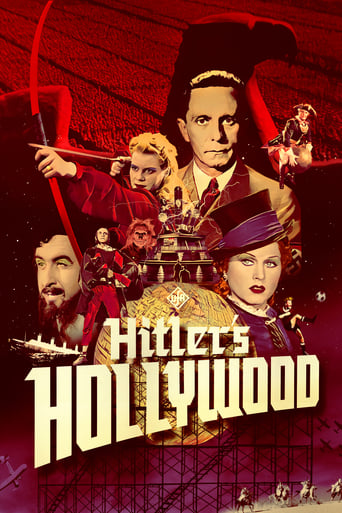
6.5Film journalist and critic Rüdiger Suchsland examines German cinema from 1933, when the Nazis came into power, until 1945, when the Third Reich collapsed. (A sequel to From Caligari to Hitler, 2015.)
Hitler's Hollywood
2017
The play is an atypical story about Leni Riefenstahl, Adolf Hitler's court director, one of the best filmmakers in the world, who rose to fame thanks to films commissioned by the Third Reich. The character of Leni was portrayed by Zdena Studénková in the drama of the Slovak National Theatre. The original Slovak play Leni by Valerie Schulczová and Roman Olekšák is about a fictional meeting of two real people. The legendary presenter Johnny Carson, whose "The Tonight Show Starring Johnny Carson" was one of the most watched talk shows in America for thirty years, and the controversial Leni Riefenstahl, Adolf Hitler's "court director". It's 1974, Johnny is at the height of his career, and Leni is in America presenting her first completed project since the defeat of Germany - a book of photographs from Africa - Last of Nubu. But Johnny knows what his audience is more interested in than art.
LENI
2015
The forgotten story of Son Kee Chung, the Korean athlete who won a gold medal under Japanese flag in marathon at the 1936 Olympic Games in Berlin.
The Run
2016
 NR
NRIn the three years leading up to the Olympics, the Nazi regime saw sport as an invaluable mobilisation and propaganda tool to motivate the "master race". Whether sympathisers or followers, German athletes went along with it; however, a number of them came to regret their decisions.
Les Champions d'Hitler
2016
No synopsis available yet.
Ice Cold Passion - Leni Riefenstahl and Arnold Fanck between Hitler and Hollywood
2018
2000s · 8 titles
 10.0
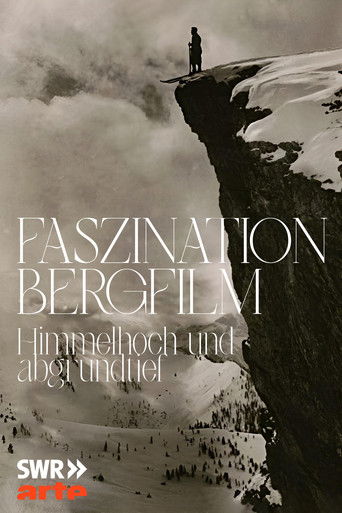
10.0A fascinating chronology of 100 years of mountain film history in the Alps. This documentary focuses primarily on films shot on the Matterhorn, the Eiger, and the Grandes Jorasses, considered until the 1930s as the "last problems of the Alps," and shows the evolution of mountain filmmaking through numerous excerpts from documentaries and feature films – notably on the Matterhorn in 1901. The genre, appropriated as a means of mass exaltation by "fascist" regimes during the Second World War, was reinvented in the 1950s by Gaston Rebuffat, Marcel Ichac, and Lionel Terray in the Mont Blanc massif, avant-garde figures of French mountain cinema, who reintroduced, beyond performance, the values of the mountains – and in color – poetry, humor, and sharing among people from all walks of life.
Faszination Bergfilm - Himmelhoch und Abgrundtief
2008
 6.0
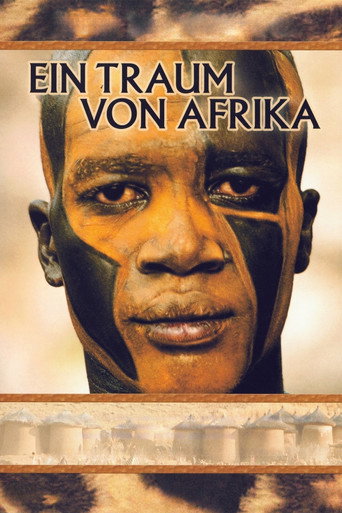
6.0At the age of 97 Riefenstahl returns to Sudan for one final farewell to the Nuba that she lived with for 8 months and photographed and filmed extensively. Müller documents her return after 23 years away and her reaction to the collapsing culture that she once celebrated so avidly in her photographs.
Leni Riefenstahl: Her Dream of Africa
2003
 6.5
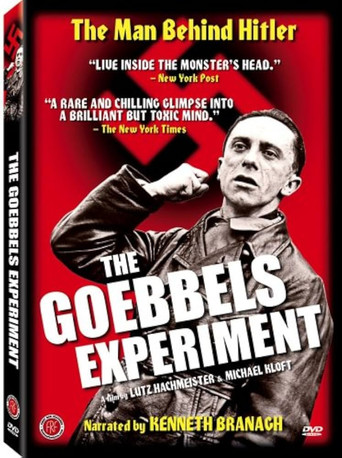
6.5The Nazi propaganda mastermind behind Hitler speaks in first person as actor Kenneth Branagh reads pages of the diary kept by the chief of propaganda, Joseph Goebbels, revealing the man's most inner thoughts.
The Goebbels Experiment
2005
 10.0
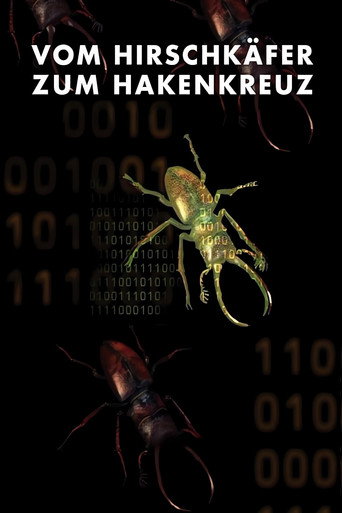
10.0From Stag Beetle to Swastika narrates in a richly detailed, associative montage the boundless possibilities of manipulating images and using images to seduce.
From Stag Beetle to Swastika
2002
Documentary continuing Breloer's exploration of Speer's life, focusing on the post-Spandau years.
Speer und er: Nachspiel - Die Täuschung
2005
This film is about the responsibility of artists and art that can lead to genocide.
In the Service of the Regime. Leni Riefenstahl
2009
An interview with infamous German filmmaker Leni Riefenstahl carried out by Sandra Maischberger in preparation for the subject's 100th birthday, and the release of not only her final film, but her first film in 48 years.
The Immoderation of Me - Sandra Maischberger meets Leni Riefenstahl
2002
 6.9
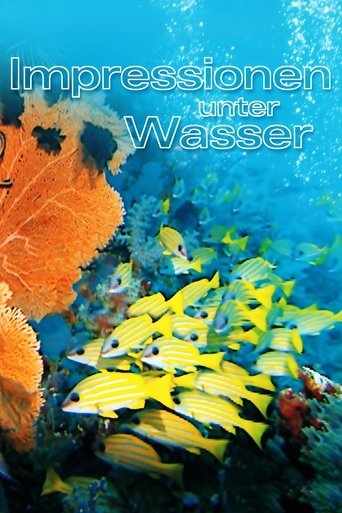
6.9Deep-sea diver/former propagandist Leni Riefenstahl explores the undersea world of coral reefs in various oceans around the world.
Underwater Impressions
2002
1990s · 3 titles
 7.0
7.0Jonas Mekas assembles 160 portraits, appearances, and fleeting sketches of underground and independent filmmakers captured between 1955 and 1996. Fast-paced and archival in spirit, the film celebrates the avant-garde as its own “nation of cinema,” a vital community existing outside the dominance of commercial film.
Birth of a Nation
1997
 7.2
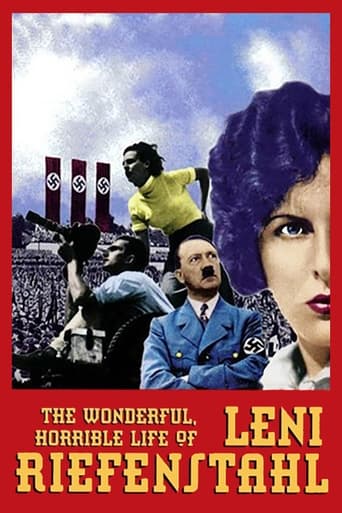
7.2This documentary recounts the life and work of one of most famous, and yet reviled, German film directors in history, Leni Riefenstahl. The film recounts the rise of her career from a dancer, to a movie actor to the most important film director in Nazi Germany who directed such famous propaganda films as Triumph of the Will and Olympiad. The film also explores her later activities after Nazi Germany's defeat in 1945 and her disgrace for being so associated with it which includes her amazingly active life over the age of 90.
The Wonderful Horrible Life of Leni Riefenstahl
1993
 6.2
6.2A meditation on the first 100 years of German cinema, featuring an assembly of German filmmakers.
The Night of the Filmmakers
1995
1970s · 3 titles
 5.1
5.1Edited from almost 100 km of film footage shot during the Games, this feature documentary is a breathtaking portrait of the 1976 Montreal Olympics. Much more than a simple record of the Games, the film approaches each event with the intention of revealing the athlete - whether winner or loser - as a unique individual.
Games of the XXI Olympiad
1977
The film tells the cultural story of Berlin during the Weimar Republic through interviews with a number of persons who were involved in literature, film, art, and music during the period. It includes interviews with Christopher Isherwood, Louise Brooks, Lotte Eisner, Elisabeth Bergner, Francis Lederer, Carl Zuckmayer, Gregor Piatigorsky, Claudio Arrau, Rudolf Kolisch, Mischa Spoliansky, Herbert Bayer, Mrs. Walter Gropius, and Arthur Koestler.
Memories of Berlin: The Twilight of Weimar Culture
1976
A semi-documentary account of the author Thomas Wolfe's trip to Berlin in the summer of 1936.
Memories of a Summer in Berlin
1972
1930s · 6 titles
6.9Junta is hated by the people in the village where she lives, especially by the women, who suspect her of being a witch. Only she can climb the nearby mountains to a cave high up, whence a mysterious blue light glows when the moon is full. Many young men of the village have died trying to follow her. She is driven out of town, and takes to living in the mountains. Eventually she shares the secret of the blue light with one man, and he betrays it.
The Blue Light
1932
6.9Starting with a long and lyrical overture, evoking the origins of the Olympic Games in ancient Greece, Riefenstahl covers twenty-one athletic events in the first half of this two-part love letter to the human body and spirit, culminating with the marathon, where Jesse Owens became the first track and field athlete to win four gold medals in a single Olympics.
Olympia Part One: Festival of the Nations
1938
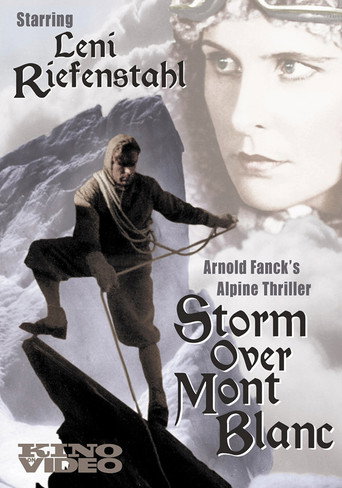 6.6
6.6Hannes is employed at the Mont Blanc Observatory; the only outside connection is a pilot and Hella over the radio. Hella ascends the mountain but her father dies along the way.
Storm Over Mont Blanc
1930
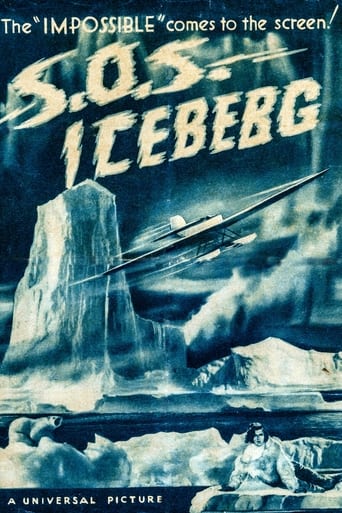 5.3
5.3An expedition goes in search of a party lost in the Arctic a year earlier. (The English-language version of S.O.S. Eisberg.)
S.O.S. Iceberg
1933
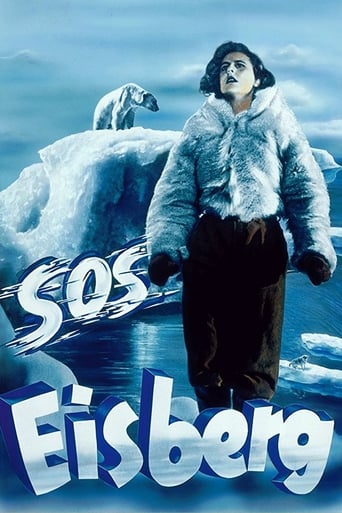 6.4
6.4An expedition goes in search of a party lost in the Arctic a year earlier.
S.O.S. Iceberg
1933
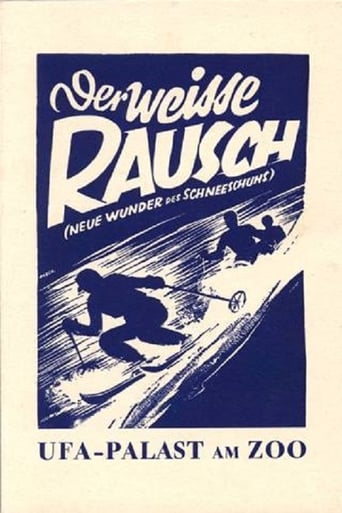 5.6
5.6The exploits of village girl Hannes and her attempts to master skiing and ski-jumping aided by the local expert.
The White Ecstasy
1931
1920s · 5 titles
 7.0
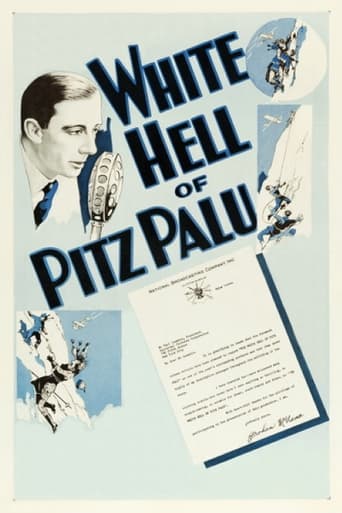
7.0Dr. Johannes Krafft climbs a 12,000-foot mountain over and over again to search for his wife, who was lost on their honeymoon. Another couple makes the dangerous climb with him.
The White Hell of Pitz Palu
1929
 8.0
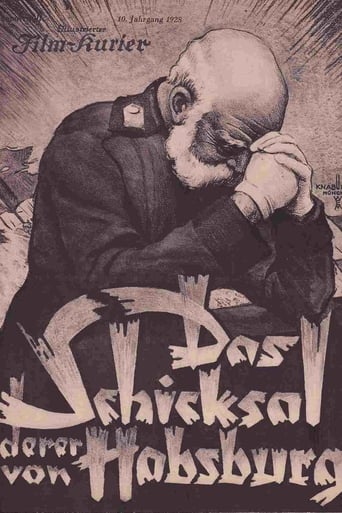
8.0No synopsis available yet.
Das Schicksal derer von Habsburg
1928
 6.5
6.5In the mountains, Diotima meets Karl and fall in love and have an affair. Karl's friend Vigo mistakenly believes she's in love with him, causing rifts in all relationships.
The Holy Mountain
1926
 7.1
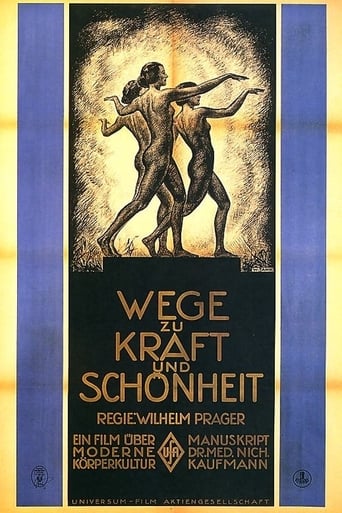
7.1The perfect body as an object of cult worship. Based on the mass sports and body worship movement of the 1920s, the film propagates physical training and shows in stylized documentary scenes aspects of physical hygiene, gymnastics, sports and dancing as well as scenes in which supposed sportsmen of antiquity pose naked.
Ways to Strength and Beauty
1925
 5.1
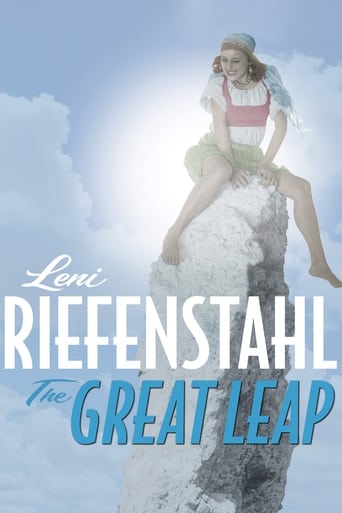
5.1A young Italian girl living in the Dolomites falls in love with a member of a tourist party skiing on the nearby mountains.
The Great Leap
1927
Series credits
A 30-minute weekly cultural magazine program. The head of aspekte, Wolgang Herles, describes the program as follows: "For 40 years, "aspekte" has repeatedly set out to enrich television with cultural contrasts. "aspekte" understands culture not as the sum of facts and events, but as the taste, the sound, the rhythms of the times. It has proven itself as a journal of true luxury and fashions as well as an instrument of public education and information."
aspekte
1965
No synopsis available yet.
Je später der Abend
1973
No synopsis available yet.
Das ist Ihr Leben
1976
A weekly sit-down with Hermann Schreiber and Peter W. Jansen with a figure of German cinema.
Biographies
1978
 NR
NRNo synopsis available yet.
Buffa racconta Jesse Owens
2017
Behind the camera
6.9A showcase of German chancellor and Nazi Party leader Adolf Hitler at the 1934 Nuremberg Rally.
Triumph of the Will
1935
6.9A showcase of German chancellor and Nazi Party leader Adolf Hitler at the 1934 Nuremberg Rally.
Triumph of the Will
1935
6.9A showcase of German chancellor and Nazi Party leader Adolf Hitler at the 1934 Nuremberg Rally.
Triumph of the Will
1935
6.9Junta is hated by the people in the village where she lives, especially by the women, who suspect her of being a witch. Only she can climb the nearby mountains to a cave high up, whence a mysterious blue light glows when the moon is full. Many young men of the village have died trying to follow her. She is driven out of town, and takes to living in the mountains. Eventually she shares the secret of the blue light with one man, and he betrays it.
The Blue Light
1932
6.9Junta is hated by the people in the village where she lives, especially by the women, who suspect her of being a witch. Only she can climb the nearby mountains to a cave high up, whence a mysterious blue light glows when the moon is full. Many young men of the village have died trying to follow her. She is driven out of town, and takes to living in the mountains. Eventually she shares the secret of the blue light with one man, and he betrays it.
The Blue Light
1932
6.9Starting with a long and lyrical overture, evoking the origins of the Olympic Games in ancient Greece, Riefenstahl covers twenty-one athletic events in the first half of this two-part love letter to the human body and spirit, culminating with the marathon, where Jesse Owens became the first track and field athlete to win four gold medals in a single Olympics.
Olympia Part One: Festival of the Nations
1938
6.9Starting with a long and lyrical overture, evoking the origins of the Olympic Games in ancient Greece, Riefenstahl covers twenty-one athletic events in the first half of this two-part love letter to the human body and spirit, culminating with the marathon, where Jesse Owens became the first track and field athlete to win four gold medals in a single Olympics.
Olympia Part One: Festival of the Nations
1938
6.9Starting with a long and lyrical overture, evoking the origins of the Olympic Games in ancient Greece, Riefenstahl covers twenty-one athletic events in the first half of this two-part love letter to the human body and spirit, culminating with the marathon, where Jesse Owens became the first track and field athlete to win four gold medals in a single Olympics.
Olympia Part One: Festival of the Nations
1938
 6.7
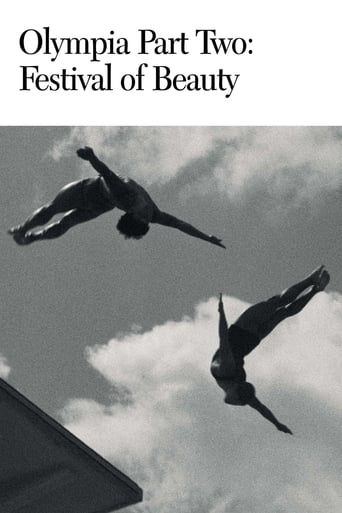
6.7Part two of Leni Riefenstahl's monumental examination of the 1938 Olympic Games, the cameras leave the main stadium and venture into the many halls and fields deployed for such sports as fencing, polo, cycling, and the modern pentathlon, which was won by American Glenn Morris.
Olympia Part Two: Festival of Beauty
1938
6.7Part two of Leni Riefenstahl's monumental examination of the 1938 Olympic Games, the cameras leave the main stadium and venture into the many halls and fields deployed for such sports as fencing, polo, cycling, and the modern pentathlon, which was won by American Glenn Morris.
Olympia Part Two: Festival of Beauty
1938
6.7Part two of Leni Riefenstahl's monumental examination of the 1938 Olympic Games, the cameras leave the main stadium and venture into the many halls and fields deployed for such sports as fencing, polo, cycling, and the modern pentathlon, which was won by American Glenn Morris.
Olympia Part Two: Festival of Beauty
1938
 5.4
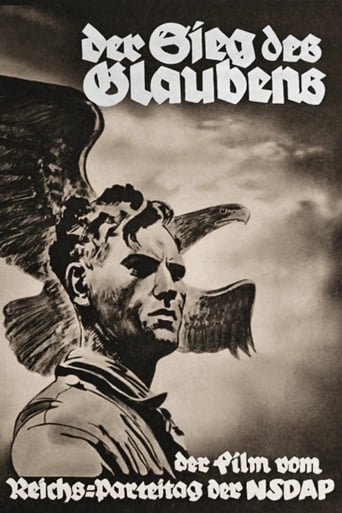
5.4Follows the Fifth Nazi Party Rally (Nuremberg, 30 August–3 September 1933) and shows the then close relationship between Adolf Hitler and Ernest Rõhm.
The Victory of Faith
1933
5.4Follows the Fifth Nazi Party Rally (Nuremberg, 30 August–3 September 1933) and shows the then close relationship between Adolf Hitler and Ernest Rõhm.
The Victory of Faith
1933
6.5In the mountains, Diotima meets Karl and fall in love and have an affair. Karl's friend Vigo mistakenly believes she's in love with him, causing rifts in all relationships.
The Holy Mountain
1926
 7.0
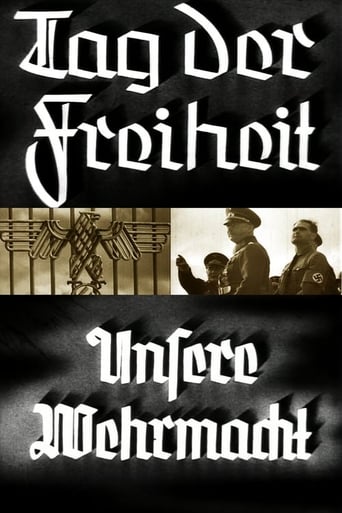
7.0The armed forces of the Third Reich, particularly the German army, are presented as an efficient system of bodies and machines at the seventh Nazi Party Rally that occurred in Nuremberg in 1935.
Day of Freedom
1935
7.0The armed forces of the Third Reich, particularly the German army, are presented as an efficient system of bodies and machines at the seventh Nazi Party Rally that occurred in Nuremberg in 1935.
Day of Freedom
1935
 6.2
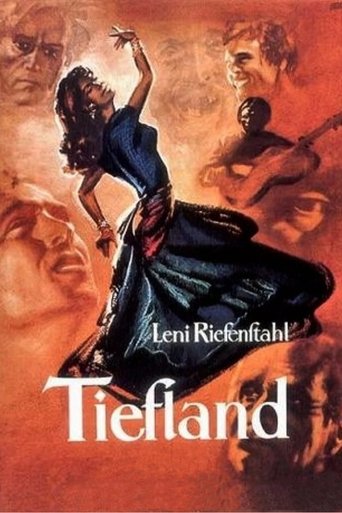
6.2In early 20th Century Europe, a dancer becomes the romantic bone of contention between two men, a humble shepherd and an imperious marquis.
Lowlands
1954
6.2In early 20th Century Europe, a dancer becomes the romantic bone of contention between two men, a humble shepherd and an imperious marquis.
Lowlands
1954
6.2In early 20th Century Europe, a dancer becomes the romantic bone of contention between two men, a humble shepherd and an imperious marquis.
Lowlands
1954
 7.0
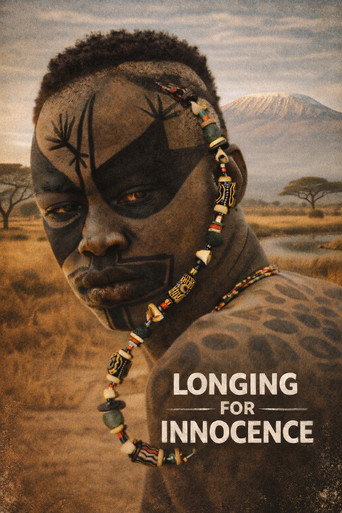
7.0Between 1963 and 1976, filmmaker Leni Riefenstahl spent months living among in the Nuba people in the Kordofan Province of Sudan, documenting their cultural traditions as well as the everyday activities crucial to their very survival.
Longing For Innocence
2023
6.9Deep-sea diver/former propagandist Leni Riefenstahl explores the undersea world of coral reefs in various oceans around the world.
Underwater Impressions
2002
6.9Deep-sea diver/former propagandist Leni Riefenstahl explores the undersea world of coral reefs in various oceans around the world.
Underwater Impressions
2002