
Sound
John Zorn
Born
1953-09-02 (73)
Place of birth
Manhattan, New York, USA
Known for
Sound
Credits
22 titles
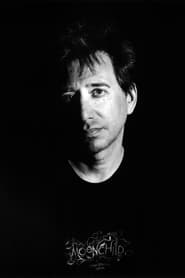
John Zorn (born September 2, 1953) is an American composer, arranger, record producer, saxophonist, and multi-instrumentalist with hundreds of album credits as performer, composer, and producer across a variety of genres including jazz, rock, hardcore, classical, surf, metal, soundtrack, ambient, and improvised music. He incorporates diverse styles in his compositions, which he identifies as avant-garde or experimental. Zorn was described by Down Beat as "one of our most important composers". Zorn established himself within the New York City downtown music movement in the mid-1970s, performing with musicians across the sonic spectrum and developing experimental methods of composing new musi…
Known for
 10.0
10.0This exhibition focuses on Jonas Mekas’ 365 Day Project, a succession of films and videos in calendar form. Every day as of January 1st, 2007 and for an entire year, as indicated in the title, a large public (the artist's friends, as well as unknowns) were invited to view a diary of short films of various lengths (from one to twenty minutes) on the Internet. A movie was posted each day, adding to the previously posted pieces, resulting altogether in nearly thirty-eight hours of moving images.
365 Day Project
2007
 6.8
6.8A rare peek into the working methods of John Zorn. Filmed over a ten year period, this documentary includes live footage of Masada, Naked City, Cobra, as well as improvisations, his classical work and rare interviews. A prize winner at European festivals, this film documents Heuermann's very personal, fifteen year odyssey with the music of John Zorn.
A Bookshelf on Top of the Sky: 12 Stories About John Zorn
2002
 7.0
7.0This is a full-length documentary honoring the life and work of American composer and artist John Cage. Cage is considered one of the most influential composers of the 20th century. This documentary features interviews with various personalities from different fields as they introduce us to the life and work of this great American artist.
The Revenge of the Dead Indians
1993
 8.0
8.0An avant-garde documentary film on English guitarist, composer and improviser Fred Frith.
Step Across the Border
1990
 NR
NRA documentary about the colorful life, times and music of a true original, Louis “Moondog” Hardin, an eccentric blind musician and composer who had far-reaching artistic influence in spite of a deliberate decision to live on the streets of New York City. With a wealth of never before seen archival film, home movies and rare audio recordings, the film is told largely from Moondog’s perspective and features interviews with Moondog’s friends, family, collaborators and musicians who cite him as an influence, including Jarvis Cocker, John Zorn, Chris Stein and Debbie Harry, Damon Albarn, Philip Glass, and many more.
The Viking of Sixth Avenue
—
 6.7
6.7In this entrancing documentary on performance artist, photographer and underground filmmaker Jack Smith, photographs and rare clips of Smith's performances and films punctuate interviews with artists, critics, friends and foes to create an engaging portrait of the artist. Widely known for his banned queer erotica film Flaming Creatures, Smith was an innovator and firebrand who influenced artists such as Andy Warhol and John Waters.
Jack Smith and the Destruction of Atlantis
2007
Film credits
2020s · 3 titles
 7.0
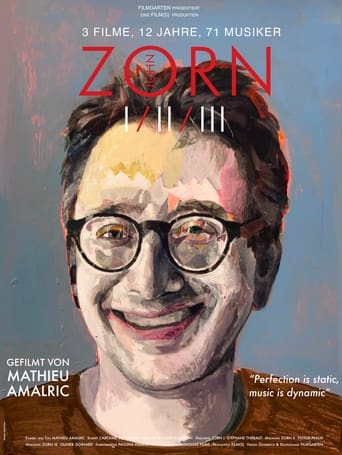
7.0Mathieu Amalric’s film with John Zorn began as a European TV commission that was quickly abandoned in favor of something more intimate: an ongoing dialogue between two friends that will always be a work-in-progress.
Zorn I (2010 – 2016)
2023
7.0For 12 years now, Mathieu Amalric has been filming the stupendous New York saxophonist and composer John Zorn. Whirligig films that Zorn likes to programme during his concerts, like a musical set. They are screened here for the first time out of a concert setting. Music in the making, constellations of energies, an ever-expanding universe of sound…
Zorn III (2018 – 2022)
2024
 NR
NRPart of a CD+DVD set released by Tzadik. Recorded at the powerful organ at Henry LeBoeuf Hall, Bozar in Brussels, this is one of Zorn’s most beautiful and personal solo performances—a dramatic musical reading of the epic Faust legend. Featuring a guest appearance by the sensational vocalist Barbara Hannigan, who is improvising with Zorn for the very first time. No one plays the organ quite like Zorn and many of his unusual techniques, usually hidden in performance, are presented in close focus. Beautifully filmed by state of the art equipment, this is a wild and colorful concert by two mavericks of new music.
John Zorn: The Hermetic Organ Volume 10 - Bozar, Brussels
2022
2000s · 7 titles
10.0This exhibition focuses on Jonas Mekas’ 365 Day Project, a succession of films and videos in calendar form. Every day as of January 1st, 2007 and for an entire year, as indicated in the title, a large public (the artist's friends, as well as unknowns) were invited to view a diary of short films of various lengths (from one to twenty minutes) on the Internet. A movie was posted each day, adding to the previously posted pieces, resulting altogether in nearly thirty-eight hours of moving images.
365 Day Project
2007
6.8A rare peek into the working methods of John Zorn. Filmed over a ten year period, this documentary includes live footage of Masada, Naked City, Cobra, as well as improvisations, his classical work and rare interviews. A prize winner at European festivals, this film documents Heuermann's very personal, fifteen year odyssey with the music of John Zorn.
A Bookshelf on Top of the Sky: 12 Stories About John Zorn
2002
6.7In this entrancing documentary on performance artist, photographer and underground filmmaker Jack Smith, photographs and rare clips of Smith's performances and films punctuate interviews with artists, critics, friends and foes to create an engaging portrait of the artist. Widely known for his banned queer erotica film Flaming Creatures, Smith was an innovator and firebrand who influenced artists such as Andy Warhol and John Waters.
Jack Smith and the Destruction of Atlantis
2007
 8.0
8.0Filmed with an intimate three camera shoot by Antonio Ferrera, a close friend of John Zorn and a long time cameraman for the documentary masters the Maysles Brothers, this concert film captures the band performing a set of Zorn's Masada compositions at their home base in the Lower East Side, Tonic, in the summer of 1999.
Masada: Live at Tonic 1999
2004
 NR
NRPart Two of John Zorn's COBRA (see April 16 for Part One).
Friday May 4, 2007: John Zorn – Cobra Part Two
2007
 NR
NRJohn Zorn with his band at Anthology Film Archves performs COBRA, part one.
Monday April 16, 2007
2007
 NR
NRExperimental documentary about Japanese experimental musician Otomo Yoshihide. Includes interviews with multiple musicians, artists, and writers as well as live footage.
Kikoe
2009
1990s · 3 titles
7.0This is a full-length documentary honoring the life and work of American composer and artist John Cage. Cage is considered one of the most influential composers of the 20th century. This documentary features interviews with various personalities from different fields as they introduce us to the life and work of this great American artist.
The Revenge of the Dead Indians
1993
8.0An avant-garde documentary film on English guitarist, composer and improviser Fred Frith.
Step Across the Border
1990
 8.0
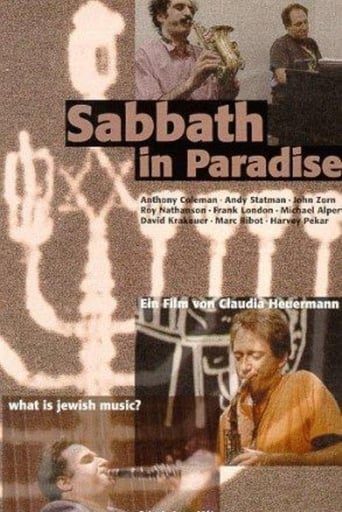
8.0Documentary examining contemporary Jewish musical culture in New York's avant garde Jazz scene in the 1990s.
Sabbath in Paradise
1998
1980s · 3 titles
 7.8
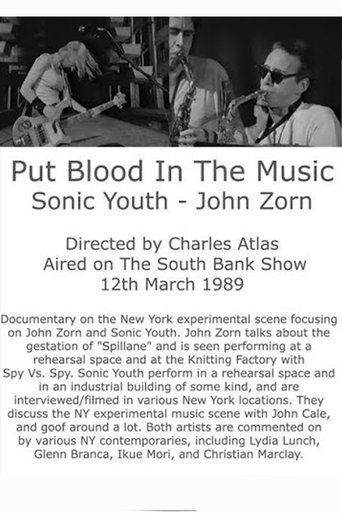
7.8PBS produced documentary in two parts: the first is dedicated to saxophonist and composer John Zorn; the second is about Sonic Youth at the height of their powers in 1988.
Put More Blood Into the Music
1988
 7.0
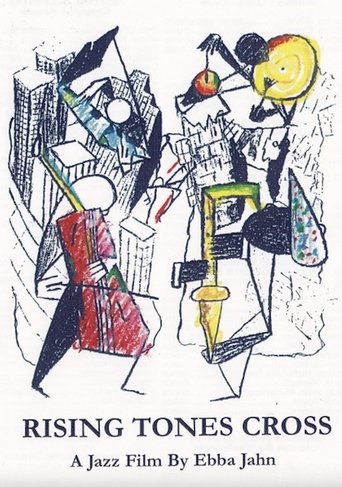
7.0This film is a documentary composition of new jazz, New York as the city that generates it, and the musicians playing it. The thoughts of the saxophonist Charles Gayle and the bass players William Parker and Peter Kowald from Germany accompany the film. Shot on 16 mm, this film remains one of a kind until today. Some of the recorded musicians have passed away - their spirits live on.
Rising Tones Cross
1985
Money (1985) is an historical document of the early days of "language poetry" and the downtown improvised music scene. A manic collage film from the mid-80s when it still seemed that Reaganism of the soul could be defeated. Filmed primarily on the streets of Manhattan for the ambient sounds and movements and occasional pedestrian interaction to create a rich tapestry of swirling colors and juxtaposed architectural spaces in deep focus and present the intense urban overflowing energy that is experience living here. Money is thematically centered around a discussion of economic problems facing avant-garde artists. Discussion, however, is fragmented into words and phrases and reassembled into writing. Musical and movement phrases are woven through this conversation to create an almost operatic composition. Give me money!
Money
1985
Undated · 2 titles
NRA documentary about the colorful life, times and music of a true original, Louis “Moondog” Hardin, an eccentric blind musician and composer who had far-reaching artistic influence in spite of a deliberate decision to live on the streets of New York City. With a wealth of never before seen archival film, home movies and rare audio recordings, the film is told largely from Moondog’s perspective and features interviews with Moondog’s friends, family, collaborators and musicians who cite him as an influence, including Jarvis Cocker, John Zorn, Chris Stein and Debbie Harry, Damon Albarn, Philip Glass, and many more.
The Viking of Sixth Avenue
—
John Zorn: alto sax, vocals Bill Frisell: guitar Wayne Horvitz: keyboards, piano Fred Frith: bass Joey Baron: drums
John Zorn's Naked City: Montreux Jazz Festival 1990
—
Behind the camera
 7.0
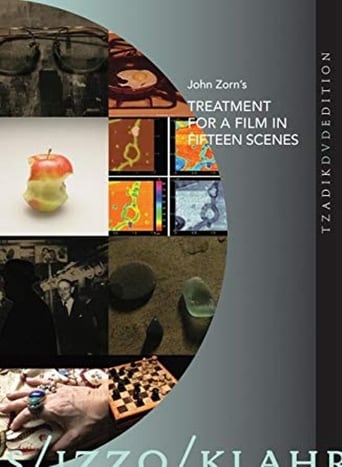
7.0An unfaithful interpretation of John Zorn’s early 80’s film script, “A Treatment For A Film in 15 Scenes”. I consider “Well Then There Now” a “list” film since Zorn’s text is really a shot list. An exploration of the singularity of the image, but a playful one.
Well Then There Now
2011
NRIconic film moments juxtaposed with the ordinary. The methods to create the shots run from classic studio set-ups to shooting on location using today’s accessible image-capture devices. The final edit comes together to trigger audio landscapes.
15 Scenes: 254 Shots
2011
7.0B-movies, industrial films, TV commercials, home movies, animation, and softcore porn have been collected and reassembled into a fractured noir murder mystery in Bare Room.
Bare Room
2011